
Imagine a cold house that’s meant to be your home. Imagine that it is a place where there is no genuine love. Imagine that it isnt safe to express an opinion. Imagine that it is a place where you are used to being told off, and the rules keep changing. Imagine that its a place where you have to grow up fast. Imagine its a place where you avoid. Imagine that its a place of emotional confusion, having to be responsible for the person who you watch abuse others. Imagine growing up where love is false, where smiles are fake or pretend – just for the cameras. Imagine a house in which you feel completely and utterly alone. Imagine having your every movement watched, either from the school playground, with flying monkeys – or have them lead in safe places, as Sunday school leaders, because….
Now imagine what growing up in this type of ‘home’ is like – and these ‘parents’ are devout Christians.
Imagine.
Imagine that these parents don’t protect you from each other, believe their own lies, and justify their actions, punishments, lack of love and emotional neglect with Bible verses. Imagine the extensively of shame and guilt growing up.
Imagine what this does to your ‘spiritual side’?
Imagine if home isnt safe – yet these parents do everything to display to others being christians?
Imagine that shame and guilt, as well as conformity, people pleasing and ‘being mature for my age’ – being contributors to staying, and finding an identity in the same evangelical tradition. Imagine what view I might have of God as result?
To give the church, I went to, credit – it was a safe place spiritually, and to some extent emotionally in my late teens – and they, well some of them, weren’t to know (though also – everyone knew). It wasn’t the church’s fault that the ‘hole’ in my life was an emotional neglect that was impossible for me to describe at the time, and that most of my behaviour then, and up until recently, emanated from my early years.
For me, Spiritual Abuse started in the home.
How could it not be considered spiritual abuse?
….as well as emotional and psychological abuse – by someone who is measuring high on any ‘dark triad’ scale (Psychopathy/Sociopathy/Narcissm)
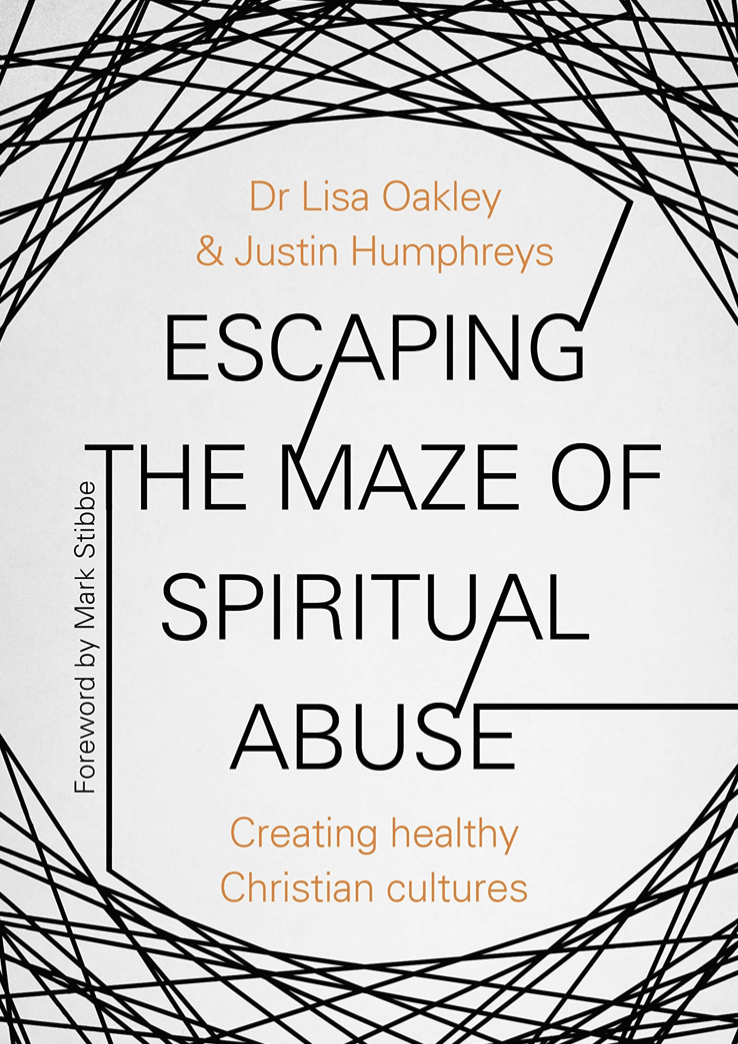
In their excellent book ‘Escaping the Maze of Spiritual Abuse’ , Dr Lisa Oakley and Justin Humphreys make an attempt to define Spiritual Abuse. They say that:
Spiritual abuse is a form of emotional and psychological abuse. It is characterised by a systematic pattern of coercive and controlling behaviour in a religious context. Spiritual abuse can have a deeply damaging impact on those who experience it. This abuse may include: manipulation and exploitation, enforced accountability, censorship of decision making, requirements for secrecy and silence, coercion to conform, control through use of sacred texts or teaching, requirement to obedience to the abuser, the suggestion that the abuser has a divine position, isolation as a means of punishment and superiority and elitism’
(Oakley, 2018)
They also say that defining Spiritual abuse is notoriously difficult and go on to affirm that many people dont realise that what they have experienced is Spiritual Abuse; then again, its also true to say that most people dont realise that they are in an emotionally abusive relationship until they can see it, and have it pointed out to them… however, I digress, they affirm that
Spiritual Abuse is a form of emotional and psychological abuse…..(and)… that Spiritual abuse can happen outside of places that might be considered ‘spiritual’ contexts (like churches, organisations etc)
(Oakley, Humphreys, 2019)
My ‘home’ growing up – was a spiritual context. There were ‘evangelical’ phrases around on the walls, such as this one:
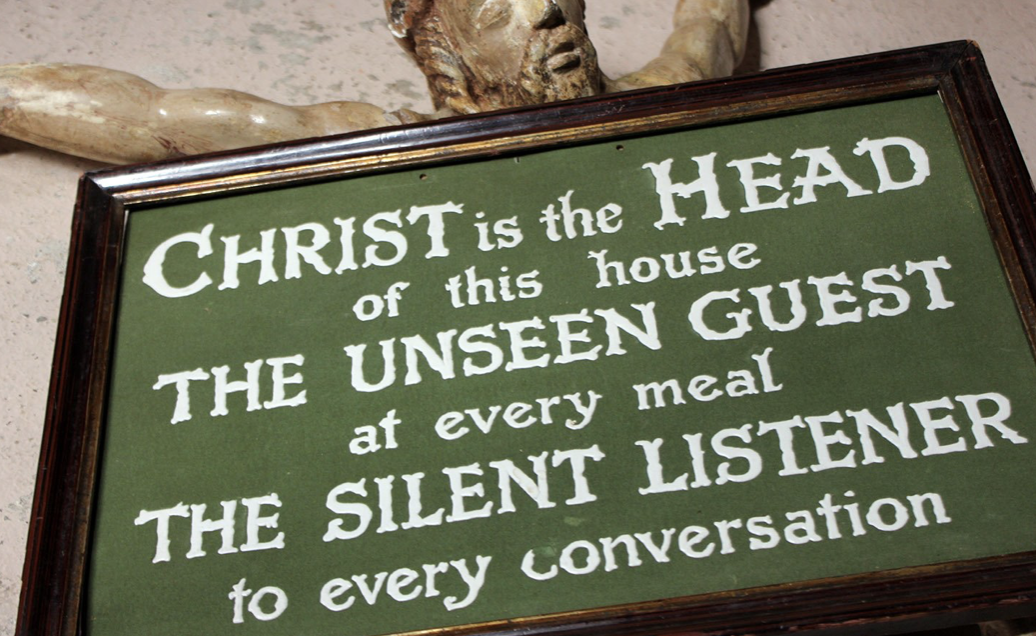
The Bible was read aloud every breakfast time. Prayers were made to accompany it. As was a reading from the ‘Daily bread’. Prayers said each night. Church went to each Sunday, and each Sunday even on holidays – and ‘they were leaders’ in the church (one of them still is).
It was definitely the intention of the parents that the home was a spiritual place, or at least a religious one, in fact, Christian culture was everywhere, from Larry Norman LP’s (no ‘secular music’), few fiction books visible (aside from on my own children bookshelves), and considerable time was given to the life of the church – from building it, hospitality, services, hosting and baking. Church was actually the only identity my parents had.
It was definitely a spiritual context then – would you agree?
But as Oakley says, Spiritual Abuse needn’t just happen in a spiritual context.
They describe in accessible detail the markers of Spiritual abuse and what it can look like, here I try and paraphrase them, with a few examples and direct quotes from their chapters:
- Coercive Control ; ‘Domination and controlling others – using ‘God’/Scripture/principles as a tool for coercion
- Under pressure: ‘feeling pressured or manipulated into service’
- Birds of a feather stick together: ‘ Demanding that persons agree with them, conformity’ including bullying them to conformity, victimisation and gossip.
- Give an account of yourself : ‘Having an undue coercion to be accountable to people’ – where this for scrutinous purposes
- Shifting Sands;
One of the most challenging and psychologically difficult aspects of spiritual abuse is shifting perceptions of reality. When people experience controlling behaviour, this can be followed by either a denial of the incident or a retelling or twisting of the story which suggests that the behaviour was actually positive or for the persons own benefit
(Oakley, Humphreys 2019)
They do not use the term DARVO in the book – but this is what they are explaining above, as well as selective amnesia and defensive projecting, and – (and may distort so that they project themselves as the victim). Spiritual abuse this can look like ‘The devil made me do it’ or ‘ you wouldn’t be accusing a vicar of doing such a thing..would you?’
- Silence is Golden ; ‘ Where people either in a congregation or elsewhere, leadership…are manipulated into..silence..’ – at the point of disagreeing, confronting or raising a concern. Especially to protect ‘the church’, the ‘name of God’ and the reputation.
- You’ve tried the best – why bother with the rest ; ‘dont mix with ‘other christians’ they are _______- insert the word ‘liberal’ or ‘not as holy’ or ‘dont believe in ____ like we do’
- Its based on Fear ; ‘ When people told us their stories of spiritual abuse, there was a strong sense of fear’ Spiritual abuse is often accompanied by fear – fear of being rejected by the system, fear of ‘eternal’ or present punishment, fear of being judged.
- Because the Bible tells us so ; ‘ When the Bible is used to manipulate, control , to beat you over the head, to pressurise’
Here is one persons story and 9 examples
What of this kind of scenario; it was said to her that “the Bible says children are to obey their parents” while staring down at you in absolute disgust and not allowing you to speak because of you speak you are talking back but if you don’t respond you are disrespecting and never pay attention
A second was to be told that,.“The Bible says you are not to be unequally yoked” was used to get a child to break up with boyfriends not white…
(just hold this thought before moving on- how horrific is this?)
- Did you get the message :’ obedience’ – self sacrifice.. ‘unity’ (for the sake of conformity) are also key aspects
- ‘Touch not the anointed’ – When folks are told that a person is a ‘spiritual’ person and is elevated above the ‘normal’ rules. Where that person was the only person able to hear from or speak to God – and this was a view perpetuated. Spiritual entitlement and exclusive access to the divine are one of the reasons that ‘Religious leader’ is one of the top ten jobs that psychopaths inhabit. (Eriksen, 2018)
- ‘Is God in it’?
As we have said, Examples of spiritual abuse include coercion and control, but what can be really damaging is the suggestion that God is behind or in agreement with the damaging behaviour.
(Oakley, Humphreys 2019)
because……
When people experience coercive and controlling behaviour in the name of God, it can significantly damage their personal faith and belief in God.
I look at the above list in the book – and recognise so much of this in what I experienced growing up – that the blurred distinction between emotional abuse and spiritual abuse is irreverent, It was nearly all there and in the home – it didn’t look like loyalty and control from a person acting in their role as a spiritual leader – but by someone who claimed authority as a person adhering to a religion in the home.
I look at the above list and realise how easy it would be to fall into the trap of being abused spiritually and emotionally in the home, and then receive the same treatment in future relationships and also spiritual settings. I think thats what’s known as trauma bonding. I wonder the extent to which I was trauma bonded to the church. Maybe thats for a part 2. What effect did this all have on me? What God was represented to me in the actions of the abusive ones?
What was God like for me?
One of the features of Spiritual Abuse, and any is that its not realised often until many weeks and months later. It requires awareness of what it is, as well as emotional and psychological abuse to spot it, and then raise it to the relevant authorities. Trusting in your feelings about someone, and being brave to raise a concern. It shouldn’t just be people like me interested in this issue because of my own experience, nor should it just be leaders in churches who go on safeguarding courses.
We need to talk about Spiritual Abuse – and how, with emotionally abusive christian parents, it starts from the home.
Some resources:
Do look up The book I referred to, and also 31:8 who develop courses in this for churches and groups
Good Therapy on Spiritual Abuse also covers Spiritual Abuse in intimate relationships
In the interest of conversation on definitions, The EA have published this on the unintended consequences of Spiritual Abuse as a definition.
25 signs of Spiritual Abuse is here
If you feel that this is something that you have experienced, or experiencing do seek help from a professional, a therapist, 31;8 have a helpline, or do call other free helplines in the UK on this subject or any in regard to domestic or emotional abuse.
 James Ballantyne
Leave a comment