Category: Journey

  • Surviving Psychopathic Parenting (Part 4) – Asbestos feet; From Eggshells to Empathy.

    Surviving Psychopathic Parenting (Part 4) – Asbestos feet; From Eggshells to Empathy.

    Thank you for reading, this is part 4 of my survival story, do check out parts 1-3 in the menu to the right, though each part can be read separately. This one may contain details that could trigger. 

    Growing up with psychopathic emotionally immature parents allowed me to develop asbestos feet, with all the walking on eggshells that I had to do.

    Now I know, if God had desired that we were to find asbestos feet useful maybe we would have been created with them, so maybe they are more a product of how the human child adapts to survive in such unnurturing circumstances.

    Using eggshells to remove toxic water pollutants | News | Chemistry World

    I had soft feet. Eggshells hurt. Like they would do if they are stood on.

    Apparently I had to toughen up, and develop proverbial asbestos feet, by the very person who was relaying the floor with a layer of eggshells to walk on.

    Sometimes there’d be a bomb in and amongst the eggshell too, or a place of glass, just to cut deeper, all just to ‘help’ me to develop ‘thicker’ skin.

    Given that I had no choice as a child, its loyalty or punishment, then, I learned to pretend, to fake agreeing, agreeing to being the role that was compliant, and trying to navigate a pathway full of emotional eggshells and explosives, that sometimes went off, other times just the fear of them was enough.

    Its one thing advising people how not to walk on eggshells when you’re at work, but what if thats your entire home existence, you might as well have been born with asbestos feet, because they get to be needed pretty early on.

    My Psychopath parent was of the emotionally fragile and unpredictable variety, in this post I share the 12 common features of emotionally immature parents, taken from Lindsay Gibsons book.

    If other people are getting more attention, they find ways to draw attention back to themselves, such as interrupting, firing off zingers that get everyones attention, or changing the subject. If all else fails they may pointedly withdraw, look bored or otherwise communicate that they are disengaged – behaviours that ensure that the focus stays on them. (Lindsey C Gibson, Adult Children of Emotionally Immature Parents, 2016)

    What you get to realise is that the eggshells appear when they are not centre of attention. When you have to ask for something, when you might want to disagree, when you try to put your needs first

    I learned not to bother. Any time I did was met with emotional outburst.

    Survival just meant growing asbestos feet, and wearing bomb proof clothing.

    Emotional shielding from the impending storm. Fear. Terror. Because you just know that a bomb had gone off, and one will go off again.  So dont dare upset them, just keep the peace, dont rock the boat, tip toe around them. Comply or hide.

    When emotional parents disintegrate, they take their children with them into their personal meltdown. Their children experience their despair, rage or hatred in all its intensity. Its no wonder everyone in the family feels like they are walking on eggshells. These parents emotional instability is the most predictable thing about them. (Gibson, 2016)

    And as the following indicates, it may not be in the workplace that some of you saw this in my parents. Though, I am pretty sure they didnt hide it very well. They left a trailblazer of shocking behaviour everywhere, and when challenged would not be able to see it as shocking. In which case it wouldn’t really matter if they were in a professional role in which character was important, like being a vicar for example, as long as in their job they could hide it…

    Their fluctuating moods and reactivity make them unreliable and intimidating. And while they may act helpless and usually see themselves as victims, family life always revolves around their moods. Although they often control themselves outside the family, where they can follow a structured role (not always I might add) within the crucible of intimate family relationships they display their full impulsivity, especially if intoxicated. It can be shocking to see ow no-holds-barred they get. (Gibson, 2016)

    However, my survival story is about me.

    As a result of this, I learned to put other people first, and my needs firmly second, or third. Though, that doesn’t stop emotionally immature people of accusing me of being selfish (when I might dare to put my needs first).  Learning how to navigate eggshells is about attuning to the needs of the other, attuning to the emotional cues of the most emotionally fragile in the room, responding to the needy. It’s codependancy. But thats what I had to do to survive, forgo myself. Because even though I should stand up to other people when they bully, the full force of victimhood, shame and loyalty would emerge if they were stood up to.

    Being overly attentive to other peoples feelings and emotions is no bad thing.

    Actually yes it is. That could end in empathy enmeshment.

    Being attentive is no bad thing, its about having empathy that seeks to understand, and compassion that enables that person to make their own decisions in the actions to alleviate their situation.

    Telling our story is about putting me as the main character of this, not the other person. From Eggshells to empathy, how I learned to be who I am, in the way I am from the start I was given.  It has taken me a very long time to actually put me first. Part of surviving trauma is to narrate the story of and see it for what it is and was, and becoming aware of how I survived and what resources I used to be able to. Developing rubber feet to walk on eggshells, when there was no sledgehammer to crush them smooth, a new layer would be put down.


  • Surviving Psychopathic Parenting (part 3):  Trainspotting (at Clapham Junction)

    Surviving Psychopathic Parenting (part 3): Trainspotting (at Clapham Junction)

    One way of surviving psychopathic parents was to become immersed in the world of trainspotting.

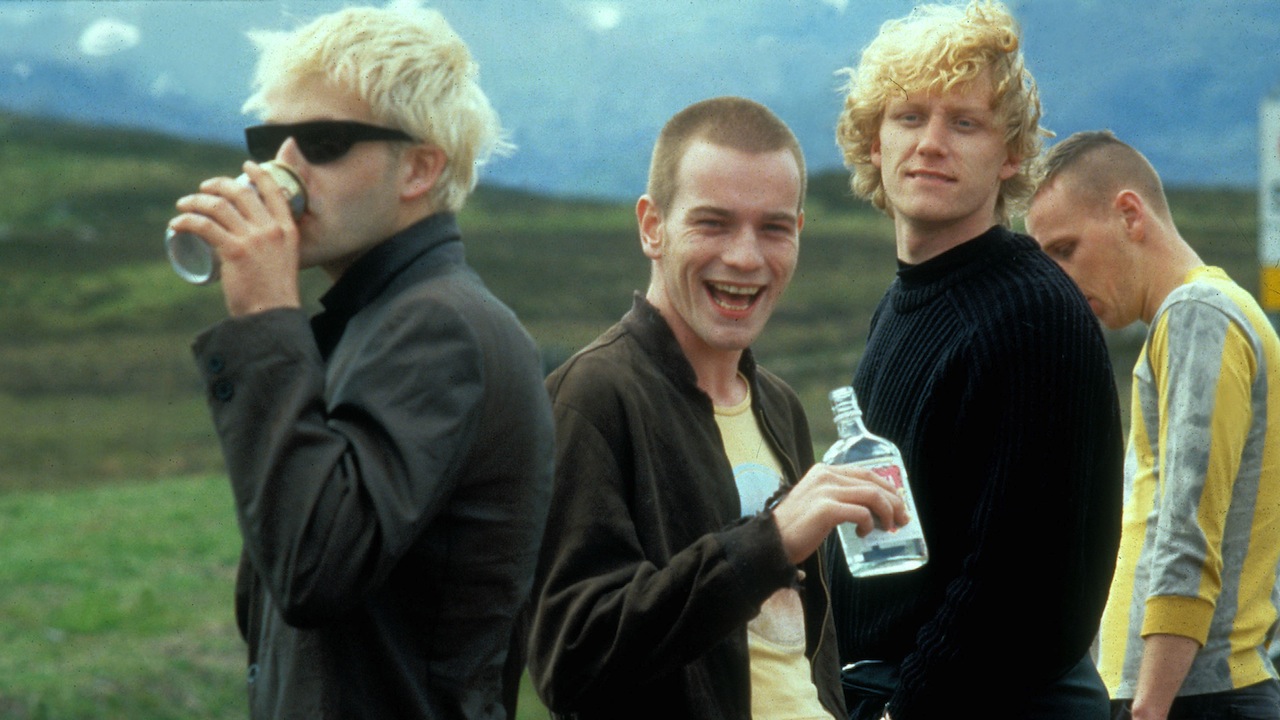
    The drugs, alcohol and destruction, and why I resonate with this 1996 film

    Trainspotting ver2.jpg

    Though I joke somewhat, reacting to emotional abuse can easily easily end in a life that is filled with the destructive elements, that this film was renowned for.

    Trainspotting – IFC Center

    It is not the trainspotting I mean.

    The trainspotting that helped me survive psychopathic parenting was more of this variety:

    What Southern Region EMU class is this? - Southern Electrics - RMweb

    When I was staying at my grandparent house in the south of England, going to railway stations and watching these and others speed through the cacophony of busy commuter stations like Clapham junction or Redhill, or ones like this from my own home in the midlands, the class 47s around the curves of the midland main line

    47474 BNS 1987 Steve Jones.jpg

    as they sped past the line at the bottom of my street and from my outside window, and more latterly in the mid 1980s, the Intercity HSTs..


    InterCity 125 - Wikipedia


    If researching the history of 1980’s EMU (electric multiple units) and class 47 and 43’s is not your thing, which I dont expect it to be, then thats ok, aside from the noise, the speed and the energy of these metallic beasts, the thing that trainspotting channelled in me, and also helped to create, was my  sense of observation and perception.  I discovered I was able to read the numbers pretty quick, I could see from a distance the train on approach, I could hear the rails vibrating (they’re nearly always vibrating at Clapham) , but, you just know when the train is approaching, as well as this, the ‘OFF’ light comes on at a station, the staff get out onto the platform, passengers swell it too.

    I was as enthralled by the process of the trains, as the numbers on them. The journeys, the routes, why some stopped at what station… and beyond attuning my sense of perception, trains were safe. Busy railway stations were safe, quiet ones were safe, trains were safe, they still are.

    So not only did I like to know how things worked (see Part 2) I became naturally observant, vigilant even. I joined in the ‘grown up’ spaces, often quietly with a book, so that I could keep an eye on what my PP (psychopath parent) was up to, or played toys near to the dining table, waiting for an inevitable family bust up that she initiated, and then would need me to cry victim into my shoulder. Because this was expected, I would stay close to the action, knowing that it was about to happen.

    There were other occasions too, staying alert, and working out whose footsteps were walking towards my bedroom door (though they had to, my room was next to the bathroom),  though more than often my Psychopath Parent would be announcing herself with constantly making noise, humming, singing, dominating.

    Developing a higher than usual sense of danger awareness, or hyper vigilance, is common in those who have to deal with emotionally immature parents, from an early age I clearly knew that I needed to be on my guard, aware and preparing myself for the next blow.

    Doesn’t everyone have to be vigilant of their parents behaviour? is this just normal?

    I dont think I stopped to ask this question at the age of 8, but thats part of what I did and had to do to survive.  It was never possible to stop their next move, or intercept it, though I do remember trying to on some occasions, theres only so much an 8 year old can do, when cast in the role emotional rescuer in my parents drama, best to be around to know when the role needs to be fulfilled.

    I used to wonder why it was that I was good at the parts of detached Youthwork that involved having an awareness of safety, their movements and vigilance, and why I am good with knowing where I am, directions, and place, and now its no surprise that I can detect the movement of birds out in the fields or river banks.


    In ‘The Body keeps the Score’, (Kolk, 2014) outlines the processes in the brain that occur during this vigilance phase, the heightening of emotion, heart beat and arousal. It is like the proverbial train arriving at the station at speed, being on the platform waiting for that moment. And then it subsides at the intercity train leaves view and heads to London or Leicester. Then it is calm for a while, the platform empties.

    And that’s the difference, Clapham Junction was like living with a Psychopath, the trains were constant, I remember going a few times and it was extraordinarily tiring, yet it was the station I wanted to go to, it was too busy, 3 trains in less than a minute at times, too much for a child to process, was there such a thing as too many trains.. yes.

    Oh God, here comes another one, get ready..

    Surviving psychopathic parents is like being on Clapham Junction station, being on guard all the time, being alert all the time, and theres trains arriving from all directions, when its difficult to get onto the right platform to get a good view of everything thats going on. (This is also why I like to sit in the corner seat in a coffee shop, and its that I like to know what’s going on, I’m not frightened by other people, I always knew that none of them posed the same threat).  At least on Clapham junction the worst that could happen to me was missing a few numbers, whilst I could be vigilant for the next emotional reaction from my Psychopath parent, I didnt, and wouldn’t have expected to, have the emotional awareness or skills to deal with it, ultimately, though, the problem that they were likely to create, was about to become a problem that everyone else would have to fix.  (Gibson, Lindsay C, 2019, p71)

    In their presence is like Clapham Junction Railway station.

    Whats one thing that I needed to survive? That sense of vigilance, being on guard. What I realise, and now know, from the book, is that its only when you can stop being on guard that you can heal. I was so used to being on guard, vigilant, that its only been in the last few years and in a safe place, that I could stop, and take a break. There was no incoming anger, emotion, unpredictability, or eggshells (see the next part) or mine fields to navigate.

    What I didnt realise, until very recently is that I could operate in life without  needing that switch on.  

    What I didnt realise, is that it wasn’t normal to not need to be vigilant. 

    When I moved into my flat 18 months ago, actually when I walked into it, empty with the agent 3 weeks prior, I felt safe, home, relaxed. It was from that point onwards that I knew I could heal, because I could switch off the vigilance valve, enjoy looking at the birds, the sea and the odd train that now goes by my window.  Healing is more likely when in a place of safety, when the vigilance valve can be switched off. I just thought I was being perceptive, aware and observant..and I was, but what I now know is that that was part of how I survived.

  • Surviving Psychopathic Parenting (Part 2) Why I broke my grandmothers clock.

    ‘Working with trauma is as much about remembering how we survived as it is about what is broken’ (Kolk, The Body Keeps the Score, 2014)

    I broke my grandmothers bedside clock.

    I didn’t kick it, throw it, sit on it, drop it or smash it with a hammer.

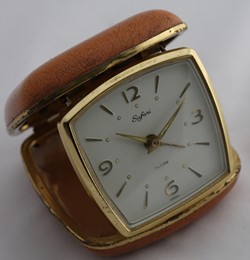
    At age 4 or 5, over the course of a few nights/mornings whilst staying in my grans front bedroom, I took it apart, prizing open the backing, and then discovering a world of cogs, levers and springs, I think it was a wind up one, but that part of my memory fails me, and that’s not a surprise, though I don’t remember that it had a battery, and it kept time. It was one that looked a bit like this: Safari travel alarm clock, 1960s

    Sort of circa 1960’s travel clock.  Gradually, and without tools I think, unless I found a small screw driver around (and that was likely given what my grandad hoarded and that my dad had tools in his van) I prized open the back of the mechanism and then began to watch at first, then piece by piece remove the springs, cogs and everything else that was inside. If you’ve ever seen the film HUGO

    And yes of course I couldn’t put the clock back together again, and I probably also left springs and cogs out on the bedside table, with the intention of at least trying to fix it.

    I think I was smacked for breaking the clock. I was also smacked for not being able to say sorry for breaking the clock.

    But I wasn’t sorry for breaking the clock. I hadn’t broken it, well, I may have broken it, but I was trying to work out how it worked.

    At age 4, I was already in curiosity, perceptive, brain engaging mode.

    Repeatedly told off for acting spoiled and strong willed as a toddler, I used to hold my breath until I went blue, when my brain kicked into gear, I sought about trying to find out how things worked, and not only that, I realised by then that I had to stay alert.

    Be alert and of sober mind. Your enemy the devil prowls around like a roaring lion looking for someone to devour. (1 Peter 5)

    If part of recovering from trauma is telling the story of how I survived, then this part is about realising that I survived because of my brain. If, as was the case, that there was not going to be any emotional connection with my psychopathic parents, nature or support, which I clearly knew by this age, then my survival was going to rely on my own resources, my own brain to work things out, and to be alert.

    My curious mind grew. And so, even though I was then discipled for being ‘smart’ at later occasions (they do find the strong parts in you to reduce/minimalise, and the weak parts to humiliate often dont they?)  I set set out trying to discover how the world worked.

    Also, what I realise now, is that I was golden child. That part was obvious. So, laden in any discipline I received was a sense of shame that I brought to my parents, and the effect it had on them, their golden child, that they showed off (to my grandparents, and aunties) , was also the breaker of the clock.

    From then on I wasn’t allowed to touch anything electronic…

    ‘You might break it’

    Ironically, It took a lot of care and attention to detail to break that grandmothers clock, it wasn’t heavy hands or clumsiness, probably at least 4-5 hours of work some evenings and mornings while everyone else was sleeping.

    So, it was so unlikely that I would break something else, but from then on I wasn’t allowed to touch something.

    Not even the remote control on my other grandparents new VHS, just in case. Ironically I was the one that my parents actually had to ask to work out things, like our own VHS, Microwave (when I was allowed to touch it)..

    Dont touch you might break it.

    The problem is that you need to know how things work so that you can see them for what they are. Its no wonder that survivors of traumatic parenting go into care work, psychology or similar professions (and everyone in my family has), their skills have had to be honed, naturally by the emotionally abusive. They, like I, have spent hours trying to work out why and how things worked.

    That started for me when I broke my grandmothers clock.

    Part of surviving psychopathy, was, and is, about trying to find out how they operate, how they work, what is it that makes them do what they do, what the patterns are. Part of their game is to stop you from from working them out.

    How I survived my psychopathic parenting, involved attuning my practical and intellectual brain into gear, whilst my emotional brain shut itself down. I had already at this point realised that being emotional wasnt worth it, might as well work out how the world works instead.

    If you missed Part 1, it is here.

  • Surviving Psychopathic Parenting (part 1)

    Not many say this and live to tell the tale, though if you have been following along with my other posts, you will know that not all psychopaths are serial killers, some happen to be church leaders, with this being one of the top 10 professions where a psychopath might be.

    My psychopath was on the emotional variety, someone who showed instinctively no generosity, empathy or responsibility, easily upset others without any idea that they had done so, and then was as easily upset when challenged (see Darvo, for the pattern), or when not getting their way, when no one was talking to them, and consistently did shocking behaviour, that shocked. There was a high regard for rules, conformity and loyalty, and above all would say that they were being just like any parent by doing all this.

    I remember a friend say to me a few years back that the different between himself and a rock star, was that he was given lego to play with as a child. I sort of recognise this, a bit, the implication was that unless you had had a challenging background, that didn’t involve material items, you were more likely to express your anger for the material lack in poetic song writing and singing. I know its more complicated that that in terms of resources needed to make it (though you tube music has flattened the hierarchy somewhat since this comment to me in 2005) . Thats the thing about emotionally abusive parents.

    You often get Lego.  Sometimes the material is a good foil for the emotional lack. Challenge them, and they plea ungratefulness. This is one reason why, for so long I couldn’t put my finger on what it was about my upbringing. The material,  certainly the basic needs were mostly met, even in dire times of recessions.  But ‘home’ was neither good, nor safe.

    Its difficult to question the emotionally immature, because they’re defensive, and they accuse you of being ungrateful. Its how they operate. The gifts I received were different to my sister, though apparently ‘we were treated the same’ .. oh, and they are never gifts.

    But there’s nothing poetic about feeling alone and trapped, but then again, I realised the other day that I quite liked the pop songs that mention the feeling of being alone, Tiffany for one, and Voice of the Beehive (Perfect Place) was another, I still have that, on cassette. Rage against the alone ness wouldn’t have made good rock though.

    I’m reading ‘The Body Keeps the score’ (Kolk) at the moment, and realise that so many of my memories for childhood revolve around being embarrassed, humiliated, controlled and bullied by my psychopath parent. I realise to that the only place I felt safe, was a place that evoked her anger when she was jealous of it. Jealous that I might be meeting the needs of others, and not her.  Without a safe space I don’t know how I would have survived, though in reality anywhere where my parents weren’t, and who didn’t talk to them, was a safe place. Food was safe too, but it was also unhealthy comfort eating.

    I became the helper, people pleaser, though also, this was so that I didnt go home. Staying behind to chat to the leaders at church, out the chairs away, and not want to go home, stay out late after school, doing anything but, be home, and then ultimately shut off, and go into survival mode.

    The mode I must have been in since a very early age. Avoiding, coping, surviving, hiding, alone.

    Thats enough for now.. because theres alot to say about disassociation, about trauma and emotions and ill write that in the next piece on surviving a psychopath, and at what cost…

    Use the ‘next post’ link below to follow the story…

  • Everyone knew…but everyone was terrified

    ‘All the same’, demurred Fudge, ‘they are here to protect you all from something much worse.. we all know what (Sirius) Black is capable of..’ ,

    ‘Do you know, I still have trouble believing it, said Madam Rosmerta thoughtfully ‘Of all the people to go over to the dark side, Sirius Black was the last id have thought…I mean, I remember him as boy at Hogwarts. If you’d told me then what he was going to become, I’d say you’d had too much mead’

    ‘You dont know the half of it , Rosmerta’, said Fudge gruffly ‘The worst isnt widely known’

    (From JK Rowlings Harry Potter, The Prisoner of Azkhaban)

    In this scene, Harry is listening under the table, to a conversation about the background of the escapee prisoner Sirius, and how Sirius had close links to the Potter Family. It is this exchange that strikes me. You have the revelation of the action of Sirius, and the disbelief of one of them in conversation, that even so many years later that the accused, Sirius could be like they are.

    Yet as the narrative unfolds the grisly truth of Sirius behaviour is revealed.

    He is stone cold, shameless when confronted by his own behaviours of betrayal – seeming perfectly normal in the heat of a crime , and betrays Harrys Parents to let Voldemort access to their home to kill them.

    Some people just dont know, they hide all their behaviour behind closed doors.

    Some still are like Rosmerta, in disbelief that anything like this could be the behaviour of the boy Sirius.

    But its as difficult, when people do actually know.

    Some people have been entitled, shameless, narcissistic bullies all their life.

    They are well known to be weird. Well known to be easily angered, jealous, spiteful, over emotional, ego centric, and turn on the victim tears at the sight of challenge or being called out.

    People knew about Sirius, though some didnt.

    What could anyone do?

    Ive wondered this a few times this year.

    Two people have told me that they are apologetic that they knew, but didnt protect me.

    What could they do?

    Everyone knew.

    But did nothing

    Because.

    They could do nothing.

    Everyone knew

    But were scared themselves.

    I know they couldn’t.

    Everyone knew

    But they were terrified

    Everyone knew

    But they were traumatised themselves

    They knew she was easily angered

    They had felt it…

    They hadn’t been seen themselves, just prey for her ego

    And had to work hard, work together to piece the story

    They now avoid, put up boundaries.

    They had been used as a complaining sponge, to hear who she was wanting to complain about this time, me, my sister, their friends, the church, her job.

    Dumbfounded in disbelief.

    ‘Theres nothing wrong with James… its his _________ thats the problem’. (Once said a Vicar who knew me aged 19)

    Some people can hide their abuse behind closed doors. Other people wear it on their sleeve. All the time.

    On their sleeve. In full view.  Revealed all the time. Like Jimmy Saville for example. And the soon to be impeached one.

    You cant say ‘why didnt you leave’ when you’re a child. There is no escape. And that shouldn’t be said to anyone in a domestic abuse relationship anyway.

    Didn’t anyone else see?

    But everyone knew.

    Everyone still does know.

    Some people have been like it from their beginning.

    And it’s tolerated. Accepted. Protected even.

    ‘They’ve always been like that…. ‘

    ‘They cant be expected to change…’

    They play victim to get sympathy, whilst squeezing every other emotion out of the room.

    Agreed.

    Some people are not cunning enough to hide themselves.

    Some people dont get the chance to have a Rosmerta defend them.

    The worst isnt widely known

    because it would make you shiver.

    Thats the point, rules dont apply to them.

    Scared

    No one could do anything

    because everyone is terrified.

    Its a trauma response that sends chills down the spine.

    and

    no one fully knows the other half of it.

    Some of the abusers are hidden in plain sight. Some have displayed it all the time.

    Just that they have had their accusers silenced and delegitimised.

    If you saw or knew, but didnt do anything, no one blames you, I don’t.

    Why did no one do anything?  Well….. who could? Who would want to?

    Everyone knows, even now.


    (and I know Sirius isnt necessarily the person they claimed to him be, thats not the point I was making)

  • The dawning reality, that your life was a lie

    One of the things I have had to come to terms with is that my life as a child was a lie. It took a while and wasn’t the first thing I started to see in the last few years as ive healed and undergone self awareness and therapy.

    Thats the reality when I see what happened to me.

    Though, I was aware of the weirdness of my parents, but….


    It was a lie.

    What I was told was a lie.

    What I was told about other members of my family, was a lie.

    What I was told to believe about expectations

    What I wasn’t told about encouragment

    What I was told to do was hold on to belief that divided

    What I was told to do to show loyalty to someone emotionally abusive

    What I was told to be

    That truth told was a deluded reality

    What I was encouraged to do about emotions

    That life was about walking on eggshells and fear.


    Dont listen to other people, they are the problem, no. the person who said this was.

    Their toxicity needs getting rid of. No, Yours does.

    They are the problem – no, your jealousy is

    Theres too many gossips in this town – no theres too many people who have been hurt by you that you are trying to discredit

    Stand up for yourself – but you’ll be in trouble if you dare stand up against me

    They pick on me – No, you can’t see why others see you as unwelcome, shocking and abusive.

    Soothe me and my emotional meltdowns – dont have your own feelings

    Im trying my best to be a good parent – goodness doesn’t come naturally to the entitled.


    It was all a lie. A lie cloaked in delusions and entitlement

    A lie – cloaked in the truth orientated ‘world’ of evangelicalism. God is on our side.  

    God the unseen presence, fear that terrified and controlled.

    When your whole life was a lie.

    A lie because the lies I had to believe were from the person who was meant to be the nurturer, protector, care giver.

    A lie because that was the default. Nothing good, generous, positive, just a dominating wounded ego, bordering psychopathy.

    A lie because emotionally immaturity, psychopathic externalising framed my entire upbringing.

    For 40 years, my life was a lie.

    How do I know?

    Because those who were lied to started to tell stories. Those who had been divided by hatred and suspicion realised that they had been treated the same.  Reconciliation occurred with truth telling. Truth required risk.

    But everything before it… was manipulative emotionally abusive lying.

    At least I now know.

    At least, im grateful… that truth sets people free. It really does.

    Im grateful that I can see

    That life begins in truth, at 42.

    With love, and a family I never had.

    Now I can see.

  • Climbing up the healing path of knowledge

    However hard it is at times, to respond and cope, the key thing that ive discovered is that is helpful to know.

    When you just know.

    When its more than panic

    more than a feeling. More that knowing that it feels wrong.

    When your mind says this is wrong.

    When you can try and say it

    out loud

    to someone else.

    It gets it out from under the rock that holds the pain down.

    Its like your voice is enough to start lifting the weight.

    Its felt like being squashed. And you didn’t know it, just felt it.

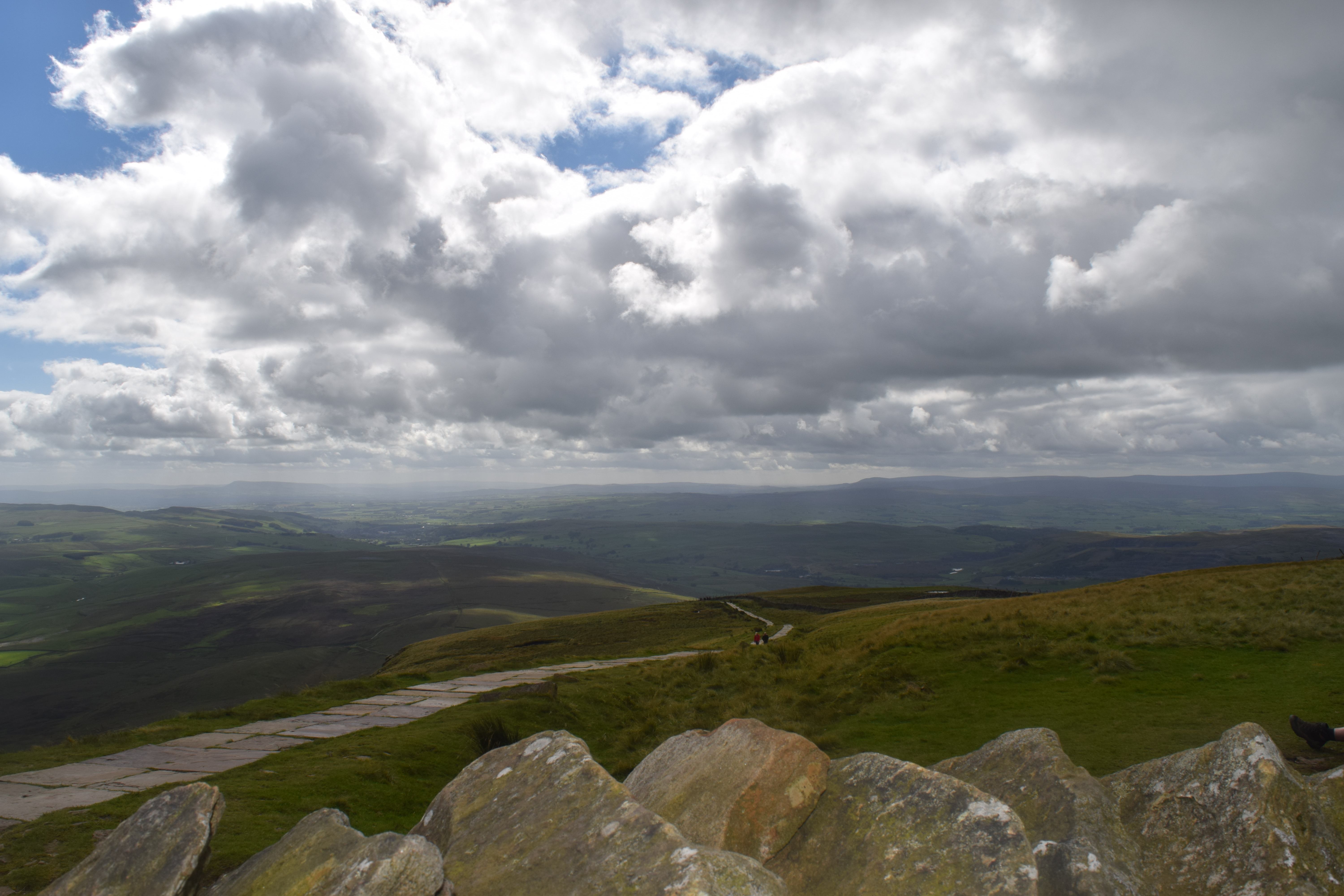
    Looking up at it, like I did at Malham Cove recently , its daunting.


    But when you know

    When you don’t just know the weight of the rock

    You stand and see the rock from above.

    Its not crushing you anymore, as much. Your head is above it,

    it might be your foot below it. And its still painful. And that still hurts your whole body.

    But it feels different.

    Head is above. Just.

    Heart is out of the firing line. Just

    It still hurts.

    Sometimes you’ve just got to say things out loud. Trust someone.

    Honestly, there isnt someone who can’t listen.

    First step is to let the rock be seen by others.

    To admit how the rock is affecting you

    To squeeze yourself from under it.

    It can be done.

    It really can.

    No need to be ashamed of the rock that is squashing you.

    Thats what the rock wants you to feel.

    But when you know

    You can see it

    and start to see the rock from a different angle

    Until you get to be above it…

    from above.

    Then you have power again

    Your power

    even when it still hurts.

    Knowing the rock from above gives it a whole different angle.

    From there it can be drilled into with less risk of damage to yourself

    From there you are seeing it.

    Seeing its patterns, as the water cascades over it.

    And not just that, its knowing it, because you’ve had to conquer it, and you have, and you will.

    That knowledge.

    Knowledge of the rock.

    Knowledge of you, the survivor. The climber. The one trying to make yourself free.

    Knowing yourself. Knowing the rock.

    you climbed

    you fought

    you began

    to make

    the rock

    look and feel different.

    Time to stand

    on

    it.

    Free yourself.

  • Already I’m glad I started more therapy

    I’ve only had the first session of therapy. But already I’m glad.

    Maybe therapy can feel like running a marathon, the hardest part is getting to the starting line.

    Wondering what it will be like

    Wondering what to say

    Wondering if what you have to say is going to be heard

    Wondering if anything you say is valid

    Already I’m glad. And that’s just one session done.

    First session and I’ve already shared, spoken, described stories I’ve never done before.

    Healing begins.

    Last time I did therapy in the midst of chaos, it was the start of a rebuild. With clarity over the end of one emotionally toxic relationship, clean air brings the desire to do work on the other one.

    24 hours since that first session. I’m sitting in the calm ok feeling of being heard, validated and safe.

    It’s all better out, that being stuck inside where it’s all been for over 40 years. Time to love myself even more, understand and heal.

    I’m already glad I started. Men, don’t put it off. Damaging parental relationships, or domestic abuse relationship can happen to you. It’s time to heal.
    It
    Wasn’t
    Your
    fault.

    And, seriously, don’t think you cant be healed, or that your problems are too little, or big, or that it’s not worth it. Just get onto the start line and start.

    I’m glad again to start therapy.

    I’m looking forward to being even more me.

  • For 40 years I was trying to keep the wrong rules

    Deep down what are the rules that shape the way you act, the way you feel, the way you think about yourself, the way you think about others? 

    Give yourself a minute or two

    Which of them might be the rules that you were ‘given’ through your childhood?  

    Maybe from a faith group?, from school? or somewhere else

    As someone brought up in an evangelical christian home, and church – the implicit rules from the faith were one thing, but only added to through my childhood experiences at home.

    What Ive discovered is that some of these rules need to be broken.

    What I have also realised is that people who like rules try and keep the rules, and can only say that you’re crazy or weird when you break them.

    What I realised that is breaking the rules is actually good.

    Some of the wrong rules are described by Melody Beattie in her brilliant book ‘Beyond Codependency’ (Theres a link on the resources page above)

    Not all of these apply to me, but, I recognised that so many of these had been mainstays in my own life. I had been trying to keep the wrong rules.

    • Don’t feel or talk about feelings (for me my feelings were secondary to soothing others)
    • Don’t think, figure things out, or make decisions – you probably don’t know what you want or what is best for you
    • Don’t identify, mention or solve problems – its not okay to have them
    • Don’t be who you are because thats not good enough
    • Don’t be selfish, put yourself first, say what want and need, say no, set boundaries, or take care of yourself – always take care of others and never hurt their feelings or make them angry
    • Don’t have fun, be silly, or enjoy life – it costs money, makes noise, or mess, and isnt necessary
    • Don’t trust yourself, your Higher power, the process of life or certain people – instead ut your faith in untrustworthy people; then act surprised when they let you down
    • Don’t be open, honest and direct – hint manipulate, get others to talk for you, guess what they want and need and expect them to do the same for you
    • Don’t get close to people, it isnt safe
    • Don’t disrupt the system by growing and changing  

    (Melody Beattie)

    Some of these rules are there to protect the system, the system of the organisation of the faith, they are often passed on from generation to generation. Following these rules keeps people locked in codependancy. Now, for me, im reading these rules and realising that many of these rules, not all of them, have guided my life for so long. If I realise what happened when or if I dared to express feelings or needs, or made any kind of choice or decision. As I said not all of them.

    What I didn’t ever know was that I was ok for me to be who I was, and good enough.

    What I didn’t ever have was the opportunity to know how to take care of myself

    To have fun (that wasn’t belittled or patronised)..

    And shame, guilt and disapproval keeps the rules in check. These rules govern silently. I was selfish for feeling, selfish for acting, selfish for making any kind of decision.

    But

    Its ok to change the rules. I realised that the rules I followed didn’t do me any good. The rules I followed, were just that, rules. They kept my decisions away from my heart. New life, new rules. Though its hard to not act like im still following the old rules, breaking free has been tough, and thats where my support group, my friends, books like the one I mention above have helped to realise the rules, and make new ones, and to decide what kind of rules I want to have in the rest of my life.

    As Melody said, and I underlined. The first rule is that it is ok to break the rules.

    The second is that that breaking might need to happen aggressively, change, assertive, to take back the power that you and I rightly have.

    Im learning to follow these rules:

    • Its okay to feel my feelings and talk about them when its safe and appropriate, and I want to
    • I can think, make good decisions, and figure things out
    • I can have, talk about and solve my problems
    • Its ok for me to be who I am
    • I can make mistakes, be imperfect, sometimes be weak, sometimes be not so great, or good, sometimes be better, and occasionally be great
    • Its ok to be selfish at times, put myself first sometimes. and say what I want and need
    • Its okay to give to others, but its ok to keep some for myself too
    • Its ok for me to take care of me. I can say no and set boundaries
    • Its okay to have fun, be silly sometimes, and enjoy life
    • I can make good decisions about who I can trust. I can trust myself. I can trust God even when it looks like I cant
    • I can be appropriately vulnerable
    • I can be direct and honest
    • Its okay for me to be close to some people
    • I can grow and change, even if that means rocking a bunch of boats
    • I can grow at my own pace
    • I can love and be loved. And I can love me, because I am lovable. And I am good enough.

    (These are also taken from Melody’s book – do add your own)

    And I say im learning because old habits die hard. One of the things I realised is that for so long, for most of my life I have been in endurance or survivor mode, bouncing off, every moment, drama and painful situation, just getting through. Mostly getting through the drama of everyone else, being the calm, strong one, the one that supports others, but didnt ever, for a long time, seek it myself. For me it is time to break rules, time to learn new rules, time to enjoy life in which new rules stem from my heart, my soul and from a place of health, safety, truth and power. Im learning to accept me, for who I am, not what I ought to be.

  • Men; do we need to talk about guilt and shame?

    It was part of my healing that some of my guilt turned to anger.

    When I realised that what I thought was my fault was a burden that wasn’t mine to carry

    As I discovered that someone else’s emotions are not my responsibility. Until then I took it on myself to clear up their emotional rubbish. Soothe. Tend.

    I grew up soothing the emotionally immature people in my life

    Reacting to them, as they didn’t own their emotions themselves. Manoeuvring around their world.

    Everyone else’s needs more important than mine.

    Feeling guilt for even thinking that I might have feelings, needs, emotions.

    Feeling their projected guilt that I hadn’t tended them enough.

    Not being angry enough to care about myself. Just guilt that I wasn’t meeting others needs enough.

    I had to care about myself to be angry enough to care about myself.

    Guilt in ministry encourages us to never say no, to work too hard

    To never feel like we’re doing enough

    Guilt inside caused me not to be my true self, what was my true self?

    Guilt keeps truth caged.

    My only feelings were that of others. What did I feel, deep down? It didn’t matter. So why bother.

    I am enough, I’m learning to know this

    I can feel, I’m learning to feel

    I do feel, and the toy box of my emotions now gets chance to play.

    I needn’t live in an existence where I felt guilty for not being enough. Unsure of my own emotions, unsafe of being true, so accepting the guilt.

    Healing meant that the guilt I had been conditioned to feel dissipated, and turned to anger.

    An anger that gave me permission to stand up for myself.

    To be truer to my true self.


    Melody Beattie writes this, in her best selling book, ‘Co-dependent no more’ :

    ‘The big reason for not repressing feelings is that emotional withdrawal causes us to lose positive feelings. We lose the ability to feel. Sometimes this may be a welcome relief if the pain is too great or too constant, but that is not a good plan for living. We may shut down our deep needs – our need for love and to be loved – when we shut down our emotions… we lose the motivating power of feelings’ (Beattie, 1992, 2nd ed)

    One of the characteristics of those who undergo therapy successfully, according to Carl Rogers, is that ‘They tend to move away from oughts’ The compelling feeling of ‘I ought to be this or that’  The client moves away from being what they out to be, no matter who has set that imperative’ (Carl Rogers, 1968)

    A friend of mine, Jenni Osborn has just recorded this on the subject of Shame in youth ministry, do have a listen

    I stopped feeling the weight of guilt, other peoples guilt projected on to me, and started to feel angry.  Angry because I now had something worth defending. Myself.