Blog

  • Unlearning the Evangelical Self Loathing

    Unlearning the Evangelical Self Loathing

    I dont deserve to feel warm

    (Me, aged 9)

    I cannot remember what I had done. But whatever it was I had been punished for it and then I felt guilt and self loathing afterwards.

    All your Sins can be removed if you accept Jesus into your life

    (Childrens worker, John Wilkes, 1989, at my church)

    Growing up in an abusive evangelical home, I was never far from self loathing.

    It couldn’t be anyone else fault that things went wrong, apart from mine. For some reason I was given the responsibility. It was my fault my parents were angry at me.

    By the age of 9 I was convinced that shame and guilt was for me to carry. By that age too I was aware of the eggshells I needed to walk on around my parents.

    I didn’t deserve to be warm. I didnt deserve the basic essentials.

    I already bit my nails so that they were infected and painful. That pain was a place of reality. That pain was safe.

    I didnt deserve to be warm either as I took all my duvets and blankets off that night, and it wasn’t summer.

    I didnt deserve.

    I didnt deserve the essentials. Any actual treat would be difficult to receive.

    Being convinced of my own guilt, and shame.

    Consequently given the chance to ‘remove that shame’ aged 11 I took it.

    But it never really was removed was it?

    It doesn’t go away.

    In fact in a strange way it becomes more of an obsession.

    The Cleansing of Sin game, also paradoxically means focussing excessively on sin, and shame, and guilt all the time. An increased opportunity for me to embed self loathing into my core.

    Self loathing is described here as:

    Self-loathing is that underlying feeling that we are just not good: not good enough, not good at this, not good at that, not good at – or for –much of anything.  It can be subtle, we may habitually compare ourselves to others, for instance, constantly finding fault with ourselves and putting ourselves down, with no real awareness that there is anything amiss. Or, we may listen intently to our critical inner voice while it scolds and berates us, telling us how embarrassing, stupid, or insensitive we are; refusing to challenge it even while we suffer from it.

    We may try to suppress this feeling of inadequacy by behaving as though we are superior to others; more intelligent, clever, intuitive, or attractive. It’s as though we have to prove that we are the absolute best in order to avoid the torrent of internal abuse waiting to pounce the moment we show any fallibility.

    https://www.psychalive.org/self-loathing/

    That I dont deserve

    Shame

    Continual guilt.

    If God wasn’t always watching me, then there was always eggshells going off at home.

    I dont deserve.

    Awareness of personal sin, that leads to self denial and self loathing, thats what was happening to me.

    I fell into the cycle, the trap. I wasn’t good enough, nothing I did was good enough, I couldn’t fix it, I dont deserve…

    At age 10 I was more sinned against and didnt have parents who took any emotional responsibility (let alone other responsibilities) , but that wasn’t the message in church. The message I needed to hear, and the one that ‘saved’ me as a christian, was one that tried to alleviate the undeserving feelings I felt. My sin. Yet, the greatest ‘sin’ I had was that I would never be good enough or meet their needs. It was less sin but guilt and shame I wanted rid of. But that wasn’t going to be possible.

    Not with psychopathic evangelical parents (and you can read my story above)

    The songs that I listened to, ‘christian music’ in the 1990’s were full of the same self loathing, that I was feeling

    What if I stumble, what if I fall, what if I lose my step and I make fools of us all

    (DC Talk, Jesus Freak 1991)

    Whats going on inside of me, I despise my own behaviour’

    (DC Talk, I want to be in the light, 1991)

    I am the only one to blame for this, Somehow it all adds up the same

    (Worlds apart, Jars of Clay 1993)

    Growing up evangelical meant being obsessed by personal shame and guilt. It meant also taking on the feeling of responsibility for not only my own failings but also where I had ‘failed’ to make things better for others, revolving around the perpetual needs of others.

    Self-Loathing | VESSELS of VISION

    Would I say I hated myself?

    Parts of me yes. Parts of me no.

    The intellectual trying. Trying to be the best. Trying to prove myself even more.

    Self loathing meant feeling shame.

    Perpetuated from how I felt.

    Scratching my body at times, twisting and pulling my hair out. All signs of the same. Comfort eating.

    A continual loop throughout most of my teenage years, though, continued until not that long ago to be honest, and unlearning it is so hard.

    Trying to say too myself that ‘I do deserve this, because I am ok’ is against 40 years of default.

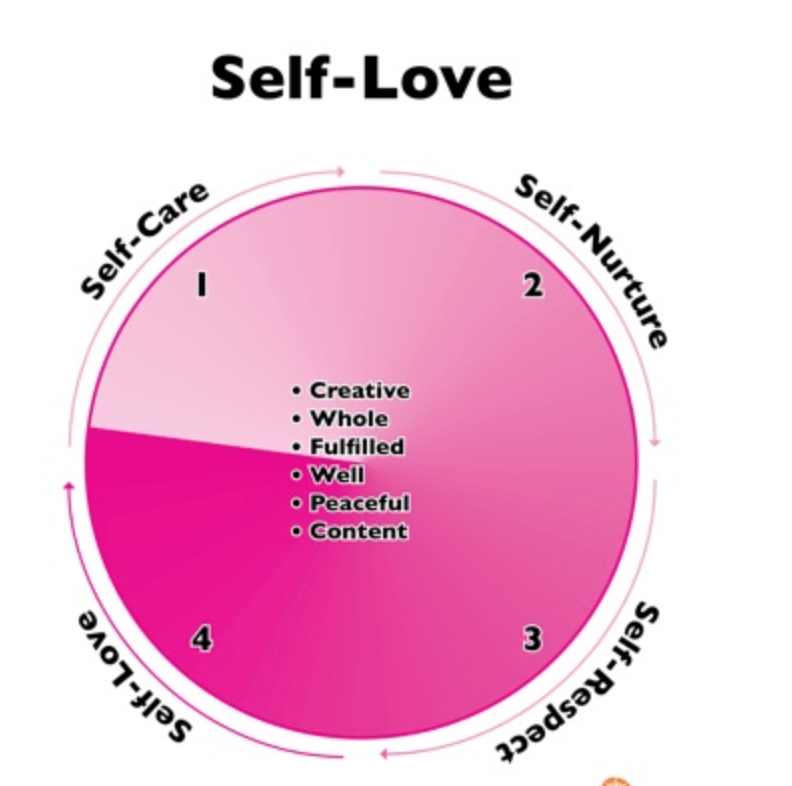
    SELF-LOVE OR SELF-LOATHING?

    Lindsey Gibson in her book ‘Adult children of emotionally immature parents’ (2015) writes the following:

    Many internalisers subconsciously believe that neglecting oneself is a sign of being a good person. When self absorbed parents make excessive claims on their children energy and attention, they teach them that self-sacrifice is the worthiest ideal- a message that internalising children are likely to take very seriously. These children do not realise that their self sacrifice has been pushed to unhealthy levels due to their parents self-centredness. Sometimes these parents use religious principles to promote self sacrifice, making their children feel guilty for wanting anything for themselves. In this way religious ideas that should be spiritually nourishing are instead used to keep idealistic children focussed on taking care of others’

    (Lindsay C Gibson, 2015, pp120-121)

    The question is how do you unlearn this? How did I?

    Its step by step. Clocking it.

    Realising that gradually when I say to myself that ‘I dont deserve’ something, its a part of my, my critical voice, that has been active too long.

    Realising that as I went to the supermarket on Saturday after having a bit of a wobbly day, and trying to convince myself that it was ‘ok’ to buy myself cake, and a treat. Yes, I guess that having to second guess myself to treat myself, comfort myself, still shows that theres still a large of part of me that has a default of not doing so.

    When we are tired we are attacked by Ideas we conquered a long time ago

    Nietzche

    Or, maybe when we are tired, and finding it a tough day, we revert to the self talk of not that long ago, whilst we are still trying to embody a new way of being.

    Part of my breaking down and rebuilding started with recognising that not everything is my fault. Part of my healing has been to realise that I need not carry decades of responsibility. To not hold it any longer.

    My default of 40 years was to think I dont deserve.

    Maybe that is you too.

    I thought I didnt deserve what I needed. I though I didn’t deserve to feel happy. I felt shame, guilt and self loathing for what I continuously self internalised, encouraged and abetted by my parents and also the strand of evangelical christianity in which I had a strong identity and safety in.

    Part of healing is to name and be close to the things that were unhealthy, harmful and caused me (and you) to feel unhealthy, shame and destructive.

    So I just wanted to say to you, say to me.

    You do deserve it.

    Beautiful human you.

    Breaking down might mean breaking away from the self loathing.

    ‘You are enough’

    If that is the case, then let it go. Shed that skin. It wasn’t doing you any good, none at all.

    Time to wake up the real you.

    Its hard road Im on, unlearning 40 years of the same shame.

  • Surviving Psychopathic Parenting (Part 11): Being the Trophy child

    Surviving Psychopathic Parenting (Part 11): Being the Trophy child

    Theres a weird dynamic that I had to wrestle with in talking about all of this stuff. Its knowing that as I grew up as the older child of the psychopath parents, I was the trophy child. So, when talking about what I needed to do to survive as a child, and adult, I am aware that the scapegoat child, my younger sister, got it far worse. I know that, she knows that, we talk, we’re doing ok, better than we have ever done.

    In my head I know that as I was lied to, we were both lied to. As I was subject to emotional abuse, so was she. Its weird, as in a way having an awareness that ‘someone else’ had it worse, can make it feel like I dont have as much to tell, or that the abuse I suffered wasn’t as much..

    At least you didnt have it as bad as your sister

    And while this is more than likely true. In fact it is definitely true.

    My story is that even as the so called trophy child I was subject to emotional abuse. It didnt alleviate any of it. It was different.

    The fact they said they treated us both the same, is true, neither of us received any emotional nurturing, both of received fair doses of fear, guilt, and plenty of opportunities to walk on eggshells around the emotional scatter gun that was the psychopath parent.

    We were both alone, growing up, thats how they played us.

    Being the trophy child, as I recollected to my therapist, was like doing all the work, with no pay.

    Cartoon Trophy Images, Stock Photos & Vectors | Shutterstock

    Massive high expectations.

    Always counted on to do the right thing.

    I learned to ignore what I wanted to do, at times, because surviving meant staying as the trophy child.

    Intense guilt, or projected fear about ‘letting them down’ or knowing that I was near to eggshells territory if I did.

    As the trophy child, I had the ‘opportunity’ for me to fulfil the parts of them they lacked.

    The opportunity that they would ‘take’ the glory for whatever it was that I might have done. Receiving what they felt that they were entitled to receive, not what they actually did to support and encourage. It was all work that I did alone.

    Being the trophy child is like all work and no pay. And I dont mean in monetary terms, though that would be another story, the manipulative gifts.

    Being the trophy child did mean that I escaped some of the more damaging abuse. I so get that. Thats why’s I am at times conflicted sharing my story.

    Because I was relatively self directed, competent and didnt need them, (the internaliser) , I was relatively low maintenance, especially as I was compliant and generally behaved.

    Not that this was ever noticed. Because, part of my parents nature, especially as victims in the Darvo cycle, is to regurgitate tales of how difficult I was, how awkward I was, how much stress I gave them, especially the times when I didnt actually do the things they wanted me to do.

    Part of surviving psychopathic parenting is that I developed the ‘role self’ from the parents, in which I was able to navigate through it, knowing that it wasn’t really truly me, and also that its very difficult to see it at the time.

    Surviving psychopathic parenting is knowing that these people who call themselves your parents are never going to see you. It’s just not in their nature, and what they do see, they want to take it for themselves. So, as the trophy child it was all about having ‘hope and expectation’ placed on me, so that I would be the bearer of their happiness and joy.

    Obvious favouritism isnt a sign of close relationship, its a sign of enmeshment

    Gibson, Lindsay C, 2016

    What I know now is that none of that would have mattered. I could have got a Phd at Cambridge at aged 26 and that would not have made a single difference. Because emotionally unhealthy, psychopathic parents can not actually be happy. Because then the world can stop revolving around them, there is a chink in their armour.

    I probably haven’t covered all of what its like being the trophy child to psychopathic parents. More will come I am sure.

    Just because you’re the trophy child, it just meant that the emotional abuse was different. It wasn’t more or less, after all it isn’t a competition. Psychopathic abuse is just directed differently.

    In idealised enmeshment, the parent indulges a favourite child as though that child is more important and deserving than other kids. However this traps the idealised favourite child in an ironclad role, so that child isnt experiencing an true emotional intimacy either

    Gibson, 2016

    Whats interesting about this is that though this sounds like the idealised child is actually spoilt. In my case, they did everything but, and went out of their way not to. As I said, all work and no pay. I survived, my story, is about surviving alone, and digging deep into my own, emotional, physical, intellectual resources. That was the only way to survive.

  • Surviving Psychopathic Parenting (Part 10); Navigating the other parent, the flying monkey.

    But you do have another parent, couldn’t you talk to them?

    Your other parent, they’re so nice, they’d do anything for anyone

    Only one of the above is true.

    Theres a reason why you feel completely alone when one of your parents is a psychopath.

    You realise that you cannot trust the other one.

    Even if you are allowed to be anywhere near them.

    You discover that they can’t be trusted.

    I did, though I cannot remember exactly when.

    In the name of marital loyalty they tell everything to the psychopathic one.

    They are on the same eggshells. Afraid to keep secrets.

    They are passive.

    They are controlled.

    They do the work of the psychopath for them.

    They are their flying monkey.

    They have no choice but to believe them.

    You know they wouldn’t believe you. They cant protect you , the child.

    Mine didnt, couldn’t, wasn’t going to.

    They are also abused themselves, but they dont know it. Wouldn’t want to know it.

    Surviving psychopathic parenting is about Surviving alone.

    The one psychopath can divide a whole family, a whole community, thats how dangerous one of them is (Erikson, 2019) It only takes one.

    The other parent elicits sympathy from others, your poor father, as they take on meeting others needs like a codependant. They take on befriending and soothing others, for the psychopathic one to manipulate later. They dont realise it, but thats how the pattern works.

    Maybe if you had emotionally abusive parents it was different for you?

    One of mine was abused by the other, passive, and then offered no protection from her.

    The other was a psychopath.

    The ‘Other’ was played, believed the victim lies, span a tale too.

    You dont have either parent, if one of them is a psychopath. Even if mine appeared generally friendly, sometimes playful, even spending a bit of time as a child with them making train sets.

    Ultimately though, they are just a shell. A tool. Being used as the flying monkey to elicit information to the other one.

    Its why the only way is to survive alone.

    You cant trust anyone.

    Until you can find people you can trust in.

    People who have boundaries. People who protect.

    I didnt have the ‘other’ parent. There was no such thing.

    Its like growing up with secondary eggshells. You know what you say goes back. You know they are sent in to discover information.

    You know you’re likely to be given the guilt trip that ‘they might miss out’ and they do.

    They have made that choice.

    Surviving Psychopathic parenting, and psychopaths and abusive people , is to see and realise the patterns of the flying monkeys.

    The other parent, the psychopaths flying monkey.

    Thank you for reading this, part 10 of my story, do read the other parts in the menu above, and also there are resources in the other menu too.

  • Surviving Psychopathic Parenting (Part 9): Pretending and Hiding

    Surviving Psychopathic Parenting (Part 9): Pretending and Hiding

    One of the ways of surviving emotionally immature parenting, in fact possibly the only way is to pretend.

    Because, unless you fit into the role they have for you, you are in trouble. So, even if you don’t want to do something, you have to pretend, you have to lie to yourself.

    And every time you do, your real self disappears just a little bit more.

    So what was pretending like.

    Pretending was putting on fake smiles in photos when the dreaded camera was used. Then awaiting the inevitable punishment for ruining the photo, especially if ‘the slide show’ was when they were revealed 6 weeks later, with house guests.

    Pretending to respond with the right words, even if in saying them I knew they weren’t real.

    When walking on emotional eggshells, the best way of surviving is staying calm. So pretending meant not being emotional, pretending meant going with the flow to keep the peace..when dying inside..trapped.

    In was always aware that it felt like ‘other people’ felt things – but I didnt.

    What I know now, is that I survived by not being me. Not being my core self. Nothing in my body or mind was going to let that be exposed.

    So I pretended. Disconnected from what was real.

    Its not just the psychopaths and narcissists who put on an act.

    The survivors do to survive. To protect their heart. Protect themselves.

    The weird thing is that looking back, my abusers didnt care about me being real, they were happy with me going through the motions, pretending.

    I know I wasn’t good at pretending.

    But it was what I had to do to survive.

    Once children discover how self-disconnection takes away pain, they can use it for increasingly minor threats

    (Lindsay C Gibson, 2019)

    The healing part, is learning to reconnect with the parts of me I disconnected from. But thats for my healing journey..another time..

    Thank you for reading, if you would like to read parts 1-8, they are in the menu above. There are resources in the menu and links to the books that have helped me.

    Thank you again

  • Responding to the Treacle Days

    Responding to the Treacle Days

    What is black treacle and how is it manufactured today?

    Like wading through treacle.

    Trying to walk through fog.

    Every now and again I get one of these.

    Beyond the healing and surviving. Beyond the self understanding, and in the safety, peace, love of my new life.

    Maybe I thought i wouldn’t get these. Maybe I had a vision that once undergoing therapy, once with the tools in the box, life would be a continued breeze, one rainbow dance after the other.

    I guess once I stopped trying to survive – Ive started to heal.

    And healing is taking a number of methods.

    Healing is occurring, as I have had to get closer to the past I tried to run away from.

    A treacle day is when my brain is showing me things that its been holding.

    A treacle day is as when I have the emotional space to feel things I hadn’t felt before.

    Like grief the week before mothers day.

    Yesterday I had a dream about my High School – what does my brain have space to show me there?

    Its also my birthday week. So for some of mothers day grief, my birthday only brings me memories of embarrassment and disrespect, a chance for the traumatising to have centre stage.

    I thought I could avoid treacle days.

    Nope.

    Avoiding isnt healing is it. When I’ve been holding it, avoiding it, trying to forget.

    But I shouldn’t feel like this, I should be happy all the time, I have no reason to feel….no, I am healing…this is going to take time…I might ‘understand’ what happened to me, but my body has alot to unravel…

    So what do I do?

    Ive got to take my own advice haven’t I? 

    Breathe. Just stop. Breathe.

    Yesterday I tried to walk it off, walking, taking photos, and I was genuinely looking forward to a day in the sunshine, walking the nature walks, but when I woke up, post dream, it was a treacle day.

    That was the plan, original plan, but my mind had other ideas…I still took some good photos though…


    My head was spinning.

    Overthinking the fact that I shouldn’t be thinking this way.

    ‘Be kind to myself’

    I said to myself.

    Try and help myself realise that I am ok.

    And, that this is hard.

    Grief is hard.

    I could do some destructive things at this point, like be angry on the internet, get passionate about something. Distract. Get a whole load of sympathy from ‘the internet’ and bring others down to me. When actually it wasn’t what I needed to do with this.

    I did go shopping and buy myself some nice food – it is my birthday this week after all…

    Having space to heal, might mean encountering new parts my life that I didnt realise I had been holding. Might mean seeing the same situations each year in a new way.

    Somehow Ive got to get closer to heal from.

    Let it happen.

    Let the things that need to heal to be revealed

    Not run from them.

    Wade the treacle.

    Wade the treacle with a warm spoon so it starts to melt.

    (Fog lifts with the warm sun)

    A warm spoon.

    Speak to myself with kindness.

    Actually realise my mind is trying to help me be kind to myself.

  • Surviving Psychopathic Parenting (Part 8): I couldn’t do anything about it, but I knew.

    Dad, Do you think theres an all powerful, sovereign, all knowing, overseeing, higher power, dominating force thats controlling all our lives?

    Said the front of the Fathers day I sent to my Dad when I was about 13.

    Inside it read;

    Yeah, its Mum isn’t it?

    It was the one occasion probably in my life where this was the perfect card to send. (Mothers day cards were impossible)

    The thing that surprised me, is that they put the card on display on top of the microwave (don’t ask) for all to see. I guess when you’re that entitled, you dont mind that your spouses Fathers day card is all about you.

    One of the things that enabled me to survive was that I could see it, and on this occasion Clintons Cards conveyed what everyone was thinking.

    Part of my survival story was that I knew.

    Even If as a child I could do anything about it. I still knew.

    Even if I couldn’t articulate it to others, I still knew.

    Even if I was trapped in an emotional minefield, I knew.

    So knowing meant that I could disengage.

    It meant I knew that what they said I didn’t need to believe. What I could do was listen, but not take in what they said. Though I couldn’t do anything about what she said or did. I at least had made an intellectual decision not to accept it.

    The shutting off had begun.

    But also, so had the realisation of what I knew.

    I survived from then on by staying in my head.  That was the place that was safe. My head had worked things out. I had survived without emotional support (I was the rescuer of theirs remember).

    Being able to discount them as useful, helpful or supportive was part of it too. But what I could see at that early age was the truth.

    There was only 1 dominant force controlling all of our lives.

    Though no one could do anything about it, and that person would be in denial of it. Everyone knew. That I knew helped me survive.

    Breaking down in the last few years, meant getting in touch with what I left behind.

    But knowing helped me survive.


    Thank you for reading, Parts 1-7 are in the menu above. Do read and share if you think my story will help others. If you’d like to support me there are ways in the menu to the right, and theres resources also above in the menu, including links to books that have helped me.

  • Surviving Psychopathic Parenting (Part 7): Why I have to thank Roald Dahl (but didn’t realise until last week)

    I was wondering a few months ago about whether there was any children story books written to help them see what domestic violence looks like, when it is against them, and by their parents. In Lindsay Gibsons book she refers to the many children stories of old that regail of how children survive and thrive, win and adventure without the help of parents, or against the abuse by ‘step’ parents, and you’ll know the Disney ones I mean. At the time I was reading, and am still reading Harry Potter, and though he is extremely abused by his adoptive Guardians, and is full of recollected grief for his own parents, he was not abused by them.

    What I realised two weeks ago was that I knew of the book.

    What I realised two weeks, minus 1 day ago, is that I knew of the book, because I had the book.

    What I realised two weeks, minus one day go, is that I read the book that includes many elements of the behaviour of my psychopathic/emotionally immature parents in it, whilst I was as child.

    Im sure there are other books out there, but the realisation that I not only had the book, read the book, I also loved the book, and I somehow even then saw something in me in the main character, whilst not completely seeing the extent to which the abuse she encountered at the time. But then again, my brain was probably doing its protective thing and not seeing it.

    So reading it again and Im seeing:

    At this point ______ entered the room. He was incapable of entering any room quietly, he always had to make his presence felt immediately by creating a lot of noise and clatter. One could almost hear him saying ‘Its me, Here I come, the great man himself, the master of the house, the wage earner…

    From the main characters Parents.

    When confronted by the Parents, the teacher has to develop all the required tools to deal with narcissism, like not using anger, staying cool, being firm, creating boundaries and not rising to their bait. It was amazing to read in a childrens book, all the techniques I’ve had to read in self help books on this (see the resources in the menu above).

    By now, youve probably worked out the book, its Matilda, by Roald Dahl, published in 1988.Matilda (novel) - Wikipedia

    Later after we have encountered the head teacher at Matildas school, Miss Trunchbull, we see that in the words of a 5 year old child, we see emotional intelligence and perception so beyond her years, and in Matildas words, the pattern of the entitled , narcissist is revealed. After an incident in which the Trunchbull throws a girl in pigtails, by the pigtails over the school fence, there is this conversation;

    How can she get away with it? Lavender said to Matilda ‘Surely the children go home and tell their mothers and fathers.I know my father would raise a terrific stink if I told him the headmistress had grabbed me by the hair and slung me over the fence’

    No, he wouldn’t  Said Matilda, ‘and ill tell you why..he simply wouldn’t believe you’

    ‘Of Course he would’ , Said Lavender

    ‘He wouldn’t ‘ Matilda said, And the reason is obvious. Your story would sound too ridiculous to be believed. And that is there Trunchbulls great secret

    ‘What is’ ,  Said Lavender.

    ‘Never do anything by halves if you want to get away with it. Be outrageous. Go the whole hog. Make sure everything you do is completely crazy its unbelievable. No parent is going to believe this pigtail story, not in a million years, Mine wouldn’t they’d call me a liar’

    Now obviously Matildas parents don’t see her, and view her merely as a scab (Page 2), but from her own words (or Dahls) we see the pattern of the self obsessed narcissistic parent, in the Trunchbull. The one who has no regard for the rules, for social rules of dignity and decency, of the human condition of the other. They are the law unto themselves. Doing actions so shocking, that evoke stunned trauma, and disbelief. That is the pattern of one of my parents.

    So why didn’t I see it? Maybe I did. Maybe I also saw what I had to do.

    As you may know Matilds draws on her inner guile, magic, knowledge and self to survive. I wonder how much this book, reading it at age 10 had on me at the time, subliminally, she was stuck between abusive parents and headteacher, and yet emerged with her own sense of self, and with one supportive adult that gave her the emotional space she needed to thrive, but also knowing she had to take responsibility for herself, because it wasn’t going to be from elsewhere.

    But if you want to see how to respond to entitlement, narcissism, and abusive adults, and educate and help children see it, then in my opinion you could do alot worse than use Matilda as an example. 30 years on, and I cant quite believe how accurate its descriptions are of behaviour I have witnessed in my whole life. Maybe the magic of Roald Dahl, for me was that he showed the ways of survival and also patterns of behaviour to the child.

    Yes Matilda had the help of some significant miracles to combat the Trunchbull in the heat of the storm, and get justice, and overcome her Parents, but so much else was about the inner strength and responsibility she took for her own life, being generally kind, grounded and diligent, and also having one trusting, supportive adult who also saw her, believed in her and gave her time.

    So yes, I have Roald Dahl to thank, because he gave me a hero that survived and thrived in the midst of the most emotionally toxic situations, and even though I didnt ‘see’ it at the time, obviously something completely resonated.

    Thank you for reading, this is part 7 of my Survivor Story, if you’d like to read from the beginning part 1 is here and the rest of the parts are in the menu above.


  • Is Generation X  healing from Baby Boomer Parents?

    Is Generation X healing from Baby Boomer Parents?

    (This blog is written by James and Christelle to accompany their latest video which is here, in which we ask the same question. We would like to prompt a conversation about this, and would like to hear from you and invite you into the conversation.) 

    This blog is dedicated to those who have supported us on our journey.

    It is also for those whose hidden journeys are yet to be revealed.

    Why?

    Because we are wondering if there is a trend going on.

    James; When I was first volunteering in Youth Ministry back in the 1990’s, there were a number of studies done about the difference in ‘generations’.  The reason was that youth ministry then, and now, became about relevance. Discovering what each generational demographic was broadly like, became a guide, and marker. What we didn’t really hear about was stuff about the potential of generational trauma to be passed down from one generation to the next. Why do I say this?

    Well..because…

    It seems like there are a significant number of people in their mid/late 30s through to 50’s (Generation x born 1965-1980) who are undergoing a realisation of the emotional abuse/trauma from the parents who were born around 1945-1960 (the baby boomers)?

    Why might that be?

    We’re not sure that Generation X has hit ‘mid-life’ crises all at once.

    ‘Mid-life crisis’ ….doesn’t equate to the number of people who are having their eyes open to the realisation of the horror of the behaviour they were subjected to as children or adults, by their Baby boomer parents.

    Descriptors like entitled, precious, favourite princess babies (after the war), narcissist, self obsessed, driven, also.. busy, aloof… are all words that fit the behaviour of many parents from the Baby Boomer generation.

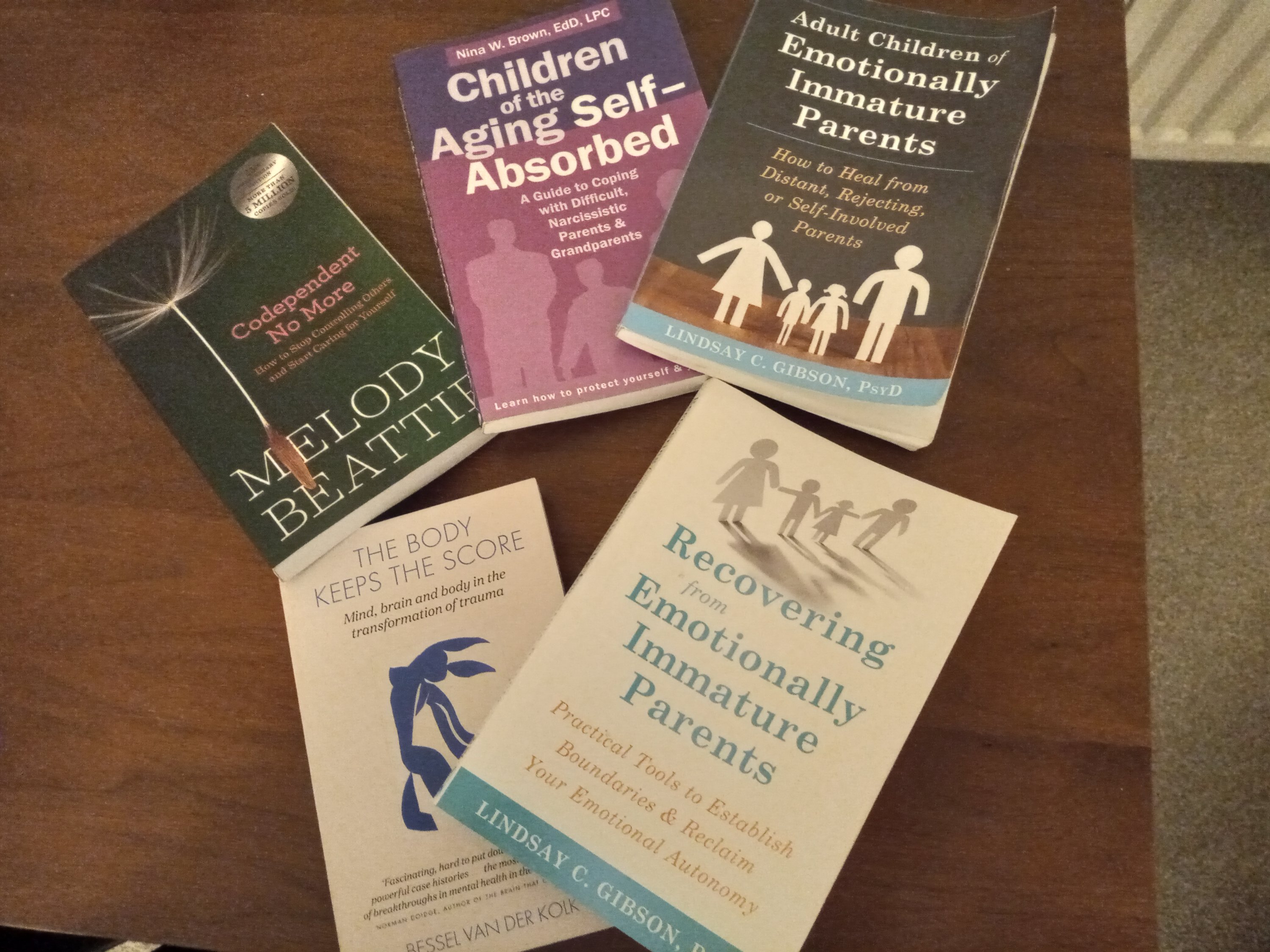
    Psychologists and counsellors have also said the same, in the following books.

    Maybe its now when Generation X have had enough, and started to make different decisions, rather than accommodate abuse.

    Instead its time to deal with it, by working on themselves.

    Realising that they werent the problem all along.

    Maybe, as in our own case, we realised that we played rescuer, and it was a role that was exhausting.  It’s time to devolve that responsibility to those who should have it themselves. It’s easy to be forced into the rescue game for those who play victim and persecutor. Its ironic also, that generation X will continue to over stretch taking responsibility for an older generation as they age.

    What caused it?

    We could go further back and make an argument that the parents of Baby Boomers could be ‘at fault’ – but this isn’t about blame. Blaming upwards, or not taking responsibility, is what we’ve heard all our lives.

    We are already the generation who has taken responsibility – by fighting on climate change, poverty, young people, equality and many other matters, we are already equipped with knowing that if it’s going to change, only we can change it. We’re also seeing our children fight for justice at an earlier age again.

    Blame won’t change the pattern. We already know change starts with us.

    But we’re wondering – is there some kind of collective generational trauma revealing and healing going on?

    So, are Generation X adults undergoing a collective healing from Baby Boomer parents? 

    Open question..What are your thoughts?

    Please comment below, please do share this post or our video. Maybe talking about it might mean that you can know you’re not alone.

    If you would like to watch the accompanying video to this blog it is here:


  • Feeling grief; for the mothers day cards I could never send

    I really have toyed with this one all week, I didn’t want to continue the series on surviving a psychopath parent, because what I needed to do this week was to take stock a bit, and be kind on myself, given that this weekend is Mothers day.

    And it started to bite in the middle of the week.

    Feelings.

    Now that I’m aware of them, I hate them too. Gave myself a headache.

    Every year I used to go through the life triggering, upsetting event of trying to find a suitable mothers day card for an abusive mother. Pretend, lie, or send a blank one.

    The same routine for as long as I can remember. Since being an early teen, easily that long.

    I mean they are all sickening.

    Why?

    Because it was the done thing. Because also I would be used to hearing…

    You’ll upset her if you dont

    Yes, because I would be the rescuer wounding the victim.

    I had already decided that I wouldn’t be sending a card this year, unless Clintons cards advertised that they had broadened their range to include honest sentiments like

    ‘On mothers day, here’s a card because it avoids drama’

    ‘To an emotionally immature parent, Happy Mothers day’

    ‘Im sending this because its tradition and not much more’

    That was the beginning of the week. Passive aggressive suggestions for the mothers day card that Im not going to send.

    Then I realised that, as per the Drama triangle, her emotions are her responsibility, and not mine.

    But that doesn’t take away from the 40 years of hearing those words.

    You’ll upset your mother

    Lindsay C Gibson writes:

    Do you remember a time when they used fear, guilt, shame or self doubt to make you do what they wanted? What worked best on you? What type of emotional coercions are you most vulnerable to? What physical sensations do you get when someone is trying to make you feel bad for their benefit?  (Gibson 2019, Recovering from Emotionally Immature Parents)

    So I clocked it. Realised it. Felt it with a headache.

    Gave myself time.

    Realised what was going on.

    Resisting the urge to buy a mothers day card.

    But then.

    Mothers day.

    The week before.

    I may avoid going through the motions in a feat of honesty to myself. But…

    Then I felt something else.

    Good grief.

    Grief.

    Grief, because I can’t send a Clintons sickening Mothers day card?

    Grief, beyond the passive aggression?

    I mean is it possible to miss the mother you never had?

    but you should be grateful James, at least…..

    Please do not suggest how I might be grateful on this one.

    I am allowed to feel…I should feel what I actually feel…

    I mean does anyone actually have the kind of relationship with their parents depicted in Clintons cards? oh you do.. oh..

    grief because whilst you’ve spent your life on eggshells everyone else has been having picnics?

    dont be so sensitive James…everyone has ‘issues’ with their parents… 

    you shouldn’t compare James…

    Realising that you even have to talk your way out of the truth of the situation, the truth of the feelings.

    Being aware that this time of the year is mixed with many emotions, and im not grieving a relationship thats broken down, because it was a relationship that never was, and feeling grief for the parents I never had.

    Grieving what you never had, at the same time realising how you survived the parents that you actually did have. Grief for the time wasted, and the emotions damaged and the trauma invoked.

    Grief for the mothers day cards I could never send.


    All the resources referred to, and links, can be found above in the Menu.

  • Surviving Psychopathic Parenting (Part 6) : Taking on the rescuing role

    Surviving Psychopathic Parenting (Part 6) : Taking on the rescuing role


    Dont you start playing victim!

    (because that’s the role I have in mind for myself)

    I cant cope with… what youve just said, what youve just done….

    (you’re expected to alleviate me, not challenge me, you’re supposed to soothe things…)

    You just need to take more responsibility

    (thats interesting, because ultimately, I’m taking all the responsibility, and I’m the child in the house) 


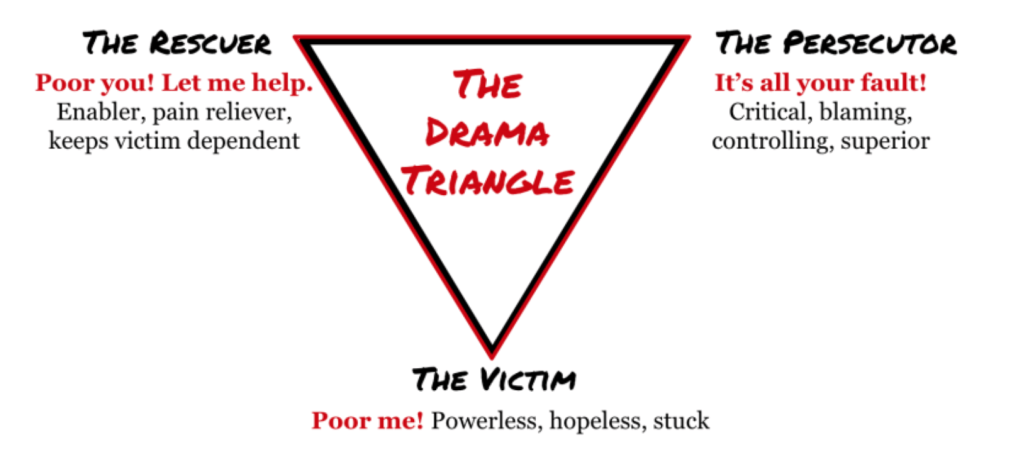
    Since I published the last part of my survival story, I was reflecting on the drama triangle on my other blog, Learning from the Streets,  which I wrote *obviously for youthworkers, like myself who can get stuck in that cycle.  Maybe it took the penny to drop a little bit.  To realise the extend to which the drama triangle was being played out in my childhood home, and also in more recent situations.  When I think about my own issues with codependency, they go back to the role I was expected to play as a child.

    Because, if the roles of Persecutor and Victim have already been taken, in the one psychopathic parent, and they control who assumes the other roles.

    I became the grown up child, like I said in my part 5, who took on the emotionally rescuing role, the ‘grown up’ , was told that I was the person that ‘could alleviate’ the emotional pain of the psychopath parent, and so, along with the eggshells to be aware of, I also became attuned to the moments where I had to step in and perform the rescuing duties.

    When the psychopath shifted from persecutor, to persecuted, the role of rescuer needed to be filled, and significant guilt/expectation was made, its not like I was able to say no.

    Seen through a drama triangle, the Emotionally immature parents distorted narrative of relationships is one of endless conflict; the strong exploit the innocent, who then suffer and deserve to be rescued by someone else.  (Lindsay C Gibson, 2019)

    What this meant, as I said in the previous part of this story, was surviving emotionally alone. Though I will say, that I was rarely cast as victim in the cycle, the persons who bore this weight, was my younger sister, and also, any other female in the family too, who my psychopathic parent had to continually be superior over. If my sister was victim, or even persecutor when she kept boundaries herself, then I was tasked with playing rescuer.

    When I was about 10 or 11 I remember a time when my parent, who maintained a level of control by being a primary school dinner lady (that’s what they were called in the 1980’s)  was hit by a football in the playground, or fell over and damaged her arm, it ended up in a sling. I remember the incident, because of the level of upset I felt about it. I remember my teachers trying to reassure me, that my mums arm would be ok. What I remember is that my over reaction to this incident emotionally was that I felt guilty for not protecting her, I, as a 10 year old, hadn’t stopped the ball, or the fall, or whatever it was. That was the reason for my reaction, I hadn’t fulfilled my role as rescuer. Was I about to get into trouble from the over emotional parent for not protecting them?

    In an emotionally toxic family upbringing, where strong persecutor and victim roles are taken, then rescuer was the only ‘safe’ place for me to be, not that I realised it at the time. But what that meant was having all the emotional responsibility, though that wouldn’t be admitted to (that would require a level of self reflection from someone incapable of it) .

    What I didn’t realise at the time (well who would as a child) was the extent which this drama was played out, neither did I realise that having to take on this responsibility as a child was emotionally abusive, and done behind closed doors.  It shouldn’t have happened, but thats what psychopathic parenting does.

    Surviving meant rescuing, but then what I did was shut down. When I began to realise how draining and destructive this was, I stated to shut down, so that my psychopathic parent did then receive any emotion from me. I went rigid and gave her no emotion, whether anger, or joy. Detaching from my emotions in that unsafe space was what I had to do to survive. I know now, my core self was protecting itself. Putting up an internal boundary to protect the inner child in me that had barely been seen or nurtured.

    Part 6 of my survival story is about me recognising how I developed into the role of child healer and rescuer. Part of my survival story, was about trying to make things better in the family, doing the emotional heavy duty lifting, and ‘trying to make things better’ when actually there weren’t adults in it taking any emotional responsibility for themselves. Surviving meant being responsible for others in a drama triangle that they were creating.  Part of my healing now, is to stop myself taking on responsibility, becoming aware of codependency, constructing boundaries and practicing emotional health.


    (A client remarked) he’d spent his adulthood trying to let go of his past, and he remarked how ironic it was that he had to get closer to it in order to let it go. (Kolk , The Body keeps the Score, 2014)