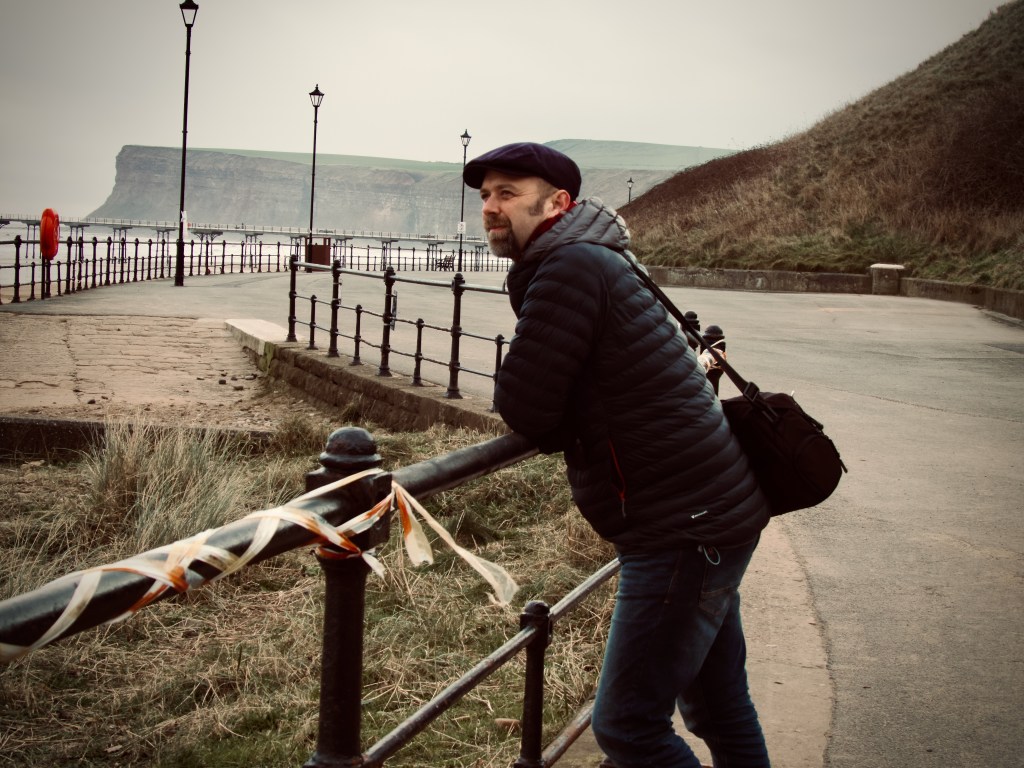
There is within each of us the ache of aloneness. An aloneness borne from our uniqueness of experience, for there is no one whose footsteps have graced the world in the ways our own have. Childhoods filled with the complexity of unmet expectations, of abandonment, of navigating more than relaxing, even in a more secure childhood, an aloneness still permeates.
Aloneness carried amidst the weight of the shame of having to stay silent, or carrying experience, of choices made and decisions slighted, of being hurt and bewildered, of self protection that creates walls, fears and wants to run and hide away. Aloneness of never being truly understood, never being allowed to be, never being seen. Aloneness that cannot be exposed, but appears in the midst of places where its not supposed to, the supposed happy childhood, marriage, the party and the church, the silent reality, the shame that it itself carries that no one else seems to know.
Aloneness that both aches and hungers.
Aloneness that no ‘other’ , no ‘thing’ and no ‘experience’ can truly fill, however hard we grasp, desire, dream or hope that it might. Aloneness that sits there, sometimes haunting, sometimes aching, sometimes screaming, sometimes raging, sometimes crying, sometimes seen, sometimes unseen. Aloneness hiding underneath the surface of the drama and distraction that pulls our energy towards and yet lurking underneath is a lack of something, and the presence of something, nothing, the bleak aloneness lurking in the shadow of the soul.
Aloneness that raises its voice in the despair of never being truly loved, or seen or heard and yet though temporarily happiness covers it, its hollow ache exists, and craves for one more temporary fix, until it finally makes itself safe to be known and seen, when the fixes run out, the busyness ceases and its raw truth
There is within us a deep sense of aloneness, that creates a need in others, or Gods, to fix, solve or mend us, expectations that they can never fill, a burden placed externally that is ours to face truly.
Yet, paradoxically, it is only when we are truly alone, bravely alone that aloneness itself can be faced. When everything else is stripped away, and you allow yourself to go to the dark recesses of your own soul. The places you dare not go to, where the mist of shame festers over a cave of cold , dark , but truthful aloneness, where there is only you, embracing gently, willingly, openly, the lost truth that yours ,and my, life has carried.
It is in that moment of going there, that there is realisation that there is a you, that is apart from the alone ache, when you travel towards it, you realise that you are not it, yet it haunted you like a lost presence throughout directing your life, yet, it wasnt ever you, just an ache in your soul waiting for you to love it, to listen to it, to face with courage and kindness.
Let it speak, Let it say what its always wanted to, when you face it, its been there, being part of you, embrace it with love, for, theres nothing more uniquely universal that the aloneness within, and nothing more powerful than meeting it face to face and loving it into your presence, integrated, not afraid, not shamed. There is within us the presence of aloneness that brings us into true courage, and true depth, and true connection with the other.
On a walk back from town this week, in the bookshelf of Darlington’s new LGBT Bookstore I saw this book.
I seriously laughed out loud.
The Evangelical Christian I used to be would have got angry at this violation of the Bible verse.
Today I thought I would do some digging, The quote could originate from a book by Jamie Buckingham, and if so, is the same Jamie Buckingham who wrote about forgiveness in the Christian context back in the 1990’s, ‘Risky living’ was one of his books. Anyway, I digress.
Because, the Truth will set you free, even if it will piss you off at first, completely encapsulates the process of healing struggle after abuse, not that different to the oppression context Gloria writes this in from a feminist perspective.
Individually though, I got faced with choices and decisions and raised awareness about my past and my behaviours that were hard to face, very hard.
But knowing the truth about myself and these things, in the present of the realisation, gave me the choice, to do something about it or deny them, run from them. Deny and Run was what I had done for the previous 40 years. That gave Lies Power.
Acceptance of the truth is what makes us free. But our..sorry my ego, my protective parts wanted to wrestle with them first, deny them any reality, deny I wasn’t ok, hide behind a mask, maybe it didnt piss me off, but parts of me were screaming inside.
Today. I see the book and smile. I see the book and realise the work. The journey ive been on and these last few weeks I seems to have a number of reasons to go back, birthdays do that dont they, as do Facebook memories, as do meeting people and being vulnerable with the story. So I see how I responded when confronted with the truth of what happened to me. So I see myself more clearly through that lens, and the behaviours I used to self soothe and survive and the consequent damage.
Today I sit and sense peace, I sense joy, i sense freedom. And in these things, to give and receive, to love, share and be loved. To be me.
The truth of me, that I am worth and deserving of love and happiness, also was something that would proverbially piss me off. But, again, it is the truth that loves is power, love from within heals, our bodies, minds and souls. It has done mine.
The Truth about Love, will set you free, but our wounded hardened selves might want to feel pissed off by it first.
Death and Resurrection, the ongoing day to day. Surrender and Acceptance.
The ‘and’, that gap between, full of tension, fear, worry and change. the Holy Saturday in the death and resurrection cycle.
On the same theme from Paulo Coelho’s new book, Maktub.
The Human Race has committed its worst crimes in the name of Truth.
Men and Women were burned.
Entire civilisations were destroyed
Those who committed sins of the flesh were cast out. Those who sought a different path were marginalised.
One of them was crucified in the name of the ‘truth’ but before he died he left a magnificent definition of Truth.
It isn’t what gives us certainties
It isn’t what gives us profound thoughts
It isn’t what makes us better than others
It isn’t what keeps us locked inside the prison of our prejudices
the Truth is what sets us free.
‘Know the truth’ he said, ‘and the Truth will make you free’
I love both Elaine Arun and Hannah Jane Walkers books on Sensitivity – but – in the main who are their key audiences and examples?
Hannahs book is wonderful by the way, yet in the main the conversation about sensitivity centres around herself, her sisters and her mother in the first few chapters, about how women nature sensitivity in other women. It is beautiful, their stories and very heartful. Actually I would go as far as reading this book was an awakening spiritual experience for me, self love in a self help book.
Sensitivity barely features in a search of TED talk titles. (but Introvert does)
Sensitive and male as a search on You Tube highlights a type of sensitivity and not necessarily of the emotional sort.
So:
Whilst it’s said that 15-20% of everyone would be considered sensitive, or highly sensitive. There isn’t much of a conversation about sensitivity and being male. I wouldn’t expect it given the author and her experiences.
There’s a lack of ‘ways’ in for Men to access this topic.
So let’s continue to have it.
What’s it like growing up male and sensitive with a male parent who either dismiss, ignore or reject their own, and thus your sensitivity?
What’s it like growing up male and sensitive and having a female parent who similarly either dismiss, ignore or reject their own sensitivity, and thus your own?
What’s it’s like having your own emotions stolen as a boy to feed other peoples emotional needs?
What glimpses are there that you were a sensitive boy, and what happened when you expressed these? or… what steps did you take to hide them, or pretend that you were otherwise.
What has been the effect on you by hiding this part of you?
I laugh now. I got into a ‘fight’ once. It was my last day of primary school , aged 11, and it was one of those glorious warm hot June days where we could play football on the ‘rec’ (recreation ground) instead of the concrete of the enclosed school playground. I won’t name the other person, but they had been a friend for a while, and lived not far from me.
I was playing ‘in goal’ and this person was deciding to stand on the goal line, I dont remember if he was even playing the match, maybe he wasn’t and was being annoying, I remember not.
I had heard enough messages about ‘toughening up’ , about standing up for myself. This was my chance, so I thought, to prove myself. T prove to myself that I wasn’t as weak, timid or shy anymore.
I don’t remember how the incident continued, my feeble attempt to be ‘brave’ probably involved pushing him out of the way, did I raise my fists? I don’t remember, though I remember getting one back. I think I ended primary school with either a black eye or bloody nose, and only the realisation that trying to physically injure anyone felt so weirdly disconnected, my arms/body didn’t work like that, and I felt pretty rubbish about it.
Trying to prove to myself that I was tough, not weak and not going to let someone else annoy me. Step 1 – ends in embarrassment… oh and the temporary loss of friendship. A year later we spoke again and we’re friends again.
I guess it’s a glimpse for me. Of how trying to be tough has felt uncomfortable. And also of the damage of hiding sensitivity.
It was the 1980’s, I get it. There wasnt talk of emotional health and wellbeing in schools at that time, or anywhere else.
Described as perceptive and contentious by my teachers – a key indication of sensitivity – neither of these things were valued or nurtured.
So, im just wondering, where does sensitivity play a part in our daily lives – yet we wouldn’t use ‘the S’ word to describe it
Because as Ted Zeff describes below, the men who recognised and realised their sensitivity could share how it was positive for them in their workplaces, relationships and social lives. (there are other vids on YT on this subject, do give them a watch)
But he also describes how a more ‘Western Culture’ , UK to a lesser extent and North American more so, there are cultural challenges in admitting being sensitive.
If the ‘S’ word is a big ‘no-no’ what gets used instead?
‘Social Skills’
‘Adaptability and flexibility’
‘Good with change’
‘Receptive to client needs’
‘Hard working’
‘Team Player’
Someone who might be good with people, good with animals – might be highly sensitive, as might someone who has deep friendships and is upset if these are rocky. But someone who has friends is valued – even if their sensitivity to emotional needs might not be.
We might not like the ‘S’ word – but the outward traits of the person, the man with sensitivity is valued…. some of the time.
Did you notice what I noticed at the beginning of that video above?
That there’s research that suggests that up until the age of 5 boys are more sensitive and aware than girls, yet by the age of 5 most of these emotions have been diminished in a boy, except for anger, the only emotion a man is socially permitted to express.
Where does that even leave that boy who is told off for expressing anger? or in a culture (a christian one) where anger is deemed sinful? (and I realise this is not just men) but saying. Where does a boy go to hide so that they can be safely sensitive?
Did you have a space for this?
It’s not that as a boy I wasn’t sensitive, I just had to hide it, especially where it wasn’t safe. On other occasions, my sensitivity enabled me to be safe in an emotionally abusive home, as I could tend to the emotional needs of others.
Like so many things in our emotional make up, and the reality of the trauma many of us have faced, acceptance leads to growth, denial hides protects and is afraid. There’s everything courageous about accepting sensitivity.
Unsure if you’re sensitive? Do have a read of this
Do share your experiences below in the comments, id love to hear. If you have a resource on this and want to share it with others do link it below too. If youd like to support me in my writing, you can do so here, Thank you for reading.
The more I have reflected on Sensitivity, the more I realise how inconvenient it seems to be.
For a start.
Admitting being a sensitive person yourself… feels inconvenient.
There can be ‘easier’ more ‘recognised’ more realisations that encourage greater sympathy than sensitivity.
Some are more diagnosed, they appear, for an example as a protected characteristic of the Equality Act (2010) – and dont get me wrong, this isn’t characteristic olympics. It’s not the point im making. Maybe this is ‘insensitive’.
Thats interesting.
Me trying to ‘make a point’ thats probably not quite as well articulated as it should be I might recognise as ‘insensitive’ . So.. what might be sensitivity?
Sensitivity might be akin to ‘making an appropriate response’
Sensitivity might be about realising who might be affected by a situation and responding appropriately.
Sensitivity builds relationships, and cooperation.
Sensitivity values depth and quality.
Sensitivity is empathy
Sensitivity..pays attention.. a lot.
Sensitivity cares.
It’s Inconvenient in a culture in which outcomes, numbers, ‘success’ and efficiency are default dynamics.
Sensitive to emotions and lives, not to system protection.
It’s the youth workers, sensitive to the young people of Rotherham, whose voice was deemed ‘over reacting’ , and years later the report highlighted that the system didn’t listen. Were the Youth workers too sensitive? Easily dismissed? Inconvenient?
Sensitive people are inconvenient aren’t they.
Inconvenient, because they dont fit.
Many of the systems we live in look at the natural responses of the Highly Sensitive Person…. and rebuke them
Hanna Jane Walker (2023)
Maybe the System needs to change.
Because if there were no sensitive people – the system would have imploded by now, already.
When the system tightens, when it gets harsher. The Sensitive person is going to feel it first.
The Canary in the Mine.
Yet, What’s strange is that when a micro system like a school develops healthier emotional responses, prioritising the practice of emotions of health, empathy, listening, cooperation and holding emotional reactions.. it benefits the pupils towards better ‘results’ and creates better community and environment (Lisa Cherry, 2021, Conversations that make a difference with Children and Young People).. its not about ticking a box to say ‘trauma informed’ – but humane.
Its no wonder that those who have sensitivity, human values in caring profession leave by the droves, when the ‘system doesn’t benefit those of whom it is meant to, and in a way that should do’.
How inconvenient.
Yet, Ultimately usually, everyone benefits. (except the non humans, the spreadsheets and newspapers)
It’s Inconvenient for the farmers to recognise that their soil quality is getting worse, being sensitive to the changes, and having to adapt. (James Rebanks, The English Pastoral)
It’s Inconvenient to be sensitive to the needs of the planet – and not the continual consumption of it. It’s inconvenient to adhere to warnings about flood plains and deforestation – and not have buildings that get flooded or be prone to landslides.
And yet.
Let’s make this personal again.
Sensitivity is inconvenient yes because it is counter system cultural
But its also counter ‘Emotional expectation cultural’
It’s a trait that many try to hide.
More than that, a gift.
When the one person stands up against the system, for the benefit of humanity, it’s not that others dont agree with them, it’s that they dont want to be seen to agree with them. To admit being sensitive, caring and humane.
If you have ever watched the film ‘The Last Bus’ there is a moment ion it when the lead character stands up against a man who is racially bullying an asian woman, he is sensitive to her plight, yet the bully expects the crowded bus to be on his side because there is silence. The opposite is actually the truth. The bully is escorted off with loud cheers, yet the old man was as equally acting alone. Those who bully might expect that silence is for them, when actually it might not be, this might also be the case in the boardroom.
Inconvenient for ourselves.. back to being personal.
In addition …
Not always being heard
Struggling with boundaries.. and
Being easily overwhelmed.
Im not going to go into detail into these things here. But if you identify as sensitive, or recognise that this might be you, but dont want to admit it, then that inconvenience of being sensitive is actually just part of you, part of you being who you are.
However challenging, it is how you are wired. It can be highly frustrating, highly draining, and to have to manage ourselves in a world that often doesn’t fit. It feels inconvenient even to be wired in this way. Inconvenient to have to be thinking, taking in information , processing, working things , feelings, body language.
The temptation with something inconvenient, something unsettling, something that feels raw, is to toughen up, deny or pretend it isnt there. It takes someone else courage to believe the voice that speaks from sensitivity, It takes courage to be paying super attention and speak up. it’s inconvenient all around, but more often more humane for everyone.
Sensitivity ; An Inconvenient Truth?
References
Sensitivity by HAnnah Jane Walker (2023)
The Highly Sensitive Person by Elaine Arun (2001)
Conversations that make a difference with Children and Young People by Lisa Cherry (2021)
Im in the middle of reading this quite brilliant book, The Fifth Agreement, by Don Miguel and Don Jose Ruiz. I guess freedom must be on my mind as ive also just finished Edith Egers book The gift, on discovering personal, emotional freedom. More to follow.
But im just reflecting on , if Faith in myself is the real faith, and I am true.. what did I place too much energy and faith in before I discovered myself and who I am?
Actually finding out a little more of my family history in the last 4 years has helped me to join the dots, reconnect and give me a sense of something.
It stared with googling my name.
I’m now on a bit of a treasure hunt. To find evidence of past Ballantynes, and also artefacts of both RM Ballantyne and the published works of James Ballantyne (based in Edinburgh from the 1700’s).
Some of this I want to know about, some will be a treasure and surprise when I find it.
I have a physical ancestry. A story.
But – what if my soul has an ancestors too?
My body and mind aren’t going to last forever, but my soul might?
And if so – might it have been somewhere else before?
and further still …. might the soul I have now, have been someone else’s one time before and was there a process for it to choose my body, my life and my experiences…
and if so…for what purpose?
Have you ever thought this?
I don’t think I mean reincarnation, but maybe soul ancestry, what’s the history of my soul, and curiously was it reluctant, happy or determined to exist in my experience now, for the time I am hosting it?
Was my Soul happy before and why my experiences?
and might there be a point when my embodied soul considers itself complete? or will it accumulate experiences, feelings and character for all eternity – if that’s even what it is doing?
Or will it become something different, like non human. Animal even? Is that what my soul might become next? Was it non human before? might this explain my affinity with nature – but then might this explain all of our affinity with the natural world?
Then, thinking Shakespeare… If all the world is a stage… what’s the role of the soul? Might Jung be right to consider the God archetype part of our humanity to exist – and this might be the soul- but what stages, performance, directions, scenes has my soul played before? Or has it been the same one, and its just the actor, the body that’s changed.
And, when there’s different performances of the soul – what happens in the gap? The Soul interval? From one person to another – and in those moments where might the soul rest, or wait, or choose?
Then again… Would I want to know? Would I want to know the full list of other people, objects, animals, trees even – that it has inhabited since it was created.. and when was that – what would I do with that list , my soul ancestry? Would it help me to explain things now? Like my genetic make up, from 10 generations of Ballantyne for example.
Continuing that thought. When was my soul created? Or was it always, well just always there. When did it come from?
Isn’t that it all along. Is the question not about how the world was created, but how the souls did?
Might this be God, divine or source all along? A lake of souls from which emanated souls like rivers into the flow of human existence?
Is my soul in my today, in January 2023, right now for a purpose?
And if so…what is it?
So so many questions, maybe the start of this was to recognise having a soul in the first place, as well as wanting to have some understanding of my familial past.
Like discovering Ballantynes, maybe my souls journey will take me on a similar treasure hunt.
There are some people who can sleep on an aeroplane.
But I, sadly, am not one of them.
Since February 2020 I have now had the experience of many transatlantic flights to both Montreal and San Diego to meet, visit and spend time with Christelle. At least 12 flights over 6 hours long.
I had the ‘joy’ of the cancelled flight in July (re arranged to a direct 9hr flight :-)) , and last week a double cancelled, staying overnight in random city (Seattle) only for 2 more flights the next day experience.
This was me at Seattle…
Early in my flight experiences I didn’t have many ideas of ‘what to do’ and how it works, so I think on my first Montreal flight I packed a bag full of food, as I didnt click the ‘food option’ but then on the BA flight got a decent 3 course meal, wine, beer and snacks, to my surprise.
But I often note other people to see what they are doing, like the use of the complimentary cushion, blanket or what’s on their TV to see if that’s something I would like.
Its not just what other people are doing. I like to know what is going on.
Every bell noise in the plane, I’m checking to see which of the lights has gone on or off, or whether this causes any sudden movement in the airline crew. What calls are being made. I like to know what’s going on.
The sleepers I guess dont care, they sleep.
But for some reason I care, or at least I feel as though I should care or be responsible, or be ready.
Even after an overnight of 4 hours sleep, and then on the second night flying from Detroit to Heathrow and losing 5 hours, I slept for less than 2 hours, but I at least slept a bit, I think. But it took for me to be completely exhausted to finally sleep, though never feeling that I was actually asleep. The display on the TV went from ‘4hr 40’ to arrival, to ‘1 hr 45’ and I know id been dozing only for much of it.
What I did this time was have an eye mask on, and ear plugs – and yes ive tried these things before, but they did work for the 2 hours or so this time. It helped me close away from the light and noise that represented things and situations I might need to be aware of.
Maybe that’s the same as everyone else. But, horror of horrors, there are some people on long distance flights who sleep so well they dont eat or drink anything complimentary? I mean what’s that all about? Who are these people? ;-) Hiding under a blanket and out for the count. Maybe they in that moment are doubly exhausted, and they can just crash.
But there’s something else.
There’s three things that come to mind as I reflect on my ‘plane’ sleep experiences.
The first is my experience of climbing.
Although I did have some outdoor experiences as a boy, climbing wasn’t one of them, it wasn’t until I was part of the leadership team on young peoples camps in Scotland that I took part in climbing, at two compass centres and on a trip to Edinburgh. I was a nervous, shaking wreck on the first two occasions, trying to get my feet into the ‘sockets’ and my arms reaching up, with barely any arm strength. The third time I went I made a mental note to myself. I would trust the rope. I would trust that the staff had done their work properly to set it up safely, and as a 29 year old I would be ok. But the main thing was, was that I would trust the rope. And I so enjoyed that third climbing experience. Trust.
The second is that Biblical story of Jesus being asleep in the storm, whilst the waves crash around their boat, Jesus slept, and yet the disciples exclaimed how it could be the case. I guess that some of the disciples stayed awake knowing they felt they had to be responsible for Jesus, given that they knew a little about who he was. As well as try and keep their boat afloat.
The third thing is that I remember taking ages to get to sleep as a child. I had to stay awake as I simultaneously felt responsible and scared of my emotionally immature psychopathic mother. So, in between reading books, I would be listening at each loud shouting conversation in the kitchen, in the floor below..and it was only one screechy voice that was making the noise. Id be awake listening for each time the hall door would open (as then id turn off my light) or know that the 2nd stair creaked, and then I would turn it off. And then there would be footsteps all the way to my bedroom door, because that’s also where the bathroom door was, next to mine, so I had no idea if I was about to be told off. Often I would be awake long after they would themselves be in bed. It was safe. Many books were read.
There was no sleep when there was a monster to be aware of.
Being aware of danger. Trust the rope (plane). Feeling responsible.
There is a different kind of awareness I often feel on a plane too.
Its a gap, a space.
And though I often take books to read (very old school) , what I often find is that I have felt travel tense until I get to the gate and on the plane. However I dont have anything to worry about, there’s travel to the airport (trains to Newcastle or London), security queues and going through it, and any check in required, it doesn’t sound much, writing it, but even with trains on time or a short tube from somewhere in London to Heathrow, I still have some residual travel anxiety. So, getting into my seat on the plane, each time, I get a sense of relief, and also a sense of excitement of the travel to Christelle, which up until then has been mixed with the travel anxiety.
A breath. An awareness moment on the plane. I go from being anxious about my own getting on the flight process – to then feeling like I am needing to be aware and responsible for other people on the plane. Hence the no sleep. Weird huh. But what I dont have or do on the plane is have wifi – I just charge my phone, eat the food and take time selecting and watching a movie or three. (Yes I have now watched the entire LOTR and Harry Potter films)
in it he talks about responding to that great challenge… The Cancelled flight. Also about how to have a kind of alertness on a plane. ✈️
Im learning. I noted how I responded to my double cancelled flight issue of last week, that’s for another piece I think. Life spills over even on 48 hours of travel.
Tolle talks about the right kind of alertness. About acceptance and surrender.
Maybe noticing all my feelings is part of all of this. It isn’t taking me long to note how I’m feeling anxious, or overly alert. Sometime my survival skills kick in, other times I give myself the time to stop, note and feel, and remember to breathe. Continually practicing presence.