Tag: disassociation

  • Shining a light onto my Depression

    Its ok to not be ok

    But what if ‘norm’ was a depression that I didnt realise was?

    I’m pretty sure now that I was depressed but I just didnt realise how this had been my normal experience.

    Thats a conclusion I came to a month or so ago.

    I had never thought of myself as being depressed, that was something other people experienced and not something I would want to or could conceive of being the lens to which I was experiencing life, maybe I was masking it.

    But I can imagine now how a cloud, mostly grey, was being taken into every room that I was in, and, not intentionally.

    Oh and I dont mean the obvious emotional breakdown moments, the teary moments that i’ve experienced in the last few years, as my emotions have welled up, have broken up through the layers of cold, hardened exterior.

    I’m more talking about the cold, prickly, exterior. The despairing hopelessness. The Self doubt and beating myself up on the inside.

    So let me wind back a bit.

    I read two books back to back just before Christmas, whilst also being in the process of therapy. (I tell a lie, there were probably 5 books on the go…but anyways..) The first was Stolen Focus, and the second was Lost Connections, Stolen focus was the gateway for me into the writing of Johann Hari (ive written about Stolen focus Here on my youthwork blog, as this is all about play).

    Lost Connections is Johann Hari’s personal exploration into his own depression story, how he was prescribed anti depressants as a late teen, the journey of medication, and his research into the causes, indicators and alleviators of depression.

    So, I read Johanns book with interest. But not with the thought that I was depressed, more that it intrigued me that he was going to talk about the importance of social relationships in mental health. But no, not that I was depressed.

    Buy the book from Hive bookstores here: Lost Connections

    If you’ve read my story (in the menus) you will know what’s coming, but it is very accurate to say that one of my survival strategies for dealing with a psychopathic mother, was to hide my emotions, including any semblance of happiness or joy. In fact I would go further and say that any moments of being happy were stolen: ‘I need to feel your joy for you passing your exams’ , and times when I felt happy outside of her influence were negated : ‘ I need to get all that toxicity out from when you were at grandmas’ – as there were and are photos of me smiling and happy at grandma’s. Any place where I was paraded or made an example of, I hid my smile, including family and school photos. If I was going to be on a mantel piece for others to see, it would not be with a smile.

    Yet I was aware I wasn’t smiling. It was ok when other people took the photo, like church events or elsewhere, but if it was photo heading to the mantel piece or taken by her, no smile.

    Thats just one example, there were many. But what it meant, and I knew that expressing any emotion was unsafe – it was stolen. Or I had to be responsible for soothing her emotions, yes thats what happened, me aged 5 and above was the one who soothed her upset ‘only you can make me feel better, not even Dad can’ was one message from when I was a child, a young child.

    Talk about being emotionally tortured. It’s what I had to do. And also, this was a survival strategy, even if I didnt have a choice to do it.

    It all makes sense now doesn’t it. It makes so much sense to the extent to which I was desperate, alone and wanted to end it all, aged 9. I wanted to wake up as someone else, failing that wondered what it would have been like to jump out of my bedroom window, or wait for a midland main line train to hit me. Aged fucking 9. Thats not normal is it?

    Funny thing, when I tried to talk about this in starting my testimony at a church event in my teens (17) no one actually believed me, thinking that I was making it up as I didnt think I had a good ‘Jesus saved me’ story. But, folks, it was utterly true.

    I couldn’t actually talk about how I was actually feeling, because I could hardly describe it, and very few people who I could talk to were safe, or would understand. It surely wasn’t normal to be scared of your own mother. But that was my normal.

    But I was stony cold, prickly, critical and only able to let my head have any responsibility in how I was dealing with daily life. Not hard hearted, but wounded, heart hiding, protected. I was trying work out things, trying to work out how to cope, having to be one step ahead to know what to do in a situation, always trying to predict.

    In some ways, this is all for me just ‘coping/survival’ stuff. I wouldn’t have categorised it as depression.

    That was my normal, and if you’ve been in any type of abusive relationship you will know what that is like. Adopting to their unpredictable rage, strategising safety.

    I wondered what it might have been like had I gone as a 10 year old to my GP and said, ‘is it normal to feel suicidal aged 9’? or ‘I feel like I have to hide my emotions around people who should be protecting and nurturing me?’ – but I didnt, anyway back to the book.

    Oh, and one more thing, this actually was the thing.

    I didnt know what I wanted to do with my life.

    Throughout school, throughout my twenties, thirties even, ask me, and I didnt know.

    My usual answer, was ‘Whatever God wants’ that was my get out, but that wasn’t what I wanted, I just didnt know.

    I had no idea that not having any concept of a future was a sign of depression, a key sign. As Johann explains, it’s like the future is wiped away, inconceivable, as the present moment is the only valid space (and the haunted past) to attempt to survive in. Getting through. Making it out alive. One day at a time.

    The other reason for me, was that my future was also something stolen. It was made conditional by that person again, as I had to do something to ‘make me proud‘ ‘not disappointing me‘ or I would have to ‘prove her wrong’ by things that had been decreed as things she was upset by. Stolen Future indeed.

    Another indicator of depression, described in the book, was the lack of being in control. This is fascinating. In the book, research is conducted into 1,000 people all working in the same building, from the very top, to the bottom, CEO to the cleaners. It was found that depression was linked to those who had less control of what happens, in short, insecurity of the future was linked to depression. Being able to dictate and decide gave people more responsibility and stress, yes, but not depression, because they could see the way ahead and have some say in it, Insecurity led to depression.

    It reminded me of Deci and Ryans work in that intrinsic motivators are linked to Relationship (connection/belonging) , Competence (being good at something/positive feedback) and Autonomy (being able to have decisions on the future) (in Human Being by Jocelyn Bryan) . I think this is extraordinarily interesting in relation to faith and systems of faith, especially in a time when status anxiety is rife. I’ll write more about this another time I think.

    Anyway, back to me.

    Well, back to the book to be honest, Johann outlines 8 ‘disconnections’ that are significant causes of depression, they are

    1. (disconnection from) Meaningful work
    2. Other people
    3. Meaningful values. (Capitalism and the need for stuff that kills the soul)
    4. Childhood Trauma
    5. Natural World
    6. Status and Respect
    7. Hopeful/Secure Future
    8. and ‘the Role of Genes/Brain changes in depression’.

    Each of the chapters is utterly fascinating, each is woven with his own personal story of what he needed to alleviate his own depression, something to blame, something that wasn’t himself, a chemical (low serotonin- this is a myth btw), a story. But each of these ’causes’ made a lot of sense. When he talked about depression and anxiety being very similar that resonated too, but what’s interesting for me, is the extent to which I hid and buried all of this, to not feel anything. The other thread being the social dynamic of depression, the lost connections with the human, natural experience. 

    I was ok, I would say. But dont we all say this?

    There was some I definitely scored myself high on. Given that its only been recently (4 years) that I have reconnected inside with the effects of childhood trauma and abuse, connecting with my feelings, and also, been able to consider myself as important and have status (and not a victim) , a lot resonated, not just the ‘future planning’ section.

    The book was another window, a light into my own life, a lens even.

    It was only when I could see all of this that I realise the extent to which my ‘normal’ could only have been an underlying depression.

    Reconnection has been the journey I have been on, probably without realising it, some of that has been to have deep, real , brave conversations, and learn to be vulnerable, some of that has been to seek professional help, and some of that has been to do the work, to reconnect in myself – all sounds simple doesn’t it, well, its so not, its a daily ongoing process. But reconnection (and gentle loving repair) is definitely a good word for it.

    I guess I didn’t realise I was depressed, or parts of me were, until I felt what it was like to feel happy, to feel calm.

    As my therapist said a few weeks ago, there’s now a bright room light shining on all of the museum artefacts of past hurts and parts, rather than trying to fumble around in the darkness trying to look at things with a tiny torchlight.

    As I sit here, I have candles glowing on my window sill, I have relaxing music playing, and I feel a calm inside, a peace inside, a sense of connection inside – that yes can be disturbed and im sure will be even today, but holding my hands to my heart, I sense the breath of love and life in my soul and body, a deep love that is holding me. And the warm glow of the sun shines on the trees, the love of the universe is awakening the darkness. Sounds blissful, and it is, but it’s been a hard road to get here.

    I write this with peace and hopefulness, with a sense of love for my past wounded self, my ignored and hurt parts, and where I am now.

    You need your nausea, you need your pain. It is a message and we must listen to that message. All these depressed and anxious people, all over the world – they are giving us a message. They are telling us that something has gone wrong with the way that we live. We need to stop trying to muffle, silence, pathologise, or soothe the pain. Instead we need to honour it and listen to it. It is only when we listen to our pain that we can follow it back to its source – and only there where we can see it true causes, that we can truly overcome it

    Johann Hari, Lost Connections (2018)

    And yes, I recommend the book, especially if you know or are working with people who are suffering from depression or anxiety.

    References

    Lost Connections (2018), Stolen Focus (2023) Johann Hari

    Human Being (2017) Jocelyn Bryan.

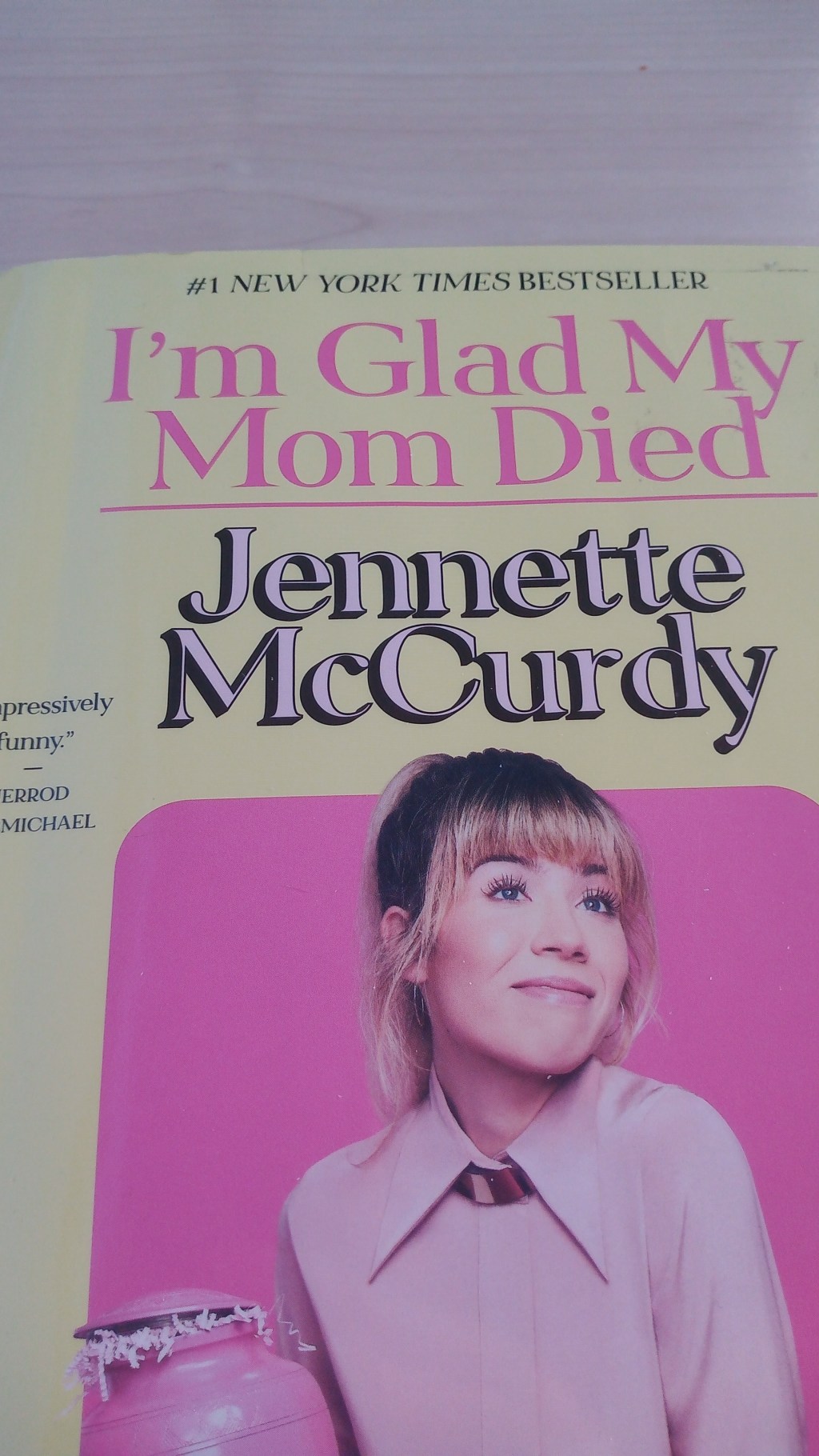
  • I’m Glad my Mom Died

    I’m Glad my Mom Died

    ..is a raw, heartfelt, inspiring book.

    It’s about the way in which the unconscious expectations are placed on a child, it’s the story of how a child, then teenager, Jeannette McCurdy, has to resist growing up to maintain the fantasy of her mother, whom she adored, of being an actress.

    I have read many books on parents and narcissism, but this is the first book I have read that describes the story of what the child had to do, and the effects long term.

    There’s much in the book that I can relate to, there’s much that I have seen in other situations too.

    If you want to get an idea of the damage emotional and coercive abuse, by a mother, can do and looks like, and how it sits under the radar of criminality, but is wholly self absorbed and destructive, then this is it.

    It’s telling that the behaviour in the book has generational patterns, the grandmother was a similar whining moaning complaining woman. The men got all the blame (not doing enough, not meeting their needs, aloof, blamed for affairs to disorientate as the women were actually having affairs.. I’ll not tell spoilers) , the women sat aloof , controlling them all.

    The thread of the mother’s perpetual victim story, of having and surviving cancer runs through. This story is forced down her own children’s throats on home videos, and used as a lever to get acting roles for Jeannette, ‘tell them your mum survived cancer as part of the audition’ is often directed.

    The effect on Jeanette is continual people pleasing, pretending, orientating her entire life around not upsetting her mother,(who was always liable to cry, get angry, scream ‘ungrateful’ , or be disappointed) at any or regular occasions. Jeannette is on emotional alert all the time, in a life that until near the end of the book is not hers, but her mothers.

    Jeannette takes on, since childhood, the emotional regulation of her mom, as the one who can soothe her, who can make her mum happy, yet.. to keep the relationship and Jeannette in her mothers orbit, nothing, not even a good audition or making a part is good enough. So Jeannette is perpetually emotionally exhausted, and notably is comes as a shock in her mid twenties that she can think of herself also. But by this time she is high on alcohol and the effects of 12 years of eating disorders.

    Im glad my mom died is raw, it’s funny at times, and I found myself cheering Jeannette on for every healing conversation with a therapist and every step forward she was making, yet the catalogue of abuse and those who could take advantage of her extended beyond just her mother, which isn’t surprising.

    It would be easy to dismiss this book as only being relevent in the culture created by child acting, the media and production companies, but it is easily relatable to other organizations and cultures, especially with a high performative, high expectation , moral expectation. The fact that Jeannette also experienced a high rigid culture of Mormonism and it’s expectations, and it’s associated shame, is a pointer. It’s interesting that Jeannette mothers pulled her away from church, as also projecting criticism of them to Jeannette, causing Jeannette to not continue to go, and feel the shame. Jeannette mom was just invalidating those who might be critical of her to her daughter.

    What I like too is that Jeannette doesn’t use the N word until the very end of the book. But what she describes throughout is her experiences, as they are, the treatment and behaviour she suffered, and her responses to it, so that when she uses the ‘N’ word (Narcissistic) is carries all the weight. Again, those of us who experienced then normalised, then survived in and amongst this will likely get this, how the naming of it heals, but also the categorising hides the varieties of behaviour behind it. It reminded me of when I first read the pink book – the words I discovered were ‘self absorbed’ or as in Lindsay Gibsons books, ‘Emotionally immature’ rather than the oft-banded around N word. But when we learn the terms having suffered it, we know.

    I was warned that I might be triggered by the book, and maybe that warning meant that I read the book prepared for what it may do. Yes, there are some aspects I relate to, high expectations, perpetual victim, emotional eggshells, at least, there are some differences, not every abusive mother looks or is the same.

    Some are more covert, some overt

    Some rely on victimhood, others entitlement

    All have prey and supply, all divide, all use people as extension of roles, none take any responsibility, all create drama.

    I’m Glad my Mom Died, is one such story of the effect of one type of narcissistic abusive mothers, it’s relief to those who’ve experienced something similar (to know we’re not alone) and insight to those who start to see the patterns from this example.

    Cheering you on Jeannette, keep on going putting yourself first.

    Im Glad my Mom Died is available here

    Thank you to my new Daughter in Law Meghan for recommending this book to me, much appreciated, and to my lovely Christelle for transporting it across the pond.

  • Dementors are Real

    The first time I saw the dementors in JK Rowlings Harry Potter, I knew what that feeling was like. The moment when I’m in a room and the life and energy has been sucked out of it. It often only takes one person to do it. They might be outwardly charismatic – but the attention becomes all on them. They might be outwardly carrying the grey cloud of personal victim hood – and want the room to be on their level. Sometimes that person is both. The man or woman child that wants attention.

    They suck the life out of the room. The collective energy.

    There is a longer historical mythology around Vampires. Some perpetuated by the stories, of Transylvania and Whitby in the north east of England.

    Maybe the mythological Vampire and fabled Dementor are attempts to give a fictional embodiment to the very real that exists in human society. For the many who give and contribute, for the many who love, care and are genuine. There are those exists just to take, to win, to consume, to prey.

    I didnt like watching Vampire movies. They were far too terrorising. The only one I could cope with watching was the Polymorph in Red Dwarf, because it was funny. But its the same thing.

    They were far to real to life. A vampire wasn’t fictional in my childhood.

    What does a real life emotional vampire want?

    Not your blood, but your emotions.

    Why?

    Because their tank is completely empty. Because they’re jealous. Because they are needy. Because you are not allowed to have what they cant feel. Because they just want, and just want to take. Because they cannot help themselves..and more besides…

    Emotional abuse and neglect takes a number of forms, though I am not sure there is quite the language except that from mythology to describe how those who neglect and abuse people emotionally also take from them.

    I have written before about pretending and hiding – and this is the only way I could survive growing up with an emotional vampire as a mother. In that post which is linked here – what I described was how I had to pretend to be someone else to fit in with a role that was expected of me. Also how I would have to give pretend smiles to the camera, whilst dying inside.

    Pretending and Hiding

    Pretending and hiding wasnt just about the role – or about fake emotions. Well, actually it was a lot more that that.

    The reality was that the emotional neglect I (and my sister) experienced wasnt just the complete lack of nature and protection emotionally – but it was also that there was an emotional vampire taking from us any positive emotions or situations for themselves.

    Sometimes it was ‘Killjoy’ words and actions ; ‘ Its my job to bring you down to earth’ – after having a good experience – notably away from them. (Jealousy)

    or ‘ I don’t know why you’re so happy’ – whilst im stuck here… (Victim playing)

    But my role growing up was that I was the one who had to soothe my abuser. There was no give, but take. At the time, aged 5 or above I thought this was a special place, a special role – to be the one who could soothe my ‘grown up’ parent. In reality I was being used and taken from. No 5 year old should be cast in the role of comforting their parent (from things the parent had done and not taken responsibility for) – ‘They are being awful to me James, I need you to hug me’ There was no give, only take.

    The vampire at work.

    Giving me the responsibility, also casting me in a favoured role. To nature and protect her. I would be in trouble if I didnt. Remember the eggshells? Yeah those.

    There was a moment when I was about 9 or 10 that I look back on and realise what that had done to me. Aside from being completely soft, and unable to stand up for myself.

    The all watching Vampire patrolled my primary school at lunchtime. I mean, there was no freedom. An incident occurred one lunchtime when she either fell, or a football hit her or some kind of accident happened when she was on patrol. Strengely I always avoided any playground she was in, most kids did tbh. Anyway, this one occasion something happened, I know not what and she got hurt, fell and damaged her arm. Though I dont remember all the exact events of the fall, or the immediate reactions of mine. I do remember being upset all afternoon. My teachers were kind, and lovely, but my emotional response really did not match the event. They thought I was crying because my mum was hurt ‘ Its ok James, she’ll be fine’ – which is perfectly understandable.

    No I was crying that afternoon in 1988 because I hadn’t fulfilled my role. To protect her, I was crying because I was expecting to be in trouble. But there was no way I could communicate that.

    Thats what happens when they take. When she gave me responsibility for her emotions, by taking mine.

    Looking back this event was a key moment for me. Alot changed after then.

    I must have known more at the time than I remember. I must have felt more.

    Can you see how my inner child had no where to go? Apart from hide?

    I worked out, from then, a number of strategies to cope, including the pretending and hiding.

    On any day of success, such as passing driving tests, GCSE’s or A levels when I was existing in my childhood home, she wasnt the first person I would tell. I found people in my life who I could tell who would say

    ‘Well done James’ – instead of the vampire reaction I was used to which was

    ‘I needed to hear this, give me some of your joy’ or

    All that stress you gave me, I can relax now‘ (its all about them remember)

    Another strategy was that my body froze. Any hug, even hello or goodbye in any family gathering I would be as rigid as a board – she did not get anything. It was how I coped and survived. I shut down so she didn’t get emotions. She may have had some of my time, or even nicely cooked food, or even my intellectual capacity in listening to her life drama and personal victimhood, but she wasnt getting emotions. Thats what I naturally did. Shut down.

    This was my norm.

    Its only when I write this, when I realise that you think all sounds awful. But it was my norm.

    I was the child-adult, the emotional rescuer.

    Vampires do exist. So do Dementors and Polymorphs. They are parts of the preying psychopath.

    So, not only was nature and protection, love and genuine support completely lacking – but anything i achieved or did, or was – was also taken – or I was expected to give it to them, for their consumption.

    The thief comes to steal and destroy. The Wolf in Lambs clothing. I heard it all growing up. Vampires who take, who steal and destroy are real.

    Emotional neglect is in many forms.

    What they don’t give – they also take.

    And they still exist.

    Only some people are affected by them though, only some people can see them.

    Usually those who have known them from childhood. Usually those who feel it in the pit of their soul.

  • Surviving Psychopathic Parenting (part 1)

    Not many say this and live to tell the tale, though if you have been following along with my other posts, you will know that not all psychopaths are serial killers, some happen to be church leaders, with this being one of the top 10 professions where a psychopath might be.

    My psychopath was on the emotional variety, someone who showed instinctively no generosity, empathy or responsibility, easily upset others without any idea that they had done so, and then was as easily upset when challenged (see Darvo, for the pattern), or when not getting their way, when no one was talking to them, and consistently did shocking behaviour, that shocked. There was a high regard for rules, conformity and loyalty, and above all would say that they were being just like any parent by doing all this.

    I remember a friend say to me a few years back that the different between himself and a rock star, was that he was given lego to play with as a child. I sort of recognise this, a bit, the implication was that unless you had had a challenging background, that didn’t involve material items, you were more likely to express your anger for the material lack in poetic song writing and singing. I know its more complicated that that in terms of resources needed to make it (though you tube music has flattened the hierarchy somewhat since this comment to me in 2005) . Thats the thing about emotionally abusive parents.

    You often get Lego.  Sometimes the material is a good foil for the emotional lack. Challenge them, and they plea ungratefulness. This is one reason why, for so long I couldn’t put my finger on what it was about my upbringing. The material,  certainly the basic needs were mostly met, even in dire times of recessions.  But ‘home’ was neither good, nor safe.

    Its difficult to question the emotionally immature, because they’re defensive, and they accuse you of being ungrateful. Its how they operate. The gifts I received were different to my sister, though apparently ‘we were treated the same’ .. oh, and they are never gifts.

    But there’s nothing poetic about feeling alone and trapped, but then again, I realised the other day that I quite liked the pop songs that mention the feeling of being alone, Tiffany for one, and Voice of the Beehive (Perfect Place) was another, I still have that, on cassette. Rage against the alone ness wouldn’t have made good rock though.

    I’m reading ‘The Body Keeps the score’ (Kolk) at the moment, and realise that so many of my memories for childhood revolve around being embarrassed, humiliated, controlled and bullied by my psychopath parent. I realise to that the only place I felt safe, was a place that evoked her anger when she was jealous of it. Jealous that I might be meeting the needs of others, and not her.  Without a safe space I don’t know how I would have survived, though in reality anywhere where my parents weren’t, and who didn’t talk to them, was a safe place. Food was safe too, but it was also unhealthy comfort eating.

    I became the helper, people pleaser, though also, this was so that I didnt go home. Staying behind to chat to the leaders at church, out the chairs away, and not want to go home, stay out late after school, doing anything but, be home, and then ultimately shut off, and go into survival mode.

    The mode I must have been in since a very early age. Avoiding, coping, surviving, hiding, alone.

    Thats enough for now.. because theres alot to say about disassociation, about trauma and emotions and ill write that in the next piece on surviving a psychopath, and at what cost…

    Use the ‘next post’ link below to follow the story…