Tag: domestic abuse

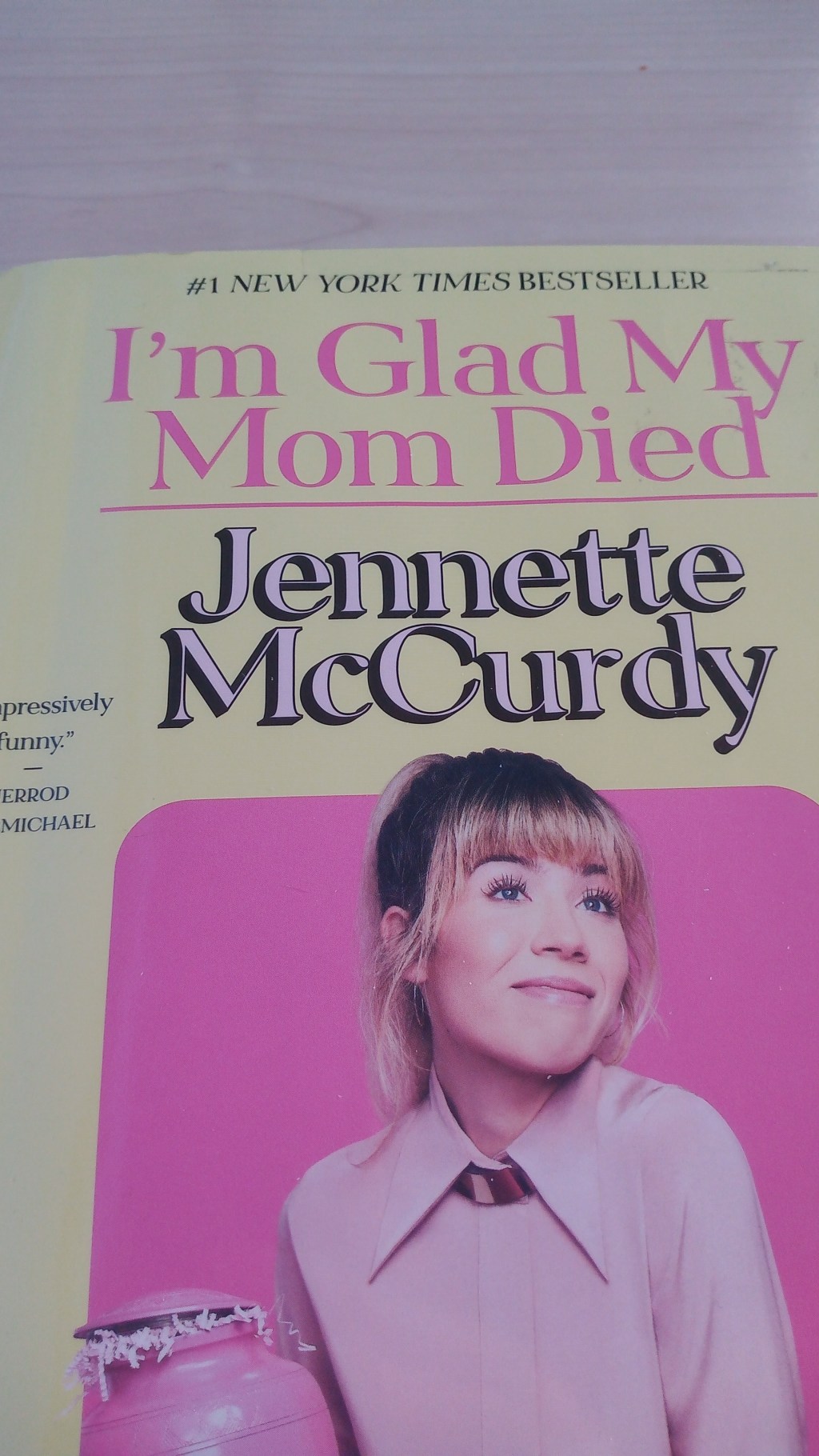
  • I’m Glad my Mom Died

    I’m Glad my Mom Died

    ..is a raw, heartfelt, inspiring book.

    It’s about the way in which the unconscious expectations are placed on a child, it’s the story of how a child, then teenager, Jeannette McCurdy, has to resist growing up to maintain the fantasy of her mother, whom she adored, of being an actress.

    I have read many books on parents and narcissism, but this is the first book I have read that describes the story of what the child had to do, and the effects long term.

    There’s much in the book that I can relate to, there’s much that I have seen in other situations too.

    If you want to get an idea of the damage emotional and coercive abuse, by a mother, can do and looks like, and how it sits under the radar of criminality, but is wholly self absorbed and destructive, then this is it.

    It’s telling that the behaviour in the book has generational patterns, the grandmother was a similar whining moaning complaining woman. The men got all the blame (not doing enough, not meeting their needs, aloof, blamed for affairs to disorientate as the women were actually having affairs.. I’ll not tell spoilers) , the women sat aloof , controlling them all.

    The thread of the mother’s perpetual victim story, of having and surviving cancer runs through. This story is forced down her own children’s throats on home videos, and used as a lever to get acting roles for Jeannette, ‘tell them your mum survived cancer as part of the audition’ is often directed.

    The effect on Jeanette is continual people pleasing, pretending, orientating her entire life around not upsetting her mother,(who was always liable to cry, get angry, scream ‘ungrateful’ , or be disappointed) at any or regular occasions. Jeannette is on emotional alert all the time, in a life that until near the end of the book is not hers, but her mothers.

    Jeannette takes on, since childhood, the emotional regulation of her mom, as the one who can soothe her, who can make her mum happy, yet.. to keep the relationship and Jeannette in her mothers orbit, nothing, not even a good audition or making a part is good enough. So Jeannette is perpetually emotionally exhausted, and notably is comes as a shock in her mid twenties that she can think of herself also. But by this time she is high on alcohol and the effects of 12 years of eating disorders.

    Im glad my mom died is raw, it’s funny at times, and I found myself cheering Jeannette on for every healing conversation with a therapist and every step forward she was making, yet the catalogue of abuse and those who could take advantage of her extended beyond just her mother, which isn’t surprising.

    It would be easy to dismiss this book as only being relevent in the culture created by child acting, the media and production companies, but it is easily relatable to other organizations and cultures, especially with a high performative, high expectation , moral expectation. The fact that Jeannette also experienced a high rigid culture of Mormonism and it’s expectations, and it’s associated shame, is a pointer. It’s interesting that Jeannette mothers pulled her away from church, as also projecting criticism of them to Jeannette, causing Jeannette to not continue to go, and feel the shame. Jeannette mom was just invalidating those who might be critical of her to her daughter.

    What I like too is that Jeannette doesn’t use the N word until the very end of the book. But what she describes throughout is her experiences, as they are, the treatment and behaviour she suffered, and her responses to it, so that when she uses the ‘N’ word (Narcissistic) is carries all the weight. Again, those of us who experienced then normalised, then survived in and amongst this will likely get this, how the naming of it heals, but also the categorising hides the varieties of behaviour behind it. It reminded me of when I first read the pink book – the words I discovered were ‘self absorbed’ or as in Lindsay Gibsons books, ‘Emotionally immature’ rather than the oft-banded around N word. But when we learn the terms having suffered it, we know.

    I was warned that I might be triggered by the book, and maybe that warning meant that I read the book prepared for what it may do. Yes, there are some aspects I relate to, high expectations, perpetual victim, emotional eggshells, at least, there are some differences, not every abusive mother looks or is the same.

    Some are more covert, some overt

    Some rely on victimhood, others entitlement

    All have prey and supply, all divide, all use people as extension of roles, none take any responsibility, all create drama.

    I’m Glad my Mom Died, is one such story of the effect of one type of narcissistic abusive mothers, it’s relief to those who’ve experienced something similar (to know we’re not alone) and insight to those who start to see the patterns from this example.

    Cheering you on Jeannette, keep on going putting yourself first.

    Im Glad my Mom Died is available here

    Thank you to my new Daughter in Law Meghan for recommending this book to me, much appreciated, and to my lovely Christelle for transporting it across the pond.

  • The Sound of Silencing (How to lose friends and manipulate people)

    Im giving you what I know. From what I have heard, directly.

    As I was watching in a fascinating documentary recently on the development of Art in America (‘The Art of making it’- I think) , they used the phrase ‘ the oppressed knows their abuser more than the abuser knows themselves’ . So this is what I’m sharing with you, my knowledge, so that you can build up yours, if you need to. Healing starts when you see how you have been treated.

    These are some of the tactics of the manipulator, and they are tactics, strategies so often used that protect their position or their core damaged, often rotten self.

    Written from their perspective. For extra ammunition for you, the healing one, the empathetic or someone who hadnt realised the extend of what people could do to be emotionally or verbally manipulative.

    So let’s put ourselves in the place of the manipulator, change places and imagine that we are in the shoes of someone trying to keep someone else quiet.

    You have power, and so here some phrases to use if you want to make sure that your, powerful position is maintained, and in the process you have bewildered and controlled the person who challenges it.

    It’ll keep someone quiet, especially someone who you want to keep silenced.

    So, next time you are challenged, they maybe start to ask you questions that seems to threaten your existence, just throw one of these at them and see their reaction. For a moment it’s likely to startle them, especially if you’re using it for the first time. But remember, dont use the same one often, because what you’ll end up doing is giving them something to digest, like the gristle on a bit of chicken, and they’ll start to think about it, and build up some responses to it, so its better to throw in a new one or different one every now and then.

    In no particular order….

    1. ‘I dont want to argue with you.’ This one is great, especially if they start to talk after a discussion before, it’ll completely silence them, they dont want an argument or conflict, just try it and see.
    2. ‘You’re just a dreamer.’ This has the same effect as
    3. ‘Stop being such an idealist’ .. If you suggest their argument is unreal, or ideal, it disables it, and they start to wonder if its unreasonable, making your position completely reasonable
    4. ‘Now dont get Angry with me’; Say this if their tone is just a tiny tiny bit louder than normal, or especially if they have gained a bit of confidence recently, suggesting they might be angry at something will peg them down a bit, also it really helps, in ‘church world’ that any determination of anger can help ensure that a position is invalidated. You can appear the calm one. It doesn’t matter if you have made them angry.
    5. ‘You’re too Sensitive’… an alternative is ‘You Care too Much’ – these are great to use, especially if they are starting to notice that you have limited depths of care for others, and maybe a deeper core of selfishness that you’d like to hide, so just let them know that they are too caring, and too sensitive to the needs of others. They’ll question how much to care, and maybe, if you say it right they’ll think that you haven’t had enough attention, and they’ll give you more, after all this is what you want all along.
    6. ‘You’re just gossiping’ or ‘thats just gossip’ or ‘they’re just a tell-tale’ Definitely use this one if someone starts to accuse someone that you have a close association with, especially related to safeguarding, and maybe churches and religious groups, this one is great to use, it’ll rally others around your position and sideline the critical, negative or disclosures. Its more effective if the persons making the accusation are in an already sidelined group, like young people, women, older people, someone with learning needs, someone from a poor background, anyone whose been judged harshly already by the majority, explicitly or implicitly, thats the best time to get away with the ‘gossip’ line.
    7. ‘Are you sure you dont belong to a Cult?’ If the person goes to a different religious group, one that is different to yours, and they are challenging you, then throw this line at them, do it especially if they have received guidance from their ‘pastor’ or ‘minister’ and its about how to cope with you.
    8. ‘This is just the ways its been/always been/ I can’t change/Just the way I am’ – There’s no way you are going to change, especially not for them, why do you even need to you are perfect as you are, so give a version of this one a try, gently let them know that this is how you have always been, (or how the organisation has always been) and by saying this, they will have to realise that they have to do any changing.
    9. ‘You need to think about my needs’. This one is great to use, after they have done some of 8, changing. Then because of the effort they have put into thinking about themselves for a while, this will help them reset to thinking about you again, and taking them back into the pattern that you liked them in, when they orientated their life around you, and you not changing. They love changing and being exhausted all the time.
    10. ‘Dont raise your voice you’ll upset the kids/someone’ . Say this when you want to give them the curveball of emotional sympathy, but not for you, for someone else. You dont feel, or get upset that often remember, neither does what they say or do upset you… but that doesn’t stop you from using someone else to create their emotional sympathy. Just gently let them know that their actions hurt someone that both you and they have a connection to, a family member, relative that kind of thing. It also gives them the knowledge that you have contact with that other person.
    11. ‘I think you might have mental health issues’. Get this one out there when they’ve gone a bit upset or really low, depressed ever since the last time they tried to talk with you. Maybe even do this in a kindly way, suggest that they get help, or make it look as if you care about them, just a little. But dont do any more than this, never find them a therapist, or book a GP appointment, no no no, just plant the seed. It’s unlikely that they’ll follow it up, it just combines a tiny bit of care, and causes them to be bewildered further. Just be really careful here though, especially if they start to go to therapy, or get help, you’ll have to find ways of pegging them down or devaluing what they are doing in this.
    12. ‘Dont you dare try and be the Victim’. When they start to even dare think of themselves as a victim of your behaviour towards them, just plant in them this little gem, it’ll reinforce to them that you control which role you are and the position from which you see the world, and there’s no way they are going to take this position from you.
    13. ‘I was just being sarcastic’. Did they not understand a comment you made that was intentionally harsh? Or they challenge you on it because it was unreasonable.. Say it was sarcastic. Now you know that they know that it wasn’t, but that doesn’t matter, just say it anyway.
    14. ‘You’re overthinking this, you read too much, best to keep it simple’. Your way is right, even if their thought through idea is a good one, demean the source of the idea (probably a book) and not them, and then appeal to an easy way. Easy avoids pain and pain is definitely something to avoid.
    15. ‘I think you expect perfection’ – Use this one to suggest that they are expecting too much of you, like anything at all or their basic needs to be met, which isn’t what you are going to do, so instead, give them the impression that what they require from you is some gigantuon effort, or extension of reality , like perfection, and instead they will have to re-assess what it might even be that they are asking.
    16. Speak of yourself in the third person, so ‘Your father, Your wife, Your husband’ dont say ‘I’ , because your I has to stay hidden away, and can’t speak, but you can describe yourself in the present as if it might be from you, its your idealised self, not your core self talking, like ‘you know your husband/mother loves you very much’ , its not I… This also works in emails, to disguise the tenses, persons and voices, to confuse. If you’re not sure of this, use ‘God’ instead… like ‘God wouldn’t want you to get angry’, or ‘God loves you’ (even if I dont).
    17. An extra one. Forget that you said any of these things. Every time. They didnt hear you properly when you said it, you dont remember saying it, they must have misheard you, and if you did say it how they interpreted it want what you meant. This utterly wastes their time, because theyve spent a while reacting to what you did actually say, and now you are disputing your own words, which of course you have every right to do so, and it makes them think they are crazy. You can even go further and then suggest they need their hearing tested.

    Sounds harsh? It happens… a lot.

    So, here’s how to gaslight and silence people. Here’s how to keep your abuse victim quiet, confused and bewildered, scared and questioning their reality. Here’s how to use language to create a culture of fear and manipulation, and for you to sit in a place of power.

    If you are reading this and are horrified that I am giving away tips to abusers, then wait.

    It’s very very unlikely that anyone abusive is going to read this, it is more likely that you are. You. Someone who has experienced this kind of behaviour. Because you googled the phrase ‘too sensitive’ or ‘verbal abuse’ or ‘Darvo’ or ‘Victim mentality’ or ‘self awareness’ or ‘projection’. Someone who is abusive doesn’t read a book on how to be abusive, somehow, their protectors just know, and their wounded ego can do the rest. That person isn’t going to read this list.

    But if you have heard these, you are more armed. You are using your brain, you utterly clever brave courageous soul, you are resourcing yourself with the tools of your abuser, and working out their similar strategies, because they are all the same. The words being only slightly different, I’ve seen and been told almost all of these in 40 years, some more than once, and more by women than men, though I know men say these things too. There are only so many patterns and phrases in their textbook, once you’ve seen the ones above, you’ll notice them all.

    Can we also broaden this out from individual relationships, to systems and structures too? How many churches wouldnt recognise these kinds of behaviours? how many might even see these as ‘normal’ ? What about in safeguarding situations? What happens when people try and defend their roles or positions or reputations? Lying to defend is too blatant, but 1/4 truth hidden in manipulation (and spiritual language) can go a long way.

    Im sorry that you had to read this list, but if you have said any of these, then it’s time also to stop, reflect and listen, to the damage you have done. If you have heard these, if you hear these in the present, do consider getting help, support and emotional safety, because it might well be time that you are treated better, respected, listened to and heard.

    Have you heard any more? do add them in the comments below, to share and build up a resource of them.

  • The Differences between a Real or ‘Reverse’ Victim.

    Trigger Warning – Abuse of any kind. Please do not read if you have experienced abuse, unless in a safe place to be able to do so. This is written to educate those who might not know the difference, if you have experienced abuse, you know this already.

    I think I was 14 when I was bought a ‘fake’ Man Utd football T-Shirt at a market stall in the south west of England by my parents. It was obviously fake. It was black, it had a ‘cotton traders’ label, the ‘Sharp’ sponsor was ironed on crooked and the badge was wrong. Yet it was ‘given’ to me as a gift. And I hated it. Man Utd were, and still are, my team, and though potentially even then I had no real sympathy with their financial situation, I knew that this fake was wrong. It wasn’t real. It wasn’t genuine. I felt, like many of the ‘gifts’ from my parents, cheap. (yet was told I was ungrateful or spoilt) . I probably was grumpy and upset for the rest of the day and told I was spoiling ‘their holiday’.

    My point was, and is now, that there’s a difference between fake and real.

    Today I read this story.

    Male Victim of Domestic Abuse Lies tells of Torment

    If you were in this situation could you spot who the ‘real’ and who the ‘fake’ victim is? Difficult.. very much so.

    The story is about how a Man was accused of being a domestic abuser, by his partner, whose story was believed, he was sent to jail on the basis of her claims. After his release, the truth was revealed. The victim story she played was fake.

    If you read this account, which will by no means be the full story, do so tracing the way in which the actual abuser plays the DARVO game throughout. As a reminder, Darvo stands for Deny, Accuse, Reverse, Victim Offender. The oft used pattern of someone accused. Playing victim is part of the pattern.

    Google DARVO to find out more – here’s a link too – DARVO

    What I mean is, that they are a ‘Reverse Victim’ rather than a real one.

    Fake, rather than real.

    And this is no criticism of Humberside police in this case. Not at all.

    Because. This cuts both ways. Both genders..and its difficult to know the difference.

    Im not sure that phrases like ‘Believe the women’ or ‘believe the victim’ help. They create a conformation or gender bias, and a woman playing victim is considerably harder to spot, than a man doing so. Especially in the face of them being able to accuse Men of wrong doing. Men play victims as much as Women do. My experience is having seen it in Women, and obviously in these stories.

    Its not just domestic abuse.

    This was a case in Cumbria a few months back. This isn’t about false allegations of abuse, its about deliberate lies and having a fake victim story being believed.

    I wasn’t the ‘real’ victim when I was given a fake Man Utd T-shirt. But I knew that something didn’t feel right when I was given it.

    These are by no means conclusive, but how can you spot a real victim, from a reverse victim?

    What is it like being a real Victim? (of abuse, of any kind)

    Lets look at the effects of abuse on someone and their emotions, feelings and behaviours. They can feel scared, silenced, bewildered, trapped, afraid – they can often mask and give a ‘false’ self to keep up appearances, they can have hard shells or even react intensely if provoked – as a defence mechanism. They may be anything like a tortoise, hedgehog, dragon or eeyore.

    They may not realise that they are a victim.

    Once they realise – as I did – it wasn’t a label they want.

    They often dont want to share about being a victim, but more about overcoming, surviving and coping, recovering and living beyond.

    They often blame themselves.

    They have nothing to lose, have often already lost everything.

    They often realise they can do something by changing and seeking help – and realising that they can – by furthering awareness, self love and compassion… which extends to others.

    They often have survivors gift.. to help others.

    Often they have fragmented story, and are afraid to tell.

    A real victim is unlikely to want to create drama. Is likely to be silent. Is likely to step away from situations. Is likely to learn to protect themselves.

    A real victim… is likely to be movitated by justice, by being heard, or by finding peace and a life beyond it.

    A real victim…. can see the games being played of the reverse victim. It’s the task of the Reverse victim..to silence, invalidate, remove the real one.

    But what of a Reverse Victim?

    This is a person who is using victimhood for a number of reasons. Usually to protect themselves, abusive behaviour or lies or denials.

    Therefore its a game being played.

    A phrase like ; ‘Look what you/she/he made me do’ or ‘ The Devil/alcohol/my mental health made me do it’ – can often be used – because that person keeping up a game, in which they present as victim/innocent and not responsible for themselves.

    False emotions usually accompany the Reverse offender, as are false projections, to accuse others.

    They often aren’t able to use the situation to better themselves through it or after it – because it wasn’t a situation in the first place – just a game.

    They can often pretend to ‘get help’ but have difficulty (blame) finding a match with a counsellor or that their counsellor isn’t working for them, or use the fact that they’re going to counselling to manipulate others into thinking that ‘they are trying’.

    When asked for more details about the situation – they might break down and cry more.. because they can’t give an answer to what hasn’t happened, there’s unlikely to be any more of a story with tears, just a more sodden weak one. And they want you to fix them. Note the drama triangle being used here too. (Persecutor, helper, victim)

    A Reverse Victim is angry when they are challenged about their game.

    A Reverse Victim is loud, and plays on victim hood. Especially in cultures where they know they elicit sympathy. Ie Churches full of nice unaware people.

    The Reverse Victim can often make claims about themselves – ‘I couldn’t do that I’m a nice guy’…’that isn’t the real me, you know the real me’ …. ‘I couldn’t do that im a christian/minister/police officer’ …..

    A Reverse victim thrives on drama. Loves the attention. Creates drama where possible. A reverse victim manipulates so that others can do their emotional work for them (flying monkeys).

    The Reverse Victim doesn’t realise that they are fulfilling a cycle, and most of the time they dont care…. until their game is up. Winning is their motive.

    A Reverse victim is likely to criticise the way in which the actual victim is responding to the situation. ‘They took their time coming forward’ or ‘They shouldn’t cry, it wasn’t a big deal at the time’

    A Reverse Victim bewilders. A victim feels bewildered.

    A Reverse Victim is threatened when their victimhood story/script is threatened. They have to stay this way.

    Often its been a script since childhood. They’ve cried wolf to get gifts, soothing and attention. ‘Dont you dare try and play victim around here’ might be their reaction. See how bewildering this is, and a projection.

    A Reverse Victim… creates a place of emotional abuse for a real one.

    Im sure there are other differences, but these are all the ones I can think of, because I have encountered them in a number of situations.

    I could say that it would take a significant amount of skill to identify the difference between a real, and a reverse victim..but as I said.. those who have been abuse victims, and done the work, can often see the patterns.. they’ve experienced them often enough.

    In the safeguarding training I’m doing there’s a phrase known as “Respectful Uncertainty”. What this means is to try and be respectful of persons whilst also being unsure of their story so that further accurate information is sought. It is not to let myths make decisions, but evidence. Its not respectful uncertainty to say that a man is always an abuser, and a female always a victim.

    I had enough respectful uncertainty to know not to take that black T shirt to be anything other than a fake. The signs on the front may have been the same, but they didnt look, feel or seem right.

    If this has affected you, then do seek professional help and/or a trusted safe friend who can listen to you non judgementally, there are helplines in the link pages too, please do give them a call.

  • Permission to be Happy

    Yesterday I wrote about learning the choice to be Happy.

    What I realise today is that there’s something else.

    Being Happy requires safety.

    Its easy to be moany, negative, critical,

    easy to be unhappy, easy to be numb

    easy to hide feelings even.

    When I was these things I was easy to manipulate.

    Easy to sink into the swamp.

    Easy to be abused.

    Easy to stay in the fight for the others, and be unknowingly co-dependent with it.

    Why would I want other people to be happy, if I had barely a concept of it.. maybe I wanted people to need me….

    Happiness wasn’t a dream for me – I numbed emotions

    Happiness wasn’t even a ‘concept’ I could conceive for myself. Not deep down.

    Reality was that for 40 years I’d lived with people who didnt want me to be happy. (they weren’t Happy themselves…)

    So why even chase it, easier to theorise or criticise the notion of it.

    Being Happy for me, required safety.

    Actually.

    It required permission.

    Specifically, I needed to hear and accept the possibility that I could actually be happy.

    It was one of my friends who said to me; ‘James, When are you going to be Happy?’ but not in that critical way, more in a ‘James – when are you going to consider that you could be happy and that being happy is ok and safe to be‘ kind of way.

    James…. Its ok… you can be Happy….

    I needed permission, and safety, and the opening of a possibility that I could feel such things, or live in a way that was about happiness.

    And my mind raged with it.

    Because, my happiness was selfish – id been told, My needs weren’t important – id been told, other peoples happiness was more important than my own – id been told , happiness is for an ‘eternal life’ – id been told, happiness was shallow – id been told…. all the messages..and others besides.

    I could easily overthink being happy and drag myself into that thinking space.

    So I needed permission to be Happy.

    Safe, brave, permission.

    Permission to begin the process of searching, seeking and feeling Happy.

    Even from in the midst of controlling relationships that had another few years to be dealt with. Not before. But in the midst.

    It wasn’t that ‘when id sorted everything id be happy’ – because that was a lie. It was that in the beginning of being happy, or that the potential removal of unhappiness was possible even at that point. It was on the table.

    Choosing to be… happy…in the midst of abuse and oppression is likely to challenge…. as the oppressor is losing control. Dancing in the metaphorical fucking rain.

    Even beginning to realise that happiness was possible, and having the courage and safety to permit myself to it, invoked a glimpse of lightness, of happiness in itself. I stepped a tiny bit, another tiny bit, out of the leadened swamp.

    So as I shared my learning yesterday, and awareness of the choice of my emotional awareness, one small step at a time, I realised that my awakening to happiness personally was about permission giving, about possibility, and about safety. I had received in so many ways the kindness of the universe through a breakdown and rebuild, yet that rebuild would not be full until I could see the lights above and know and feel that these could be true for me too.

    Today, 4 years on I can give myself permission to be happy. What I needed the first time was the safe permission from others.

    I can be happy, and so can you.

    It is possible and permissible Now.

    It might take courage….

  • Holding the weight, when the other doesn’t

    I was wondering, what are the things we do, when in the midst of abusive relationships, before we realise that it wasn’t actually us?

    Therapy is one of them

    This reminded me of more….in an abusive relationship, of some of the strong imbalances..

    You do the work – for those that wont

    You do the thinking – for the one that wont

    You show up – for the one that hides

    You take the blame – for the one that gives it

    You have principles, of truth – for the one who is just out to win

    You do the time – for the one who wants easy

    You solve and fix – the damage they create

    You take on their issues – for the one who demands it

    You take on responsibility – for the one who avoids it

    You invest in the relationship – for the one who expects it

    You respond to their emotions – for the one who projects them

    You keep the peace – for the drama that spews from them

    You stay the quiet one – for the one who can’t see themselves, making the noise

    You remember things – for the one who’s amnesia is selective

    You start….eventually… too see….

    Yourself, in a way they cannot see.

    and

    Them, in a way they cannot see either.

    That you are more than an extension of their abuse

    That all you have dealt with, are tools too for making you strong.

    You and I have put up with so much, that its now time to fly.

    As a friend commented to me, there are nuances to this, that a short article can never convey, my focus on this is more parent/child abusive relationships, but that doesnt negate the possibility/reality that partner relationships can be very one sided and these binary occur. The adage that ‘they dont change’ unless we do is undoubtedly true, but as you do change, seeing the extent of that weight can start to be released..

  • Surviving Psychopathic Parenting (part 1)

    Not many say this and live to tell the tale, though if you have been following along with my other posts, you will know that not all psychopaths are serial killers, some happen to be church leaders, with this being one of the top 10 professions where a psychopath might be.

    My psychopath was on the emotional variety, someone who showed instinctively no generosity, empathy or responsibility, easily upset others without any idea that they had done so, and then was as easily upset when challenged (see Darvo, for the pattern), or when not getting their way, when no one was talking to them, and consistently did shocking behaviour, that shocked. There was a high regard for rules, conformity and loyalty, and above all would say that they were being just like any parent by doing all this.

    I remember a friend say to me a few years back that the different between himself and a rock star, was that he was given lego to play with as a child. I sort of recognise this, a bit, the implication was that unless you had had a challenging background, that didn’t involve material items, you were more likely to express your anger for the material lack in poetic song writing and singing. I know its more complicated that that in terms of resources needed to make it (though you tube music has flattened the hierarchy somewhat since this comment to me in 2005) . Thats the thing about emotionally abusive parents.

    You often get Lego.  Sometimes the material is a good foil for the emotional lack. Challenge them, and they plea ungratefulness. This is one reason why, for so long I couldn’t put my finger on what it was about my upbringing. The material,  certainly the basic needs were mostly met, even in dire times of recessions.  But ‘home’ was neither good, nor safe.

    Its difficult to question the emotionally immature, because they’re defensive, and they accuse you of being ungrateful. Its how they operate. The gifts I received were different to my sister, though apparently ‘we were treated the same’ .. oh, and they are never gifts.

    But there’s nothing poetic about feeling alone and trapped, but then again, I realised the other day that I quite liked the pop songs that mention the feeling of being alone, Tiffany for one, and Voice of the Beehive (Perfect Place) was another, I still have that, on cassette. Rage against the alone ness wouldn’t have made good rock though.

    I’m reading ‘The Body Keeps the score’ (Kolk) at the moment, and realise that so many of my memories for childhood revolve around being embarrassed, humiliated, controlled and bullied by my psychopath parent. I realise to that the only place I felt safe, was a place that evoked her anger when she was jealous of it. Jealous that I might be meeting the needs of others, and not her.  Without a safe space I don’t know how I would have survived, though in reality anywhere where my parents weren’t, and who didn’t talk to them, was a safe place. Food was safe too, but it was also unhealthy comfort eating.

    I became the helper, people pleaser, though also, this was so that I didnt go home. Staying behind to chat to the leaders at church, out the chairs away, and not want to go home, stay out late after school, doing anything but, be home, and then ultimately shut off, and go into survival mode.

    The mode I must have been in since a very early age. Avoiding, coping, surviving, hiding, alone.

    Thats enough for now.. because theres alot to say about disassociation, about trauma and emotions and ill write that in the next piece on surviving a psychopath, and at what cost…

    Use the ‘next post’ link below to follow the story…

  • Everyone knew…but everyone was terrified

    ‘All the same’, demurred Fudge, ‘they are here to protect you all from something much worse.. we all know what (Sirius) Black is capable of..’ ,

    ‘Do you know, I still have trouble believing it, said Madam Rosmerta thoughtfully ‘Of all the people to go over to the dark side, Sirius Black was the last id have thought…I mean, I remember him as boy at Hogwarts. If you’d told me then what he was going to become, I’d say you’d had too much mead’

    ‘You dont know the half of it , Rosmerta’, said Fudge gruffly ‘The worst isnt widely known’

    (From JK Rowlings Harry Potter, The Prisoner of Azkhaban)

    In this scene, Harry is listening under the table, to a conversation about the background of the escapee prisoner Sirius, and how Sirius had close links to the Potter Family. It is this exchange that strikes me. You have the revelation of the action of Sirius, and the disbelief of one of them in conversation, that even so many years later that the accused, Sirius could be like they are.

    Yet as the narrative unfolds the grisly truth of Sirius behaviour is revealed.

    He is stone cold, shameless when confronted by his own behaviours of betrayal – seeming perfectly normal in the heat of a crime , and betrays Harrys Parents to let Voldemort access to their home to kill them.

    Some people just dont know, they hide all their behaviour behind closed doors.

    Some still are like Rosmerta, in disbelief that anything like this could be the behaviour of the boy Sirius.

    But its as difficult, when people do actually know.

    Some people have been entitled, shameless, narcissistic bullies all their life.

    They are well known to be weird. Well known to be easily angered, jealous, spiteful, over emotional, ego centric, and turn on the victim tears at the sight of challenge or being called out.

    People knew about Sirius, though some didnt.

    What could anyone do?

    Ive wondered this a few times this year.

    Two people have told me that they are apologetic that they knew, but didnt protect me.

    What could they do?

    Everyone knew.

    But did nothing

    Because.

    They could do nothing.

    Everyone knew

    But were scared themselves.

    I know they couldn’t.

    Everyone knew

    But they were terrified

    Everyone knew

    But they were traumatised themselves

    They knew she was easily angered

    They had felt it…

    They hadn’t been seen themselves, just prey for her ego

    And had to work hard, work together to piece the story

    They now avoid, put up boundaries.

    They had been used as a complaining sponge, to hear who she was wanting to complain about this time, me, my sister, their friends, the church, her job.

    Dumbfounded in disbelief.

    ‘Theres nothing wrong with James… its his _________ thats the problem’. (Once said a Vicar who knew me aged 19)

    Some people can hide their abuse behind closed doors. Other people wear it on their sleeve. All the time.

    On their sleeve. In full view.  Revealed all the time. Like Jimmy Saville for example. And the soon to be impeached one.

    You cant say ‘why didnt you leave’ when you’re a child. There is no escape. And that shouldn’t be said to anyone in a domestic abuse relationship anyway.

    Didn’t anyone else see?

    But everyone knew.

    Everyone still does know.

    Some people have been like it from their beginning.

    And it’s tolerated. Accepted. Protected even.

    ‘They’ve always been like that…. ‘

    ‘They cant be expected to change…’

    They play victim to get sympathy, whilst squeezing every other emotion out of the room.

    Agreed.

    Some people are not cunning enough to hide themselves.

    Some people dont get the chance to have a Rosmerta defend them.

    The worst isnt widely known

    because it would make you shiver.

    Thats the point, rules dont apply to them.

    Scared

    No one could do anything

    because everyone is terrified.

    Its a trauma response that sends chills down the spine.

    and

    no one fully knows the other half of it.

    Some of the abusers are hidden in plain sight. Some have displayed it all the time.

    Just that they have had their accusers silenced and delegitimised.

    If you saw or knew, but didnt do anything, no one blames you, I don’t.

    Why did no one do anything?  Well….. who could? Who would want to?

    Everyone knows, even now.


    (and I know Sirius isnt necessarily the person they claimed to him be, thats not the point I was making)

  • Already I’m glad I started more therapy

    I’ve only had the first session of therapy. But already I’m glad.

    Maybe therapy can feel like running a marathon, the hardest part is getting to the starting line.

    Wondering what it will be like

    Wondering what to say

    Wondering if what you have to say is going to be heard

    Wondering if anything you say is valid

    Already I’m glad. And that’s just one session done.

    First session and I’ve already shared, spoken, described stories I’ve never done before.

    Healing begins.

    Last time I did therapy in the midst of chaos, it was the start of a rebuild. With clarity over the end of one emotionally toxic relationship, clean air brings the desire to do work on the other one.

    24 hours since that first session. I’m sitting in the calm ok feeling of being heard, validated and safe.

    It’s all better out, that being stuck inside where it’s all been for over 40 years. Time to love myself even more, understand and heal.

    I’m already glad I started. Men, don’t put it off. Damaging parental relationships, or domestic abuse relationship can happen to you. It’s time to heal.
    It
    Wasn’t
    Your
    fault.

    And, seriously, don’t think you cant be healed, or that your problems are too little, or big, or that it’s not worth it. Just get onto the start line and start.

    I’m glad again to start therapy.

    I’m looking forward to being even more me.

  • Emotional Abuse – why it’s like the aphids on my chilli plants

    I am now in the fourth season of growing chillies, I planted the current crop from seed in January, and now 25 (sorry 24, I gave one away) plants adorn my small flat, taking up window sills and the balcony.

    I think ive eaten 6 green fruits and I’m giving the chance for the other fruits to ripen and turn red, unless I need them for cooking.

    But the first year I tried to grow them from seed I failed. They just didn’t take.

    The second year I was given a cutting from my sister in laws mum/dad, and the one plant grew and supplied me with over 100 chillies in a year.

    But they nearly didn’t make it.

    I looked at the plant every day. It was in a prime sunlit position.

    I didn’t realise it was being attacked.

    What I didn’t spot, initially, was the aphids.

    Because they hide.

    But also because I wasn’t looking for them

    I thought the extra green/white dots on the flowers were normal.

    I didn’t see them.

    (And I bet you cant see these ones either: )

    Not yet.

    Not until just before it was too late.

    Or just before I could do something about them.

    Spray purchased and they got eradicated.

    Plant saved.

    Chillies harvested.

    Aphids destroyed.

    But only after I could see them.

    I could equate this story to Sin, and especially a note I remember why old pastor telling me, that its always the little foxes that spoil the vine.

    But I’m not going to do that.

    Because sometimes it’s easier to notice Sin and ignore it, than it is to notice abuse and put up with it.


    One of the most key questions about Domestic abuse is said to the victims:  ‘Why did you stay?’

    instead it should be ‘what was manipulating you not to leave?’

    It takes more than 28 calls for help to leave.


    Thats when its dawned enough for the victims to know that they’re in something so terrible, and they want a way out.


    But on other occasions the abuse is more like the aphids.

    So subtle.


    Call it gaslighting, emotional manipulation, psychopathy, or sociopathy. Language varies.


    Either way; It’s not a pair of scissors sniping away at a chilli plant, but almost invisible aphids.


    Until the plant has lost its spark, its reason to be.

    Aphids attack the new plant. The leaves that are growing. New life susceptible.

    Emotional abuse attacks any new growth. Any opportunity for light, joy or growth. It is jealous.

    Until there’s nothing left in its core.

    The plant cannot escape. But it needs help. But it might not even know it.

    Needs the help of those who have previously bought the spray.

    Needs the help of those who know what they’re looking for.

    Those who can see.

    These fourth season chillis are growing in an environment where i have an aphid spray of water and soap ready to hand.

    Theres no shame for chilli plant to have aphids. It just needs help to have them eradicated.

    Its not the fault of the plant.

    Ever.

    (This post was originally posted on my Learning from the streets Blog, it still remains there too)


    References:

    Children of the Aging self-absorbed: (2006) Nina Brown

    The Gaslighting effect : (2018) Reva Steenbergen 

    The Carl Rogers Reader, (1990) Kirschuenbaum, Henderson