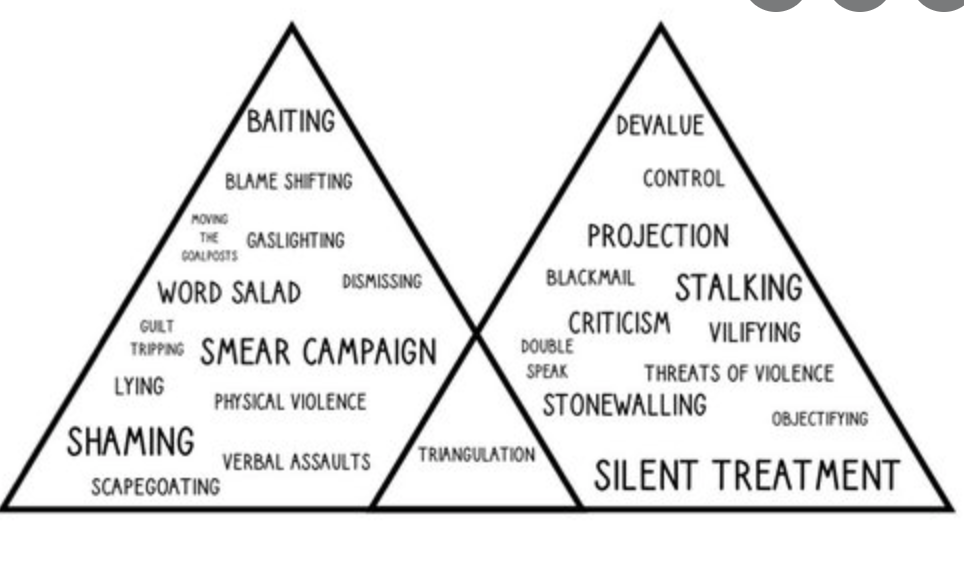
Tag: emotional immaturity

  • Fathers Day; It’s Complicated

    Mothers Day is ‘easy’, as is her birthday. Its not easy, but it’s easy because it’s clear cut, if you have read anything of my story on these pages, or had met her, you will know.

    For some of you reading this, Fathers day is the clear cut one. Not easy, not ever easy, but its clear, if your father abused you, hurt you, abandoned you, or beat up your mum, Fathers day brings with it horrible trauma, understandably, as its being dealt with, I’m not in any way saying that its easy, at all – more reflecting that there’s a clarity, however rough, in facing that day as a horrendously difficult one, as its a permanent reminder of the abusive, toxic one. For me- that day is Mothers day.

    But Fathers day – the celebratory day , for me, of the ‘other’ parent – its complicated isn’t it?

    Even as I grew up, from mid teens onwards there was a recognition of the ‘difficult relationship people has with their fathers’ – on fathers day. But that wasn’t me.

    The difficult relationship was with the psychopathic other one.

    So, I could, somehow think to myself- aged 12 onwards that I was somehow alone, in that no-one had difficult mum issues, and also that compared to mum issues I did have, I didnt have dad issues. Or at least, I had lesser Dad issues that have only arisen to the surface as I have begun in recent times to deal with the mum issues.

    Growing up, the eldest male child – of an abused Father. A Father still caught in the web of her abuse. A Father powerless. or…. A Father choosing to stay trapped, choosing loyalty, actively making a choice?

    I kind of get, how a child of abused female parent is expected to rationalise their action -The abusive male is stronger, more powerful physically, the child watching the damage to their mum – is undoubtedly traumatised – but she isnt expected to fight back, yet might protect her children and leave for safety.

    What kind of emotional strength and awareness would it take for a man to leave an abusive woman?

    Thats the question I am left facing in regard to my Dad, for 40 years I know I was afraid, for 40 years I ran and hid, for 40 years I couldn’t see it either – caught in her toxic web – the trophy, compliant child, walking on eggshells.

    Its complicated, Fathers Day.

    On one hand, my Dad didnt abuse me, frighten me, hurt me, bully or reject me. So thats a tick.

    But on the other, he didn’t protect me from the one who did abuse, frighten, hurt and bully, not just me..but everyone. Thats the tick taken away, isnt it?

    And he did carry out the ‘Dad’ punishments on behalf of the other one, when she got upset by something I did or didnt do – that to her was unreasonable.

    Slippers used to beat me on at least two occasions, and on both I can remember thinking that he wasnt really invested in doing it, wasnt really him, just being told to do it by her. Child-mum got upset. Emotional, couldn’t cope.

    And he didnt ever stand up to her – for either of us – never saying ‘You’re being too hard on them’ to her… but , instead saying things like ‘ Just do that thing to please your mother’ or ‘ Dont upset her’ – all the whole realising that it made absolutely no difference.

    Keep off the eggshells, or ill be in trouble too. he might as well have said.

    Often he was just her tool.

    Defending her, when others called her out.

    I am reminded of this- and the book it came from:

    Essentially, you dont get to have only one Emotionally immature Parent. At least, I dont. The obvious one is the Emotional one, the Child-mother. Dad is Passive parent, to the textbook.

    ‘Passive parents aren’t angry or pushy like the other three types, but they still have negative effects. They positive acquire to dominant personalities and often partner with more aggressive types who are also emotionally immature, which makes sense given that people with similar emotional maturity levels are attracted to one another. Comparesd to other types, these passive parents seem more emotionally available, but only up to a point. When things get too intense, they become passive, withdraw emotionally, and hide their heads in the sand. They dont offer their children any limits or guidance or help them to navigate the world,. They may love you, but they cant help you’

    Lindsay C Gibson, Adult children of Emotionally Immature Parents (2015)

    He was also completely un-trustworthy – her Flying Monkey , he’d be the one to glean information, good (easy to talk to) cop, though didnt offer anything in return – no empathy, advice, genuine concern – was just listening for information to take back. I learned not to trust this parent. Any attention he got made the other jealous, so actually it would become difficult to know how to gauge what to do. He knew we, as children or a family, would spend time with him, when she wasnt around. Yet, he would hide away to stay out of the line of fire, I mean he didnt spend hours in a shed, garage or converting an attic for nothing – or somebody elses.

    The image is right though, playful – and also at times fun – especially when I was a much younger child, and would still play board games , also the helpful fixer – practically doing things, making, fixing, DIY and all of that, though that DIY ‘dependency’ would be a way for her to be involved – so again he was being used.

    What makes all this complicated is the level to which I regard him as someone who could have made different choices, someone who may have realised a long time ago that he has missed out on many aspects of actual life – like relationships with his own kids, grandkids, family and others – and chosen instead a path of least resistance and loyalty. For too long people would say ‘I feel so sorry for ________ (insert my Dads name) he’s such a nice guy – really helpful – he shouldn’t miss out – just because of your mum’ – and maybe, feeling sorry meant that I or others kept softer boundaries with him, that the other parent bull dozed through – (a marathon of miles taken when an inch was offered).

    I could understand that he was scared of her, everyone was, but if he was scared of her – why did he not think that his children needed protecting from her too? Maybe thats it, maybe thats what makes it complicated, he was in his own survival mode that we were all in, whilst the psychopath took everything for herself – am I angry- no – is it complicated? Yes. Could he have taken responsibility – and not left the emotional responsibility to me in the house? Yes, Could he have thought his children have some emotional welfare against her abuse? Yes

    Was he continually lied to by her? Was he stuck in the midst of the Darvo game she played? Did he accept breadcrumbs? Was he coerced to be loyal for religious reasons? – probably yes to all.

    Maybe, I just realised that because of his loyalty to her, despite all the abuse, then what I had to do was treat them as the pair that they are.

    Fathers Day. Its complicated. When one parent is only slightly better than a very abusive one, doesnt mean that they’re in anyway good, nurturing, protective or supportive, especially when enmeshed in their lair. He’s a grown up though, its his responsibility to change himself. Happy Fathers day ; To the parent who isnt as bad as the other one – isnt going to sell many in Clinton cards…

    So – what do I feel? Feelings are complicated today – because all of this is complicated. Sometimes I feel angry and annoyed, then I feel guilty for feeling angry and annoyed , because well, that anger and annoyed should be directed at the other parent – then I wonder if in reality there is no such thing as a perfect dad anyway and do I have unrealistic expectations – but actually thats just a cop out. I can choose to have neither part of my life, especially while both exist as a pair. Its just easier that way. Whilst im writing this, im realising im a week early in processing this, thinking that Fathers day is tomorrow when it actually isnt, says something about how im feeling I guess.

    Its also complicated because I am also a Dad too, and trying to unlearn what I grew up with, to be a better person and man today, every day.

  • What if my Monster only Abused Me?

    What if my Monster only Abused Me?

    Maybe I was going to realise this eventually.

    For all that I have described the details of the abuse I suffered.

    What if it was just me.

    What if it was just me, and my family who suffered and experienced the monster. Our Monster.

    Because, its very likely isnt it?

    Thats the game they play – jackal in public – hyde away in private.

    Public persona – just about gets through – unless challenged, unhinged or worked out

    Ensuring that the suffering goes on alone.

    Ensuring that the suffering isn’t believed

    What if it was just me – because thats more than likely – isnt it?

    The Family.

    They can put on ‘literal’ Sunday best behaviour out there – for an hour a Sunday, or 9-5 Monday to Friday.

    Have friends or allies.

    Meanwhile – was I the only one?

    Was is just my family whose lives were wrecked by her?

    I mean – would anyone in their jobs ever see it?

    Would they ever make a complaint?

    Would they diminish it, or be scared of it?

    Would they ever see it – and choose to ignore it?

    Triangulated?

    Whilst the family suffered?

    But thats the thing isnt it

    Men who abuse their wives – play a great round of golf, talk the talk,

    Women who abuse their husbands – playing the kindly one as teacher, vicar or nurse…or a dominant sales person ready to lie for money

    Hiding behind the social norm, that it’s only men who are abusive

    Could be the person in your workplace, and you wouldn’t know it

    Part of their game, hiding parts of their life away

    So, the family know, they’ve felt the scars

    We’ve then done the lifelong work, amateur psychologists trying work the monster out, professional therapy patients in recovery, healing with survivors gift

    Took us, took me, a long time to realise what it was.

    But can they act out a normal living whilst they’ve abused so appallingly? How is that even possible?

    The psychopath at large, choosing victims appropriately. Playing the victim appropriately.

    Darvo games

    Only leaving the obvious trail amongst the unheard, silenced, victims

    But leaving a trail elsewhere, that only the aware can spot.

    So maybe only the family got abused.

    Only the family saw their splintered personality at large

    Only the family felt the cold

    Only the family were stolen from, emotionally, physically and financially

    Maybe it was only just the abused who know the abuser.

    The truth has set us free – whilst they lie to everyone else.

    So maybe it was just me, just us.

    The victims who know and see – who saw and felt

    It really cant just have been me?

    But what if it was – what if its ‘just’ family.

    They couldn’t do that – could they – be so good to get away with it elsewhere?

    Or has that trail waiting to be discovered? Has no one come forward? Too scared or terrified?

    The shame of being a victim, shame of exposing them, silenced into silence.

    What if there are other stories waiting to be told? What if it wasn’t just me?

    I wouldn’t know – until one of them was brave. Until one of them got angry, until one of them took a stand, but what if that story is dead? – unable to speak?

    Its not possible to be just me – it cant be- can it?

    Whats hidden in places, what trail was left behind, what tales behind closed doors never come to the open?

    Theres no shame in being a victim of my monster, in speaking out – talk to us, talk to me – I already know. You are not to blame.

    It cant just have been me – cant just have been family, can it?

    Surely others can see?

    Thank you for reading this piece, if you would like to respond to me, do so via my contact details, if you have stories of your own regarding my monster, then I would love to hear from you. Know that I will listen and it was not your fault.

  • Preventing the take-over when the abuser gets in touch

    Anyone panic when that message or that text or email arrives? From ‘that’ person?

    Its like a shock, a reaction, pangs of fear, of guilt and brain on overload…

    Sometimes it is just better to block them, to avoid this possibility, but what if that isn’t possible..there needs to be contact?

    After 6 months of no contact, the abusive parents sent a few ‘contact bombs’ in the last few months

    often its just a

    ‘dont forget about us’

    ‘dont try and have fun’

    Ever notice how they do a scattergun of contact..to see who bites? – thats another tactic too, when it’s a whole family.. but

    It got me thinking, when ‘that’ message appears… and after spending a moment to breathe, to regroup- what are some of the things to think about in receipt of the message, to decide what’s been said, being done, and what/if any response is actually required.

    Heres an number that I’ve come up with

    1. They usually lie- are they selling the truth this time?
      1. it could be a half truth, hidden/masked – there often some truth in there… (what’s the lie cloaking it)
    2. Whats the hidden message in this message?
    3. How are they revealing themselves in this?
    4. What are the verifiable facts of this situation?
    5. What is the seriousness of this crisis- if it is one at all?
    6. Could they solve it themselves..if they calm down?
    7. When should I respond, because I don’t need to immediately?
    8. What role am I being out in in this message ? Is it rescuer, persecutor or victim?
    9. Is this your reponsibility to fix/rescue?
    10. What does this message make me feel.. and what does my gut say?
    11. Have I been in this position before and is it part of a pattern? – what can I do to step out?
    12. What statement can I use in response , that allows me to be true to myself, and get the outcome I want?
    13. What method is best to respond with, if a response is required…

    Some of these might fit some situations better than others, some may not be appropriate at all. You dont have be the same with them that you have been before. You dont have to revert to a role. You dint even need to think that you have an obligation

    the more questions you ask, the slower you are being, taking time, taking time back.

    The only way someone else might change, is if you do – if you start responding differently.

    If that reveals their anger, coded often in the next message…then that is also their responsibility.

    Emotionally immature people exaggerate and distort everything – their crisis hasn’t been thought through by them, and so they’re dragging you into it – someone must save them, even if its just feeding the cat

    It is always up to you to decide what level of response to give, independent of their pressure and wildfire emotions. If they make it a lack of love if you dont give them what they want, in their time..then see this as the emotional manipulation it is.

    If you delay – but they refuse – they are promoting a distortion..that you dont matter as much as they do… again..you dont have to accept this offer of a skewed-one sided relationship. ‘I can’t believe you’re not doing this for me in my hour of need’ …step back out of this…

    If you do give…decide what you are willing to..

    And yes, some incidents may well require a response, if life or death or third party injury

    A question to ask is what is about their request that causes the often immediate reaction, that had traditionally put me, and many others into that same whirlwind of emotional distortion and abuse.. often its one of three things

    • feeling bad for saying no
    • Being afraid of their anger
    • fearing being judged and punished

    It was important for me to reflect on why my responses to emotionally abusive people were as they were, and if im honest it was all of the above at different times, im not going to deny this, having been the recipient of anger, or threats of anger, and also punished as a child. Feeling bad for saying no, was wrapped up in ‘being nice’ , ‘keeping the peace’ and also no concept of standing up for myself, just crumbling underneath projected anger of women, especially the parent. That fear/stuck moment I described at the top is that disconnection… breathing and reclaiming time and asking questions… as well as developing self awareness, and self respect (actually I deserve better that to be spoken to like this) is all key. As you know, it was therapy 28 months ago that started the emotional rebuild for me.

    I also think that in a faith community some of these become attached to spiritual language to make them more manipulative ‘God wants you to love everybody’ ‘God wouldn’t want you to say no to me’ ‘Obey your parents..or else’ Read it as manipulation, and take out the spiritual stuff, because its weaponising with scripture.

    So I want to end this, but saying… you dont have to agree with their judgement of you, or choose to take on the guilt that their distortion projects onto you

    What that text arrives… breathe…pause…think…- and repeat this as necessary… remind yourself of you. And then decide if and an appropriate response.

    Theres more on this in Lindsay C Gibsons book ‘Recovering from Emotionally Immature Parents, 2019) chapter 4 – ‘Resisting the emotional take-over’.

    In researching this piece I discovered this article

    21 Signs of an abusive parent – It is highly accurate and triggering, but, if you are in any doubt of the nature of the relationship with your parents.

    Would you add any other questions? or have any other strategies for dealing with this? Do share below, and thank you for reading, do share with anyone you know who is going through this kind of thing in an abusive relationship with partner, parents or others. If you’d like to support me, please do click the link on the right and buy me a coffee.. for about £3.. thank you

  • Recovering and Healing (Part 4) Healing the Toxic time

    Recovering and Healing (Part 4) Healing the Toxic time

    Time is something Abusers like to control

    It’s also something that exists in a weird dynamic for them.

    When you dont reply to them, or include them

    they say

    How dare you not reply to my message!

    Or, maybe less abruptly

    Did you get my message, I expected a reply by now

    Often they want a response.

    Part of my healing was realising I didnt have to respond.

    Part of my healing and recovery was slowing down a response

    Slowing down.

    Then realising, that the communication was more important than the response.

    They often want the dialogue to keep going, not just the answer.

    A quick answer, I had to learn, was one that was reactionary.

    A slow answer revealed actually what they wanted.

    They wanted to control time.

    They expected an immediate response

    If I say something… you will do this straight away.

    I expect you to jump when I ask

    Is it important to respond straight away? Really?

    What kind of response am I giving if I give it straight away?

    if you’re in the role of rescuer – do you need to rescue- shouldn’t that person rescue themselves?

    If you haven’t read it yet, this is what Voldemort uses to manipulate Harry in The Order of the Pheonix; Being the hero without stopping to work out what was going on, Harry could be manipulated with a strong sense of rescue.

    What if youre naturally empathetic, and let’s face it, most of us generally are, is that the best default to respond out of?

    When our abuser makes demands of our time… what tactics do they use to make us ‘jump’? – and what might we need to work on to reduce feeling fear, shame or guilt for not doing so.

    Some requests do not require an answer.

    because I didnt hear back from you, I did it myself

    Oh good, but now please dont make me feel guilty for it.

    Lindsay Gibson writes:

    Emotionally immature people Exaggerate everything. Every frustration is the end of the world. They are the boy who cried wolf ; you dont know whether to believe them or not. That is why it is so important not to accept their completely self-focussed view of their situation. It is up to you to clarify the reality of things

    Lindsay C Gibson, 2019

    In their mind, the only answer is that someone save or rescue them.

    When you start feeling compelled by duty or obligation, ask yourself who’s suggesting that and why

    Gibson, 2019

    Theres something else to do with Time that I had to learn with abusive people.

    They have a weird sense of it. Its a kind of selective toxic amnesia.

    They dont store or remember any of the abuse they doled out to you, yet, they do remember the few times that you were critical or questioning back.

    Its as if, with no empathy, every moment is lived in the strategic present to them, a present in which they just try and get what they want or need – without remembering or dealing with any of the reality as to why its not liked, possible, considerate, respectful, decent or dignified.

    Its the over realised entitlement, that knows that it can get, and can weasel its way out of keeping any of the rules that do or don’t exist to prevent or be abhorred by it. (its like doing a ‘Cummings’)

    Instead of analysing their mistakes, they think ‘that was then, this is now’. They are famous for moving on and ‘getting over it’ and other forms of not processing lessons from the past. They dont notice when they are repeating past mistakes, nor can they steer themselves to a better future. The future isnt a real consideration for them, so they feel free to deceive others, burn bridges or create enemies. They concoct something that gets them off the hook but don’t realise others will be suspicious due to their past lives

    Gibson, 2019

    There is no recollection of previous occurrences, no sense that time is a coherent continual ongoing concept – its just what they want now.

    So, learning and recovering from abusive situations, for me is about developing a different understanding of time.

    Its also about realising that an understanding of time in which there is an acceptance – not a denial- of reality.

    When we say no, or not yet, or no response to the emotionally abusive – it reveals them. Their desire to control, their entitlement, their feelings of power.

    Yet, healing and recovering meant realising that I am important. That I am only going to respond when it is respectful. That I dont need to. That I am worth more than being someone elses rescue mission. That I am not responsible.

    Time is power – for you

    Time is power – for them too – so be aware, and realise the emotional amnesia that goes on with the emotional immature.

    You are unlikely to be the crazy one, if you’re constantly bewildered by that weird time thing.

  • Surviving Psychopathic Parenting (part 16)  Putting my feelings in shutdown mode

    Surviving Psychopathic Parenting (part 16) Putting my feelings in shutdown mode

    Im not going to feel that now

    No, its not going to hurt me, I’m going to go rigid

    Switching off

    Numb

    I decided not to feel anything from a long time ago. It was the easiest thing at the time. It was more than that, it was a self protective thing, because of the arrows, lies, the verbal abuse and emotional reactions of the psychopath in my life.

    Did I train myself not to feel?

    Possibly

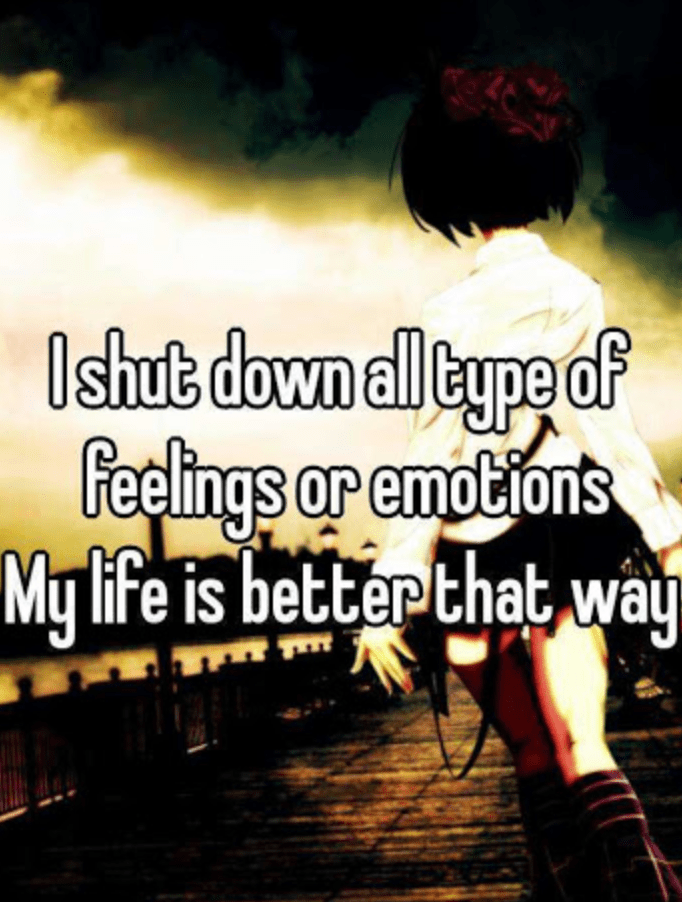
    I shut down all type of feelings or emotions My life is better that way
    or so I thought…

    I cant remember how or when I started to dissociate from my body. From my feelings. From listening to my heart.

    Probably from a time when it was unsafe to. Probably from a time when the needs it expressed as a toddler or child did not get responded to, or was scalded for.

    I didn’t know that it was known as ‘dissociation’ I just thought I was being clever, I was just doing what I needed to do to survive, I was just doing what I needed to to not be as hurt by the emotional abuse.

    What I do remember is the strength of my mind one time. On an early morning paper round late one winter/march time, I forgot my gloves, and I usually wore 2-3 pairs, it was the cold and wind chill on a bike… So, I remember thinking to myself that temperature was ‘all in the mind’ – and so, for the next 2 hours, cycling, folding and delivering newspapers I tried to focus my mind on things like warm fires, heat and sunshine, almost trying to block out to my mind the cold pain signals. To my surprise it virtually worked, until maybe the last 20 mins.

    Another time this occurred is that one piece of advice for cycling further is to listen to music, as it stops pain signals getting to the brain.

    The problem with both. Is that in the immediacy afterwards, I realised that my fingers were cold, in the hot shower afterwards… and also that my body after a 100 mile cycle could only endure so much blocking of the pain…

    Interesting.

    My body could only withstand so much of the blocking of the pain, when it was about the cold, or exercise..

    At the same time as blocking the cold on a paper round, I had been blocking the emotional reactions of the parent. I have done ever since. Just because im 43 and not 13 doesn’t mean to say that dissociation doesn’t occur even now, but it did last time 2 years ago.

    My mind took over, and knew it had a heart to protect, and my body went into a kind of dissociated paralysis in her presence. No you don’t get me to hug you back. You don’t get the me you damaged.

    What I also know I did was shut down my inner world, a world I am now discovering, but that’s for another piece.

    Dissociation is when you psychologically separate yourself from yourself. It can make you freeze up or shrivel inside, or even make you feel like you’re detached from your body

    Lindsay C Gibson, 2019 Recovering from Emotionally immature Parents

    Gibson goes on to say that dissociation is a ‘natural defence’ and can be any form of distancing from your conscious experience of yourself , being a primitive type of emotional escape and common defence against threat or danger, especially for children in an unsafe environment.

    There are costs to this reaction. But at the time its like coping with no gloves on a freezing cold day, its numbing the possibility of pain, and the pain itself.

    Its the proverbial deer in the headlights. The freeze.

    But in the moment it causes passivity. (The deer isn’t thinking much either)

    Recovering from this is to reclaim the action and power in the space- not to freeze, to ‘hang in there’ – and this is something I am working through. But for now, this is about recognising that surviving psychopathic parenting was a feat of natural strength, a natural shut off.

    Because

    When children discover how self-disconnect takes away pain, they use it for increasingly minor threats. After a while they can become strangers to their own inner experience, instead of just cutting themselves off from fear or hurt, all emotion gets so dulled that life itself feels a little unreal.

    Gibson, 2019, pp79.

    Yes.

    This.

    Living in my head, pretending, keeping the emotions at bay.

    In survival mode because of dissociation.

    Most, if not all of my childhood, and a lot of my adulthood to date so far.

    Discovering only recently through therapy what I feel – because I just dont or didnt know.

    Shut that bit off like headphones on a bike ride.

    Did everything to suppress the emotion.

    The body keeps the score though.

    Childhood Emotional Neglect: How It Can Impact You Now and Later

    Feeling shame, go numb

    Protect myself , freeze.

    Survival meant putting up the shield. One that doesn’t stop arrows, but tried to stop them going deep.

    Thank you for reading, links are above or to the right of the resources, the previous parts to my story, and also how you can support me, via the KO-FI site. Thank you

  • Surviving Psychopathic Parenting (Part 14): Hiding the Treasure

    Surviving Psychopathic Parenting (Part 14): Hiding the Treasure

    It wasn’t just the anger switch that I had turn off as a child.

    It was the happy joy one too.

    Its my job to bring you down to earth

    That Parent

    It was easier to hide that go through having to hear things like the following

    I need some of your joy, give me some of your joy

    So I didn’t bother.

    I didnt want the photo shoot when I won trophies at school. One because I couldn’t find the photographer, the other because it wouldn’t have been celebrated appropriately. Though the trophies did stay on the mantle piece for a bit too long.

    Fast forward to a graduation 11 years later and their presence caused me to only be on vigilance trauma mode, rather than celebrate. But they had to be there, it was their right. Apparently.

    They didnt know how to affirm or celebrate what I did well, or were envious of the good time I might have had without them. Envy when I did well, Envy when things were going well. Their claim on my success was the trophy child.

    But we knew it. One parent had to have the last word on the other parents birthday. Even making sure at his birthday party, they sang to her too.

    Surviving meant switching off the positives, as well as the negatives.

    Dont raise your hopes up James, even if you think she might be pleased for you, if you are happy, it’ll be tainted with something referring to her ego.

    Some emotionally immature parents actually envy their Childs success and social attention. Instead of being happy for their child, envious parents are ore likely to discount and minimalist their Childs abilities and achievements. These parents lack the maturity to vicariously enjoy other persons good fortune. In their competitive approach to life, a successful offspring threatens their spotlight

    Gibson, Lindsey C, 2019 Recovering from Emotionally Immature Parents

    It was easy after a while though. From about aged 14 I only fed them the essentials. What they needed to know.

    Surviving meant finding other people to celebrate with or not bothering.

    Hiding.

    It meant closing up the feelings. Protecting myself from the inevitable dead end type comments, the cut de sacs of emotional eggshells.

    When I knew that it would only be met with a self referential comment, or belittling, or comparing (to herself) , or something that seemed very false (praise), then they didn’t get the good news either.

    What she wanted to take from anything, everything I did.

    Over emotional if I did something wrong, Belittling or killjoy if something went well, or would want to take from it for herself.

    Maybe I did the text book thing, given that:

    Under these conditions, children of envious or jealous parents might learn its better to hide their talents or stay out of the spotlight so as not to tempt a put down from a competitive parent. Due to their parents envy and jealousy, success can be an ambivalent issue for these adult children

    Gibson, 2019, pp52

    Surviving Psychopathic parenting meant shutting down the good stuff too, knowing that it would be taken and used to meet her needs, or reveal her needs. Then I would feel guilty for being successful, or respond to that neediness.

    I wouldn’t say they were overly competitive, or maybe I didnt see it, but parasitic yes.

    Ultimately they only saw themselves, so it was easier to try not to be seen.

    But on other occasions it was just that knowing that having a smile on my face after being somewhere, or with someone, or doing something I enjoyed was about to be shot down. So there was no conversation.

    And equally, if she found out, they’d be trouble too. Or ‘He never tells us anything’ – as if theres no awareness of why they wouldn’t have been told.

    It meant learning to hide. Hide the treasure of the good parts of my life.

    Protect myself, and protect the memories, and protect those good bits.

    Thank you for reading, do like and share with others who you think might find this blog or the website helpful, parts 1-13 of my story are in the menu above.

  • Surviving Psychopathic Parenting (Part 10); Navigating the other parent, the flying monkey.

    But you do have another parent, couldn’t you talk to them?

    Your other parent, they’re so nice, they’d do anything for anyone

    Only one of the above is true.

    Theres a reason why you feel completely alone when one of your parents is a psychopath.

    You realise that you cannot trust the other one.

    Even if you are allowed to be anywhere near them.

    You discover that they can’t be trusted.

    I did, though I cannot remember exactly when.

    In the name of marital loyalty they tell everything to the psychopathic one.

    They are on the same eggshells. Afraid to keep secrets.

    They are passive.

    They are controlled.

    They do the work of the psychopath for them.

    They are their flying monkey.

    They have no choice but to believe them.

    You know they wouldn’t believe you. They cant protect you , the child.

    Mine didnt, couldn’t, wasn’t going to.

    They are also abused themselves, but they dont know it. Wouldn’t want to know it.

    Surviving psychopathic parenting is about Surviving alone.

    The one psychopath can divide a whole family, a whole community, thats how dangerous one of them is (Erikson, 2019) It only takes one.

    The other parent elicits sympathy from others, your poor father, as they take on meeting others needs like a codependant. They take on befriending and soothing others, for the psychopathic one to manipulate later. They dont realise it, but thats how the pattern works.

    Maybe if you had emotionally abusive parents it was different for you?

    One of mine was abused by the other, passive, and then offered no protection from her.

    The other was a psychopath.

    The ‘Other’ was played, believed the victim lies, span a tale too.

    You dont have either parent, if one of them is a psychopath. Even if mine appeared generally friendly, sometimes playful, even spending a bit of time as a child with them making train sets.

    Ultimately though, they are just a shell. A tool. Being used as the flying monkey to elicit information to the other one.

    Its why the only way is to survive alone.

    You cant trust anyone.

    Until you can find people you can trust in.

    People who have boundaries. People who protect.

    I didnt have the ‘other’ parent. There was no such thing.

    Its like growing up with secondary eggshells. You know what you say goes back. You know they are sent in to discover information.

    You know you’re likely to be given the guilt trip that ‘they might miss out’ and they do.

    They have made that choice.

    Surviving Psychopathic parenting, and psychopaths and abusive people , is to see and realise the patterns of the flying monkeys.

    The other parent, the psychopaths flying monkey.

    Thank you for reading this, part 10 of my story, do read the other parts in the menu above, and also there are resources in the other menu too.

  • Surviving Psychopathic Parenting (Part 4) – Asbestos feet; From Eggshells to Empathy.

    Surviving Psychopathic Parenting (Part 4) – Asbestos feet; From Eggshells to Empathy.

    Thank you for reading, this is part 4 of my survival story, do check out parts 1-3 in the menu to the right, though each part can be read separately. This one may contain details that could trigger. 

    Growing up with psychopathic emotionally immature parents allowed me to develop asbestos feet, with all the walking on eggshells that I had to do.

    Now I know, if God had desired that we were to find asbestos feet useful maybe we would have been created with them, so maybe they are more a product of how the human child adapts to survive in such unnurturing circumstances.

    Using eggshells to remove toxic water pollutants | News | Chemistry World

    I had soft feet. Eggshells hurt. Like they would do if they are stood on.

    Apparently I had to toughen up, and develop proverbial asbestos feet, by the very person who was relaying the floor with a layer of eggshells to walk on.

    Sometimes there’d be a bomb in and amongst the eggshell too, or a place of glass, just to cut deeper, all just to ‘help’ me to develop ‘thicker’ skin.

    Given that I had no choice as a child, its loyalty or punishment, then, I learned to pretend, to fake agreeing, agreeing to being the role that was compliant, and trying to navigate a pathway full of emotional eggshells and explosives, that sometimes went off, other times just the fear of them was enough.

    Its one thing advising people how not to walk on eggshells when you’re at work, but what if thats your entire home existence, you might as well have been born with asbestos feet, because they get to be needed pretty early on.

    My Psychopath parent was of the emotionally fragile and unpredictable variety, in this post I share the 12 common features of emotionally immature parents, taken from Lindsay Gibsons book.

    If other people are getting more attention, they find ways to draw attention back to themselves, such as interrupting, firing off zingers that get everyones attention, or changing the subject. If all else fails they may pointedly withdraw, look bored or otherwise communicate that they are disengaged – behaviours that ensure that the focus stays on them. (Lindsey C Gibson, Adult Children of Emotionally Immature Parents, 2016)

    What you get to realise is that the eggshells appear when they are not centre of attention. When you have to ask for something, when you might want to disagree, when you try to put your needs first

    I learned not to bother. Any time I did was met with emotional outburst.

    Survival just meant growing asbestos feet, and wearing bomb proof clothing.

    Emotional shielding from the impending storm. Fear. Terror. Because you just know that a bomb had gone off, and one will go off again.  So dont dare upset them, just keep the peace, dont rock the boat, tip toe around them. Comply or hide.

    When emotional parents disintegrate, they take their children with them into their personal meltdown. Their children experience their despair, rage or hatred in all its intensity. Its no wonder everyone in the family feels like they are walking on eggshells. These parents emotional instability is the most predictable thing about them. (Gibson, 2016)

    And as the following indicates, it may not be in the workplace that some of you saw this in my parents. Though, I am pretty sure they didnt hide it very well. They left a trailblazer of shocking behaviour everywhere, and when challenged would not be able to see it as shocking. In which case it wouldn’t really matter if they were in a professional role in which character was important, like being a vicar for example, as long as in their job they could hide it…

    Their fluctuating moods and reactivity make them unreliable and intimidating. And while they may act helpless and usually see themselves as victims, family life always revolves around their moods. Although they often control themselves outside the family, where they can follow a structured role (not always I might add) within the crucible of intimate family relationships they display their full impulsivity, especially if intoxicated. It can be shocking to see ow no-holds-barred they get. (Gibson, 2016)

    However, my survival story is about me.

    As a result of this, I learned to put other people first, and my needs firmly second, or third. Though, that doesn’t stop emotionally immature people of accusing me of being selfish (when I might dare to put my needs first).  Learning how to navigate eggshells is about attuning to the needs of the other, attuning to the emotional cues of the most emotionally fragile in the room, responding to the needy. It’s codependancy. But thats what I had to do to survive, forgo myself. Because even though I should stand up to other people when they bully, the full force of victimhood, shame and loyalty would emerge if they were stood up to.

    Being overly attentive to other peoples feelings and emotions is no bad thing.

    Actually yes it is. That could end in empathy enmeshment.

    Being attentive is no bad thing, its about having empathy that seeks to understand, and compassion that enables that person to make their own decisions in the actions to alleviate their situation.

    Telling our story is about putting me as the main character of this, not the other person. From Eggshells to empathy, how I learned to be who I am, in the way I am from the start I was given.  It has taken me a very long time to actually put me first. Part of surviving trauma is to narrate the story of and see it for what it is and was, and becoming aware of how I survived and what resources I used to be able to. Developing rubber feet to walk on eggshells, when there was no sledgehammer to crush them smooth, a new layer would be put down.

  • Surviving Psychopathic Parenting (part 3):  Trainspotting (at Clapham Junction)

    Surviving Psychopathic Parenting (part 3): Trainspotting (at Clapham Junction)

    One way of surviving psychopathic parents was to become immersed in the world of trainspotting.

    The drugs, alcohol and destruction, and why I resonate with this 1996 film

    Trainspotting ver2.jpg

    Though I joke somewhat, reacting to emotional abuse can easily easily end in a life that is filled with the destructive elements, that this film was renowned for.

    Trainspotting – IFC Center

    It is not the trainspotting I mean.

    The trainspotting that helped me survive psychopathic parenting was more of this variety:

    What Southern Region EMU class is this? - Southern Electrics - RMweb

    When I was staying at my grandparent house in the south of England, going to railway stations and watching these and others speed through the cacophony of busy commuter stations like Clapham junction or Redhill, or ones like this from my own home in the midlands, the class 47s around the curves of the midland main line

    47474 BNS 1987 Steve Jones.jpg

    as they sped past the line at the bottom of my street and from my outside window, and more latterly in the mid 1980s, the Intercity HSTs..


    InterCity 125 - Wikipedia


    If researching the history of 1980’s EMU (electric multiple units) and class 47 and 43’s is not your thing, which I dont expect it to be, then thats ok, aside from the noise, the speed and the energy of these metallic beasts, the thing that trainspotting channelled in me, and also helped to create, was my  sense of observation and perception.  I discovered I was able to read the numbers pretty quick, I could see from a distance the train on approach, I could hear the rails vibrating (they’re nearly always vibrating at Clapham) , but, you just know when the train is approaching, as well as this, the ‘OFF’ light comes on at a station, the staff get out onto the platform, passengers swell it too.

    I was as enthralled by the process of the trains, as the numbers on them. The journeys, the routes, why some stopped at what station… and beyond attuning my sense of perception, trains were safe. Busy railway stations were safe, quiet ones were safe, trains were safe, they still are.

    So not only did I like to know how things worked (see Part 2) I became naturally observant, vigilant even. I joined in the ‘grown up’ spaces, often quietly with a book, so that I could keep an eye on what my PP (psychopath parent) was up to, or played toys near to the dining table, waiting for an inevitable family bust up that she initiated, and then would need me to cry victim into my shoulder. Because this was expected, I would stay close to the action, knowing that it was about to happen.

    There were other occasions too, staying alert, and working out whose footsteps were walking towards my bedroom door (though they had to, my room was next to the bathroom),  though more than often my Psychopath Parent would be announcing herself with constantly making noise, humming, singing, dominating.

    Developing a higher than usual sense of danger awareness, or hyper vigilance, is common in those who have to deal with emotionally immature parents, from an early age I clearly knew that I needed to be on my guard, aware and preparing myself for the next blow.

    Doesn’t everyone have to be vigilant of their parents behaviour? is this just normal?

    I dont think I stopped to ask this question at the age of 8, but thats part of what I did and had to do to survive.  It was never possible to stop their next move, or intercept it, though I do remember trying to on some occasions, theres only so much an 8 year old can do, when cast in the role emotional rescuer in my parents drama, best to be around to know when the role needs to be fulfilled.

    I used to wonder why it was that I was good at the parts of detached Youthwork that involved having an awareness of safety, their movements and vigilance, and why I am good with knowing where I am, directions, and place, and now its no surprise that I can detect the movement of birds out in the fields or river banks.


    In ‘The Body keeps the Score’, (Kolk, 2014) outlines the processes in the brain that occur during this vigilance phase, the heightening of emotion, heart beat and arousal. It is like the proverbial train arriving at the station at speed, being on the platform waiting for that moment. And then it subsides at the intercity train leaves view and heads to London or Leicester. Then it is calm for a while, the platform empties.

    And that’s the difference, Clapham Junction was like living with a Psychopath, the trains were constant, I remember going a few times and it was extraordinarily tiring, yet it was the station I wanted to go to, it was too busy, 3 trains in less than a minute at times, too much for a child to process, was there such a thing as too many trains.. yes.

    Oh God, here comes another one, get ready..

    Surviving psychopathic parents is like being on Clapham Junction station, being on guard all the time, being alert all the time, and theres trains arriving from all directions, when its difficult to get onto the right platform to get a good view of everything thats going on. (This is also why I like to sit in the corner seat in a coffee shop, and its that I like to know what’s going on, I’m not frightened by other people, I always knew that none of them posed the same threat).  At least on Clapham junction the worst that could happen to me was missing a few numbers, whilst I could be vigilant for the next emotional reaction from my Psychopath parent, I didnt, and wouldn’t have expected to, have the emotional awareness or skills to deal with it, ultimately, though, the problem that they were likely to create, was about to become a problem that everyone else would have to fix.  (Gibson, Lindsay C, 2019, p71)

    In their presence is like Clapham Junction Railway station.

    Whats one thing that I needed to survive? That sense of vigilance, being on guard. What I realise, and now know, from the book, is that its only when you can stop being on guard that you can heal. I was so used to being on guard, vigilant, that its only been in the last few years and in a safe place, that I could stop, and take a break. There was no incoming anger, emotion, unpredictability, or eggshells (see the next part) or mine fields to navigate.

    What I didnt realise, until very recently is that I could operate in life without  needing that switch on.  

    What I didnt realise, is that it wasn’t normal to not need to be vigilant. 

    When I moved into my flat 18 months ago, actually when I walked into it, empty with the agent 3 weeks prior, I felt safe, home, relaxed. It was from that point onwards that I knew I could heal, because I could switch off the vigilance valve, enjoy looking at the birds, the sea and the odd train that now goes by my window.  Healing is more likely when in a place of safety, when the vigilance valve can be switched off. I just thought I was being perceptive, aware and observant..and I was, but what I now know is that that was part of how I survived.

  • 10 Red Flags to Identify Emotionally Unhealthy Christians

    Trigger Warning: Emotional Abuse, Spiritual Abuse, CPTSD, Narcissm, Child abuse. This piece contains material that may cause a reaction. 

    Following Tanya Marlows quite brilliant piece on the statements that Christians have used in the wake of the RZMI revelations, in it she identifies a number of phrases that then get banded around, often excusing, minimising or disconnecting a persons character from their ministry, mostly after the revelations have been made public. That piece is here 

    But his books are still good, right? – 5 things Christians must stop saying about sexual abusers

    I want to add a few more, to that list

    Though, her list includes: 

    1. His books are still good
    2. ‘we are all human’ everyone makes mistakes
    3. Blaming pedestals. 
    4. God can use anyone – this is a great example..
    5. The Biblical excuse – equating Kind David as a mirroring example.   (Tanya Marlow)

    Do read in full. 

    I want to build on this, by suggesting that there will have been a few things said BEFORE the case was made public, that signify that there were signs that there was emotionally immature practices from along time ago.

    Before you think that these do not happen in the UK (and RZMI has been in the UK) , and RZMI is a one-off, then I’m afraid you are mistaken. Emotional immaturity covers a range of personality issues, such as narcissism, sociopathy and psychopathy

    1. The Loyalty Card. 

    This gets played when someone disagrees with them. Rather than converse or dialogue with the person in a healthy conversation, they often dismiss this, using phrases like “I dont agree with them, and we as an organisation shouldn’t entertain it’ or ‘ You’ll bring shame to the family if you carry on saying things like that’ or ‘we cant have those kind of opinions in our church’  – loyalty is the card, played because they dont want to argue, but more that they seek adherence and conformity. Emotionally immature people throw this. They are often only interested in their opinion, not listening to someone elses.  This one is very very common.  Loyalty is regarded very very high in emotionally immature people. Closely linked to this is the shame that they throw towards you, and you then get to feel guilt for saying such a thing. Loyalty is often accused by those who actually show no evidence of being it themselves. It’s projecting, or gaslighting too. 

    2. Invalidate Feelings.  

    ‘They’re just emotional, They’re just sensitive’ This gets played to dismiss that someone might even have emotions when they have been wronged, and make a complaint. Somehow its as if emotionless responses are the higher ideal. Maybe, its that culturally in churches we place a very low regard for any emotions. So, when people display them, they are often dismissed, devalued and ignored. Can also include ‘ they’re always angry’. The emotionally unhealthy can look people in the eye and still lie. Emotionless is somehow then believed and that culture then created by them. 

    3. The Jezebel.

    You know its about to happen. The attack. The use of the J word. Its on its way. ‘They’re just a Jezebel’  Once the emotions have been highlighted, now the complainant is given the highest calling of all, the name above all, the most magnificent insult known to nearly all women who dare to a)disobey, b)show disloyalty, or c) expose an abuser and the ministry they hold. 

    They are the Jezebel.

    The sounding attack of the emotionally immature christian leader. (or twitter troll- same thing)  

    Notice that men dont get the insults as easy. But Women await the Jezebel insult. Wear it with pride. It’s coming. ‘Jezebel’ is on its way. 

    4. The forgiveness card 

    Following a concerted, even pastoral attempt to soothe the situation, often by saying things like ‘ you’re just bitter, angry’ then forgiveness is requested by representatives of the abuser, said like ‘you just need to forgive them, dont hold it in your heart’ ‘God wouldn’t want you to see them in that way’  ‘let go and let God’ 

    Forgiveness, as I have learned, is not something the abuser has the right to suggest, neither is it for the institution who houses them to offer it. Especially when those whose voices have expressed concern have not been taken seriously. 

    5.  The ‘Giving away the bare minimum’ card. 

    That wasn’t a big deal, everyone does that. I didnt do anything. I didnt do that. 

    But they did do this. 

    One thing that you can be certain of is that an emotionally immature person admits to merely the tip of the iceberg.

    So, they belittle the one thing, giving it away – oh I did just do that, but it was nothing 

    like ‘I dont abuse people, but I maybe have said the odd thing’ – its as if they are happy to give away something and admit one thing, the tip of the iceberg. 

    It is often just that. The tip of an iceberg they hope you never see. 

    What ever they admit to, what they actually did do was 5000 times worse. 

    6. Spiritual Bypassing or weaponising. 

    This could be similar to the forgiveness card ‘ everyone else needs to…’ – But its when they say things like ‘lets just pray about this’ or ‘Im sure God will help us at this time’ or ‘we just need to pray more’  or ‘We just need to make Jesus central to this’ – Especially in cases of emotional abuse, this is said when the person wants to avoid actually dealing with something to do with themselves, and holding up a spiritual bypass card to avoid wrestling with or having their real emotional trauma or state revealed. 

    And weaponising scripture. Ill not add it here. But throw a few bible verses out context to make people doubt their opinions and feelings, and you’re there.  

    7. The Role card 

    Usually in the form of ‘As a christian ‘I cant do that ‘thing’  or ‘Im a minister, theres no way I would do that’ or ‘Ive been doing this ministry for 20 years I wouldn’t do that’ or ‘As the child of a ________, that really isn’t me’ 

    Often they’ll play on an identity or role to make it look as they couldn’t do something. In a way what this does is separate them into roles and identities. When accused, or when challenged, they slip into an identity within which they cannot see themselves as anything other than a Godly, Holy person. However, what they disassociate from is the behaviour and their own personhood that has committed it. 

    They also see you in a role. Often one of the 3 in the Drama triangle.Image result for the drama triangle

    8. The ‘self loathing and victim mindset’ card.  

    No one else truly understands me, im just a worthless worm, im like Elijah under the tree, Im just one of those people Satan attacks, im tormented, theres days when I wish the whale would swallow me. 

    This is closely followed by using these examples to exegete that their life has been one long drama, and that everyone needs to feel sorry for them.  Its a rubber guts humility. (They play victim in the triangle, using Biblical references as a guide) 

    They are actually bragging about the things that they are asking you to feel sorry for them. They brag about they are repenting for and proud of it. 

    9. The ‘just trying my best’ card

    Im just trying. Everything I do seems to fail. Im just trying to be a good vicar/person/husband/leader/pastor. Again said to request that someone else needs to see them as the helpless trier who keeps trying, and wants a second chance. 

    also seen as ‘I have a good heart…ive just made a lot of mistakes in my past’ 

    or can look like. 

    ‘Im a good guy, trying my best, why are you the only person I cant get along with’

    Problem is that they have had millions of second chances, and if you have offered second chances, chances are others have too. Chances are, they are unlikely to be good, honest, decent – though they keep saying they are trying to be.  ‘You’ll just have to trust me, ive changed, this time its different’  – do question how this is the case, and them reading the bible or praying more, doesn’t count. Therapy, though, might. 

    I wish it wasn’t the case, but, unless the emotionally immature see themselves and do something about it, they will nearly always be unable to do the good they see others do. At times their only reaction is to be jealous of it.  Until that point, they are only saying they are trying their best, and its just words.  

    10. Not taking any responsibility.  

    Never, not once. Its everyone else fault. Satans. Gods. The congregation. The previous church,  ‘Its the world is full of darkness’ …The previous partner, and add more… 

    They use your compassion on them, to give them a second chance, it’s how they can hide. 

    If you start to hear any of these, the red flags need to be raised.  Get vigilant, aware and begin talking to each other, They will play you all off. Their only hope to survive is to divide and rule. 

     Darvo is one of the key patterns to look out for, because the emotionally immature will seek to confuse their victims, complainants and the system itself by switching roles.  The victim triangle is one to look out for too, as the emotionally immature will nearly always only operate in one of these three roles, Victim, Rescuer (often Codependant) or Perpetrator. 

    Thank you Tanya, for your piece yesterday, Thank you to all the women and men who have had to raise their voices and concerns in cases and not been believed. Emotionally immature, unhealthy churches and organisations are all around, they are full of emotionally unhealthy people. Often the emotionally healthy are the ones whose voices get belittled or sidelined. Strange that, when they often know what’s going on. 

    Please do leave a comment, like this piece and also if you have other examples to add, please share. Thank you 

    Many of the resources from which I gathered these from are in the menu link above.