Tag: evangelical

  • I needed in me, what God used to be.

    Those of you who have followed my writing for a while have either read or endured a few pieces from me about my faith, notably my evangelical upbringing and also more recently my stepping back from going to church.

    Trying to survive after falling off the evangelical cliff

    1000 Days since I last went to church (as of December 2022)

    Add to this my story of survival with in an ‘evangelical’ home with a monster of a parent.

    So, Relationship with God: Its Complicated.

    At least, what I’m beginning to realise and see is how emotionally complicated my relationship with God (and the church) was, and that is all written above.

    Yet, at the same time, I dont think ive really had a process though my various breakdowns, rebuilds and healing journey of being angry with God, there wasn’t a sense of ”Why?’ God did you let this or that happen’ not recently; I had internalised personal responsibility, having taken that on implicitly as the little rescuer of my parents emotions, and then becoming a christian aged 10 in which somehow I implicitly then gave Jesus my ‘Sin’ (which were survival strategies) and for forgiveness for them. I wasn’t sinful aged 10, yet this was the pattern I then implicitly believed in. This is appropriate here:

    It’s been more of a gradual shift.

    Mainly because over the last few years I have realised that there was good and well meant good in the community of many of the churches I have been involved and and certainly the church of my teenage years, and tbh many of them were as scared of or had experience of the same monster. (Except the ‘old dears’ , the ‘old dears’ would have had special visits by them, having been ‘popped around to be seen’ and so, the ‘old dears’ every week at church would be like ‘How are they, how are your parents’ . It was a lovely first question as a young person to face in church. For some reason it was old people in churches who they gravitated to, to be ‘helpful’ and ‘charming’.)

    Anyway. I digress. 2 paragraphs in and a pre-amble and I’m no-where, where I thought I would be.

    I have began to notice something.

    The things I needed for myself, were things that I ascribed to God for.

    Here are a few examples from well known evangelical songs from the 1990’s…

    1. Jesus is Alive (mostly on Easter Day)
    2. God is Strong (You are mighty/ Our God is an awesome God)
    3. God is love (various)
    4. God is Powerful (There is power in the name of Jesus, Show your power)
    5. God is in or is the quiet space (Be still, The Lords my shepherd)
    6. God is the place of Joy (The Happy song)
    7. God is the exclusive way to hope and healing (In Christ alone)
    8. I trust in God alone
    9. I found Jesus

    Im definitely not here to say that these things aren’t true.

    But what I have realised is that by ascribing to God for these things, these were not things that I felt I could be, they were the what God can do and be, and not what I could do, be or have. I know this sounds complicated.

    I have discovered that I have needed to know my own Power and Strength, that I can have healthy power, and not stay weak.

    I needed to find myself, not wait to be found, or look for something other.

    I have discovered that I have needed to find my own capacity to love, for self love, compassion and self gentleness, not sink in the swamp of self loathing.

    I have discovered that I have needed to find safety as an important part of everyday , to heal.

    I needed to be able to trust myself (not my mind)

    I have discovered that I can be alive and joyful.

    I have discovered too how my inner self is both spiritual and creative, that tender person within, that needed nature and care and attention.

    These have all been important components of my healing process over the last 5 years. For too long I believed that these were only possible ‘because of God’ and therefore ‘unattainable for myself’, or that ‘I could carry on, or suffer without them for myself’. I dont think that these were the intentions of the song writers by the way. The other thing of complication is that the same powerful God was also the God of those who were and had harmed me – so whose side was he/she on?

    I am at peace in using different language, it feels right and whole to me to talk about ‘the gifts of the universe’ or ‘love’ or ‘magic’ and to feel the earth, the sea and the waves, to wonder at ‘consciousness’ and ‘being’ , to be still in the present of the moment and seek alignment to the deep truths. Maybe it’s the language of the heart and soul. Maybe it’s the innocent faith of the child, the inner child, and not the rules of the organisation. Maybe it’s the language of the mystics. Maybe it is just language that describes very similar things but with different agreements and expectations upon them. Maybe I decided I prefer or need or enjoy different agreements and expectations. Maybe the gentle attentive love of the Celtic contemplatives has spoken, restored and awakened my soul. Maybe these gave me the assurance of peacefilled mystic giants whose earnest shoulders I could sit on and be held by.

    I didnt wrestle with God, it all just awakened for me, it just started to appear, moment by moment, book by book, journal by journal (that I wrote). It started to make sense, it started to feel like love that until then had been mostly only cognitive knowledge. Maybe emotional breakdown and spiritual awakening were intertwined. Maybe it was about unlearning and learning. Maybe it was already there all along.

    I noticed that I was becoming more and more whole, more and more coherent in myself, less fractured and fragmented, less desperate in need of a God to save me, more balanced in knowing, loving and enjoying my flawed, but created and incredible self.

    So more broadly. Maybe it’s time to rethink the way of christian songs, or the implicit messages from the lecturn. Maybe a trauma aware church might reflect on these things. What if loving our self, was what Jesus meant all along, and not just our neighbour. What might life in all its fullness mean, and the good shepherd leads sheep to come and go freely. Maybe the sheep dance too. Maybe they play and run around. Maybe the sheep are happy. Maybe thats what’s its been about all along.

    May all that is unforgiven in you, be released

    May your fears yield, their deepest tranquilities

    May all that is unlived in you

    Blossom into a future

    Graced with love

    (To Come home to yourself, John O Donohue)

  • On Shame, Vulnerability and Faith – the experience of women – a conversation to listen and learn from

    On Shame, Vulnerability and Faith – the experience of women – a conversation to listen and learn from

    Two of my last posts have been about Shame and Vulnerability, and in particular the areas of shame that may be more prevalent in Men, given societal expectations.

    So theres Shame that men feel.

    Theres also Shame that men create – that Women feel, that women carry and hide that affects them.

    In the industries run by men, that perpetuate shame – to control to to make money.

    In the faith industries run by men, cultivated by men – that damage, wound and inflict shame.

    We have a responsibility, given, that we create society.

    If you hadn’t started to listen to Women, and their stories of how shame affects them, in faith contexts, in society – then maybe its time to.

    Not deny it, not to reject it – but to stop and listen

    And recognise, deeply, our part in this, and to do something about it

    So I share with you a personal, warm, honest, sometimes sweary video below of my partner Christelle, and our friend Marie, – both previously evangelical Christians, both had been in ministry, both in their 40’s in western society.

    Do watch, and listen,

    What surprises you? What do you learn? what might you change as a result? What has to change?

    Healing ourselves is about being open to listen, about acknowledging the pain we’ve inflicted, and making amends – to do better.

    Please do put comments below, like and share the video , ill put the link below too.

    The link is here https://youtu.be/xsqDC0Q4OrE

    I would like to add that if you are interested in exploring the subject of Shame, Trauma and Christianity even further then further reading on this can be found by Karen O Donnell and Sally Nash in the UK, and Serene Jones, Shelley Rambo in the US – they have , in the last 20 years, began to write on shame, trauma and theology. It is worth a look, do follow Karen on social media for details of studying this subject in the UK too.

  • Surviving Psychopathic Parenting (Part 18) Terrified by breakfast table Jesus.

    Surviving Psychopathic Parenting (Part 18) Terrified by breakfast table Jesus.

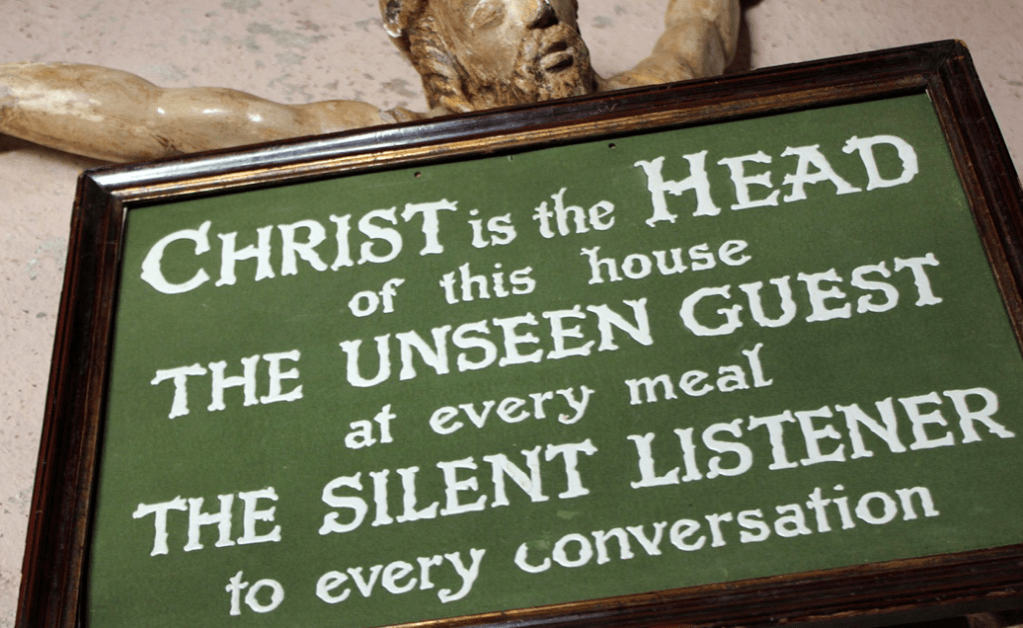
    Christ is the Head of this house

    So far, in parts 1-17 of my story of what I needed to do to survive psychopathic parenting, I have talked alot about emotional abuse, emotional neglect, narcissism and the drama triangle, and the eggshells that had top be continually walked upon. I haven’t really talked about the spiritual weaponising that associated all of this as I grew up.

    At the same time as all of the events I have described went on, it was all occurring in a ‘home’ that outwardly professed to be a ‘Christian’ one. So much so, that for most times in my life I would have said ‘I grew up in a Christian home’ . Now id say I grew up in an abusive home and my parents also had an evangelical faith.

    What did this mean?

    It meant that I grew up with a distorted sense of God.

    ‘Family’ mealtimes of course included ‘saying grace’ – but also this ritual meant having to be ‘serious’ and ‘saying grace properly’ – and at times having to be thankful for food that was delivered with little care or value.

    Breakfast was accompanied by an elongated daily bible reading – usually ‘Our Daily Bread’ and lengthy prayers by the parents afterwards.

    The unseen guest

    Prayers that were often messages, sorry, prayers that were messages of morality to us as children. Im not going to say that they didnt pray for exams or issues (that they knew about) – but thats not really what I remember. This time was enforced on me (us as it included may sister too) , it was as important as the eating part.

    It enforced daily that God was on their side. It enforced daily a time that they projected outwards to keep casting moral messages to us as children. They knew God, God was on their side. God was a weapon they used to control our behaviour.

    The Silent listener

    ‘We pray that we (though looking at me) dont behave like the older child when the prodigal returned (on the brief occasion my sister started going to church)’

    ‘We pray that the lost are returned, and you accept us when we return (looking at my sister who had stopped going to church)’

    There were many that were worse than this.

    Im not sure that the writers of ‘Our Daily Bread’ had this in mind, when they ensured that evangelical parents were starting every day with this, and reading it publically in front of their children as a control, a weapon.

    Christ is the Head of this House

    The Unseen guest at every meal

    The Silent listener of every conversation

    Was hung bold and in a red (not green) background large and proud in the dining room.

    On a blood red background.

    In a place where it had to be walked past every day to get the kitchen, or to where our shoes were kept in the back room.

    It was put there as deliberately.

    God was on their side. God was to be terrified of.

    God was watching us. (he wasnt watching them)

    In his book ‘Ghost Ship’ A.D.A France-Williams writes…

    My mum would point to this piece of terror art and use it as a motif of her and Gods total surveillance. So whatever I was getting up to at home, I was being watched

    A.D.A France-Williams (2020)

    My mum would always sit on the side of the table nearest the kitchen. That may have been one reason. The other was that it meant that, as she dominated every conversation, that picture was in view behind her head. She didnt point to it, as the author of Ghost ship described. In my case the picture was to be as feared as its message.

    God was to be terrified of. He was no help in the emotional abuse, in fact he was on their side.

    A.D.A was right though. This was terror art.

    We were being literally watched.

    From being Sunday school leaders and Primary school dinner ladies. We were being watched.

    If we didnt behave in church that morning, or in Sunday school, there were repercussions afterwards.

    They were watching, God was watching. God was to be terrified of, because she was to be terrified of. The God who was said to be about love – was delivered by the parents with bucketloads of added fear, terror and morality.

    God was abused by them.

    As an older teenager , who fearfully stayed within the box, I remember going to one of the bigger christian festivals in the mid to late 1990’s, and someone there talked about ‘Father God’ and if what we might need do ‘if people have a poor image of God because of a damaged relationship with their Dad’. Which is all perfectly legitimate. But I wonder about what space there was to talk about a damaged relationship with God, because of the way that he was presented as a child. What about the effect an abusive mother who was a powerful evangelical woman, could have on the image of a child, a teen..and me? What about, as I know now, that God the father to me was unprotective, abused and also silent?

    As she damaged the whole family, doing so claiming that God was on her side.

    Fast forward 40 odd years to me writing this now. looking back, what did I do to survive?

    I did what I had to do, and that was try not to upset or go against them, or make things difficult for them. Those eggshells to navigate on the ground were multi facetted. I conformed, out of fear. And eventually, and only because they left that church, it could become a place of safety. (Yes, they left the church, thats been a common pattern ever since)

    Its no wonder I grew up with a large dose of evangelical fear and self loathing . I internalised all of that fear, guilt, shame. I hid myself, disconnected, and ultimately ran away as far, geographically as I could.

    Before then though, I had started to re think God. I felt home, and also something of a different God in places where I felt safe. However, I, took on the same devout faith as them, usually not because I wanted to, but because I thought it was make them proud or pleased of me. An impossible task, as I have realised now. Its what abuse does to you, you keep going back for more beatings even if you’re carrying a bunch of flowers, flowers you think they will like.

    I did discover that God was and is love. Though removing the shed skin of being traumatically terrified of God can be hard to shift.

    Im working on what faith is, beyond trauma, in the midst of reconnecting with myself all the time. Im learned that I dont have to keep going back to God with flowers to show my efforts. I can do what was always words sung, I can ‘be still’. Be still and know. As I’m learning to know myself, and to be myself, im discovering faith new again.

  • Unlearning the Evangelical Self Loathing

    Unlearning the Evangelical Self Loathing

    I dont deserve to feel warm

    (Me, aged 9)

    I cannot remember what I had done. But whatever it was I had been punished for it and then I felt guilt and self loathing afterwards.

    All your Sins can be removed if you accept Jesus into your life

    (Childrens worker, John Wilkes, 1989, at my church)

    Growing up in an abusive evangelical home, I was never far from self loathing.

    It couldn’t be anyone else fault that things went wrong, apart from mine. For some reason I was given the responsibility. It was my fault my parents were angry at me.

    By the age of 9 I was convinced that shame and guilt was for me to carry. By that age too I was aware of the eggshells I needed to walk on around my parents.

    I didn’t deserve to be warm. I didnt deserve the basic essentials.

    I already bit my nails so that they were infected and painful. That pain was a place of reality. That pain was safe.

    I didnt deserve to be warm either as I took all my duvets and blankets off that night, and it wasn’t summer.

    I didnt deserve.

    I didnt deserve the essentials. Any actual treat would be difficult to receive.

    Being convinced of my own guilt, and shame.

    Consequently given the chance to ‘remove that shame’ aged 11 I took it.

    But it never really was removed was it?

    It doesn’t go away.

    In fact in a strange way it becomes more of an obsession.

    The Cleansing of Sin game, also paradoxically means focussing excessively on sin, and shame, and guilt all the time. An increased opportunity for me to embed self loathing into my core.

    Self loathing is described here as:

    Self-loathing is that underlying feeling that we are just not good: not good enough, not good at this, not good at that, not good at – or for –much of anything.  It can be subtle, we may habitually compare ourselves to others, for instance, constantly finding fault with ourselves and putting ourselves down, with no real awareness that there is anything amiss. Or, we may listen intently to our critical inner voice while it scolds and berates us, telling us how embarrassing, stupid, or insensitive we are; refusing to challenge it even while we suffer from it.

    We may try to suppress this feeling of inadequacy by behaving as though we are superior to others; more intelligent, clever, intuitive, or attractive. It’s as though we have to prove that we are the absolute best in order to avoid the torrent of internal abuse waiting to pounce the moment we show any fallibility.

    https://www.psychalive.org/self-loathing/

    That I dont deserve

    Shame

    Continual guilt.

    If God wasn’t always watching me, then there was always eggshells going off at home.

    I dont deserve.

    Awareness of personal sin, that leads to self denial and self loathing, thats what was happening to me.

    I fell into the cycle, the trap. I wasn’t good enough, nothing I did was good enough, I couldn’t fix it, I dont deserve…

    At age 10 I was more sinned against and didnt have parents who took any emotional responsibility (let alone other responsibilities) , but that wasn’t the message in church. The message I needed to hear, and the one that ‘saved’ me as a christian, was one that tried to alleviate the undeserving feelings I felt. My sin. Yet, the greatest ‘sin’ I had was that I would never be good enough or meet their needs. It was less sin but guilt and shame I wanted rid of. But that wasn’t going to be possible.

    Not with psychopathic evangelical parents (and you can read my story above)

    The songs that I listened to, ‘christian music’ in the 1990’s were full of the same self loathing, that I was feeling

    What if I stumble, what if I fall, what if I lose my step and I make fools of us all

    (DC Talk, Jesus Freak 1991)

    Whats going on inside of me, I despise my own behaviour’

    (DC Talk, I want to be in the light, 1991)

    I am the only one to blame for this, Somehow it all adds up the same

    (Worlds apart, Jars of Clay 1993)

    Growing up evangelical meant being obsessed by personal shame and guilt. It meant also taking on the feeling of responsibility for not only my own failings but also where I had ‘failed’ to make things better for others, revolving around the perpetual needs of others.

    Self-Loathing | VESSELS of VISION

    Would I say I hated myself?

    Parts of me yes. Parts of me no.

    The intellectual trying. Trying to be the best. Trying to prove myself even more.

    Self loathing meant feeling shame.

    Perpetuated from how I felt.

    Scratching my body at times, twisting and pulling my hair out. All signs of the same. Comfort eating.

    A continual loop throughout most of my teenage years, though, continued until not that long ago to be honest, and unlearning it is so hard.

    Trying to say too myself that ‘I do deserve this, because I am ok’ is against 40 years of default.

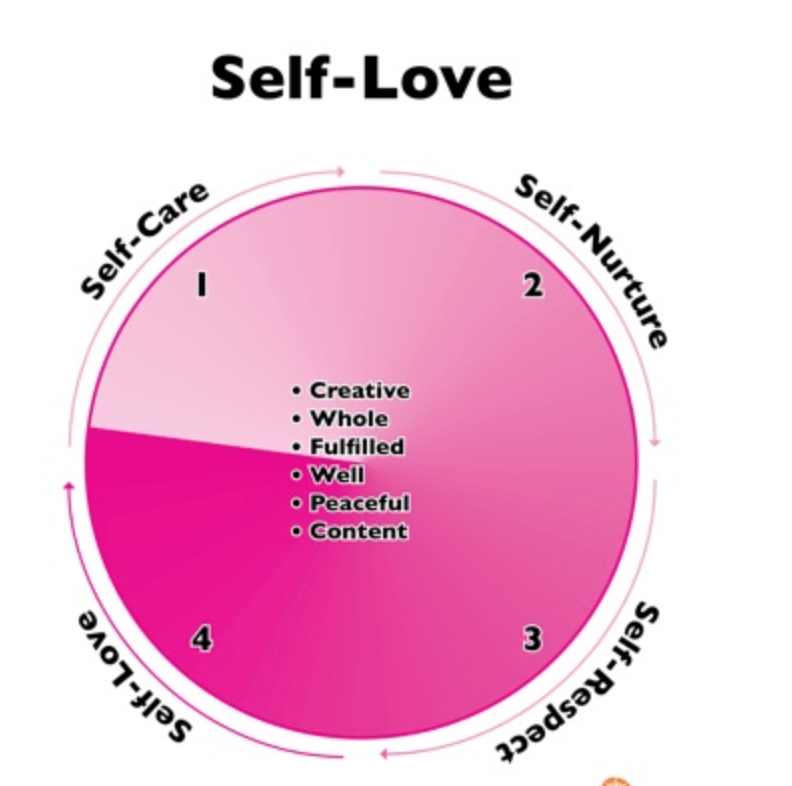
    SELF-LOVE OR SELF-LOATHING?

    Lindsey Gibson in her book ‘Adult children of emotionally immature parents’ (2015) writes the following:

    Many internalisers subconsciously believe that neglecting oneself is a sign of being a good person. When self absorbed parents make excessive claims on their children energy and attention, they teach them that self-sacrifice is the worthiest ideal- a message that internalising children are likely to take very seriously. These children do not realise that their self sacrifice has been pushed to unhealthy levels due to their parents self-centredness. Sometimes these parents use religious principles to promote self sacrifice, making their children feel guilty for wanting anything for themselves. In this way religious ideas that should be spiritually nourishing are instead used to keep idealistic children focussed on taking care of others’

    (Lindsay C Gibson, 2015, pp120-121)

    The question is how do you unlearn this? How did I?

    Its step by step. Clocking it.

    Realising that gradually when I say to myself that ‘I dont deserve’ something, its a part of my, my critical voice, that has been active too long.

    Realising that as I went to the supermarket on Saturday after having a bit of a wobbly day, and trying to convince myself that it was ‘ok’ to buy myself cake, and a treat. Yes, I guess that having to second guess myself to treat myself, comfort myself, still shows that theres still a large of part of me that has a default of not doing so.

    When we are tired we are attacked by Ideas we conquered a long time ago

    Nietzche

    Or, maybe when we are tired, and finding it a tough day, we revert to the self talk of not that long ago, whilst we are still trying to embody a new way of being.

    Part of my breaking down and rebuilding started with recognising that not everything is my fault. Part of my healing has been to realise that I need not carry decades of responsibility. To not hold it any longer.

    My default of 40 years was to think I dont deserve.

    Maybe that is you too.

    I thought I didnt deserve what I needed. I though I didn’t deserve to feel happy. I felt shame, guilt and self loathing for what I continuously self internalised, encouraged and abetted by my parents and also the strand of evangelical christianity in which I had a strong identity and safety in.

    Part of healing is to name and be close to the things that were unhealthy, harmful and caused me (and you) to feel unhealthy, shame and destructive.

    So I just wanted to say to you, say to me.

    You do deserve it.

    Beautiful human you.

    Breaking down might mean breaking away from the self loathing.

    ‘You are enough’

    If that is the case, then let it go. Shed that skin. It wasn’t doing you any good, none at all.

    Time to wake up the real you.

    Its hard road Im on, unlearning 40 years of the same shame.