Tag: language

  • The Last Judgement.

    The last judgement is the day we’re no longer afraid to be alive again, it when we come back to our real state , our divine self, where we feel a communion of love with everything in existence (Don Miguel Ruiz, The Fifth Agreement)

    This is a far cry from what I grew up believing.

    Though I was spared ‘The Left Behind’ series, UK evangelicalism hadn’t fallen for this work of christian cult fiction (or taken it as the underlying influence for US christian education policy) , I still had given to me, from Sunday school and home, a deep worry of what ‘the last judgement’ could mean.

    Hades, Hell and eternal damnation, or absence from the love of God permeated in my prayers, behaviour, diligence and attempts to be good christian boy/man – with the requisite states of shame for failings and repeated eradication of sin.

    The Last judgement stood as a place of reckoning – appearing even in the Family game ‘The game of life’ . I imagined a replaying of the TV screens in a production room of all the scenes of my life, the good, the bad and the ugly, and everything else. I was going to be judged, and fearing this judgement, and the possibility of ‘going to hell’ featured heavily in my evangelical upbringing as well as further theological studies. The conversations about the end times rattled around endlessly, when a so called 1000 years might occur and how it related to the fires of Hell and end times. No one could even consider that it was more metaphorical than real. That wasnt the question, the question was which.

    The heat of hell was to be feared and avoided.

    Hell was real……and ….

    there were many sermons that would decry that ‘one of the tricks of the devil, is to say that he doesn’t exist, that hell isnt real’ – stoking the fear of disbelieving hell even more – even in slightly more compassionate theological evangelicalism in the UK, this was still a thing said.

    As a good christian boy, I believed it all. Every action was seen through a lens of being judged one day.

    So in effect I did a very good job of judging it each time myself.

    Did I hurt that person? Did I make a mistake? Could I have done better? That was embarrassing James…

    The fear of judgement, created my own personal judgement.

    Id push myself to the brink, because being self critical was a skill, and being ‘reflective’ was a thing people consider me known for. Asking questions.

    None worse than the judgement I gave myself.

    Judgement poured inwards.

    All questions, and almost no heart. Restless frustration that world should be a better place – whilst im wallowing in an ache of hurt, pain and internal suffering that im judging myself for. Spewing criticism outwards, as an outpouring of my own conditioning.

    Hell was what I was living, it wasn’t just in my own mind, it was the drama of all around.

    The last judgement. The decision time.

    Without question, part of my awakening process has been to see my faith in different ways, and though rejecting some of it, re appropriating other aspects, and so whilst I probably rejected the notion of ‘end times Hell’ a long while ago, realising that I was living in my own personal hell and taking power to change it, has taken a very long while.

    Since the moment in 2023, after an emotional breakdown, and undergoing therapy for the 4th time, I saw myself differently.

    (This is the story of that moment)

    It felt different.

    It was as if something awoke inside me

    I felt clean. I felt whole.

    I felt as if I had been swimming in shark infested water all my life, and now I was standing on an island in the sunshine that I didnt even know existed, I couldnt even see it. I felt light, joyful, whole.

    It was a feeling, a sense, a reality that has, with the exception of a few challenging situations, been a place that I have been able to stay in, to return to – because I know now that it exists.

    Some might call it awakening, or realisation of consciousness or the moment when I walked through my own personal shadows and hell, to gently loving let these parts of me go.

    The last judgement might just be the last time you make a judgement.

    I didnt believe it would continue. There was a part of me that would envisage me falling back into the waters, and theres been moments of my toes and maybe knees getting wet again. But these moments haven’t been met with self criticism, or failure, or disregard (you know that voice that wants to disregard the ‘good’ moments as blips, and suggest that ‘real’ is the struggle)

    The last judgement.

    Is a place thats possible to create- but its a place the finds you. I didnt go after it, there isnt a magic formula, it arrived when I was ready.

    Judgement is a place of safety, security and dependence, it’s also a place of fear and lack of self trust – and this stuff is hard to work through. But when it happens, you know, you just know.

    It’s like that inner spaciousness that gets bigger.

    It’s not just a crack where the light gets in- thats the start – , more an embodied lightness of being, where being is love and light – and its judgements, of self, of the other, of the past, of the future, of the world – that become the blockages in the light tube.

    Maybe they were the true ‘sins’ after all. Not the actions, but the judgements.

    But 45 years of self critical programming, I realise had to be reorientated. The language I used for myself, in how I spoke to myself – had changed in the preceding 5 years – but the voices of my inner protective dialogue hadn’t been dug out at their roots – and they were my default programming, I was unconsciously competent at beating myself up, for everything I did or didnt do. That was the voice. I didnt need God to do this for me – though deep down I believed in a God that was about to… I did it to myself.

    After the moment when my therapist heard my story of taking myself into the shadows, and telling me that ‘James, you are incredible’ and my response, instead of self denial, or reluctant acceptance, was ‘I think I believe you’

    I walked down to the bookstore and wrote the positive words of being incredible, down, and repeated and repeated. I bought a blank journal for 2024 and wrote down only positive messages of myself to myself each day, sometimes it was wrestled determination, but most days, using coloured pens, there were stars and hearts and rainbows and words of grace and love and joy and power for myself – from my imagination or the universe to myself……and a re-writing of my inner dialogue – to retrain or to give more practice – or to give more weight to my inner God, my inner heart, the voice of my soul.

    Using language to become acquainted with the beauty of love and life for myself. To create on a daily basis a space of the island within my being. Using words of love and not self judgement for myself. Writing it daily embodied my belief in it. Writing it daily fed the loving voice. And where there is love, there isnt judgement.

    I get how positive psychology is both derided and believed in – (this could come across as this). This wasn’t a path I chose, it just found me, as I realised that self belief was something that I could make for myself. But I couldnt allow myself to do so, whilst I was in place of self judgement.

    Fear of the beyond, where critical judgement wasn’t the dominant voice wasnt a known place, it was a prison of my normal…so it was easier to obey and stay at its mercy.

    Faith in yourself is the real faith. Real faith is to trust in yourself unconditionally , because you know who you really are, and you really are the truth

    (The Fifth Agreement)

    When you find the place of self truth, it will become apparent that the ways of living previously were prisons that you (and I) had made ourselves more comfortable in than we would like to believe. And one of those was the place of judgement – where someone, something, some system, some part of ourselves – is to blame or causes us to blame ourselves.

    Judgements are fractures in our wholeness, beliefs to keep us stuck in places of restraint and comfort, they feel easy – they lie easily and are believed easily – especially when we feel we need to belong in the very systems that permeate them (religion, family etc) as moral codes or stated behaviours….until we realise, or start to notice….that to buy into the judgement is to remain stuck, in someone else’s personal hell or even our own. Judgement creates it.

    Notice what happens when you stop making judgements.

    Notice what happens, when you stop yourself beating yourself up.

    Notice what happens when you feed the voice inside that is gentle warm and kind.

    Notice what happens when you completely accept yourself. Your body. Your actions. Your past. Your emotions. Your thoughts,

    Notice what happens when you let go of being judgemental

    Notice what happens when judgement feels wrong and not normal anymore.

    Notice what happens when the lie of judgement is exposed.

    The last judgement, might be the last judgement you might make – before life actually begins.

    Beyond judgement beckons, as place of deep agreement – where no-thing but love, light, life matters – it just is and it feels like heaven.

    Maybe the last judgement is the last tine you make a judgement.

  • When Healing words do (and don’t) matter.

    When Healing words do (and don’t) matter.

    Theres a funny but profoundly interesting moment in Brene Browns fairly famous ted talk (link below) ‘The Power of Vulnerability’ in which she describes how as a researcher in vulnerability and shame, she undergoes, well, resists the undergoing of the practice of vulnerability (because of….shame)

    She goes on to share how she sits in front of a therapist, and is trying to work out what is or isnt happening to her.

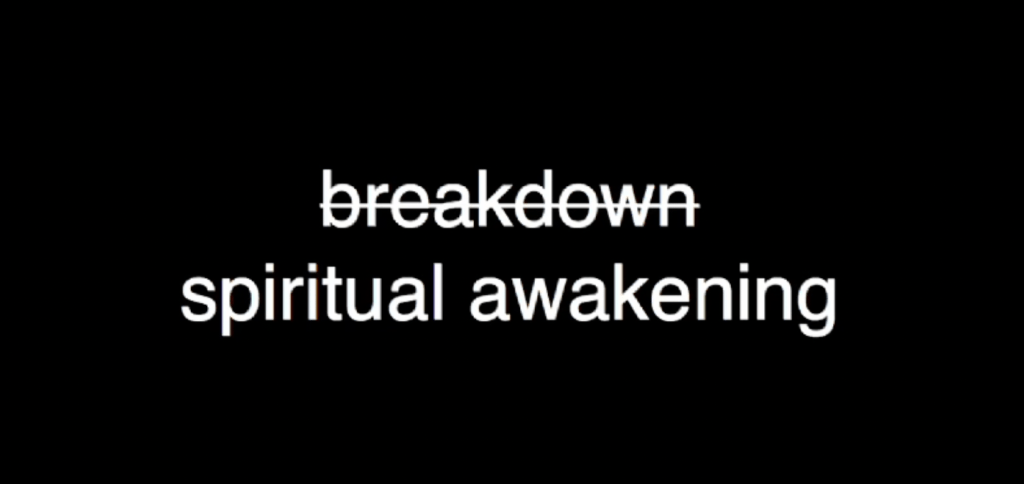
    Her therapists describes it as a ‘breakdown’ , to which Brene, probably fuelled by the Eat Pray Love stuff, says ‘ oh no, its not a breakdown, its a spiritual awakening’

    and, whilst its funny, it also leads to a deeper truth.

    Words in Healing matter, sometimes.

    Sometimes though, they dont quite capture it.

    The descriptive language of whatever the process is to whatever the new (or re-new) is, has a myriad of descriptors and metaphors. Some can be really helpful to some, some can be really unhelpful, some stick, some dont.

    Most describe a journey, a movement,a change – from the ‘dark night of the soul’ to the ‘pilgrims progress’ , from caterpillar to butterfly (via the v important chrysalis) , or to the remoulding and reconnecting of Japanese china with gold welds – brokenness to wholeness in a more beautiful/useful way than before.

    Theres something profound to realise that theres both something in, and also lacking in the descriptive words that include; Healing, Recovery, Breakthrough, transformation, reconnection, awakening, wholeness journey, wellbeing , growth, remaking, restoring, breakdown… (add even more)

    And the ‘wellbing and self-help’ section in Waterstones bookstore has expanded threefold in the last 5 years- self help is the new sexy, and most, if not many describe very similar practices of change, just starting from different points, anxiety, depression, abuse, trauma….there is a hunger overall for the solving of the problem, and quite a few people, from celebrities to self determined spiritual gurus proclaiming answers into the void, using similar processes for slightly different problems. (and lets not talk about the ‘Let Them’ theory book…. the rebadging of ‘acceptance’ as a concept thats as old as the ancient saints)

    But…. language matters and yet at the same time, language is sometimes insufficient. The pain of what we go through and its experience seems to be belittled by the work ‘breakdown’ , and spiritual awakening, whilst seems more positive does feel like ‘Eat Pray Love’ and a desire to ‘find oneself’ through doing experiences- when one wasnt entirely lost in the first place. Yet awakening can also be a good word, describing the new seeing of things, describing clarity…

    For you, for me, our experience of life that require the seeing, clearing, healing, recovery and all the messy bits in between will all be different. As I read, and largely enjoyed Karen O Donnells book on Spiritual Practices for Trauma survivors this week, I was reminded that the way in which language can be helpful for someone who has had a ‘one off’ traumatic experience (and the shame/silence afterwards) – and so can consider their lives in ‘before trauma/trauma event (ie miscarriage, car accident, bereavement) /post trauma’ timeline (it will always be more complex than this, so just for brevity, forgive me) – and words like ‘remake’ and ‘post’ trauma, seem more relevant, than to someone (like me) who has had many traumas (divorce, unemployment, homelessness for example) yet underlying all of it was the trauma of a childhood of being raised by a psychopathic mother – and so, I dont have a sense of a healthy life ‘before’ trauma, when I was born into it. In effect, this is what my soul chose for me….. (and even that has taken a while to accept) – but from a timeline of before/middle/after…. it’s as if I was born in the ‘middle’ … the C of cptsd is quite critical…. but the D needs changing as rarely is the emotional or bodily reaction to a trauma a disorder….usually its very natural (just unwanted in a capatalist world thats disconnected from the sacredness of the body)

    Maybe theres something in everything. If no one descriptor is perfect, then a multitude will, and surely if in a place of acceptance and seeing, language is only meant to affirm and encourage, and what’s going on for us and how we make our lives become more loving to our selves, others, the world and the divine soul of the universe and within our souls is mythical, mystical and messy, and there are sometimes no words, but all words. Maybe it’s that language is insufficient because our soul, heart and body know and that knowing is beyond language.

  • What my Projections began to reveal

    What my Projections began to reveal

    Although I might have considered myself a ‘not very judgemental’ type of person, borne out, mostly of a combination of people pleasing, empathic behaviour from an early age, and also adopting youth and community work values, stemming from human values that were of this nature from my studies. Strong empathy on one hand maybe, maybe even non judgemental at times too – I definitely did judge though, often as a form of a projection, this could be to organisations, or people groups. A classic one would be to say that a group of young people were ‘hard to reach’ – from an organisation point of view – but that was more likely a reflection on my own practice in engaging – rather than their responsibility.

    That was from an organisational point of view – project outwards to hide personal defects or deficits. Many projections I made came from what I did not have, critical of what others had.

    Im just reading ‘Born to Win’ by Muriel James and Dorothy Jongeward, in it they very succinctly describe the process of as an adult learning from projections saying:

    A projection is a trait, attitude, feeling or bit of behaviour which actually belongs to your own personality but is not experienced as such, instead it is attributed to object or persons in the environment and then experienced as directed towards you instead of the other way around

    Perls, in James/Jongeward

    So its something that is in my own personality – that I might either be aware or unaware of, or in denial of – that I communicate outwards, yet it resides in something of my own more than it does others. Most insults are projections. Most of what I heard by my abusive mother was projections. One was;

    ‘Look at _______, they are spoiling that child’

    When this translating as, I am actually neglecting my children, and justifying this as ‘not spoiling’

    So what about mine.

    In the above book they share another example:

    ‘The picture of being rejected – by first his (or her) parents and now his (or her) friends is one the neurotic goes at great lengths to establish and maintain. Whilst some claims might be true , what is also true is that the person has failed to live up to ideal expectations or standard he imposed on them. Once he (she) has projected his/her rejecting onto the other situation, regard themself as the passive object of all kinds of unwarranted hardship, unkind treatment or even victimisation’

    (Perls: Getalt Therapy Verbatum) (gender neutral alternatives added)

    It was only when I became aware of what I did not have that I realised I was projecting. In a twist of irony, where my parents projected that other parents were spoiling their children, and emotionally damaging us, my own projections focussed on the luxuries of others, whilst not being aware of how I was in denial of myself. I dont need self -care, I can manage without…. or ‘look at them going to get their fix’ , what I understand now is that I can use my projections to listen and learn to myself and see what it is that might be part of my own personality. I wince at some of my blogs on my other site, or even here.

    Whats also clear is that unsurprisingly, my childhood family communicated in the language of projection. It was what Sunday Lunchtime was, complain and project about everyone in church that morning, its what conversations were after seeing family members – ‘everyone else is damaging/toxic’ . Everyone else is the problem… so as I grew up its no wonder I can see how it was easy to fall into the same cynical critical stand point. As a child there was no way of knowing or realising what was going on. I had learned a way of hiding what was deficit in myself by projecting outwards.

    On reflection, can I continue to be brave and courageous to realise where my current tendencies to project outwards might reveal personal deficiencies in my own personality?

    What might it mean, like to quote says above – to read the lines of projection in insults?

    What do I – what do you accuse other of – that might be self-lesson waiting to be had?

    This is a brilliant article on exploring projections further, do give it a read – on why we use projections as defence mechanisms, instead of owning and expressing ourselves.

    Reference – James & Jongewald, Born to Win 1996

  • Why we’ve got to try and feel our feelings, not think our way out of them

    Its easier to say….’I know’

    I know that 

    Its easier to say … ‘I think’

    I think that

    Its easier to say …’I am…’

    I am annoyed

    Its easier to say ..’I cant..’

    I cant do this anymore

    Its harder to say ‘I feel..’

    As I I feel sad, I feel happy, I feel good… when ____ happens

    Not ‘you made me feel’ or ‘you should feel’ – having someone else to blame, or dictate our feelings, but ‘I feel’

    I feel fine covers a lot though doesn’t it…How Are You? Broken Sad Lonley Hurt Upset Alone Depressed Suicidal Angry  Hateful Breaking Down Screaming Dead Empty Nothing Crying Shouting Giving  Up Hiding Wearing a Mask Cutting Horrible Down Holl Worth

    It was recently said to me that in the conversations about men and emotions, that its not that men dont feel emotions, but that they lack the language to describe and articulate them. I look at my own life, and wonder when I could, or felt safe to, express how ‘I feel’ or ‘felt’ about anything. It strikes me as ironic, as during a time when I was helping young people explore emotional literacy in some mentoring work, that I numbed my own pain, that I had no handle on, or no experience of doing this myself. I know about emotional literacy, is vastly different to me being able to say ‘I feel’ .

    You quickly learn as a child not to worry about your own emotions, when there’s more emotional people in the family to care for, when you’re on tenterhooks all the time. You learn to ignore feelings. Thats what I did. Switch onto full on survival mode.

    Yet at the same time I thought I was self aware. I wasn’t.

    If Daniel Coleman is to be believed, its about being aware of our mood and our thoughts about that mood (emotional intelligence, p 47) He says when we say ‘this anger I am feeling’ is more freeing than trying to deny someone the right to feel angry. Growing up in a ‘shouldn’t feel’ emotions culture, let alone a coping with other persons over emotional state culture, denies the healthy growth of emotional awareness, of the self.

    Research has shown that those who accept and are aware of their emotions, are more likely to feel both good and negative ones, than people who distract, deny and suppress emotions. Coleman writes, the more we notice in terms of emotions, the richer we are emotionally.Emotional Intelligence For Dads And Kids - The Dad Train

    But what about not being able to express or articulate emotions. A case study in Colemans book talks about the man who literally had flat, colourless emotions, who ‘lacked the words’ for feelings, and whilst he goes on to state (in 1996) that further research is needed on this (it might be done by now) he and others were drawn to the significant amount of people who literally could not feel and why this was the case.

    I like this line, on the back of their preliminary findings then..

    if you could put words to what you were felt, it was yours

    and that, as they said was the problem to those who couldn’t feel or have no words for them, they couldn’t own their own feelings. Often, that just meant feeling other peoples.

    I feel….. well what doing I feel. What do you feel?  and, Men, I address you, to  ask that you take notice of, and allow yourself to feel. Allow yourself to feel, and try and articulate the feeling, saying I feel angry, happy, blissful, calm, or feeling anxious, tired, hot, aroused…

    or any one of these… practice saying, feeling, acknowledging them..I will..

    Today I Feel... Poster - FREEBIE by The Vibrant VA Studies Shop and More

    Saying I feel isn’t weak.

    Its so hard work that it requires strength. Ignoring I feel is so so much worse.  I get if you cant. I get if you cant because its buried under hurts and trauma. I know. But admit that too, and prioritise talking, therapy and loving yourself to be fully you.

    ‘I think’ was always an easy get out for me. ‘I know’ was too. Hide emotions because not being in a safe place to express them, or to peel off the layers to experience them.

    To be more me, Im going to try and speak from my heart and say I feel.

    Its not too late to start. I owe it to myself, and everyone around me.

    This may help:

    How “Feeling Your Feelings” May Help Improve Your Relationship with Food —  Michelle Vina Baltsas