Tag: Men

  • Breaking the Silence: Men’s Mental Health Matters

    As men, we’ve been conditioned for generations to believe that strength means suppressing our emotions. We’re told that being tough, stoic, and unshakable is the ideal. We’re encouraged to “man up,” to push through pain, to avoid vulnerability, and to believe that needing help is a weakness. This outdated notion is not only damaging to our mental health, but it’s also limiting our potential to live fulfilling, balanced lives.

    The reality is that mental health struggles don’t discriminate based on gender, and emotional pain doesn’t go away by ignoring it. If anything, it grows in silence. More than ever, it’s time for us to dismantle the toxic expectations surrounding masculinity and embrace the truth: it takes courage to heal.

    Here, I aim to create a safe, open space for men to address their mental health, explore their emotional well-being, and heal from the burdens that have been weighing on us for too long. Today, I want to share why this journey is crucial and how embracing healing is not just a form of self-care—it’s an act of strength.

    The Invisible Weight: Why Men Struggle in Silence

    For decades, mental health awareness has been dominated by female voices, and while this is an important conversation, the men’s mental health crisis often gets overlooked. According to a 2019 report from the Mental Health Foundation, men are three times more likely to die by suicide than women, and nearly 75% of suicides are committed by men. These numbers are not just statistics—they’re real lives lost to a silent epidemic.

    Why does this happen? Why are so many men silently suffering, often without reaching out for help?

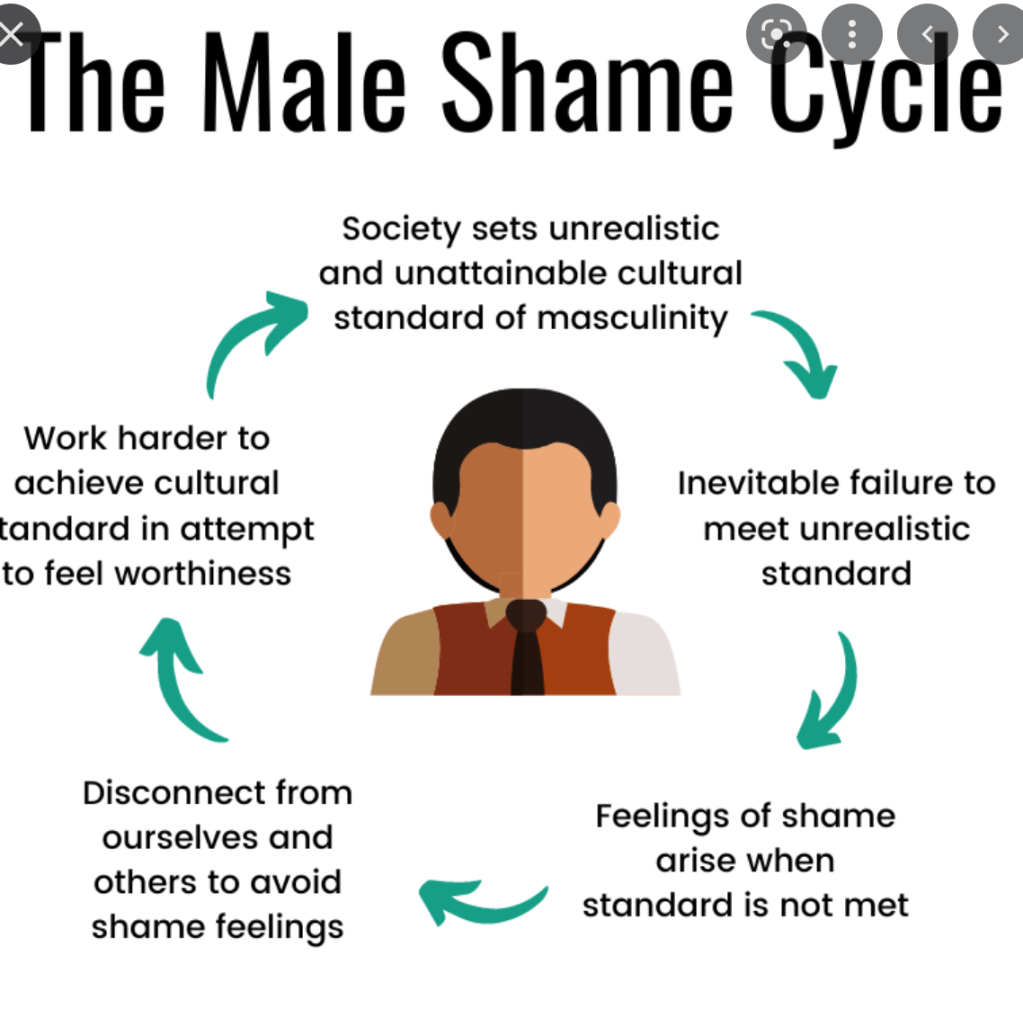
    The answer lies in the societal pressures and deeply ingrained stereotypes about what it means to be a man. Many men grow up in environments where vulnerability is shamed, where emotional expression is seen as a flaw, and where “being a man” means never showing weakness. As a result, men often bottle up their feelings, ignore their emotional pain, and repress their mental health struggles, leading to a build-up of unresolved issues.

    But this approach doesn’t just lead to tragic outcomes; it also prevents men from achieving true emotional maturity. It stifles personal growth, strains relationships, and isolates men from the support networks they desperately need.

    The First Step: Acknowledging the Need for Healing

    It’s impossible to start a healing journey if we don’t first acknowledge that something needs to change. And for many men, that means recognizing the emotional pain they’ve been carrying and giving themselves permission to feel.

    The healing process begins with self-awareness. Whether it’s experiencing anxiety, depression, trauma, or just a general sense of emotional numbness, the first step is often the hardest—admitting that we are not okay. This can be a daunting experience, especially for those who have been conditioned to believe that “real men” don’t feel or express weakness.

    But the truth is, acknowledging that we need help is one of the most courageous things we can do. It’s a sign of self-respect, a commitment to bettering ourselves, and an act of self-love. It says, “I deserve to be well,” and, “I’m worth the effort it takes to heal.”

    The Power of Vulnerability

    I know that for many men, the word vulnerability carries a lot of weight, often invoking fear or discomfort. We associate vulnerability with being weak or exposed, but in reality, vulnerability is an incredible source of strength.

    Think about it: vulnerability is what allows us to form deep connections with others. It’s what lets us be real and honest, not just with ourselves, but with the people we care about. When we embrace vulnerability, we open ourselves up to healing, growth, and authenticity.

    Opening up about our feelings—whether it’s to a friend, a therapist, or a support group—doesn’t make us weak. In fact, it does the opposite. It takes immense courage to confront and express the emotions that we’ve been taught to hide. Vulnerability fosters trust, self-acceptance, and meaningful relationships. It helps us release the burdens we’ve been carrying in isolation and invites others to do the same.

    Im hoping that by sharing my story, I’ve encouraged men to lean into vulnerability. It’s not about airing our weaknesses—it’s about recognizing our humanity and giving ourselves the space to be imperfect.

    Seeking Help: Therapy, Support Groups, and More

    The road to healing is not one we have to walk alone. In fact, seeking help is a crucial step in the journey. For men, this may mean attending therapy, joining a support group, or talking to trusted friends or family members. The stigma surrounding therapy for men is slowly changing, but it’s still a barrier that many men face. There is a misconception that therapy is only for those who are “broken” or “weak,” but that’s simply not the case.

    Therapy is a tool for growth, not a sign of failure. It’s a space where we can explore our emotions, process past trauma, and develop healthier coping strategies. It’s a place where we can challenge the harmful narratives we’ve been told about masculinity and build a more balanced, authentic version of ourselves.

    Support groups can also be an invaluable resource. Many men feel isolated in their struggles, thinking they’re the only ones going through difficult emotions. But when we connect with others who share similar experiences, we realize we’re not alone. Support groups provide a sense of camaraderie and encouragement, and they help men normalize the conversation around mental health.

    The Benefits of Healing: Personal and Relational Growth

    Healing isn’t just about alleviating pain, often its about facing it—it’s about transforming our lives for the better. When we take care of our mental health, we improve our overall well-being, which has a ripple effect on all areas of our lives.

    1. Emotional Resilience: When we work through our emotional challenges, we build the resilience needed to face future stressors. Rather than feeling overwhelmed or defeated, we become more equipped to handle adversity with confidence and emotional maturity.
    2. Stronger Relationships: Healing allows us to show up more fully in our relationships. We become better partners, fathers, and friends when we prioritize our emotional well-being. By understanding ourselves more deeply, we can communicate better, set boundaries, and foster healthier connections.
    3. Physical Health: Mental and physical health are deeply connected. Chronic stress, depression, and anxiety can manifest in physical symptoms like headaches, digestive issues, and fatigue. When we address our mental health, we’re also improving our physical health, leading to a more vibrant and energetic life.
    4. Purpose and Fulfillment: Healing helps us reconnect with our sense of purpose. It allows us to align our lives with our values and passions, leading to a more fulfilling and meaningful existence. When we take care of our emotional health, we can pursue our goals with clarity and motivation.

    Taking Action: How to Start Your Healing Journey

    If you’re ready to embark on your own journey of healing, know that you don’t have to have all the answers right now. The process can begin with small, intentional steps:

    • Speak to a professional: A therapist can help guide you through your healing journey with personalized support. Look for a therapist who specializes in men’s mental health or general emotional well-being.
    • Open up to someone you trust: Sharing your struggles with a friend or family member can help alleviate the weight of silence. Even if it’s just starting with one conversation, it’s a powerful first step.
    • Join a support group: Finding a group of like-minded men who are on a similar journey can offer camaraderie and solidarity. You don’t have to face your challenges alone. Andy’s Man club is one in the north east.
    • Practice self-care: Healing isn’t just emotional—it’s also physical. Take care of your body by exercising, eating well, and getting enough rest. Self-care routines create a foundation for mental and emotional healing.
    • Educate yourself: Read books, watch documentaries, or listen to podcasts about men’s mental health. The more informed you are, the better equipped you’ll be to navigate your healing journey. I can recommend a lot in the resources section on this blog.

    Final Thoughts: Reclaiming Your Power

    As men, we’ve spent far too long holding onto the lie that emotional pain should be hidden, ignored, or suppressed. But healing is not only possible—it’s essential. By embracing our vulnerability, seeking support, and taking responsibility for our mental health, we can redefine what it means to be a strong, resilient man.

    Healing is an act of power, not weakness. It’s time for us to break the silence, step into our full humanity, and heal—not just for ourselves, but for the generations of men who will come after us. Often its crisis that takes us to this point, or the desperate calls of a loved one to face things, maybe it’s time for you, to lean in to the possibilities beyond and break up the surface cracks and find wholeness underneath, beyond the pain.


    Remember: You are not alone in this journey. You are worthy of healing, and it’s never too late to start.

    Confession. This article is 90% written by GPT, with a few additions. I genuinely wanted to see what it would write if I asked it to write a 1500 word piece on Mental Health and Men. So here it is. Whether it’s from AI or from me, the message is the same though.

    Your Mental health matters men, and you change before you break, or it’s too late. Do it for you, and all you love.

  • Healthy Emotional movies… for Men?

    Last night Christelle and I were watching this film

    Marilyn Hotchkiss’ Ballroom Dancing & Charm School

    The Trailer is here

    Robert Carlyle Dances. Yes.

    But there’s much more to it than that.

    It was a film that centred Men and their dealing with emotions, such as grief, anger and memories. Yes, it wasn’t perfect and maybe not therapeutically perfect either. But it was good.

    So it got me wondering, what films have you watched that portrayed Men dealing appropriately, though not always perfectly, with their emotions? Do comment below

    I can think of a few others, Rocketman, Hector and the pursuit of Happiness, The Day we sang all watched in the last few years – but what for you has been a good film that shows Men dealing well with difficult emotions?

    Do share below:

  • Why ‘Healing for Men’ and not for all?

    Why ‘Healing for Men’ and not for all?

    I sometimes get asked the question : ‘Why are you writing just to Men?’ so I thought I might share a little in response and maybe pose a few further thoughts on this, thoughts, that may not be complete, but thoughts that share a little on some of my reasoning and motives for the blog as it is:

    1. The main reason ‘Healing for Men’ is that I am male. Its kind of obvious, but theres no way I would want to speak for, or to women. Yes I know women read what I write, some women read it and pass it on to their male friends or partners. My experience is from a male perspective, my perspective, of what it was like to grow up in an emotionally abusive home and the implications of that, of being a son, a brother, a husband and father, and also male in various workplaces such as supermarkets, call centres, and through education to Masters and 20 years in faith based youth and community work, all as a male. But also what its like for me, as a male, accessing therapy, accessing the process of therapeutic learning, self help, self awareness and rebuilding. I have tried where I have been able too to write from my experience.
    2. The Mental health, suicide crisis is virtually solely a Male one in the UK, its the biggest cause of death for the 30-50’s, and though I can honestly say I wasn’t close to making that life ending decision aged 40, it might have been close if it wasnt for a small group of friends and a place to stay. Part of this blog then, is for me to talk about what getting help, vulnerability and life change is like for me, what shame, guilt, feeling trapped is like and sharing something of my journey. Could it be that men might read this and think that they are not alone? Maybe…
    3. Though numbers of this are increasing, I want to raise the profile of Male victims of Domestic Violence, and the support offered, accessible to others (links included), but also I think it is as important to speak into the situations of where men abuse women, as this is tragically still more common. Though I recognise that if this is you, you are unlikely to be reading this, but one day you might reflect on your behaviour, change is possible, starting with acceptance, vulnerability, you don’t have to abuse and objectify women forever, that frightened part of you can heal, give it light.
    4. I am wondering if there are specific actual aspects of a breakdown-healing-self awareness- growth journey might be characteristically male. I have read recently that less men access therapy, and less men are present at seminars on DV or Trauma – these are seen as ‘female’ issues..are they? , I am not qualified enough to suggest responses to the men and therapy question generally – though for me it was about pride, and about not wanting to start a process that felt dauntingly large – knowing what I had hidden or avoided for so long. (I acknowledge therapy isn’t for everyone, though I will also say that external activities that say they are therapeutic, (like screaming at a football match) might only scratch some of the surface) – but might there be male attitudes to ‘getting help’ ? More men that women might be externalisers who hide and defend their weaknesses – through a veil of codependency, narcissism or worse – but women do this too. (21 reasons men hide their vulnerability – here)
    5. One of the ‘Male’ perspectives and attitudes that I didn’t grow up with – given that my own father was an abused Dad , was the idea of ‘Macho’, strong, and senses of achievement, and physical strength – its not something I can relate to – but, the ‘Macho’ I had to be was have inner survival strength to cope with emotional shit, and the emotional beatings and manipulations of a lifelong psychopathic mother. I can’t speak from the ‘macho’ culture, but dont we all hide behind strengths of a variety of different kinds? I am intrigued at some level by the toxic masculinity conversation, and reflecting on its effect, on men, since childhood, and how it plays out in families, workplaces and elsewhere. What if we stopped trying to live up to, but started to live? I know I’m not going to heal the world, and I dont profess to, yet I do know and have heard of men who have recognised themselves in some of what I have written, and I’m honoured to have been able to connect in this way.
    6. Healing for Men, for whilst we as men dont fill up the therapy rooms, we are bulging at the addiction clinics, whether its gambling, food, alcohol, porn, drugs or something else or we’re drowning in overwork – these are all conditions that stem from deep loss, brokenness and trying to run and hide. This is what we turn to often – the external – when its the internal that’s crying in pain. At least, thats what I did. I am sure women turn to these things, or others too.

    Another thing more common to men is take on roles of Power and Authority, it becomes an addiction and a mask.

    Given our influence, in our families, workplaces, homes, and communities – dont those around us deserve us to be the best we can be? Our real selves? What would it mean to be vulnerable – for the first time- to accept and acknowledge needing help? To start by admitting defeat, but not the end? Ultimately all I really want to do in this blog is continue to share the parts of my journey that I want to make public, to encourage any man in their own process of growth, self learning and personal truth, to let them, to let you know that change from any behaviour is possible.

    Your emotional needs are important, men, you are important.

    Self care and self help isnt just for women

    Self -love isnt weak

    It takes courage to admit

    Real courage

    The strongest strength you have ever had to look inwards

    Its where real power lies.

    You dont need to carry around an emptiness forever, friend.

    Neither do I.

    So thats some of my reasoning for ‘Healing for Men’ – maybe the other is that theres already alot out there for a female audience, not that there aren’t resources for men either, but felt that I could be specific, and personal, and be one male, sharing my story, speaking with and to other men, as we all journey though life.

    Thank you – do click like and share with others, and thank you for your ongoing support

    Healing for Men, the world is a better place – when we are too.

  • On Praise of the Men who

    On Parise of the men who

    are trying to keep it together men,

    The staying strong for others men,

    The ones about to break men,

    The ones whose needs come second, third or fourth,

    The men who dont lash out or damage.

    The men who listen and ask,

    The men who say, sorry and Ill change men,

    The men who create space for others men,

    The men who cheer the women men,

    The men who challenge the expectations men,

    The men who protect their women men,

    Those who continually self reflect and grow men,

    Those who know their frailty men,

    Who are aware of their strength – but dont use it men.

    The step aside for women men

    The calling out bullshit men

    The challenge other men men

    A shout out to the men who aren’t afraid to

    go to therapy men

    The men who

    face their own reality

    The men who do kind

    The men who make the world a better place for others men

    The men who show up

    The men who value integrity

    The men who dont blame others for what they did or didn’t do men

    The men who dont stir up swirling drama

    The silent types often, whose kindness knows no praise

    The men who bring colour and spark and life to the world

    The men whose word and work brings healing, truth and vibrancy

    In praise of the men who stand up for justice – and get attacked for it men

    The men who do vulnerable – for their own good, but cost too

    So, on International Mens Day

    Praise to the men who, give men a good name

    Thank you.

    For being you.

  • The shame of being male

    This feels like one of the most difficult pieces I have ever written, but that fact alone doesnt stop me from wanting to write it, for theres a feeling I get every now and then, that I hate, and this week its become much stronger.

    This is difficult to write, because I know I won’t get it right.

    And that is the feeling that I really hate men sometimes.

    I hate men when they abuse women

    I hate men when they manipulate systems to allow those who abuse women to get away with it

    I hate men when they blame alcohol or women to excuse their behaviuour

    I hate men who find it easy to talk about raping and treating women as their possession

    I hate men who lie and play games with women to pit them against each other, whilst abusing others to keep them silent.

    I hate men when they say its not all men, because they are factually right, it isnt but thats not whats required, whats required is listening, learning and feeling, and standing up women, and to challenge the systems, that exist all over the world.

    I hate men, who, just dont take responsibility. For themselves, for others, and expect others to revolve around them. It is not good enough

    The men who blame women for their actions, to excuse them – ‘because they did what they did or didnt do, or wear what they did or didnt- that was the reason I acted’ they were to blame.

    So im annoyed, Im hurt and I feel powerless, but I just wanted to talk about it, why- because im tired of having to feel like whilst its not all men, its enough men, its enough systems, its enough places where male behaviour is excused.

    I was at a local railway station late last night, 6 drunk older men in their late 50’s got off the same late train as me, I knew what was going on, i could work out a late train needed a new ticket and how to do a quick change. It was as if they couldn’t and didnt want to even try to follow what I was saying to them, just reading the signs and saying things like ‘our train went early’ and blaming a train, whilst having no idea what was going on. The train they were meant to be on left, without them, and they might have spent the night in thornaby at 9.45pm on a Friday night, with not a chance of getting too Sunderland.

    Im sick and tired of men, who dispose of their responsibilities, for themselves, and expect others to deal with them when drunk.

    I wonder, what might it be like to begin to admit our collective failings as men in society.

    Dont take out the reason that life has treated us badly on other people – therapy and talking it out is a way of doing it – sports and alcohol distraction only delays it

    I wonder, if a key to healing as a man is to stop, and admit things.

    The closer we are to the pain and walking through it, the greater chance of being able to be free from it.

    Our woundedness is not an excuse for behaviour – men we can choose – and men, often we can do better, often we are just lazy. Or maybe we prefer to bully and abuse others, because thats when we get what we want, whilst clawing away at our soul.

    We have been conned by our own male orientated society to think the way that we do, and brought up in a world that has tainted our views on money, possessions, power and women. We just dont know what or who to be, too soft, too hard, too closed, too open, too feminine, too kind, not enough.

    I want to be sympathetic as well as angry. I want to see the men who act disastrously and destructively as both victim and perpetrator.

    Its complicated, I know, and thats the problem.

    What does healing for men look like when brought up by an abusive mother? When you’re angry at that abusive mother or father, or been in the care system, what is that like?

    What does healing for men look like to the entitled man who has everything, who destroys everything around him as a consequence of his moulded ego and narcissism? Can they be healed?

    What does a healed, healthy, society look like – and how significant should the male dominated media play in it?

    Whats the starting point we’re at now?

    There are times when I hate men. I really do

    I hate that victims of male abuse pay 1000’s on legal fees and therapy to recover. That should not happen.

    Yet Society rewards the bullies.

    And I am one of them.

    A white middle aged man.

    And I know I can do better. Because if I can do better, it benefits everyone.

    I can reach into the depths of my hurting damaged heart and try not to inflict that pain on others, then it is possible.

    I hate men as much as Im embarrassed to be a man sometimes, or feel some kind of gender guilt because of the 100’s and 1000’s of stories of women beaten up by men on a daily basis.

    It wasn’t her

    It wasnt the drink

    It wasnt the football

    It wasnt the mates down the pub

    It wasnt the stress of work

    It wasnt the lack of work

    It wasnt a mental health issue

    It was you.

    Because you had a choice not to, at every point.

    Maybe healing for men, is for you because you are on the brink, you are angry, you are bitter, you are running, you are hiding, you feel trapped, pressured and exhausted. It doesnt have to be this way or continue to be.

    Dont stand there and tell me that men are abused too, I know, I so know it.

    I look in horror at the Plymouth shooting and its aftermath, and the many shootings elsewhere by men.

    So maybe this is anger, maybe this is grief – for what we have all become.

    So I’m thinking out loud, heart filled splattering of hurt, pain and anguish.

    I wish it wasnt the way, but sometimes I really hate men.