Tag: narcissm

  • The tiring, futility of trying to be good.

    The tiring, futility of trying to be good.

    When you have something to prove, you aren’t free

    Edith Eger, The Choice (2017)

    It is not necessary to satisfy other peoples expectations

    Kishimi, Koga , The Courage to be disliked (2013)

    This is hard stuff for me, so I thought I would write about it.

    Most of my family, that is, both my lovely grandmothers, and more recently my Aunties, have commented on me being ‘such a good little boy’ when I was a child.

    I can remember them doing this as a child, in defence of me, against my toxic mother.

    My teachers said the same. In fact I remember astounding one teacher when I was 6 for wanting the spelling of a word that she thought I shouldn’t know. The word was blancmange. School reports aged 8 said that I was concientious. (not conceited) , and I didnt have google then to find out what this meant, so when I asked my parents what this word meant, there strangely wasn’t a response. I was told off for asking for a present for having a good school report.

    What I didnt realise aged 8, was that this was about to be a pattern. Other people would see my gifts and general goodness, my mother would see either the opposite, de legitimise who I was or what they said.. or as ive said before..take it for herself.

    But, I did learn this though… That being good (as long as I didnt ask for rewards for it) kept me out of trouble in those other places, even if I was seemingly always in trouble/danger in the home.

    Nothing was good enough at home, it was impossible to win, and it was all game. But I did realise that by staying out trouble and invisible meant I was safer.

    There was something else weird too. Because I wasn’t being seen. This is what I wanted, it was like this…

    If only they could see what I did or who I was then they might be proud of me or love me.

    But there was a complication to this.

    I didnt want them anywhere near me – not publicly anyway, and so I hid or avoided achievements. I feigned disappointment when they said they couldn’t come to my duke of Edinburgh bronze award night, they were away I think and it was one of favourite events where I collected an award. Ever. So, its complicated, the desire to be seen to be good, mixed with the impending trauma of having them see it. Moments of achievement were best avoided. When I got school prizes aged 13, I didnt expect it, and I definitely didnt the next year.

    But I was a good boy.

    When I realised I had to be, and do this on my own – I set out at doing so.

    And being a good boy, also meant and became, being a good christian boy too.

    The two became synonymous, and God became intrinsically linked to the same parent figure, always watching, to be feared, temperamental, never seeing (except sin and failings). God gave me tasks to do, God was keeping a list of sins, God was storing up every thought for the last days – so I could rewatch it all. Also.. nothing I did that was actually good, this was just ‘God’ in me doing these things, because deep down im full of darkness, sin and shame, of course I am.

    So I was pointlessly trying to be good. And it was exhausting.

    Keeping up good appearances. At church, at school… adapting to the institutions.. believing this was what life was all about. Believing that if I was good I would be liked. Actually I noticed the opposite. The fun people had friends. The other ‘good’ kids congregated together, all the oldest child, maybe all sitting in the Christian union too.

    Good christians, judging the fun others had, and being jealous that they all had friends.

    A life of performance, pretence, self protection and compliance.

    Imagine my surprise when I decided to a ‘christian’ gap year doing youth ministry and this caused probably 15 years of anger and disappointment in her.. because I didnt go to university at 18 (her plan and expectation) . Being good and even following a faith calling – didnt make a difference.

    Because it wasn’t seen though, I then had to prove them wrong, and spent a good amount of my life doing so.

    Being good didnt matter, and there was no possibility to me meeting their expectations. But I didnt know this at the time. Not until I read the pink book that saved my life, until I realised that I didn’t matter what I did.

    Somewhere deep in my conscious is this notion of ‘being good’, that being good somehow would mean being accepted and liked – especially in the institutions – and that maybe this being liked and accepted in these places were compensation for what I didnt have at home.

    Somewhere there’s still a belief that if im good, i’ll be liked and accepted.

    But this isn’t true.

    And if it is, it isn’t freedom. Its trying to meet other peoples expectations.

    And thats something neither I or you can control.

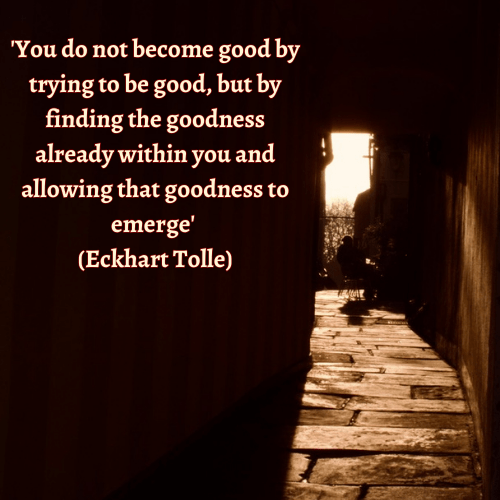
    And maybe there’s a difference, between trying to be good – to fit in – and letting that deep inner well of goodness shine through and be revealed. Goodness needn’t mean compliance. Goodness is for all humanity.

    At the risk of being disliked.

    I think I could also talk about how this applies to my writing, but thats for a different time.

    Its not that I see now and think that ‘being good’ ruined my life – no not at all, I needed to be good to survive, to be and get to where I am today. Being good in school and doing well was an achievement of my own doing, as was graduating to Masters level a few years ago.

    I just realised that it isn’t the most important thing.

    Yet I can tell that its a continual wrestle for me, as it sits so close and deep within my own psyche – and maybe yours.

    More to come on this… probably..

    Thank you for reading.

  • My healing started the day I realised that my mother is a narcissist.

    Sometimes days have a special significance dont they. I remember clearly the day I got my A level results, the days when my children were born, days of celebration, and where I was when I heard significant news, like my grandparents deaths. Positively recently I remember so much about the day of my wedding with Christelle (it wasn’t that long ago)

    But there is one other day in my life that had a significant impact upon my life… it was the day I realised what narcissism is, and the extent to which my mother is one.

    There is a slight blurring to this story, however, is that in 2006 I was reading a paper whilst I was doing my Youth work and Theology degree at ICC, Glasgow which described the difference between listening with a young person with empathy, and taking a story that a young person shares and using it to launch into your own, this was described as being narcissistic. That was the first time I had heard this word. I did also underline the word on the paper and write in the margin ‘Remind me of anyone’ . A seed had been sown.

    The other blurring in the clarity is that it was only a few years later in 2008 when fairly serious incidents that revealed this behaviour. The fall out from this was that ‘nothing changed’ or responsibility was taken. But at that time I didnt equate or delve into what narcissist behaviour was, was just in a swirl of denials.

    Anyway, back to the story, rather than the pre amble.

    I was in a cafe just outside Durham with one of my best friends, it was just after Christmas, the day after Boxing Day, 4 years ago. I was recounting how the few days of Christmas had gone, as there was a lot of tension around the family home at the time. For some reason the subject came up that I hadn’t spent time with my parents or spoken to them over the Christmas time, and I said something about how weird they were.

    My friend asked me whether I thought, no actually she said, ‘Your Mother is a narcissist isn’t she?’

    I may have done my usual and passed this off, or said ‘yeah I know’ or something like that. I didnt know, or didnt realise the extent to which this truth had affected my entire life, or would be part of what my life recovery would take.

    I knew that she was difficult. I knew that she sucked the life out of every room. I knew that she was emotionally unstable. I knew that also she had the capacity to upset everyone. I knew that she didnt listen.

    But a Narcissist? What’s that ?

    What I hadn’t done until that point was begin the process of doing the work.

    Firstly of recognising the problem. Secondly of releasing myself from the responsibility of the problem and changing myself. Thirdly of naming it. Fourthly and this is the ongoing bit – of realising the extent to which I have ongoing recovery to do because of the deep personality issues that dominated my childhood.

    None of this could be done until I had the space to see it.

    And I could only see it when someone who had experience of it could identify it.

    My friend recommended to me the ‘pink book’.

    This book:

    Link here if you would like to buy a copy

    A week later the book arrived as I received a copy.

    In it Nina describes the characteristics of healthy parents (none of which I could recognise) and then 4 types of Self Absorbed Parents, 3 of which I could identify in mother, but definitely strongly one of them.

    Though the book didnt stop there.

    Nina described the way in which I had reacted and responded to my parents, and my own self destructive, self limiting responses to them – to either pacify, soothe or avoid – also flight, or fight/anger responses. She went on to describe how to protect the self, in the midst of the narcissistic interaction, and afterwards. There’s also coping strategies for each type of parent.

    This was my first ‘self help’ book I had read.

    It was like scales and weights falling, as I could see clearly for the first time the extent of what I had tried to cope with, alone, and also how I had reduced myself in the process, of 40 years, yet at the same done what I thought I should do for my own survival.

    I thought that the stuff I suffered with my mother were impossible to describe, too weird, too crazy to recognise, yet this book described my experiences. It describes what emotional control, abuse, belligerence and victim playing looks like. And I had experienced it all.

    I wasn’t alone. I wasn’t the only one.

    That was so important.

    And if this might be you, know that you aren’t alone either.

    I confess to not doing all of the exercises in Nina’s book, the scoring charts in the beginning were enough for me to be able to do some accurate identification.

    But It wasn’t that I now had someone to blame. It wasn’t that I now took this information and stereotypically ‘blamed my childhood’ , and I hope that from what ive ever written on this blog I haven’t done that, I certainly haven’t tried to. What the information did for me was to help me see who I was, how I coped and survived, and what I now needed to do, and how I had been affected by it.

    The important thing was that it was that I could let go of things I had felt responsible for.

    And four years later, can feel more compassionate about my child James, teenage James and mid twenties and thirties James – who was trying to do life with a void, a void that had had things taken.

    And now I knew. I had avoided wanting to know, feeling the pain to be too great, even though a number of people had been trying to tell me, I hadn’t listened, not fully.

    Part of my healing journey, was the day I realised that my mother was a narcissist. There were other significant moments, but this was definitely one of them.

    Thank you for reading, if there’s something in this that you resonate with, do seek out professional help and therapy if you can, acknowledging this is a first step, making a move of self love to begin a healing journey is courageous and beautiful. I have other resources in the menu above including other books, and there’s a lot on you tube on responding to narcissism. Know that its time. Today is a good first day to start to recover and heal from this.

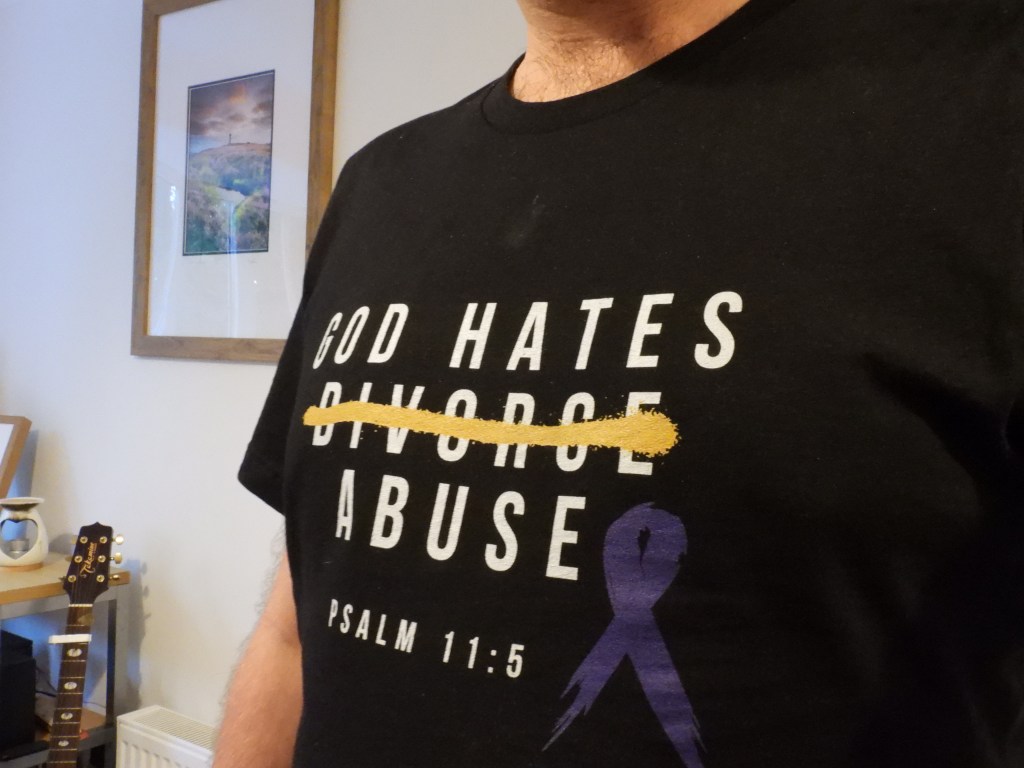
  • Domestic Violence Awareness Month

    Domestic Violence Awareness Month

    This Month is #domesticviolenceawarenessmonth

    More details are here: https://www.daysoftheyear.com/days/domestic-violence-awareness-month/

    Signs You Are In An Abusive Relationship

    A lot of people do not realize that they are in an abusive relationship. Here are some of the signs that you could be in an abusive relationship that you need to get out of…

    • Your partner sexually or physically abuses you. If they ever make you have sex with them when you don’t want to, hit you, shove you, or push you, this is domestic abuse. 
    • Your partner threatens you or your family.
    • Your partner puts your down. They attack your capabilities, mental health, looks, or intelligence. They blame you for their violent outbursts.
    • Your partner is jealous. They may isolate you from your family or friends or they may accuse you of not being faithful.
    • Your partner is possessive. They may check up on you all of the time and they may get angry if you hang out with certain people.
    • Your partner has strangled you, beat you, or hit you in the past.

    Emotional Abuse

    When we talk about raising awareness for Domestic Violence Awareness Month, it’s important that we acknowledge emotional abuse. This is a much bigger problem than a lot of people realize. Just because you don’t have bruises on your skin does not mean you are not being abused. A lot of women and men suffer from emotional abuse, and it is no less destructive. Unfortunately, emotional abuse is often overlooked or minimized, even by those experiencing this.

    Emotional abusers look to chip away at your feelings of independence and self-worth. You can end up feeling like you do not have anything without your abusive partner or that there is no way out of your relationship. 

    Emotional abuse includes verbal abuse. This includes controlling behavior, intimidation, isolation, shaming, blaming, name-calling, and yelling. Abusers who use psychological or emotional abuse will often throw about threats of physical violence, as well as other repercussions if you do not do what they demand. 

    Gaslighting is one form of emotional and verbal abuse

    Taken from https://www.growthcounselingservices.com/blog/2019/9/18/intimate-and-tribal-gas-lighting-how-to-keep-yourself-safe-amp-sane

    The scars of emotional abuse run deep, and they are very real! You may assume that physical abuse is a lot worse, as people can end up with physical wounds and send you to the hospital. However, emotional abuse can be just as damaging. Sometimes, it can even be worse. This is why it is important to raise awareness of all types of domestic violence and abuse.

    Financial abuse is one of the subtler forms of emotional abuse. Some examples of this include:

    • Taking your money or stealing from you
    • Sabotaging your job – calling constantly or making you miss work
    • Preventing you from choosing your own career or working
    • Restricting you to an allowance
    • Withholding basic necessities, such as shelter, medications, clothes, and food 
    • Making you account for every penny you spend
    • Withholding credit cards or money
    • Rigidly controlling your finances

    Note that Men can experience Domestic abuse too. I have experienced both abuse by a controlling dominating Mother and then having suffered emotional abuse in a previous long term relationship.

    If you would like to speak in confidence about Domestic Abuse that you are suffering as a male – then do contact this helpline – https://mensadviceline.org.uk

    Or Man kind ; Here : https://www.mankind.org.uk/help-for-victims/types-of-domestic-abuse/

    Its not just women, its not just relationships linked to poverty, its not relationships ‘out there’ it occurs in churches and so called ‘christian relationships’ no relationship is immune from it, when actions occur that stem from not taking personal responsibility, blaming, deep neediness, as well as power imbalances.

    If you have committed abuse of others – do get help – there is time, there is support to change, should you realise that there is a better way to behave.

    The world is a better place when we all are too.

    There is no shame in asking for help

    There is no shame in admitting that there is a problem in your relationship

    There is no shame in realising that you have been or are being abused.

    It isn’t your fault, their behaviour isn’t your responsibility.

    Time to make yourself safe, time to deserve better, time to feel like living and not just surviving.

    #domesticviolenceawarenessmonth

    Purple is the colour.

  • Surviving Psychopathic Parenting (Part 34) I had Hope – The Countdown to the end was in sight.

    Surviving Psychopathic Parenting (Part 34) I had Hope – The Countdown to the end was in sight.

    The Day I left my childhood home I was sick.

    I actually vomitted in the Midland Main line Intercity 125 Toilets from Market Harborough to Sheffield, before then boarding the Cross Country To Darlington, then two pacers from Darlington to Thornaby and Hartlepool, Sorry my train nerd distracted me there.

    It was August 1996, and I was sick.

    The train was on its way to Hartlepool for to start my gap year.

    For me it was the day I left home.

    Left what I couldn’t describe or articulate but had been a horror show of a childhood.

    The last straw of simmering fury, that I held in, had been my 18th Birthday. When I didn’t get the chance to do what I wanted to do, and in peace, (without them) without them interrupting what I wanted to do and spoiling it. March to August 1996 was 5 months, but the clock had started long before.

    The Clock had started when I was about 13 or 14, may even been earlier. But definitely by then.

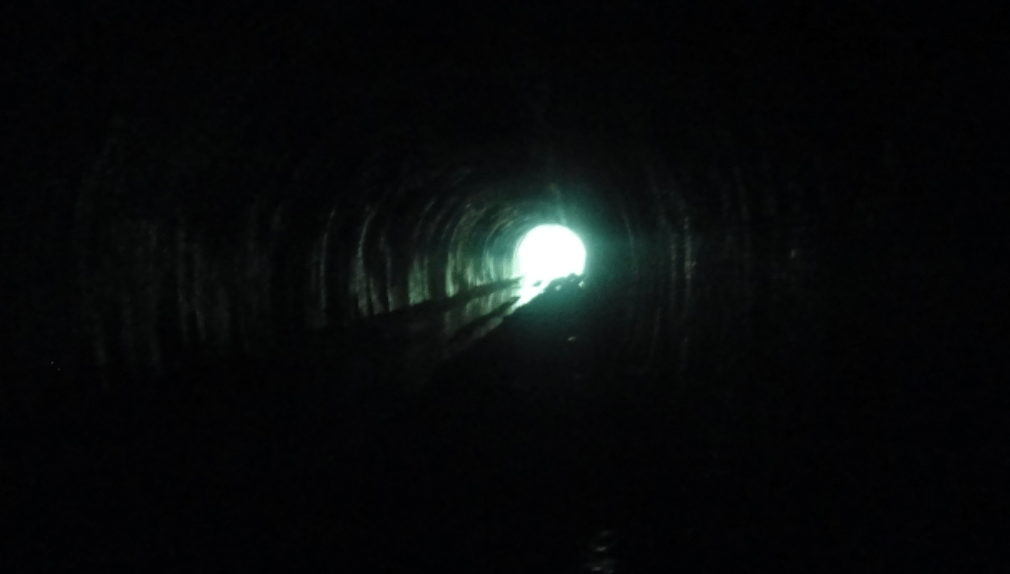
    The great escape was a dim light on the horizon, a shard of yellow in the darkest of tunnels, but it was there. Freedom awaited.

    Only 4 more years, only 4 more school years, only 4 more football season years – and fortunately 1992-1996 were glorious for my team. So that was an emotional soother.

    Counting down the months, the years

    Every day , every month, every year – and they got quicker, the more I worked, saved, studied and was busy the day got closer.

    I also knew that I had to be independent from them completely. Too many stories about Parents bailing out their kids at Uni, student debt, I was alone, and had to be independent from them. So id saved up a lot.

    When there was an end date to it, there was hope.

    The light got bigger.

    Though I was in a situation of being trapped… I may have been accused of treating the home like a hotel – but at least I didnt run it like a prison. The date of escape was getting nearer and so was the light of freedom.

    That light was one of the things that kept me going.

    It gave me hope. It gave me a sense of future. It was escape. It was freedom.

    (It wasn’t the end, it wasnt dealing with all the shit of childhood, but I didnt know that then)

    The escape helped me survive, I have no doubt.

    The glimmer of distant escape was enough.

    Though it was bad, and I didn’t realise how bad. There was enough of a glimmer of light to know that I wasnt trapped.

    There was a countdown clock. I had set it too. At 18 1/2 I was out.

    It made it far easier to cope with the present – knowing there was a fixed point of an ending.

    I have just finished ‘Mans Search for Meaning’ by Victor Frankl. In it he writes about how not knowing about the date or time of release or freedom from the concentration camp was one of the hardest things. They just didnt know, so, time and days had so little meaning as there was no future to look forward too, only a past that has blurred endings and present of torture. Time was condensed. It was a ‘provisional existence’ . Once prisoners gave up on having faith in a future, they lost hope and fell into despair. He watched, the prisoners who started smoking were on the path to killing themselves, they had given up. It took a mental resolve, an inner strength to show up each day.

    I didnt know at the time how much having a known date of escape, of leaving home, gave me such strength and hope. Im not saying that the psychopathic parents didnt do what they could to ruin my plans, or manipulate those who were about to be my new employees and ministry leaders.

    But one of the reasons I survived was knowing there was a way out.

    Its no wonder that I was sick in the best of British rails Intercity 125’s toilets that Tuesday morning. It was 4 years of build up.

    I am so aware that the times in my life where I have felt a deeper sense of despair, a deeper sense of that swirl of black, hopelessness – has been when there hasn’t been a coherent sense of time – the feeling of being trapped, stuck and feeling like there was no way out. Trapped by expectations, trapped by shame, trapped by the thought of difficult processes to free myself, trapped because there didnt seem to be any way out, stuck.

    Provisional existence is a brilliant way of putting it. Knowing that there was an end in sight was such a construct of survival for me. It would end. It would be over. The day to day prison being ran by a psychopath was over and I was out.

    The only way, however, that I have got out of the stuck feeling, in the moments of real despair has been vulnerability.

    I had to say I needed help. I had to take a risk in talking to someone. I had to be vulnerable. I had to give someone else a tiny shard of responsibility when up until that moment I had held it all, and tried to cope all alone. It was and still is so important for me to have people around me to listen, support and give me the opportunity to share, reflect and give me some building blocks, coping mechanisms, therapy tools – whatever, to help me in the moments – and more importantly too, to give me perspectives. Give yourself the gift of time, a glimmer of the future, hold on to it, and know that you are stronger, more capable and more valuable a human being. The gift of future time.

  • Surviving Psychopathic Parenting (Part 31) It wasn’t a relationship, just roles being played.

    Its a shame that your relationship with your parents has broken down…

    Id like to try and respond to a question that I often get in relation to my Parents. Its based on the relatively frequent statement that I get, from well meaning and concerned friends and also others, and its a difficult thing to try and explain, but I will do so anyway.

    By the way, if you haven’t read it, there’s 30 parts to my survival story, and its here , and theres 15 things not to say to children who have abusive parents here – as there are others to that of above..

    And I completely get it the sense that for some people they have a ‘normal relationship’ or even a viable relationship with their parents – one in which theres maturity, fun, highs, lows, conversations, and an emotional maturity – or an acceptance of growing, changing etc. Its viable, at least – no relationship is normal I guess.

    The thing is though, a broken down relationship and reconciliation requires a number of factors – truth, honesty and also a requirement for change to happen – and importantly – a broken down relationship implies that there was actually a relationship in the first place.

    This is the bit that is and has always been difficult to explain.

    I have described already that I was given a variety of roles as a child – chief comforter of the abusive one, trophy child, ‘mature’ , the little grown up, having to work hard, fixer and responsible, being taken from for her glory – with high expectations of making them proud or avoiding giving them stress.

    I was born with a role.

    My Sister was also born with a role.

    (My Dad was also given a role.)

    All of these roles are in relation to the abusive one, my emotionally immature mother who was and is mother-child and has many indicators of dark-triad personality, showing high narcissism and psychopathy. It was impossible not to have a role-self as a child – and have the choice to comply or reject this role. With fear and punishment for rebelling or threatening too.

    One of the reasons for this is that she played roles too. From an early age I can remember her having to articulate being ‘mum’ now or ‘putting on her ‘dinner lady’ hat on, or ‘loving wife deacon’ role – at church on a Sunday. This got worse as ‘grandma’ , ‘minister’ were added later on.

    Im playing mum role now

    Unbeknown to me as a very young child, or even later, this behaviour was normalised – even if it seemed weird – what it might reveal is a splintered personality, deeply – but as a child it meant that there was a falseness to how any interaction was, it was as if it was being played. Disintegrated.

    Maybe this is normal too – but it was very obvious too that the mother ‘role’ was the one that she was grumpily reluctant to do, or fulfil – especially instead of work related, or professional ones – most notably anything to do with being a minister. This was the place where she could dedicate to avoid any parenting ‘role’ – which seemed inferior.

    So, as part of my survival in this dynamic I had to develop a ‘role-self’ – growing up fast, keeping quiet – because what I wasn’t able to be was my true self – adapting myself into conformity in a role, trying hard to be – for security, belonging or reward – were that to ever come, but gave up on that ages ago.

    Nothing around someone so emotionally immature, or psychopath can be seen for itself – it is seen for what it can be for that person to take from, like a parasite. This includes possessions, ceremonies like weddings or funerals (they destroy these) or the general public to denigrate (like waiters etc – big red flag). This included what the three of us around her could be taken from and destroyed.

    If the persons around such a person are playing roles – to survive – with a person who is splintered themselves into roles and creates roles around them to take from … what kind of relationship is there?

    There isn’t one.

    Not a viable, safe one, not one where any sense of real self can be present. Just one in which roles are enforced, played or avoided.

    Some of this ‘role’ / hat wearing is revealed when they make contact via writing or email – its often far too formal (going into business speak) , too spiritual (a high spiritualised self) , or mixing up tenses or mixing up writing in the first or third person in the space of one sentence or paragraph – and rarely using ‘I’ – I’ve written about the confusion of the toxic email here. They often write as if its from the other person – the partner who is ‘once’ – but there are usually clues to this – watch for it.

    Anyway, what am I getting at.

    I suppose what I’m getting at is that part of all of this is an acceptance, of seeing all the roles having to be played – and of realising that because of this – there wasnt an actual relationship – ever. Now, obviously to maintain a role there has to be a lot of pretending, hiding, lying, to maintain appearances and then patterns of denial or justification when threatened. Some of that is what im having to do with therapy, see the roles, and work out what I needed, or what I hid, and denied in myself, feelings, emotions and creativity.

    There wasnt a relationship to breakdown. Just people playing parts to survive a psychopath.

  • Surviving Psychopathic Parenting (Part 21) Accepting delusional normality

    Surviving Psychopathic Parenting (Part 21) Accepting delusional normality

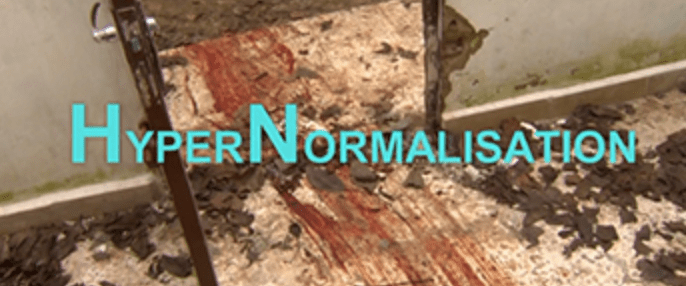
    If you’re like me and have spent a lot of your life reading or watching politics, you may know about the phrase ‘hyper-normalisation’ . I dont know who coined it, but its spoken of in depth in Adam Curtis’ brilliant documentary here. The key part in which he speaks of it, is when the people of Russia dying of poverty are living a very different life to that of which is portrayed on their TV screens, and they accept it as ‘normal’. Imagine A Boris Christmas party being live broadcasted last year. Curtis’ documentary is long, but worth it.

    Anyway, this blog isn’t about politics. Its about Normality.

    I have found it fascinating, that over the course of the last few years, especially, as I have shared my story, incidents, events and situations of my childhood and then more recent times involving my parents, I sometimes get the reaction ; ‘That isn’t normal behaviour’ , then followed with… ‘ its shocking/abusive/disturbing/manipulative’

    It isnt normal behaviour.

    But then, like Boris world, and his accompanying anger – growing up in ‘non normal’ world, is about navigating it for safety reasons – showing pretend acceptance that doesnt rock the boat, hiding and all the other things. But its one of the weirdest things to write about, is that those who create a delusional reality, that isnt ‘normal’ (but normal to them) – based on entitlement, ego, woundedness, self absorption, narcissism etc – then expect that this normal is adhered to by others.

    Sounds sort of cult like. Sounds pretty psychopathic too.

    But what about me, what about any of us caught in the whirlwind of delusion, of a person chucking out death traps all the time?

    One form of ‘normal’ they create is the one that you are forced to accept – their world.

    There is another one too.

    Theres the ‘Everything is normal’ that they determine.

    They do a weird thing.

    Imagine for a moment that you have no capacity to show remorse, shame or guilt – can you imagine that?

    So now, consider how you react after someone has called you out for your crime?

    Remember you cannot feel shame, guilt or remorse (and secretly you enjoyed the party, or crime)

    Of course, not only do you have selective amnesia about it, deny it, or blame others for it (taking no responsibility) … and hope to get away with it..again and again… but then what…

    Yes, you guessed it. They carry on as normal.

    As if nothing happened.

    Making no attempt to do any work in the relationship, because..they dont do anything wrong..remember?

    Thats one of the crazy bewildering patterns of the abusive ones. Sometimes it even is accompanied by ‘playing the victim’ and being hurt that they got found out. On other occasions it may be said that ‘everyone just needs to move on and forget about it’ or ‘you cant get over what I did, I said sorry’ – putting the responsibility on someone else again, and they create a new normal, their normal.

    Its bewildering isnt it? And thats why growing up in an emotionally abusive home, delusions become normalised.

    And everyone else goes – that really isnt normal, or thats not the way to deal with hurt or pain..

    But negotiation or conversation about the abuse never happens.

    It’s normalised. Its not even viewed in that way. Its ignored.

    Because a person who cant feel, cant accept that others might feel too.

    Everyone else is emotional and cant get over it.

    Most normal people recognise when they cause pain.

    Some normal people might apologise

    Some might have to face consequences.

    Others live in a reality in which none of these exist.

    Where everyone else is expected to see normal in the way they do.

    As a child, its only possible to navigate through the delusion with safety, and escape on the mind.

    But that delusional reality, and the trauma created as a result of it..affects..

    Every time I accepted normal as abusive I denied myself, though that core was hurting badly.

    Surviving Psychopathic parenting was about navigating the delusional normality and the price that I and everyone else paid for it.

    And then what happens when you stop…

    And realise that I deserve better, and able to stand up for myself.

    See the delusional world, highlight others to it, and stay out.