Theres something interesting that happens when you are told as a child messages like:
‘Were not going to spoil you’
‘He’s asking too much ______ (insert my Dads name)’
‘No’
‘You dont need that’
‘You’re not allowed to ask for this I had it as a child and hated it’ (with reference to music lessons or a school holiday)
‘I know what you need and it isnt that’
‘You know we can’t afford that’
‘you’ll only ruin that if you had one’
‘You dont look after things so why should you have one’
‘You can go to your friends house to play on theirs, we’re not spending money on that sort of thing’
What do you do?
A number of things happen.
If you imagine that those phrases above are not just said, theyre shouted back to you, by the same person who terrifies you every day. Then the best strategy is never to ask. So as a child the best thing was not too. If it wasn’t for the 20p per week my gran sent up each week, and a comic, there was nothing. No pocket money. On one had this encouraged me to get jobs very quickly – paper rounds from age 13, babysitting asap – so that I didn’t have to ask, ever again.
As well as growing up hiding my own needs, and wants. It meant there was a choice within this emotional neglectful abuse.
Go without, or find ways of getting what I wanted without them finding out.
oh you mean stealing then? I hear you say.
Yes.
This is confession time.
Early in the mornings id wake up early, go downstairs and watch TV (wide awake club, wacaday) first thing, whilst the parents were upstairs (they had the same 7-730am routine every morning that involved radio 2 and the tea maker) – I stole money from my mums brown leather purse. I was probably between 7-10 at time time, I really cant quite remember, and I have no idea what I spent the money on – but at the start it was brown coins, then a few silver 5/10/20p’s and the odd 50p, the last time I did it there were alot of newish £1 coins in there, and I figured that one of them could go missing. And I didnt get caught. Or at least I dont remember getting caught. Or they knew and didnt say anything.
Then id whisk the money upstairs in my pyjama pockets and into my money saving box very slowly, so the clinks weren’t heard.
And it was adrenaline filled, naughty and yes, I was utterly terrified of being caught, but I did it all the same. For the purposes of completion, id say I stole the grand total of £5 in a few months.
The other money I ‘stole’ was dinner money. Id often go hungry at school lunch to keep my dinner money, play football instead and spent some of it on the way home on crisps/chocolate and keep the rest.
You can have two biscuits thats all. (for US readers I mean cookies, and when I mean cookies I mean small ones)
was the mantra,
from the age of 5 to the age of well…11?
And a 9 year old needs more than a 5 year old. So after school I devised a mechanism of opening the fridge to get the squash/juice out, and then sneakily taking one of the more chocolate biscuits from it and putting it into my pocket. Id then probably make the drink, reload the fridge with the bottle, and then, and yes this is a bit weird, go to the downstairs toilet – just behind the kitchen, when I would combine eating the food and using the toilet, or at least flushing the chain. The less genius part of this plan was that I then put the wrapper of the bar under the washing machine.
Something I completely forgot about 3 years later when the washing machine broke and there was maybe up to 40 wrappers under there. Each one gleefully taken, under her watchful eye after school days.
A few times I vaguely remember eating teaspoons of syrup – I have no idea when this started but I forgot to wash these up, and no I didnt admit it, the punishment for this was that I wasnt allowed to stay in (with my sister) on a Sunday evening , so from then on we had to go to Sunday evening church with them. I just cant remember how old I was then – old enough to be left – but at that time the church thing was very confusing, as they were going to lots of different ones. Sarah im sorry, though Im sure it was me, I still to this day dont actually remember doing it on this occasion.
I know I’m not the only person to have stolen things from their parents. Im not the only well known christian leader who has stolen money from their parents either, as Martin Saunders admits in his book ‘The Man you’re made to be’ – this confession of mine is 2 years in the making, since I realised I wasnt the only one.
On one hand this was about doing things to try and get them back – a bit like Matilda – see what I could get away with.
Another looking back is the repeated cycle of the taking, they (she) took from me emotionally (without anything in return) so I learned that get anything I had to take it – and hide it.
The deeper thing in all this is that realising growing up without being able to express any needs or wants – for when I did I was labelled selfish, spoilt or demanding. Aged 8 you dont realise that these are projections. Aged 8 I do start to think that I am none of these things.
So, they take, neglect and terrorise, then to survive was to either go without or take in return – then there was punishments for taking or not being grateful. Nice cycle.
There was only 1 toddler in the house that threw spoiled tantrums. The Woman-child whose created orbit revolved around her needs, attention and wants. So there was no point trying to be a normal child. Taking was what I learned. I learned to take rather than ask, and hide.
Its taken me a number of years of therapy and unlearning to realise the importance of expressing needs and wants, and to recognise that having a safe place to do so emotionally has been required. I went from hiding what I wanted, to fearing wanting, and feeling shame for wanting or needing things. All of these things buried deep underneath. I dont know what I need is a common thing for me to say, but I get there in the end. Undoing these patterns takes a very long time. By suppressing needs and wants, I became codependent – selfless and passive to the extreme.
I had to learn that it isnt selfish to ask for what I need – what my soul needs – what my heart needs – and that I am allowed to have wants and needs.
One hour later from posting the original piece above I realise that I could legitimately express a need /request for a job and funding, so if anyone could support me that would be great, the link is in the menu above.
The other thing I realise is that the shame I felt for doing these wrong things and the internalised view of my own spoilt/selfishness was one of the key stimulus for my identity in the evangelical church. Escape and removal of sin/shame/guilt was what enticed me and kept me. But what I see now is that that stuff wasn’t mine to carry in the first place. It was
As a youth worker you get to hear alot of stories and moral panics about abusive or absent Dads, and the effect this has on children. It is often in regard to the behaviour of those children, especially in education or criminal contexts. Theres a cry for ‘better role models‘ – assuming that parental role models aren’t good enough. It is easy to blame the parents.
The same rhetoric was used in those ‘christian’ mid nineties evangelical circles too that I grew up in, anyone else remember the ‘Even if your Dad was ______, God is a perfect father’ type stuff. Usually the reference to a Dad being abusive or absent. Strange thing then, that during those times there was little critique on that ‘perfect’ father sending a son to die.
I digress, and the discussion on absent or abusive fathers doesn’t really need repeating here, only to note how pejorative it is, and only too often, sadly and tragically, how common this is, and with the misuse of concepts like ACES*, children and young people are predicted behaviour and outcomes based on this in state settings, and barely given a chance to be different at times.
But my experience is different. And so might yours be.
What about a boy raised by an abused Dad?
Ive just tried googling images for ‘Abused Dad’ – have a guess at what I found?
This:
Note what emerges.
Article and article about Abusive Dads and Fathers. men who abuse their wives, their children, who dominate, hit, provoke, sexually abuse, financially abuse and the list terrifyingly goes on…..
Not Dads who are abused themselves.
I watched this a few weeks ago
In the TED talk above, Justin reflects on the qualities of his Dad, and how growing up he was determined to be different – Justin didnt want to be soft, kind and gentle – only to realise later that these were good qualities to have, and were part of his core.
So I pose myself the question; What kind of a Man did I learn from my own Dad?
Let’s start with the positives – everyone, outside, and some inside the family love my Dad. He would do anything for anyone, mostly in a practical way – fixing, decorating, making, constructing, he is softly spoken and rarely impulsive. He worked hard, and didnt cause or create any stress or drama.
But the rest of the time, he was a ghost. He was belittled and devalued, and threatened, walking on eggshells all the time. He could only obey the other parent, becoming the flying monkey, the accomplice, completely untrustworthy. He tolerated being lied to, by someone who was gaslighting him all the time. I dont remember him ever expressing his needs, ideas or dreams, and was told what to do nearly all the time. His invisibility extended to offering almost no nurturing or protection at all – deferring everything to the other parent, someone so sunk that they couldn’t be a healthy father figure at all. One who conceded.
I could go on, as there is more, and none of this is to be critical of him – given the extent of the manipulation he has suffered – this is more to reflect on what its like being Male, and a Dad, and growing up with an Abused Dad.
For one, there is almost nothing to read on this – even some of the emotionally ‘immature’ parent books defer to general characteristics of dominating Dad figures – and as I said above – try doing a google search.
Boys or Girls and their Abusive Mother figure may come up, but what are the effect on a child of their abused Dad?
What kind of Man/Masculinity did I see, and experience growing up?
Someone passive to women or others needs – no regard of their own
Someone with no role with their children
Someone with no voice
Someone weak
Someone who accepted being lied and pretended to
Someone who is weaponised by the other
Just a tool for someone else to get what they want.
I reflect on these, not with anger or bitterness, not with remorse or grief, but a sense of being in the process of understanding what the effect of an abused male care-giver had on my life – and not just an abusive female role-care giver. The abused dad rarely gets talked about, hen-pecked might be a mild term for emotionally manipulated.
I think what i’m trying to come to terms with is how challenging it is to try and talk about this, ‘some dads are abused too’ ..’some men are abused in domestic abuse relationships’ ‘some boys have emotionally abused fathers too’ – and what’s likely is that these situations are so likely to go under the radar. As that boy, might be kind, sensitive and attuned to the needs of others – and not themselves, that boy might be more likely bullied than a bully, that boy might like the quiet life, that boy might have issues with women – or find themselves in relationships with dominating women, that boy might struggle in a number of ways, but those ways might not be as evident as they dont fit the stereotype, if stereotypes are there to be fitted into anyway. They’re unlikely to be loud in a crowd and make a scene – getting attention.
That boy, might also struggle to know ‘how to be a man’ ….
When the female parent once told me to ‘stand up for myself’ it was ironic in that that was something she wouldn’t allow to happen to her, by my Dad. Stand up against bullies…but not the one in the home… a man is never right, a man always gives way, a man doesn’t have an opinion… oh and I knew I would have been punished had I hit that boy back….
I heard the advice as a teenager; ‘At least you’ll know how to treat a woman, given the way your Dad is‘ or words to that effect, and from a trusted source I internalised this, probably too much – to the detriment of treating myself, and being passive, putting myself lowest emotionally on the pecking order, because as I reflect I wonder how much that person saw and knew, and with the benefit of hindsight, the behaviour that has occurred 30 odd years since.
I reflect on also on the question of how all these things, and more, might be similar to children who grow up with the experience of their mum being emotionally, physically, sexually or spiritually abused, and what that is like for them, and whilst I clock it here as being highly significant and impactful in their life. This isn’t , as I say my experience, but I want to note it – and whilst its significantly more common, it doesn’t make it any less damaging on the child – this is in no way a comparison piece, but something I wanted to recognise.
There are plenty of cold maternal figures in the world, and plenty of female narcissists/psychopaths that go under the radar, yet alot rise in politics, business and also the church, and yet their damage to the men in relationships (and other females in their friendships) as well as their children is being more and more well known. What we don’t want to talk about is that Mothers have are cold, colder than ice, with only pretence of warmth, if that. So what might that mean for the Male parent, and how being the victim of domestic abuse , has on they children they have? – especially for their boys? What about the children, the boys, who get caught up the female narcissists loyalty games against that abused Dad? What kind of male/masculinity does that boy grow up with? What kind of insecurities might they have to deal with? What did I? The list is extensive – alot of written about already in my story above.
For the Boys growing up with Abused Dads – what is that like for you? What resources have you found to be helpful in this? Have you found some good articles on this – please do share them below, it would be great to have comments and conversation on this, if you want to get in touch and share a story or piece on this, do let me know.
And, to finish with that theological premise at the beginning, I can’t help but wonder what kind of God I internalised given the association that was made between earth and heaven Father figures.
Maybe this is a conversation we need to have – whats it like growing up with an abused Dad?
*ACES – Adverse Childhood Experiences
Thank you for reading this piece, if you would like to support me financially as I share, write and develop conversations that are Healing for Men, you can do so here, all gifts and donations appreciated Healing for Men
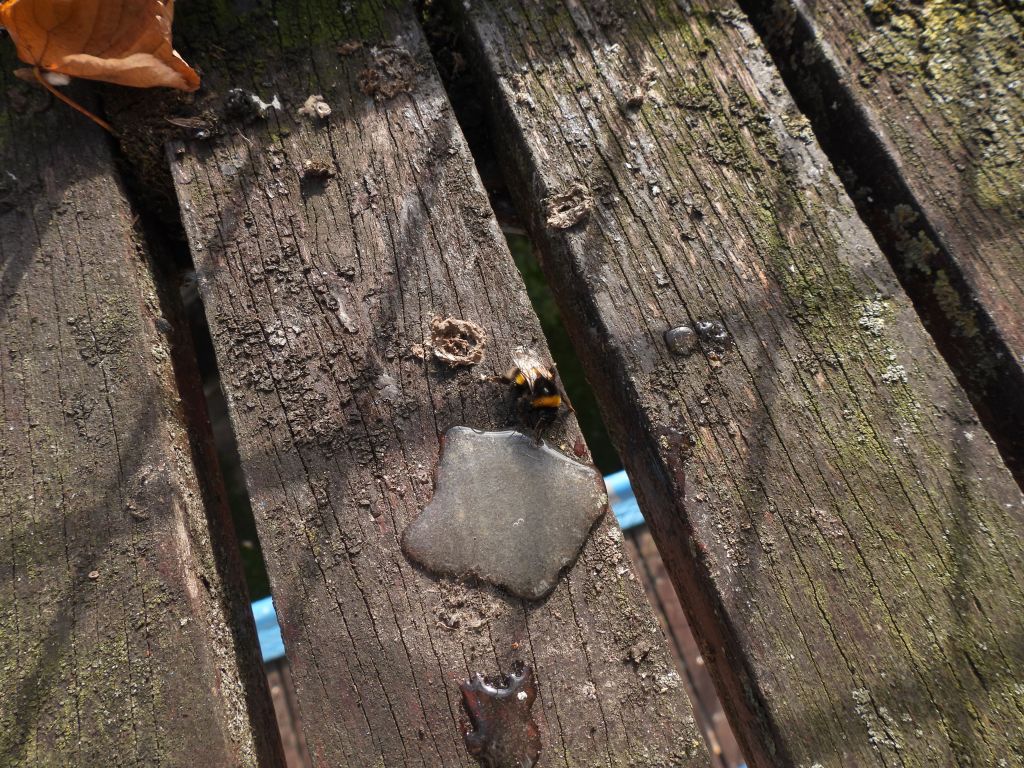
Lying motionless, almost on my small balcony lay a bumble bee in the morning heat today
Exhausted
Barely clinging on to the edge of the wood, nearly about to drop down a 30ft gap
close, to death
So I googled what to do and mixed up a combination of water and sugar in a small container
Then put some nearby
on the wood, so it could be away from the edge..
then I watched and waited.
I had no idea if it was damaged
No idea if it would fly
And I watched as it moved cautiously towards the liquid, stuck its leg in, then its mouth
Sucking away at the sugar, desperate, hungry, exhausted
It kept sucking
finding its energy
and gradually it moved away from the liquid
energy returning
but could it still fly…
You can watch what happened next in full in this short video Bumblebee
it crossed my mind that the Bumblebee is a good metaphor for ourselves after trauma – the pandemic, abuse, accident – what we don’t need when exhausted is to be flicked off the ledge, but something sweet, someone to pick us up and give us what we need at that time.
Time… to take in all the nutrients we need
Safety, away from the ledge
Space .. to fly- when we have what we need
I am sure you can think of personal or collective analogies for the bumblebee.
What about young people, what about prisoners? What if an exhausted group of people needs energy, time, safety and someone who cares about them.. what if…
Isn’t it glorious when something so weak, and exhausted, finds its feet, and wings again?
That, my friend, could easily be you, or someone else..
To see what happened next do have a watch of this here
I wonder.
I wonder what life is all about, and how life might be different to see ourselves as those who help others fly?
You were such a spoiled child, I had to get that out of you
Don’t you even dare even ask for that
You need to think about things from my point of view
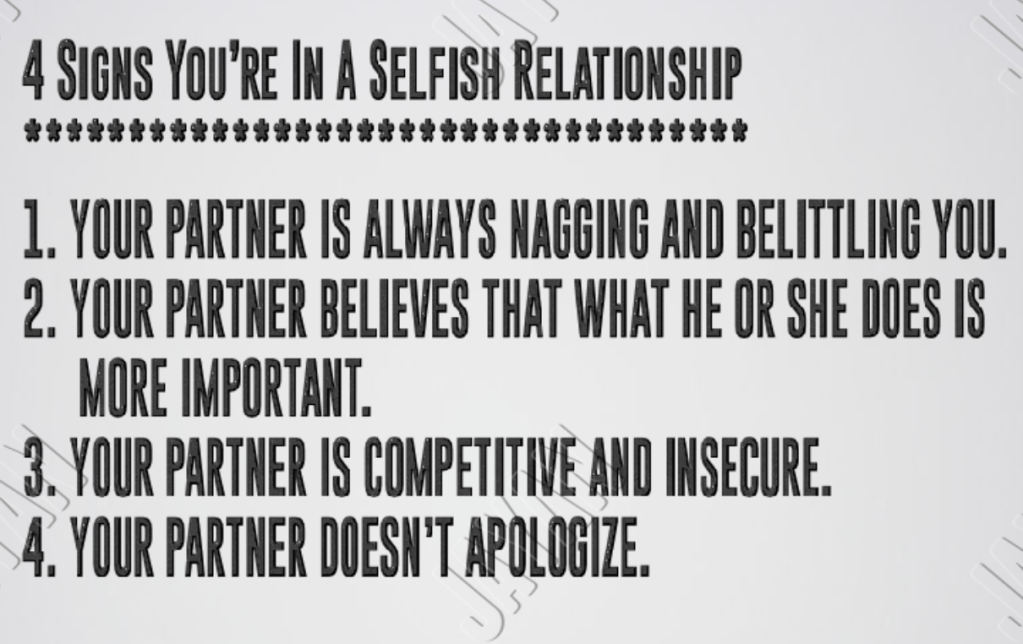
Ultimately there is no avoiding this, with psychopathic, emotionally immature parenting, or a situation of emotional abuse, it’s the shame and accusations of selfishness that will get you in the end. The above applies to parents too, though you cant divorce them.
They got me.
Its funny when I think about it, The very thing the abusers cant do (think of others) is the very thing they accuse you of not doing, when you do it all the time.
So what are they saying.
Don’t you dare think about your own needs
Or
I am going to control you into doing what I ask, by making you feel shame.
Emotionally immature people want you to jump when they call.
They want you to rescue them.
I was the rescuer, as I’ve written before.
Terrified to say no as a child if that parent needed me.
‘No’ was harder than pretending.
‘No’ was harder than going through the motions
I was accused of selfish if I didn’t meet their needs
They were jealous if I met the needs of others. Furious even.
They came first. It was their right and entitlement.
A Childs dependency often irritates the self-involved parent. Preoccupied with their own issues, Emotionally Immature Parents can be short tempered and react to their Childs needs as if the child had done something wrong. Those parents make their children feel bad for having needs and thereby making the parents life harder.
Lindsay C Gibson, 2019, pp41
Surviving meant not having needs.
It meant not disrupting the apple cart, or daring to crunch the eggshells
It meant not asking, not requesting.
Which is funny. Because unless we asked we didnt get, but often shame for asking (because I was at risk of being spoiled)
This meant going without. Because there was no point in asking.
I didnt go to them. For anything.
I acted as though I didnt need them.
I didnt even need them or go to them when my marriage fell apart.
Better to hide.
If you were treated in this way as a child, you may still feel ashamed for having problems or needing help
Gibson, 2019, pp41
Yup.
Survival of the least neediest.
Survival Alone.
Knowing that any request to ask would be met with accusations.
Knowing that any gift would be attached with manipulative strings
Because they didnt give without strings, or give at all, then the threat of the accusation meant not going to them.
Shame devastates.
I didnt bother going to them, my task was to comfort them.
There was no way I wanted to be thought of as selfish.
Especially someone who wasnt selfish at all. For some reason I had already learned to put others peoples needs first. Strange how I might have learned that.
Such powerless anguish impels children to do something -anything- to make their parent respond to them. Thats why young children so often have meltdowns over seemingly insignificant things. They cant keep themselves together in the absence of supportive parental attachment.
Surviving Psychopathic parenting meant accepting the accusation. It meant accepting it and getting on with life without. It meant being learning to cope completely alone. What parent would give a snake, when a loaf of bread was asked for, said Jesus in Marks Gospel, well, some evangelical psychopathic parents shamed so much that I wouldn’t have even ask.
Its ironic then that when they shamed for asking, they just take.
Thank you for reading, this is part 13 of my story, parts 1-12 are here
Please do like and share this, and my other posts if its the kind of message you know will help others, there are a number of resources in the menu above too, and if you’d like to support me on this healing journey, please do click the link to the right too, thank you.
Deep down what are the rules that shape the way you act, the way you feel, the way you think about yourself, the way you think about others?
Give yourself a minute or two
Which of them might be the rules that you were ‘given’ through your childhood?
Maybe from a faith group?, from school? or somewhere else
As someone brought up in an evangelical christian home, and church – the implicit rules from the faith were one thing, but only added to through my childhood experiences at home.
What Ive discovered is that some of these rules need to be broken.
What I have also realised is that people who like rules try and keep the rules, and can only say that you’re crazy or weird when you break them.
What I realised that is breaking the rules is actually good.
Some of the wrong rules are described by Melody Beattie in her brilliant book ‘Beyond Codependency’ (Theres a link on the resources page above)
Not all of these apply to me, but, I recognised that so many of these had been mainstays in my own life. I had been trying to keep the wrong rules.
Don’t feel or talk about feelings (for me my feelings were secondary to soothing others)
Don’t think, figure things out, or make decisions – you probably don’t know what you want or what is best for you
Don’t identify, mention or solve problems – its not okay to have them
Don’t be who you are because thats not good enough
Don’t be selfish, put yourself first, say what want and need, say no, set boundaries, or take care of yourself – always take care of others and never hurt their feelings or make them angry
Don’t have fun, be silly, or enjoy life – it costs money, makes noise, or mess, and isnt necessary
Don’t trust yourself, your Higher power, the process of life or certain people – instead ut your faith in untrustworthy people; then act surprised when they let you down
Don’t be open, honest and direct – hint manipulate, get others to talk for you, guess what they want and need and expect them to do the same for you
Don’t get close to people, it isnt safe
Don’t disrupt the system by growing and changing
(Melody Beattie)
Some of these rules are there to protect the system, the system of the organisation of the faith, they are often passed on from generation to generation. Following these rules keeps people locked in codependancy. Now, for me, im reading these rules and realising that many of these rules, not all of them, have guided my life for so long. If I realise what happened when or if I dared to express feelings or needs, or made any kind of choice or decision. As I said not all of them.
What I didn’t ever know was that I was ok for me to be who I was, and good enough.
What I didn’t ever have was the opportunity to know how to take care of myself
To have fun (that wasn’t belittled or patronised)..
And shame, guilt and disapproval keeps the rules in check. These rules govern silently. I was selfish for feeling, selfish for acting, selfish for making any kind of decision.
But
Its ok to change the rules. I realised that the rules I followed didn’t do me any good. The rules I followed, were just that, rules. They kept my decisions away from my heart. New life, new rules. Though its hard to not act like im still following the old rules, breaking free has been tough, and thats where my support group, my friends, books like the one I mention above have helped to realise the rules, and make new ones, and to decide what kind of rules I want to have in the rest of my life.
As Melody said, and I underlined. The first rule is that it is ok to break the rules.
The second is that that breaking might need to happen aggressively, change, assertive, to take back the power that you and I rightly have.
Im learning to follow these rules:
Its okay to feel my feelings and talk about them when its safe and appropriate, and I want to
I can think, make good decisions, and figure things out
I can have, talk about and solve my problems
Its ok for me to be who I am
I can make mistakes, be imperfect, sometimes be weak, sometimes be not so great, or good, sometimes be better, and occasionally be great
Its ok to be selfish at times, put myself first sometimes. and say what I want and need
Its okay to give to others, but its ok to keep some for myself too
Its ok for me to take care of me. I can say no and set boundaries
Its okay to have fun, be silly sometimes, and enjoy life
I can make good decisions about who I can trust. I can trust myself. I can trust God even when it looks like I cant
I can be appropriately vulnerable
I can be direct and honest
Its okay for me to be close to some people
I can grow and change, even if that means rocking a bunch of boats
I can grow at my own pace
I can love and be loved. And I can love me, because I am lovable. And I am good enough.
(These are also taken from Melody’s book – do add your own)
And I say im learning because old habits die hard. One of the things I realised is that for so long, for most of my life I have been in endurance or survivor mode, bouncing off, every moment, drama and painful situation, just getting through. Mostly getting through the drama of everyone else, being the calm, strong one, the one that supports others, but didnt ever, for a long time, seek it myself. For me it is time to break rules, time to learn new rules, time to enjoy life in which new rules stem from my heart, my soul and from a place of health, safety, truth and power. Im learning to accept me, for who I am, not what I ought to be.