Tag: parenting

  • Surviving Psychopathic Parenting (Part 15):  Learning to walk small.

    Surviving Psychopathic Parenting (Part 15): Learning to walk small.

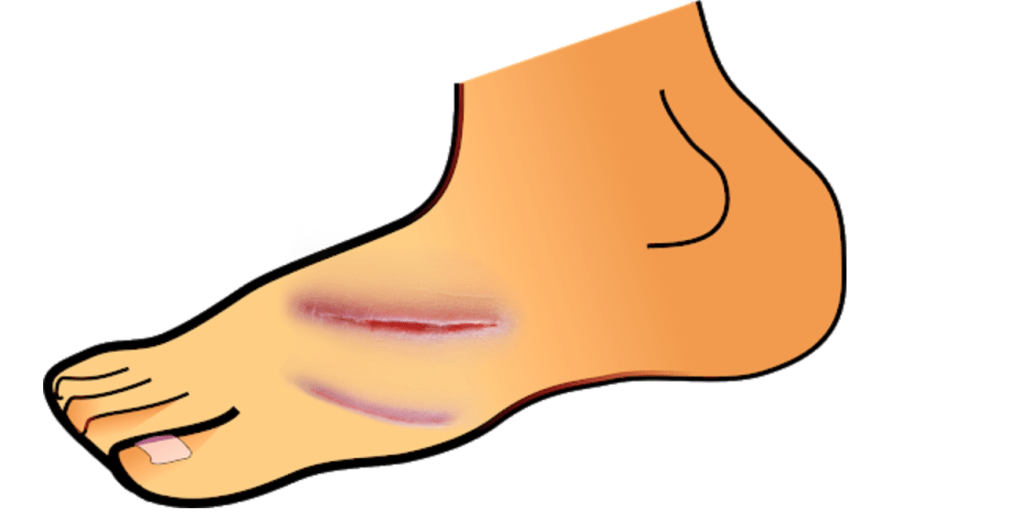
    The only way to survive navigating walking on eggshells with an abusive parent, or partner, is to make yourself as small as possible.

    In that way less of you can get cut on the sharp shells.

    Theres sometimes at least a few places to be able to walk safely.

    Sometimes.

    Scrapes and Cuts

    When they bark instructions on the phone, at least its not to you

    When other people are around the house, if they’re mistreating them, with often toxic food and emotionally awful conversation, in that space you are safe, even if their false charm is that…false. They daren’t look like they’re a bad person.

    ‘Look at James, here’s my boy… ‘

    Cringe time. But at least it was safe.

    Surviving as a child, and a victim, meant working out when the safe places were, and being small the rest of the time.

    Small.

    ‘The Ballantyne men, are all so quiet’ She would say.

    ‘Its as if no one wants to talk’ she would say

    Staying small.

    Behaving, most of the time.

    Being the internaliser who didnt express needs – for the fear of being accused of being selfish

    But small, in that not being able to be me.

    Small in trying to be the person who was seeking anything, affirmation, validity, a voice.

    Small in that it was a place not to speak.

    Small in that it was a place to hide

    Small in that it was a place to only try and stay within what was safe

    Small in that it was a place to keep trying to get affirmation and recognition, by trying to please, trying to do the thing I thought they wanted.

    Small and survive was not to deliberately touch the eggshells, or ride the sore feet.

    Small meant inhibiting myself, because who can grow in a concentration camp? A literal concentration camp when you have to be on vigilance guard all the time.

    A concentration camp when the trapped had to soothe and pacify the enactors of punishment.

    Small, hiding away.

    Dont make a noise, dont be disruptive, dont make a mess…

    And yet, they make themselves feel like they’re just normal, so to justify it ‘ we’re just like other parents’ ‘its what parents do’

    Surviving meant staying small. Inhibiting. Hiding. Pretending.

    Small in so many ways.

    Giving space away. People pleasing. Codependant. All things I became and am reflecting through.

    Staying small, meant not being heard, taken seriously or be healthily supported nurtured.

    Its hard to walk when your feet are small, and ravished by eggshell cuts.

    Walking small meant having to think ahead, constant. Fear.

  • Unlearning the Evangelical Self Loathing

    Unlearning the Evangelical Self Loathing

    I dont deserve to feel warm

    (Me, aged 9)

    I cannot remember what I had done. But whatever it was I had been punished for it and then I felt guilt and self loathing afterwards.

    All your Sins can be removed if you accept Jesus into your life

    (Childrens worker, John Wilkes, 1989, at my church)

    Growing up in an abusive evangelical home, I was never far from self loathing.

    It couldn’t be anyone else fault that things went wrong, apart from mine. For some reason I was given the responsibility. It was my fault my parents were angry at me.

    By the age of 9 I was convinced that shame and guilt was for me to carry. By that age too I was aware of the eggshells I needed to walk on around my parents.

    I didn’t deserve to be warm. I didnt deserve the basic essentials.

    I already bit my nails so that they were infected and painful. That pain was a place of reality. That pain was safe.

    I didnt deserve to be warm either as I took all my duvets and blankets off that night, and it wasn’t summer.

    I didnt deserve.

    I didnt deserve the essentials. Any actual treat would be difficult to receive.

    Being convinced of my own guilt, and shame.

    Consequently given the chance to ‘remove that shame’ aged 11 I took it.

    But it never really was removed was it?

    It doesn’t go away.

    In fact in a strange way it becomes more of an obsession.

    The Cleansing of Sin game, also paradoxically means focussing excessively on sin, and shame, and guilt all the time. An increased opportunity for me to embed self loathing into my core.

    Self loathing is described here as:

    Self-loathing is that underlying feeling that we are just not good: not good enough, not good at this, not good at that, not good at – or for –much of anything.  It can be subtle, we may habitually compare ourselves to others, for instance, constantly finding fault with ourselves and putting ourselves down, with no real awareness that there is anything amiss. Or, we may listen intently to our critical inner voice while it scolds and berates us, telling us how embarrassing, stupid, or insensitive we are; refusing to challenge it even while we suffer from it.

    We may try to suppress this feeling of inadequacy by behaving as though we are superior to others; more intelligent, clever, intuitive, or attractive. It’s as though we have to prove that we are the absolute best in order to avoid the torrent of internal abuse waiting to pounce the moment we show any fallibility.

    https://www.psychalive.org/self-loathing/

    That I dont deserve

    Shame

    Continual guilt.

    If God wasn’t always watching me, then there was always eggshells going off at home.

    I dont deserve.

    Awareness of personal sin, that leads to self denial and self loathing, thats what was happening to me.

    I fell into the cycle, the trap. I wasn’t good enough, nothing I did was good enough, I couldn’t fix it, I dont deserve…

    At age 10 I was more sinned against and didnt have parents who took any emotional responsibility (let alone other responsibilities) , but that wasn’t the message in church. The message I needed to hear, and the one that ‘saved’ me as a christian, was one that tried to alleviate the undeserving feelings I felt. My sin. Yet, the greatest ‘sin’ I had was that I would never be good enough or meet their needs. It was less sin but guilt and shame I wanted rid of. But that wasn’t going to be possible.

    Not with psychopathic evangelical parents (and you can read my story above)

    The songs that I listened to, ‘christian music’ in the 1990’s were full of the same self loathing, that I was feeling

    What if I stumble, what if I fall, what if I lose my step and I make fools of us all

    (DC Talk, Jesus Freak 1991)

    Whats going on inside of me, I despise my own behaviour’

    (DC Talk, I want to be in the light, 1991)

    I am the only one to blame for this, Somehow it all adds up the same

    (Worlds apart, Jars of Clay 1993)

    Growing up evangelical meant being obsessed by personal shame and guilt. It meant also taking on the feeling of responsibility for not only my own failings but also where I had ‘failed’ to make things better for others, revolving around the perpetual needs of others.

    Self-Loathing | VESSELS of VISION

    Would I say I hated myself?

    Parts of me yes. Parts of me no.

    The intellectual trying. Trying to be the best. Trying to prove myself even more.

    Self loathing meant feeling shame.

    Perpetuated from how I felt.

    Scratching my body at times, twisting and pulling my hair out. All signs of the same. Comfort eating.

    A continual loop throughout most of my teenage years, though, continued until not that long ago to be honest, and unlearning it is so hard.

    Trying to say too myself that ‘I do deserve this, because I am ok’ is against 40 years of default.

    SELF-LOVE OR SELF-LOATHING?

    Lindsey Gibson in her book ‘Adult children of emotionally immature parents’ (2015) writes the following:

    Many internalisers subconsciously believe that neglecting oneself is a sign of being a good person. When self absorbed parents make excessive claims on their children energy and attention, they teach them that self-sacrifice is the worthiest ideal- a message that internalising children are likely to take very seriously. These children do not realise that their self sacrifice has been pushed to unhealthy levels due to their parents self-centredness. Sometimes these parents use religious principles to promote self sacrifice, making their children feel guilty for wanting anything for themselves. In this way religious ideas that should be spiritually nourishing are instead used to keep idealistic children focussed on taking care of others’

    (Lindsay C Gibson, 2015, pp120-121)

    The question is how do you unlearn this? How did I?

    Its step by step. Clocking it.

    Realising that gradually when I say to myself that ‘I dont deserve’ something, its a part of my, my critical voice, that has been active too long.

    Realising that as I went to the supermarket on Saturday after having a bit of a wobbly day, and trying to convince myself that it was ‘ok’ to buy myself cake, and a treat. Yes, I guess that having to second guess myself to treat myself, comfort myself, still shows that theres still a large of part of me that has a default of not doing so.

    When we are tired we are attacked by Ideas we conquered a long time ago

    Nietzche

    Or, maybe when we are tired, and finding it a tough day, we revert to the self talk of not that long ago, whilst we are still trying to embody a new way of being.

    Part of my breaking down and rebuilding started with recognising that not everything is my fault. Part of my healing has been to realise that I need not carry decades of responsibility. To not hold it any longer.

    My default of 40 years was to think I dont deserve.

    Maybe that is you too.

    I thought I didnt deserve what I needed. I though I didn’t deserve to feel happy. I felt shame, guilt and self loathing for what I continuously self internalised, encouraged and abetted by my parents and also the strand of evangelical christianity in which I had a strong identity and safety in.

    Part of healing is to name and be close to the things that were unhealthy, harmful and caused me (and you) to feel unhealthy, shame and destructive.

    So I just wanted to say to you, say to me.

    You do deserve it.

    Beautiful human you.

    Breaking down might mean breaking away from the self loathing.

    ‘You are enough’

    If that is the case, then let it go. Shed that skin. It wasn’t doing you any good, none at all.

    Time to wake up the real you.

    Its hard road Im on, unlearning 40 years of the same shame.

  • Surviving Psychopathic Parenting (Part 11): Being the Trophy child

    Surviving Psychopathic Parenting (Part 11): Being the Trophy child

    Theres a weird dynamic that I had to wrestle with in talking about all of this stuff. Its knowing that as I grew up as the older child of the psychopath parents, I was the trophy child. So, when talking about what I needed to do to survive as a child, and adult, I am aware that the scapegoat child, my younger sister, got it far worse. I know that, she knows that, we talk, we’re doing ok, better than we have ever done.

    In my head I know that as I was lied to, we were both lied to. As I was subject to emotional abuse, so was she. Its weird, as in a way having an awareness that ‘someone else’ had it worse, can make it feel like I dont have as much to tell, or that the abuse I suffered wasn’t as much..

    At least you didnt have it as bad as your sister

    And while this is more than likely true. In fact it is definitely true.

    My story is that even as the so called trophy child I was subject to emotional abuse. It didnt alleviate any of it. It was different.

    The fact they said they treated us both the same, is true, neither of us received any emotional nurturing, both of received fair doses of fear, guilt, and plenty of opportunities to walk on eggshells around the emotional scatter gun that was the psychopath parent.

    We were both alone, growing up, thats how they played us.

    Being the trophy child, as I recollected to my therapist, was like doing all the work, with no pay.

    Cartoon Trophy Images, Stock Photos & Vectors | Shutterstock

    Massive high expectations.

    Always counted on to do the right thing.

    I learned to ignore what I wanted to do, at times, because surviving meant staying as the trophy child.

    Intense guilt, or projected fear about ‘letting them down’ or knowing that I was near to eggshells territory if I did.

    As the trophy child, I had the ‘opportunity’ for me to fulfil the parts of them they lacked.

    The opportunity that they would ‘take’ the glory for whatever it was that I might have done. Receiving what they felt that they were entitled to receive, not what they actually did to support and encourage. It was all work that I did alone.

    Being the trophy child is like all work and no pay. And I dont mean in monetary terms, though that would be another story, the manipulative gifts.

    Being the trophy child did mean that I escaped some of the more damaging abuse. I so get that. Thats why’s I am at times conflicted sharing my story.

    Because I was relatively self directed, competent and didnt need them, (the internaliser) , I was relatively low maintenance, especially as I was compliant and generally behaved.

    Not that this was ever noticed. Because, part of my parents nature, especially as victims in the Darvo cycle, is to regurgitate tales of how difficult I was, how awkward I was, how much stress I gave them, especially the times when I didnt actually do the things they wanted me to do.

    Part of surviving psychopathic parenting is that I developed the ‘role self’ from the parents, in which I was able to navigate through it, knowing that it wasn’t really truly me, and also that its very difficult to see it at the time.

    Surviving psychopathic parenting is knowing that these people who call themselves your parents are never going to see you. It’s just not in their nature, and what they do see, they want to take it for themselves. So, as the trophy child it was all about having ‘hope and expectation’ placed on me, so that I would be the bearer of their happiness and joy.

    Obvious favouritism isnt a sign of close relationship, its a sign of enmeshment

    Gibson, Lindsay C, 2016

    What I know now is that none of that would have mattered. I could have got a Phd at Cambridge at aged 26 and that would not have made a single difference. Because emotionally unhealthy, psychopathic parents can not actually be happy. Because then the world can stop revolving around them, there is a chink in their armour.

    I probably haven’t covered all of what its like being the trophy child to psychopathic parents. More will come I am sure.

    Just because you’re the trophy child, it just meant that the emotional abuse was different. It wasn’t more or less, after all it isn’t a competition. Psychopathic abuse is just directed differently.

    In idealised enmeshment, the parent indulges a favourite child as though that child is more important and deserving than other kids. However this traps the idealised favourite child in an ironclad role, so that child isnt experiencing an true emotional intimacy either

    Gibson, 2016

    Whats interesting about this is that though this sounds like the idealised child is actually spoilt. In my case, they did everything but, and went out of their way not to. As I said, all work and no pay. I survived, my story, is about surviving alone, and digging deep into my own, emotional, physical, intellectual resources. That was the only way to survive.