Tag: Parents

  • What if my Monster only Abused Me?

    What if my Monster only Abused Me?

    Maybe I was going to realise this eventually.

    For all that I have described the details of the abuse I suffered.

    What if it was just me.

    What if it was just me, and my family who suffered and experienced the monster. Our Monster.

    Because, its very likely isnt it?

    Thats the game they play – jackal in public – hyde away in private.

    Public persona – just about gets through – unless challenged, unhinged or worked out

    Ensuring that the suffering goes on alone.

    Ensuring that the suffering isn’t believed

    What if it was just me – because thats more than likely – isnt it?

    The Family.

    They can put on ‘literal’ Sunday best behaviour out there – for an hour a Sunday, or 9-5 Monday to Friday.

    Have friends or allies.

    Meanwhile – was I the only one?

    Was is just my family whose lives were wrecked by her?

    I mean – would anyone in their jobs ever see it?

    Would they ever make a complaint?

    Would they diminish it, or be scared of it?

    Would they ever see it – and choose to ignore it?

    Triangulated?

    Whilst the family suffered?

    But thats the thing isnt it

    Men who abuse their wives – play a great round of golf, talk the talk,

    Women who abuse their husbands – playing the kindly one as teacher, vicar or nurse…or a dominant sales person ready to lie for money

    Hiding behind the social norm, that it’s only men who are abusive

    Could be the person in your workplace, and you wouldn’t know it

    Part of their game, hiding parts of their life away

    So, the family know, they’ve felt the scars

    We’ve then done the lifelong work, amateur psychologists trying work the monster out, professional therapy patients in recovery, healing with survivors gift

    Took us, took me, a long time to realise what it was.

    But can they act out a normal living whilst they’ve abused so appallingly? How is that even possible?

    The psychopath at large, choosing victims appropriately. Playing the victim appropriately.

    Darvo games

    Only leaving the obvious trail amongst the unheard, silenced, victims

    But leaving a trail elsewhere, that only the aware can spot.

    So maybe only the family got abused.

    Only the family saw their splintered personality at large

    Only the family felt the cold

    Only the family were stolen from, emotionally, physically and financially

    Maybe it was only just the abused who know the abuser.

    The truth has set us free – whilst they lie to everyone else.

    So maybe it was just me, just us.

    The victims who know and see – who saw and felt

    It really cant just have been me?

    But what if it was – what if its ‘just’ family.

    They couldn’t do that – could they – be so good to get away with it elsewhere?

    Or has that trail waiting to be discovered? Has no one come forward? Too scared or terrified?

    The shame of being a victim, shame of exposing them, silenced into silence.

    What if there are other stories waiting to be told? What if it wasn’t just me?

    I wouldn’t know – until one of them was brave. Until one of them got angry, until one of them took a stand, but what if that story is dead? – unable to speak?

    Its not possible to be just me – it cant be- can it?

    Whats hidden in places, what trail was left behind, what tales behind closed doors never come to the open?

    Theres no shame in being a victim of my monster, in speaking out – talk to us, talk to me – I already know. You are not to blame.

    It cant just have been me – cant just have been family, can it?

    Surely others can see?

    Thank you for reading this piece, if you would like to respond to me, do so via my contact details, if you have stories of your own regarding my monster, then I would love to hear from you. Know that I will listen and it was not your fault.

  • We need to talk about Parental Stalking.

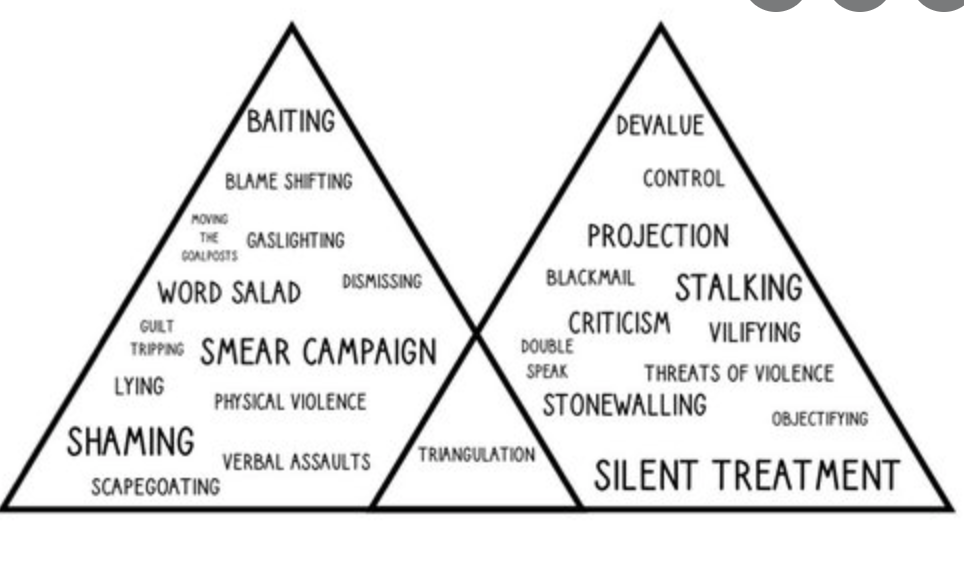
    Stalking, tends to be focussed on one type in the media. Men grooming young people, or partners in an abusive relationship. The day after I wrote this piece, I saw this one on the BBC website

    but it is defined as

    Stalking is defined as a pattern of unwanted behavior, directed at a specific person, which causes that person to change their routine or feel afraid, nervous or in danger. Examples of stalking behaviors include: Repeated, unwanted phone calls, texts, messages, etc. that may or may not be threatening.

    But it happens with Parents too.

    If you know, you know.

    They continue to watch.

    Doesnt matter if you think you got rid of them.

    They continue to watch.

    They continue to search

    They continue to find ways of interrupting.

    When you close them off from your life

    Even Parents.

    They are desperate to know everything about you

    They are desperate to be in the ‘know’

    As the ‘trophy’ child they were desperate to show me off – so this requires information

    The scapegoat child gets no time, is constantly harassed and their movements controlled

    Happens to each child in different ways at different times.

    They continue to stalk.

    Doing so in the name of ‘We’re just looking out for you’

    though more accurately its so that they can tell their friends about us, without actually having any contact

    It’s stalking and harassment.

    and its to unsettle and alarm.

    Because, what they also do, is give away that they are looking.

    They cant help themselves.

    In fact they love giving themselves away…

    Its like they want you to know that you’re still not safe from them.

    Its like they want you to know that that you’re being watched – and controlled

    Its like they still want to cause fear.

    Taken from Gloucestershire Police

    So they give themselves away.

    ‘I notice on facebook that…..’

    or

    ‘I dont think you should be having conversations about ……’ – things that they obviously saw on a you tube channel.

    or somewhere in an email – to you or to someone else.

    They set up social media accounts, to keep an eye on you, changing them often.

    It’s usually embedded in a different message, but they like to give away something to just let you know.

    Of course if you dont know, you might think im being paranoid – but thats the thing, if this hasn’t been what you have had to deal with you’re not likely to get it. Parental Harassment.

    Theres can be the weak mole in the family – usually the flying monkey

    The one who maintains contact with them – enough so that their inch is a proverbial HS2 of a railway scheme.

    The unsuspecting mole gets

    ‘We don’t hear from _______, have you heard from them’?

    ‘________ doesnt speak to us any more , are they ok?’

    ‘ Last time we saw _______, they we’re doing ______, is this still the case? ‘

    ‘I bet you’ve seen _____ since we have______’

    The favoured child is only favoured whilst they are the sharer of information and does what they want.

    The unsuspecting mole, faces the dilemma to say nothing. say no- and face a reaction. This can happen over phone, email or face to face- obviously. Or they give away all the information, because they are terrified too or that they cant see the issue for what it is.

    ‘But they’re worried about you’ you might say… thats what ‘normal’ parents might be like. It doesn’t work for the psychopaths and narcissist parents (or the emotionally immature as Lindsay Gibson writes). They dont possess these emotions in any genuine way- they worry about themselves and their reputation, they worry that they might be damaged, there is no genuine worry.

    They use other family members to get gossip about the person they are trying to keep track of. They go as far as using friends in the same way, and social media.

    They are probably reading this. And thats the thing, until you decide to hide everything and go completely underground they aren’t going to know. But what about living our lives and exposing them for who and what they are. Their behaviour is not my shame to carry.

    Parental Stalking does happen, and its something we need to talk about alot more.

    When it happens and you’re in the middle of it its terrifying.

    Yes, of course they deny it…. but then again… part of their pattern is to deny things, misremember things…

    So It’s time to talk about it, time to put it in the open.

    Time to state the horrors of what abusive parents will do to their own children.

    Has this happened to you? Have you experience of parents who stalk you?

  • Boys and their Abused Dads

    Boys and their Abused Dads

    As a youth worker you get to hear alot of stories and moral panics about abusive or absent Dads, and the effect this has on children. It is often in regard to the behaviour of those children, especially in education or criminal contexts. Theres a cry for ‘better role models‘ – assuming that parental role models aren’t good enough. It is easy to blame the parents.

    The same rhetoric was used in those ‘christian’ mid nineties evangelical circles too that I grew up in, anyone else remember the ‘Even if your Dad was ______, God is a perfect father’ type stuff. Usually the reference to a Dad being abusive or absent. Strange thing then, that during those times there was little critique on that ‘perfect’ father sending a son to die.

    I digress, and the discussion on absent or abusive fathers doesn’t really need repeating here, only to note how pejorative it is, and only too often, sadly and tragically, how common this is, and with the misuse of concepts like ACES*, children and young people are predicted behaviour and outcomes based on this in state settings, and barely given a chance to be different at times.

    But my experience is different. And so might yours be.

    What about a boy raised by an abused Dad?

    Ive just tried googling images for ‘Abused Dad’ – have a guess at what I found?

    This:

    Note what emerges.

    Article and article about Abusive Dads and Fathers. men who abuse their wives, their children, who dominate, hit, provoke, sexually abuse, financially abuse and the list terrifyingly goes on…..

    Not Dads who are abused themselves.

    I watched this a few weeks ago

    In the TED talk above, Justin reflects on the qualities of his Dad, and how growing up he was determined to be different – Justin didnt want to be soft, kind and gentle – only to realise later that these were good qualities to have, and were part of his core.

    So I pose myself the question; What kind of a Man did I learn from my own Dad?

    Let’s start with the positives – everyone, outside, and some inside the family love my Dad. He would do anything for anyone, mostly in a practical way – fixing, decorating, making, constructing, he is softly spoken and rarely impulsive. He worked hard, and didnt cause or create any stress or drama.

    But the rest of the time, he was a ghost. He was belittled and devalued, and threatened, walking on eggshells all the time. He could only obey the other parent, becoming the flying monkey, the accomplice, completely untrustworthy. He tolerated being lied to, by someone who was gaslighting him all the time. I dont remember him ever expressing his needs, ideas or dreams, and was told what to do nearly all the time. His invisibility extended to offering almost no nurturing or protection at all – deferring everything to the other parent, someone so sunk that they couldn’t be a healthy father figure at all. One who conceded.

    I could go on, as there is more, and none of this is to be critical of him – given the extent of the manipulation he has suffered – this is more to reflect on what its like being Male, and a Dad, and growing up with an Abused Dad.

    For one, there is almost nothing to read on this – even some of the emotionally ‘immature’ parent books defer to general characteristics of dominating Dad figures – and as I said above – try doing a google search.

    Boys or Girls and their Abusive Mother figure may come up, but what are the effect on a child of their abused Dad?

    What kind of Man/Masculinity did I see, and experience growing up?

    Someone passive to women or others needs – no regard of their own

    Someone with no role with their children

    Someone with no voice

    Someone weak

    Someone who accepted being lied and pretended to

    Someone who is weaponised by the other

    Just a tool for someone else to get what they want.

    I reflect on these, not with anger or bitterness, not with remorse or grief, but a sense of being in the process of understanding what the effect of an abused male care-giver had on my life – and not just an abusive female role-care giver. The abused dad rarely gets talked about, hen-pecked might be a mild term for emotionally manipulated.

    I think what i’m trying to come to terms with is how challenging it is to try and talk about this, ‘some dads are abused too’ ..’some men are abused in domestic abuse relationships’ ‘some boys have emotionally abused fathers too’ – and what’s likely is that these situations are so likely to go under the radar. As that boy, might be kind, sensitive and attuned to the needs of others – and not themselves, that boy might be more likely bullied than a bully, that boy might like the quiet life, that boy might have issues with women – or find themselves in relationships with dominating women, that boy might struggle in a number of ways, but those ways might not be as evident as they dont fit the stereotype, if stereotypes are there to be fitted into anyway. They’re unlikely to be loud in a crowd and make a scene – getting attention.

    That boy, might also struggle to know ‘how to be a man’ ….

    When the female parent once told me to ‘stand up for myself’ it was ironic in that that was something she wouldn’t allow to happen to her, by my Dad. Stand up against bullies…but not the one in the home… a man is never right, a man always gives way, a man doesn’t have an opinion… oh and I knew I would have been punished had I hit that boy back….

    I heard the advice as a teenager; ‘At least you’ll know how to treat a woman, given the way your Dad is‘ or words to that effect, and from a trusted source I internalised this, probably too much – to the detriment of treating myself, and being passive, putting myself lowest emotionally on the pecking order, because as I reflect I wonder how much that person saw and knew, and with the benefit of hindsight, the behaviour that has occurred 30 odd years since.

    I reflect on also on the question of how all these things, and more, might be similar to children who grow up with the experience of their mum being emotionally, physically, sexually or spiritually abused, and what that is like for them, and whilst I clock it here as being highly significant and impactful in their life. This isn’t , as I say my experience, but I want to note it – and whilst its significantly more common, it doesn’t make it any less damaging on the child – this is in no way a comparison piece, but something I wanted to recognise.

    There are plenty of cold maternal figures in the world, and plenty of female narcissists/psychopaths that go under the radar, yet alot rise in politics, business and also the church, and yet their damage to the men in relationships (and other females in their friendships) as well as their children is being more and more well known. What we don’t want to talk about is that Mothers have are cold, colder than ice, with only pretence of warmth, if that. So what might that mean for the Male parent, and how being the victim of domestic abuse , has on they children they have? – especially for their boys? What about the children, the boys, who get caught up the female narcissists loyalty games against that abused Dad? What kind of male/masculinity does that boy grow up with? What kind of insecurities might they have to deal with? What did I? The list is extensive – alot of written about already in my story above.

    For the Boys growing up with Abused Dads – what is that like for you? What resources have you found to be helpful in this? Have you found some good articles on this – please do share them below, it would be great to have comments and conversation on this, if you want to get in touch and share a story or piece on this, do let me know.

    And, to finish with that theological premise at the beginning, I can’t help but wonder what kind of God I internalised given the association that was made between earth and heaven Father figures.

    Maybe this is a conversation we need to have – whats it like growing up with an abused Dad?

    *ACES – Adverse Childhood Experiences

    Thank you for reading this piece, if you would like to support me financially as I share, write and develop conversations that are Healing for Men, you can do so here, all gifts and donations appreciated Healing for Men

  • 15 phrases not to say to children of abusive parents

    A few months ago I wrote a piece about the myths that surround in regard to parents – myths like ‘Parents love you whatever’ or ‘Mums are so supportive’ that do nothing for anyone who’s experience of parents is vastly different to this, to the point of being abusive, physically, emotional, sexually or spiritually (or a combination of all of these), they do more than nothing, they give these parents an already sympathetic starting point. If you want to have a read of that piece, it is here ; The myths about parents that prevent abuse from being believed.

    You see the thing is, when youve known that your parents have been awful from an early age, you get the opportunity to respond to alot of ‘well-meaning’, sometimes trite, sometimes misadvised comments from people, who might be trying to help, without actually knowing the situation.

    Sometimes these phrases do no more than pile on heaps of guilt and shame – that somehow I was to blame about the way my parents are, or were towards me, or they sort of encourage a kind of grief/guilt – that somehow I ‘should’ feel this way about my parents…but I don’t.

    Maybe these are things ‘not’ to say to a child who is known to have difficult parents. Maybe these are things not to say to an adult child who is now able to deal with those parents, or even to grandchildren who have worked out their grandparents. Most of them I have heard in one form or another.

    1. They can’t be that bad…because you turned out ok
    2. They could have been worse
    3. Your Poor parents having to deal with you
    4. At least they stayed together when other couples didnt
    5. You only get one set of parents
    6. You’ll miss them when they’re gone, trust me
    7. At least you have 1 decent parent
    8. Of course they’re not perfect, you have too high expectations – go easy on them
    9. Considering their past, they did their best
    10. Look at what they did for you, kept you fed, and watered
    11. You’re meant to honour them, the Bible says so.
    12. You have to learn to forgive them
    13. One day you’ll realise they were right all along (isnt that what they say about Dads?)
    14. You’ll grow up and accept them as you get older.
    15. Is it fair for your children to miss out on their grandparents?

    Can you see how harmful some of these comments are? Ive received nearly all of them over the course of the 43 years of responding and trying to deal with my parents.

    Some of these reflect how the person has been manipulated by the parents already (3), some of them reflect how that person might feel about their parents (6) others reflect a moral/spiritual imperative (11,12) that then requires some unpacking to not take on that shame and guilt.

    Some of them seem to want to blame the child – that somehow they are responsible for their parents (8)

    And some reflect that being grateful means that parents fulfilled a legal requirement , to be fed, watered and have somewhere to sleep (2, 10)

    And obviously, the way I grew up and became who I am has something to do with them. (1) Gees, thanks for that one, they stole enough without that credit. What if children raised by narcissist parents got somewhere..despite them? not because of them. Yeah. Exactly. Because that’s the only way, or its a pile of self destruction and torment, or both.

    It could be easy to say 9. But then again, thats like saying that every action they took for an entire parenthood can be attributed to their own childhood. And not everyone who grew up a baby boomer, or had a difficult childhood, or even an entitled one, is necessarily a bad parent. Some do the work. Some take responsibility.

    For 7, see here.

    And for number 5. Yes, you’re right… but your point is?

    and 15… difficult one, but protecting them from harm is more important than toxicity and gifts.. isnt it?

    Lets deal with number 6. Are you sure about that? Actually really sure? – didnt think so…

    So maybe, if you have good parents, maybe if you’ve got amazing parents, maybe if your parent is your best friend, then do have a think about the effect of the well meaning saying on someone who really doesn’t have that kind of relationship with a parent. Someone, who maybe has had to do alot of work to create their own safe distance from their parents. Someone who has had to undergo the emotional torment of parent stuff for a very long time.

    And that leads me on to number 14. This one is the only possible true one. Because growing up does happen, seeing them, even clearer does happen, accepting them does happen too, as does accepting that they are unlikely to change, they get worse (as Nina Brown describes) , and accepting and spending time with them are two vastly different things.

    So from someone who has struggled alot with their parents, and heard many if not all of these things and more about what I’m expected to do, or feel about my parents, i thought I would write a few of these sayings down, because they are so common, so often said, and just want to say that you dont have to accept your parents, or like them, or put yourself in a place where they do not respect you. You are valuable, and can create situations to protect yourself from them.

    And, sometimes its about biting your tongue, or giving that look to anyone who gives you the gift of the well meaning, but harmful phrase like above.

    This piece was inspired by this one from Peg Streep ; 8 things not to say from someone estranged from a parent in it she writes the following about children who have to protect themselves from their parents, effectively estranging them and blocking them. I like what she says in response to my number 11 :

    The taboo has the back-up of a Biblical Commandment which enjoins us to honor our mothers and fathers as well as deeply-held ideas about filial obligation and the never-ending gratitude we are supposed to feel for those who put us on the planet or took us in; who fed, clothed, sheltered, and educated us; and paid for all of those things. Since those happen to be legal requirements, it’s actually not snarky to note that if that were all that is required of a parent, an orphanage would be an ideal one.

    Even though recent psychological research substantiates that the decision by the adult child to estrange from family is long thought-out and a process that may include periods of attempted reconciliation by the adult child, the culture still frames it as a fit of pique or anger and a sign of immaturity. In researching my books—over a decade now—I have found the decision to estrange as is almost always deeply thought through, worried about, and revisited in the thousands of people I have heard from over the years; these stories echo my own.

    If you want to read more on this subject then I do recommend the books in the self-help resources section of this site, especially Nina Brown and Lindsay Gibsons, and also, in the process of seeing, realising, and loving yourself through the challenges of emotionally abusive parents, do seek out professional therapy to help you to reconstruct, and rebuild through it.

    Feel free to share and like this piece to help others. Thank you

  • Surviving Psychopathic Parenting (Part 14): Hiding the Treasure

    Surviving Psychopathic Parenting (Part 14): Hiding the Treasure

    It wasn’t just the anger switch that I had turn off as a child.

    It was the happy joy one too.

    Its my job to bring you down to earth

    That Parent

    It was easier to hide that go through having to hear things like the following

    I need some of your joy, give me some of your joy

    So I didn’t bother.

    I didnt want the photo shoot when I won trophies at school. One because I couldn’t find the photographer, the other because it wouldn’t have been celebrated appropriately. Though the trophies did stay on the mantle piece for a bit too long.

    Fast forward to a graduation 11 years later and their presence caused me to only be on vigilance trauma mode, rather than celebrate. But they had to be there, it was their right. Apparently.

    They didnt know how to affirm or celebrate what I did well, or were envious of the good time I might have had without them. Envy when I did well, Envy when things were going well. Their claim on my success was the trophy child.

    But we knew it. One parent had to have the last word on the other parents birthday. Even making sure at his birthday party, they sang to her too.

    Surviving meant switching off the positives, as well as the negatives.

    Dont raise your hopes up James, even if you think she might be pleased for you, if you are happy, it’ll be tainted with something referring to her ego.

    Some emotionally immature parents actually envy their Childs success and social attention. Instead of being happy for their child, envious parents are ore likely to discount and minimalist their Childs abilities and achievements. These parents lack the maturity to vicariously enjoy other persons good fortune. In their competitive approach to life, a successful offspring threatens their spotlight

    Gibson, Lindsey C, 2019 Recovering from Emotionally Immature Parents

    It was easy after a while though. From about aged 14 I only fed them the essentials. What they needed to know.

    Surviving meant finding other people to celebrate with or not bothering.

    Hiding.

    It meant closing up the feelings. Protecting myself from the inevitable dead end type comments, the cut de sacs of emotional eggshells.

    When I knew that it would only be met with a self referential comment, or belittling, or comparing (to herself) , or something that seemed very false (praise), then they didn’t get the good news either.

    What she wanted to take from anything, everything I did.

    Over emotional if I did something wrong, Belittling or killjoy if something went well, or would want to take from it for herself.

    Maybe I did the text book thing, given that:

    Under these conditions, children of envious or jealous parents might learn its better to hide their talents or stay out of the spotlight so as not to tempt a put down from a competitive parent. Due to their parents envy and jealousy, success can be an ambivalent issue for these adult children

    Gibson, 2019, pp52

    Surviving Psychopathic parenting meant shutting down the good stuff too, knowing that it would be taken and used to meet her needs, or reveal her needs. Then I would feel guilty for being successful, or respond to that neediness.

    I wouldn’t say they were overly competitive, or maybe I didnt see it, but parasitic yes.

    Ultimately they only saw themselves, so it was easier to try not to be seen.

    But on other occasions it was just that knowing that having a smile on my face after being somewhere, or with someone, or doing something I enjoyed was about to be shot down. So there was no conversation.

    And equally, if she found out, they’d be trouble too. Or ‘He never tells us anything’ – as if theres no awareness of why they wouldn’t have been told.

    It meant learning to hide. Hide the treasure of the good parts of my life.

    Protect myself, and protect the memories, and protect those good bits.

    Thank you for reading, do like and share with others who you think might find this blog or the website helpful, parts 1-13 of my story are in the menu above.

  • Surviving Psychopathic Parenting (Part 7): Why I have to thank Roald Dahl (but didn’t realise until last week)

    I was wondering a few months ago about whether there was any children story books written to help them see what domestic violence looks like, when it is against them, and by their parents. In Lindsay Gibsons book she refers to the many children stories of old that regail of how children survive and thrive, win and adventure without the help of parents, or against the abuse by ‘step’ parents, and you’ll know the Disney ones I mean. At the time I was reading, and am still reading Harry Potter, and though he is extremely abused by his adoptive Guardians, and is full of recollected grief for his own parents, he was not abused by them.

    What I realised two weeks ago was that I knew of the book.

    What I realised two weeks, minus 1 day ago, is that I knew of the book, because I had the book.

    What I realised two weeks, minus one day go, is that I read the book that includes many elements of the behaviour of my psychopathic/emotionally immature parents in it, whilst I was as child.

    Im sure there are other books out there, but the realisation that I not only had the book, read the book, I also loved the book, and I somehow even then saw something in me in the main character, whilst not completely seeing the extent to which the abuse she encountered at the time. But then again, my brain was probably doing its protective thing and not seeing it.

    So reading it again and Im seeing:

    At this point ______ entered the room. He was incapable of entering any room quietly, he always had to make his presence felt immediately by creating a lot of noise and clatter. One could almost hear him saying ‘Its me, Here I come, the great man himself, the master of the house, the wage earner…

    From the main characters Parents.

    When confronted by the Parents, the teacher has to develop all the required tools to deal with narcissism, like not using anger, staying cool, being firm, creating boundaries and not rising to their bait. It was amazing to read in a childrens book, all the techniques I’ve had to read in self help books on this (see the resources in the menu above).

    By now, youve probably worked out the book, its Matilda, by Roald Dahl, published in 1988.Matilda (novel) - Wikipedia

    Later after we have encountered the head teacher at Matildas school, Miss Trunchbull, we see that in the words of a 5 year old child, we see emotional intelligence and perception so beyond her years, and in Matildas words, the pattern of the entitled , narcissist is revealed. After an incident in which the Trunchbull throws a girl in pigtails, by the pigtails over the school fence, there is this conversation;

    How can she get away with it? Lavender said to Matilda ‘Surely the children go home and tell their mothers and fathers.I know my father would raise a terrific stink if I told him the headmistress had grabbed me by the hair and slung me over the fence’

    No, he wouldn’t  Said Matilda, ‘and ill tell you why..he simply wouldn’t believe you’

    ‘Of Course he would’ , Said Lavender

    ‘He wouldn’t ‘ Matilda said, And the reason is obvious. Your story would sound too ridiculous to be believed. And that is there Trunchbulls great secret

    ‘What is’ ,  Said Lavender.

    ‘Never do anything by halves if you want to get away with it. Be outrageous. Go the whole hog. Make sure everything you do is completely crazy its unbelievable. No parent is going to believe this pigtail story, not in a million years, Mine wouldn’t they’d call me a liar’

    Now obviously Matildas parents don’t see her, and view her merely as a scab (Page 2), but from her own words (or Dahls) we see the pattern of the self obsessed narcissistic parent, in the Trunchbull. The one who has no regard for the rules, for social rules of dignity and decency, of the human condition of the other. They are the law unto themselves. Doing actions so shocking, that evoke stunned trauma, and disbelief. That is the pattern of one of my parents.

    So why didn’t I see it? Maybe I did. Maybe I also saw what I had to do.

    As you may know Matilds draws on her inner guile, magic, knowledge and self to survive. I wonder how much this book, reading it at age 10 had on me at the time, subliminally, she was stuck between abusive parents and headteacher, and yet emerged with her own sense of self, and with one supportive adult that gave her the emotional space she needed to thrive, but also knowing she had to take responsibility for herself, because it wasn’t going to be from elsewhere.

    But if you want to see how to respond to entitlement, narcissism, and abusive adults, and educate and help children see it, then in my opinion you could do alot worse than use Matilda as an example. 30 years on, and I cant quite believe how accurate its descriptions are of behaviour I have witnessed in my whole life. Maybe the magic of Roald Dahl, for me was that he showed the ways of survival and also patterns of behaviour to the child.

    Yes Matilda had the help of some significant miracles to combat the Trunchbull in the heat of the storm, and get justice, and overcome her Parents, but so much else was about the inner strength and responsibility she took for her own life, being generally kind, grounded and diligent, and also having one trusting, supportive adult who also saw her, believed in her and gave her time.

    So yes, I have Roald Dahl to thank, because he gave me a hero that survived and thrived in the midst of the most emotionally toxic situations, and even though I didnt ‘see’ it at the time, obviously something completely resonated.

    Thank you for reading, this is part 7 of my Survivor Story, if you’d like to read from the beginning part 1 is here and the rest of the parts are in the menu above.


  • Feeling grief; for the mothers day cards I could never send

    I really have toyed with this one all week, I didn’t want to continue the series on surviving a psychopath parent, because what I needed to do this week was to take stock a bit, and be kind on myself, given that this weekend is Mothers day.

    And it started to bite in the middle of the week.

    Feelings.

    Now that I’m aware of them, I hate them too. Gave myself a headache.

    Every year I used to go through the life triggering, upsetting event of trying to find a suitable mothers day card for an abusive mother. Pretend, lie, or send a blank one.

    The same routine for as long as I can remember. Since being an early teen, easily that long.

    I mean they are all sickening.

    Why?

    Because it was the done thing. Because also I would be used to hearing…

    You’ll upset her if you dont

    Yes, because I would be the rescuer wounding the victim.

    I had already decided that I wouldn’t be sending a card this year, unless Clintons cards advertised that they had broadened their range to include honest sentiments like

    ‘On mothers day, here’s a card because it avoids drama’

    ‘To an emotionally immature parent, Happy Mothers day’

    ‘Im sending this because its tradition and not much more’

    That was the beginning of the week. Passive aggressive suggestions for the mothers day card that Im not going to send.

    Then I realised that, as per the Drama triangle, her emotions are her responsibility, and not mine.

    But that doesn’t take away from the 40 years of hearing those words.

    You’ll upset your mother

    Lindsay C Gibson writes:

    Do you remember a time when they used fear, guilt, shame or self doubt to make you do what they wanted? What worked best on you? What type of emotional coercions are you most vulnerable to? What physical sensations do you get when someone is trying to make you feel bad for their benefit?  (Gibson 2019, Recovering from Emotionally Immature Parents)

    So I clocked it. Realised it. Felt it with a headache.

    Gave myself time.

    Realised what was going on.

    Resisting the urge to buy a mothers day card.

    But then.

    Mothers day.

    The week before.

    I may avoid going through the motions in a feat of honesty to myself. But…

    Then I felt something else.

    Good grief.

    Grief.

    Grief, because I can’t send a Clintons sickening Mothers day card?

    Grief, beyond the passive aggression?

    I mean is it possible to miss the mother you never had?

    but you should be grateful James, at least…..

    Please do not suggest how I might be grateful on this one.

    I am allowed to feel…I should feel what I actually feel…

    I mean does anyone actually have the kind of relationship with their parents depicted in Clintons cards? oh you do.. oh..

    grief because whilst you’ve spent your life on eggshells everyone else has been having picnics?

    dont be so sensitive James…everyone has ‘issues’ with their parents… 

    you shouldn’t compare James…

    Realising that you even have to talk your way out of the truth of the situation, the truth of the feelings.

    Being aware that this time of the year is mixed with many emotions, and im not grieving a relationship thats broken down, because it was a relationship that never was, and feeling grief for the parents I never had.

    Grieving what you never had, at the same time realising how you survived the parents that you actually did have. Grief for the time wasted, and the emotions damaged and the trauma invoked.

    Grief for the mothers day cards I could never send.


    All the resources referred to, and links, can be found above in the Menu.

  • Surviving Psychopathic Parenting (Part 4) – Asbestos feet; From Eggshells to Empathy.

    Surviving Psychopathic Parenting (Part 4) – Asbestos feet; From Eggshells to Empathy.

    Thank you for reading, this is part 4 of my survival story, do check out parts 1-3 in the menu to the right, though each part can be read separately. This one may contain details that could trigger. 

    Growing up with psychopathic emotionally immature parents allowed me to develop asbestos feet, with all the walking on eggshells that I had to do.

    Now I know, if God had desired that we were to find asbestos feet useful maybe we would have been created with them, so maybe they are more a product of how the human child adapts to survive in such unnurturing circumstances.

    Using eggshells to remove toxic water pollutants | News | Chemistry World

    I had soft feet. Eggshells hurt. Like they would do if they are stood on.

    Apparently I had to toughen up, and develop proverbial asbestos feet, by the very person who was relaying the floor with a layer of eggshells to walk on.

    Sometimes there’d be a bomb in and amongst the eggshell too, or a place of glass, just to cut deeper, all just to ‘help’ me to develop ‘thicker’ skin.

    Given that I had no choice as a child, its loyalty or punishment, then, I learned to pretend, to fake agreeing, agreeing to being the role that was compliant, and trying to navigate a pathway full of emotional eggshells and explosives, that sometimes went off, other times just the fear of them was enough.

    Its one thing advising people how not to walk on eggshells when you’re at work, but what if thats your entire home existence, you might as well have been born with asbestos feet, because they get to be needed pretty early on.

    My Psychopath parent was of the emotionally fragile and unpredictable variety, in this post I share the 12 common features of emotionally immature parents, taken from Lindsay Gibsons book.

    If other people are getting more attention, they find ways to draw attention back to themselves, such as interrupting, firing off zingers that get everyones attention, or changing the subject. If all else fails they may pointedly withdraw, look bored or otherwise communicate that they are disengaged – behaviours that ensure that the focus stays on them. (Lindsey C Gibson, Adult Children of Emotionally Immature Parents, 2016)

    What you get to realise is that the eggshells appear when they are not centre of attention. When you have to ask for something, when you might want to disagree, when you try to put your needs first

    I learned not to bother. Any time I did was met with emotional outburst.

    Survival just meant growing asbestos feet, and wearing bomb proof clothing.

    Emotional shielding from the impending storm. Fear. Terror. Because you just know that a bomb had gone off, and one will go off again.  So dont dare upset them, just keep the peace, dont rock the boat, tip toe around them. Comply or hide.

    When emotional parents disintegrate, they take their children with them into their personal meltdown. Their children experience their despair, rage or hatred in all its intensity. Its no wonder everyone in the family feels like they are walking on eggshells. These parents emotional instability is the most predictable thing about them. (Gibson, 2016)

    And as the following indicates, it may not be in the workplace that some of you saw this in my parents. Though, I am pretty sure they didnt hide it very well. They left a trailblazer of shocking behaviour everywhere, and when challenged would not be able to see it as shocking. In which case it wouldn’t really matter if they were in a professional role in which character was important, like being a vicar for example, as long as in their job they could hide it…

    Their fluctuating moods and reactivity make them unreliable and intimidating. And while they may act helpless and usually see themselves as victims, family life always revolves around their moods. Although they often control themselves outside the family, where they can follow a structured role (not always I might add) within the crucible of intimate family relationships they display their full impulsivity, especially if intoxicated. It can be shocking to see ow no-holds-barred they get. (Gibson, 2016)

    However, my survival story is about me.

    As a result of this, I learned to put other people first, and my needs firmly second, or third. Though, that doesn’t stop emotionally immature people of accusing me of being selfish (when I might dare to put my needs first).  Learning how to navigate eggshells is about attuning to the needs of the other, attuning to the emotional cues of the most emotionally fragile in the room, responding to the needy. It’s codependancy. But thats what I had to do to survive, forgo myself. Because even though I should stand up to other people when they bully, the full force of victimhood, shame and loyalty would emerge if they were stood up to.

    Being overly attentive to other peoples feelings and emotions is no bad thing.

    Actually yes it is. That could end in empathy enmeshment.

    Being attentive is no bad thing, its about having empathy that seeks to understand, and compassion that enables that person to make their own decisions in the actions to alleviate their situation.

    Telling our story is about putting me as the main character of this, not the other person. From Eggshells to empathy, how I learned to be who I am, in the way I am from the start I was given.  It has taken me a very long time to actually put me first. Part of surviving trauma is to narrate the story of and see it for what it is and was, and becoming aware of how I survived and what resources I used to be able to. Developing rubber feet to walk on eggshells, when there was no sledgehammer to crush them smooth, a new layer would be put down.

  • Surviving Psychopathic Parenting (part 3):  Trainspotting (at Clapham Junction)

    Surviving Psychopathic Parenting (part 3): Trainspotting (at Clapham Junction)

    One way of surviving psychopathic parents was to become immersed in the world of trainspotting.

    The drugs, alcohol and destruction, and why I resonate with this 1996 film

    Trainspotting ver2.jpg

    Though I joke somewhat, reacting to emotional abuse can easily easily end in a life that is filled with the destructive elements, that this film was renowned for.

    Trainspotting – IFC Center

    It is not the trainspotting I mean.

    The trainspotting that helped me survive psychopathic parenting was more of this variety:

    What Southern Region EMU class is this? - Southern Electrics - RMweb

    When I was staying at my grandparent house in the south of England, going to railway stations and watching these and others speed through the cacophony of busy commuter stations like Clapham junction or Redhill, or ones like this from my own home in the midlands, the class 47s around the curves of the midland main line

    47474 BNS 1987 Steve Jones.jpg

    as they sped past the line at the bottom of my street and from my outside window, and more latterly in the mid 1980s, the Intercity HSTs..


    InterCity 125 - Wikipedia


    If researching the history of 1980’s EMU (electric multiple units) and class 47 and 43’s is not your thing, which I dont expect it to be, then thats ok, aside from the noise, the speed and the energy of these metallic beasts, the thing that trainspotting channelled in me, and also helped to create, was my  sense of observation and perception.  I discovered I was able to read the numbers pretty quick, I could see from a distance the train on approach, I could hear the rails vibrating (they’re nearly always vibrating at Clapham) , but, you just know when the train is approaching, as well as this, the ‘OFF’ light comes on at a station, the staff get out onto the platform, passengers swell it too.

    I was as enthralled by the process of the trains, as the numbers on them. The journeys, the routes, why some stopped at what station… and beyond attuning my sense of perception, trains were safe. Busy railway stations were safe, quiet ones were safe, trains were safe, they still are.

    So not only did I like to know how things worked (see Part 2) I became naturally observant, vigilant even. I joined in the ‘grown up’ spaces, often quietly with a book, so that I could keep an eye on what my PP (psychopath parent) was up to, or played toys near to the dining table, waiting for an inevitable family bust up that she initiated, and then would need me to cry victim into my shoulder. Because this was expected, I would stay close to the action, knowing that it was about to happen.

    There were other occasions too, staying alert, and working out whose footsteps were walking towards my bedroom door (though they had to, my room was next to the bathroom),  though more than often my Psychopath Parent would be announcing herself with constantly making noise, humming, singing, dominating.

    Developing a higher than usual sense of danger awareness, or hyper vigilance, is common in those who have to deal with emotionally immature parents, from an early age I clearly knew that I needed to be on my guard, aware and preparing myself for the next blow.

    Doesn’t everyone have to be vigilant of their parents behaviour? is this just normal?

    I dont think I stopped to ask this question at the age of 8, but thats part of what I did and had to do to survive.  It was never possible to stop their next move, or intercept it, though I do remember trying to on some occasions, theres only so much an 8 year old can do, when cast in the role emotional rescuer in my parents drama, best to be around to know when the role needs to be fulfilled.

    I used to wonder why it was that I was good at the parts of detached Youthwork that involved having an awareness of safety, their movements and vigilance, and why I am good with knowing where I am, directions, and place, and now its no surprise that I can detect the movement of birds out in the fields or river banks.


    In ‘The Body keeps the Score’, (Kolk, 2014) outlines the processes in the brain that occur during this vigilance phase, the heightening of emotion, heart beat and arousal. It is like the proverbial train arriving at the station at speed, being on the platform waiting for that moment. And then it subsides at the intercity train leaves view and heads to London or Leicester. Then it is calm for a while, the platform empties.

    And that’s the difference, Clapham Junction was like living with a Psychopath, the trains were constant, I remember going a few times and it was extraordinarily tiring, yet it was the station I wanted to go to, it was too busy, 3 trains in less than a minute at times, too much for a child to process, was there such a thing as too many trains.. yes.

    Oh God, here comes another one, get ready..

    Surviving psychopathic parents is like being on Clapham Junction station, being on guard all the time, being alert all the time, and theres trains arriving from all directions, when its difficult to get onto the right platform to get a good view of everything thats going on. (This is also why I like to sit in the corner seat in a coffee shop, and its that I like to know what’s going on, I’m not frightened by other people, I always knew that none of them posed the same threat).  At least on Clapham junction the worst that could happen to me was missing a few numbers, whilst I could be vigilant for the next emotional reaction from my Psychopath parent, I didnt, and wouldn’t have expected to, have the emotional awareness or skills to deal with it, ultimately, though, the problem that they were likely to create, was about to become a problem that everyone else would have to fix.  (Gibson, Lindsay C, 2019, p71)

    In their presence is like Clapham Junction Railway station.

    Whats one thing that I needed to survive? That sense of vigilance, being on guard. What I realise, and now know, from the book, is that its only when you can stop being on guard that you can heal. I was so used to being on guard, vigilant, that its only been in the last few years and in a safe place, that I could stop, and take a break. There was no incoming anger, emotion, unpredictability, or eggshells (see the next part) or mine fields to navigate.

    What I didnt realise, until very recently is that I could operate in life without  needing that switch on.  

    What I didnt realise, is that it wasn’t normal to not need to be vigilant. 

    When I moved into my flat 18 months ago, actually when I walked into it, empty with the agent 3 weeks prior, I felt safe, home, relaxed. It was from that point onwards that I knew I could heal, because I could switch off the vigilance valve, enjoy looking at the birds, the sea and the odd train that now goes by my window.  Healing is more likely when in a place of safety, when the vigilance valve can be switched off. I just thought I was being perceptive, aware and observant..and I was, but what I now know is that that was part of how I survived.

  • I grew up with a psychopath in the home (and a christian one)

    I grew up with a psychopath

    One of my parents is a psychopath.

    I don’t say this lightly.

    My mother is a psychopath.

    There, I said it.

    I grew up with a psychopath

    A christian one.

    Just saying this out loud is pretty phenomenal, or is it?

    I mean didn’t you all do the facebook quiz ‘Discover if your mum is a psychopath and get a high score…? no, I thought not…

    Its a bit different from that Johnny Briggs TV show of my own childhood, ‘My mum, who’s a nurse… ‘

    When I started blogging nearly 10 years ago, I did not think that this would be the blog I would write.

    Probably because at that time I lived in blissful ignorance, actually, numbed trauma reaction, to the extent of my parents emotional coercion and abuse.

    Was it ever possible to see?  Yes, and everyone knew more than they realised. But it wasn’t possible for me to see it.

    So, it was no surprise to me this year when I realised that my mum is a psychopath. Actually it meant that all the pieces fit together.

    It was one thing to realise that I was subject to emotional abuse as a child. 

    It was another thing to categorise my parent as a narcissist 

     Another again to regard them both as emotionally immature. 

    It was a step further still to regard her as a psychopath. But honestly, its the only accurate conclusion. 

    It wasn’t a shock in anyway when it was pointed out to me by two separate people in the last year, one of whom knows her pretty well.

    I realised something else this year too.

    You know that thing where some kids defend their parents and are loyal to them, even when they raise the alarm about abuse, or when others attract their parents. Theres a natural defence and loyalty from children to parents at times, despite everything.

    This is not something I have ever consciously felt. It was only this year when I realised that I hadn’t ever stood up for them. So, something must have happened when I was a young child, and thanks to trauma therapy I’ve worked, and working through this.

    I have always known that my parents, mum especially, was weird. But an 11 year old isn’t going to come to this clinical realisation. A 31 year old didn’t either.

    And in the main, a number of you reading this, if this makes it to my home town, or places where they have lived, also know.

    You felt it, but couldn’t put your finger on it. You were bullied, then played as a victim. You were taken from, and never given to. Gifts were never without reason. Social moments where often of shock, and orientated around her. They played people off each other , all the time. Unable to see or understand why they aren’t liked.

    In his book ‘Surrounded by psychopaths’ Eriksen suggest that there are 20 behaviour traits that a psychopath is likely to display much of the time. (I know there is A PPI test too.)  She scores very high.

    These behavioural things include:

    Grandiosity, Jealousy, Shallow feelings/emotions, Egocentricity, Superficial charm, Role playing, pathological lying, cunning and manipulative, entitled, need for stimulation, early behaviour problems, parasitic lifestyle, lack of realistic long term goals, failure to accept any responsibility, juvenile delinquency, Callous.

    But it wasn’t a shock. It was more a dawning reality that helped me explain who I am. Helped me explain my life choices, and the divisions within my family, that kept everyone apart.

    So, im 42, 43 soon, and have lived 41 of those years trying to appease, exist and revolve my life a psychopath parent.  A parent, or parents in which none of these are true . Parents who exist only in the drama triangle, and perpetuate DARVO .

    Image result for drama triangle


    When I have shared this with a few people, they have said that they were sorry. Sorry for me, that this is what I have had to realise or face in my upbringing.

    As Lindsey Gibson writes too, Emotionally immature people (a term that encompasses psychopath, narcissist, sociopath) also disassociate. Dissociative personality disorder is evident in my parents. This has enabled one of them to commit shocking behaviours in their entire life, and not feel any remorse or guilt, or shame, and certainly not take any responsibility, amongst other things. But switching personalities, roles and identities was common.

    So, in piecing all the behaviour together, the trauma, the terror, the victim role playing, the dissociation. I had only one unenviable conclusion.

    My mother is a psychopath. She’s also Evangelical.

    My mother; The Christian Psychopath.

    I grew up with a psychopath in the home.

    Now I know it, its time to live with the awareness, heal from emotional trauma and be the person i am meant to be.

    (PS. Im aware that there will not ever be a diagnosis. Thats just the point, they wouldn’t actually go themselves, voluntarily, and even in any court case it would be difficult to prove. No one walks into their GP and says ‘ can I have a psychopath test please?’ and thats just the point. Admitting this would even mean acknowledging a self awareness, that is absent. )

    The resources that helped me identify all this are here