Tag: safe

  • Practicing Safe Sensitivity.

    Google ‘Sensitive’ and what do you find?

    (especially in the images).

    I love both Elaine Arun and Hannah Jane Walkers books on Sensitivity – but – in the main who are their key audiences and examples?

    Hannahs book is wonderful by the way, yet in the main the conversation about sensitivity centres around herself, her sisters and her mother in the first few chapters, about how women nature sensitivity in other women. It is beautiful, their stories and very heartful. Actually I would go as far as reading this book was an awakening spiritual experience for me, self love in a self help book.

    Sensitivity barely features in a search of TED talk titles. (but Introvert does)

    Sensitive and male as a search on You Tube highlights a type of sensitivity and not necessarily of the emotional sort.

    So:

    Whilst it’s said that 15-20% of everyone would be considered sensitive, or highly sensitive. There isn’t much of a conversation about sensitivity and being male. I wouldn’t expect it given the author and her experiences.

    There’s a lack of ‘ways’ in for Men to access this topic.

    So let’s continue to have it.

    What’s it like growing up male and sensitive with a male parent who either dismiss, ignore or reject their own, and thus your sensitivity?

    What’s it like growing up male and sensitive and having a female parent who similarly either dismiss, ignore or reject their own sensitivity, and thus your own?

    What’s it’s like having your own emotions stolen as a boy to feed other peoples emotional needs?

    What glimpses are there that you were a sensitive boy, and what happened when you expressed these? or… what steps did you take to hide them, or pretend that you were otherwise.

    What has been the effect on you by hiding this part of you?

    I laugh now. I got into a ‘fight’ once. It was my last day of primary school , aged 11, and it was one of those glorious warm hot June days where we could play football on the ‘rec’ (recreation ground) instead of the concrete of the enclosed school playground. I won’t name the other person, but they had been a friend for a while, and lived not far from me.

    I was playing ‘in goal’ and this person was deciding to stand on the goal line, I dont remember if he was even playing the match, maybe he wasn’t and was being annoying, I remember not.

    I had heard enough messages about ‘toughening up’ , about standing up for myself. This was my chance, so I thought, to prove myself. T prove to myself that I wasn’t as weak, timid or shy anymore.

    I don’t remember how the incident continued, my feeble attempt to be ‘brave’ probably involved pushing him out of the way, did I raise my fists? I don’t remember, though I remember getting one back. I think I ended primary school with either a black eye or bloody nose, and only the realisation that trying to physically injure anyone felt so weirdly disconnected, my arms/body didn’t work like that, and I felt pretty rubbish about it.

    Trying to prove to myself that I was tough, not weak and not going to let someone else annoy me. Step 1 – ends in embarrassment… oh and the temporary loss of friendship. A year later we spoke again and we’re friends again.

    I guess it’s a glimpse for me. Of how trying to be tough has felt uncomfortable. And also of the damage of hiding sensitivity.

    It was the 1980’s, I get it. There wasnt talk of emotional health and wellbeing in schools at that time, or anywhere else.

    Described as perceptive and contentious by my teachers – a key indication of sensitivity – neither of these things were valued or nurtured.

    So, im just wondering, where does sensitivity play a part in our daily lives – yet we wouldn’t use ‘the S’ word to describe it

    Because as Ted Zeff describes below, the men who recognised and realised their sensitivity could share how it was positive for them in their workplaces, relationships and social lives. (there are other vids on YT on this subject, do give them a watch)

    But he also describes how a more ‘Western Culture’ , UK to a lesser extent and North American more so, there are cultural challenges in admitting being sensitive.

    If the ‘S’ word is a big ‘no-no’ what gets used instead?

    ‘Social Skills’

    ‘Adaptability and flexibility’

    ‘Good with change’

    ‘Receptive to client needs’

    ‘Hard working’

    ‘Team Player’

    Someone who might be good with people, good with animals – might be highly sensitive, as might someone who has deep friendships and is upset if these are rocky. But someone who has friends is valued – even if their sensitivity to emotional needs might not be.

    We might not like the ‘S’ word – but the outward traits of the person, the man with sensitivity is valued…. some of the time.

    Did you notice what I noticed at the beginning of that video above?

    That there’s research that suggests that up until the age of 5 boys are more sensitive and aware than girls, yet by the age of 5 most of these emotions have been diminished in a boy, except for anger, the only emotion a man is socially permitted to express.

    Where does that even leave that boy who is told off for expressing anger? or in a culture (a christian one) where anger is deemed sinful? (and I realise this is not just men) but saying. Where does a boy go to hide so that they can be safely sensitive?

    Did you have a space for this?

    It’s not that as a boy I wasn’t sensitive, I just had to hide it, especially where it wasn’t safe. On other occasions, my sensitivity enabled me to be safe in an emotionally abusive home, as I could tend to the emotional needs of others.

    Like so many things in our emotional make up, and the reality of the trauma many of us have faced, acceptance leads to growth, denial hides protects and is afraid. There’s everything courageous about accepting sensitivity.

    Unsure if you’re sensitive? Do have a read of this

    Do share your experiences below in the comments, id love to hear. If you have a resource on this and want to share it with others do link it below too. If youd like to support me in my writing, you can do so here, Thank you for reading.

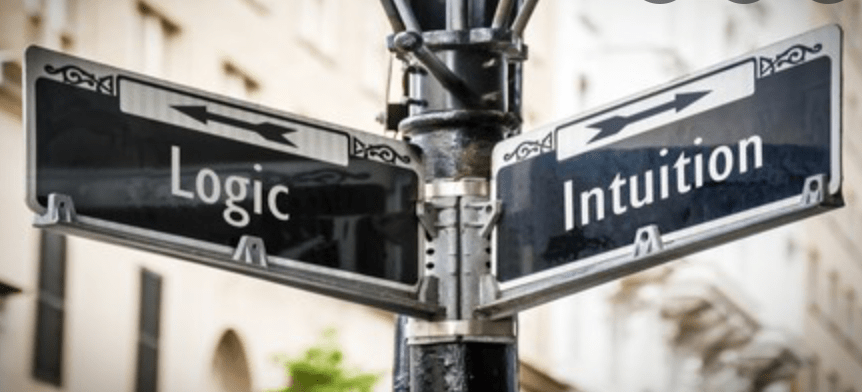
  • On Intuition

    On Intuition

    I love this by Anne Lamott:

    You get your intuition back when you make space for it, when you stop the chattering of the rational mind

    The rational mind doesn’t nourish you.

    You assume that it gives you the truth, because the rational mind is the golden calf that this culture worships , but this is not true.

    Rationality squeezes out much that is rich and juicy and fascinating.

    Sometimes intuition needs coaxing, because intuition is a little shy.

    But if you try not to crowd it, intuition often wafts up from the soul or subconscious, and then becomes a tiny fitful little flame.

    It will be blown about about by too much compulsion and manic attention, but will burn quietly when watched with gentle concentration

    Anne Lamott, Bird By Bird (1994)

    What has it meant to me, to let my soul speak?

    What does it mean to you

    That spark from the well of the soul

    Warmth, energy, power, from within

    Tentative

    What has it meant to me to hide my inner voice for so long, to have the rational mind needfully take over for my own survival. Rational mind to survive. Intuition and inner voice to nourish. Theres a big difference.

    What do you think? What do you feel? What colour is your intuition when it emerges from within?