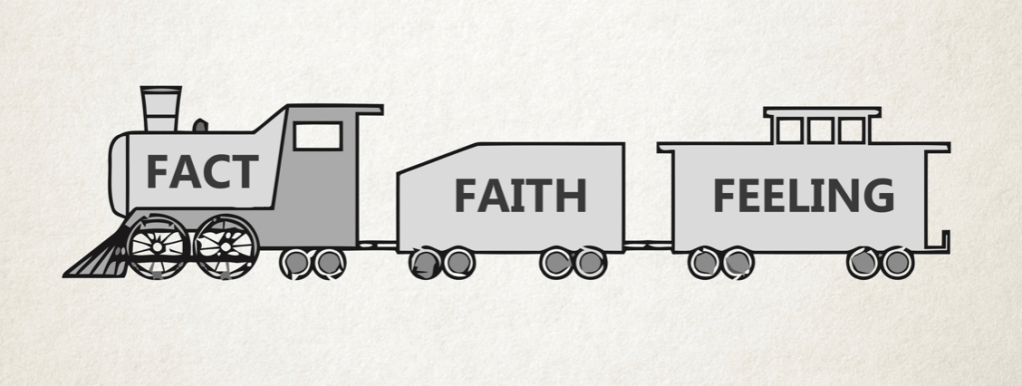
Not the ‘I should have done this’ ‘ I could have prevented something happening’ kind of guilt – when there is grief – a bit like this
But more, like , that feeling when you’re expected by other people to feel grief for the loss of something – and yet you have nothing?
Like, that feeling when you’re meant to feel loss and pain – and you’d feel like you were pretending to feel anything close like that?
Like, that feeling when you then feel guilty for ‘not’ feeling the way others might do about a situation, when actually that feeling of grief – is no where to be found?
Grief-guilt.
Guilt for not feeling grief – when somehow you’re supposed to feel grief – because the person who is talking to you would feel grief…
Guilt for not being able to muster up any sense of emotional feeling – because, there is nothing.
Grief-guilt – because Im meant to feel something?
I know what grief feels like, feelings that overcome, that aching, of missing something and someone. Just shitty tears. Shitty tears that hurt.
Love filled tears of loss, of someone I loved, and loved me back.
Grief reserved for those for whom there is love.
As I watched ‘The Boy called Christmas’, something was helpfully revealed to me
Grief is the price we pay for love. And it is worth it, a thousand times over
Matt Haig (A Boy Called Christmas, on Netflix now)
It is.
Grief is the price we pay for love.
So – what happens when there wasn’t actually love?
Grief may just be hard to find?
‘You’ll miss them when they’re gone’ Some people often say.
If you’ve not walked the path of toxic, narcissist, psychopathic parents – who ‘look’ like ‘nice’ people to everyone else – you dont really know.
And by the way – they haven’t died…
But I have taken huge steps in the last 2 years to remove them from my life.
And bring others into the collective space of seeing them for who they are, and have always been ..forever.
And they have, and do.
Which has been really hard work – and no doubt many of you have stopped reading what I write… its painful stuff, I’m sure.
So I don’t feel grief for the loss of the relationship with my parents – even though im possibly meant to, because , I think Matt Haig nailed it – Grief is the price we pay for love.
If there was a relationship in the first place – there would be something to grieve over.
But its always been the way it always has been.
There was no ‘way things were’ – so there was no ‘restoration’ or ‘reconciliation’ – fine ideals, and even manipulative standpoints – a broken relationship implies that there was actually something.
I might grieve the person of myself who had to hide for decades under the shroud of trauma – though that person is feeling safe to play again, to live and love
I might grieve the lost time
I might grieve the love I didn’t have , especially when I see it in others – and know that its ok
But it’s ok not to feel that actual tear stained, shitty, painful grief for those who have abused us, the caregivers who were meant to do more. I think we need to say this. It’s ok.
Save the grief for those we actually loved, and who loved us back in truth. Those who natured and protected us, for even glimpses in our lives.
We have enough actual feelings to feel, to notice and accept – the grief for those who we have actually lost, loved ones – that forcing feelings (to avoid shame) doesnt feel right at all.
So grief-guilt – can go its merry way and jump the hell off.
Permission to not feel grief. Permission to tell the grief guilt to be dispelled.
None of us need to force grief, or be forced to. It’ll happen if it happens.
So what do I actually feel?
I feel peace. I feel free. I feel safe. I feel big.
Vindication is a hard fought battle.
I might feel relief.
Maybe ‘Grilief’ is a more appropriate word.
The combination of grief and relief – if theres grief at all.
Spiders, Clowns, Heights, Buttons, Spaces, The dark, Nuclear war, being bullied at school….
These weren’t the things I fear in most of my life. It wasnt things.
It wasnt just ‘that parent’ that gave me considerable terrors. Have a read of my story above for more.
That was bad enough.
That voice. Those footsteps up the stairs. That coldness.
But there was something else.
Something that I think we all fear at some point in our lives.
Was something I feared from the age of about 14
Even if we have half decent respectable parents – it can be that weird thing of starting to act like them when we get to ‘that’ age, or ‘that’ moment – often when we have kids of our own.
But what if your parents have been utterly abhorrent, in one way or another? What if they have been physically, emotionally or sexually abusive? What if they have few redeeming features at all? What if they are narcissistic/psychopathic to their core?
When we see those parents for who they are – the light dawns – and for me it was a fairly early age – but could do nothing about it – the fear becomes very real.
The fear is this:
How do I stop myself becoming anything like them?
And it plagued me.
It might plague you too.
That has been one of my biggest fears all my life.
Will I end up being abusive? Will end up treating others the same? Am I psychopathic myself?
Its a question I remember asking when I was still a teenager.
Will the pattern continue? and Am I likely to turn out the same?
how can I stop this? Will I be able to prevent it?
Theres something else that caused me to worry about this. Its that the same abusive parent would often suggest that I was just like them.
“We’re just the same James‘ she would often say – we both have this kind of personality, and I remember thinking, even then queasily, no I’m not – people actually like me, and I think I know how to be kind to people.
But have you ever had that situation where your abuser wants to alleviate themselves by saying that they’re not much different to you. Its like they’re trying to convince themselves, and yet at the same time be utterly bewildering at the time.
Youre just like me, Don’t you dare think you’re better than me, we’re just the same.
Oh the horror.
How to emotionally confuse , gaslight, me as I knew then, that I was and am nothing like them and have no desire to be, at all.
Yet with that fear in mind, what happens?
It’s complicated.
On one hand to try and not be like abusive parent, I become like other parent, accommodating, boundary less, unable to stand up for myself. In other words….too nice, helpful, open, and then walked all over..and also a shell of a person….. but on the positive… at least my fears aren’t realised….
Im just then a walking punch bag ready to be pierced with defence mechanisms so high.
Its like from over compensating in one way, I end up somewhere else – instead of damaging others deliberately, im damaging myself.
But was there any real alternative anyway? Thats what I had to do to survive the childhood with the monster anyway. Stay small, stay out of the way, and fearfully accommodate with eggshells like landmines.
Yet in another way, I would ‘end up’ like them… told you it was complicated.
In desperate attempts to be seen, heard, validated and affirmed…that never arise anyway – (so quit this when you can – emotionally immature parents cant give this, however hard you try) – I sort of end up in places of work that they might acknowledge and validate. This isnt unusual either, how many kids become vets because their parents are – how many children do this out of ‘trying to please’… ? So, subconsciously, I think, I end up working in churches and ministry for 20 odd years, a default on one level, and somewhere in there is a thought about deep conformity, as the older, trophy child.
So I would end up becoming ‘a bit’ like them, in the work that I do.
Id spend most of my lifer up until the age 40 wrestling with that voice in my head, that fear of ‘don’t be anything like your mum’ thing, I wouldn’t know how to stop it, and a torment of analysing my actions to assess my motives, my behaviours.
What I know now, is that kind of emotional trauma suffered by me , that I normalised to an extent, through childhood, has needed a place of safety, the reconnection with my family to share the common stories and name the abuse, the love of friends, and my partner Christelle, two, maybe more bouts of therapy, lots of books to help me see and understand everything. To realise now, though that I am not like them, because unlike one parent I have protected myself, and others from them, I am making others aware of them, and also the wider world aware of the effect of abusive mothers, and also reconnecting deeply with myself, to not be the shell, the mask even, that was.
They do say that if you are worried about becoming like that person, your own self reflection is likely to cause you to be very different, as this is often a quality they dont have. If you think you might end up being a psychopath, you’re not one.
That mask and shell might be the subject of a future piece.
Do have a look on the resources page for books and articles on emotionally immature parents, that I found useful, and you may do too.
Thank you for reading, please do like this blog, share with others who might find it useful, and if you can make a donation to my work, you can do do in the KO-FI link below. Thank you.
I’d rather pretend the shit didn’t exist thank you very much
I’d rather add a whole layer of other stuff on top of it
I’d rather pretend that the shit was actually roses without any thorns
I’d rather do avoid the shit, and run and hide away
I’d rather distract from the shit
Id rather bypass the shit and say it was just God’s plan for me to endure
I’d rather keep busy that sit with it.
I’d rather cover it up with comforting food
Or hope that entertainment soothes it
Or scroll on Facebook to take on even more, or get annoyed at something else
Or go to a football match or do some exercise to ‘get the anger out’
I can’t allow it to settle
That would mean accepting
Feeling it, smelling it
Sensing it in its fullest sense
Realising that it exists
And it has affected me
And I feel sad, I feel angry, I feel hurt,I feel..what ever this dose of shit makes me feel
Rage, hurt, tears, coming out, from amidst the shit
And then
The voice from within that says, you are not the shit
I am not the shit, I am bigger than it
I let it, but it isn’t devouring me, I can feel it, look at it, and realise that I am me, and the shit isn’t me
Even if I am in it or have been given it
It’s not a place to want to stay and now that I’ve felt it, I can move away
And not keep it buried, hidden or avoided to come back to..and deal with, another day. Piling more and more above it
Naming it, feeling it, sensing it, letting it settle, and be
And breathe, and know, that I am more, I am bigger, I can see
That there’s a way out, that I can take, and in the quiet of nothing
That voice , that me, is waiting to speak, and heal, repair and recover, rebuild and remake
And Ill look at the shit one day from a different place, and realise how far I am from it, and I needn’t look back, because I dealt with it once, twice or many
Clean air awaits, entices and breathes, it’s fresh and it’s pure, green grass in the fields awaiting our feet
It’ll only feel good when I haven’t cheated, and try to enjoy it with a bag full of shit, I’m still carrying around, or buried deep, hoping never to be found.
Letting it settle and letting it be
Is part of the way of making me free.
(thank you to Gabriella Russo on Facebook for the image)
As a youth worker you get to hear alot of stories and moral panics about abusive or absent Dads, and the effect this has on children. It is often in regard to the behaviour of those children, especially in education or criminal contexts. Theres a cry for ‘better role models‘ – assuming that parental role models aren’t good enough. It is easy to blame the parents.
The same rhetoric was used in those ‘christian’ mid nineties evangelical circles too that I grew up in, anyone else remember the ‘Even if your Dad was ______, God is a perfect father’ type stuff. Usually the reference to a Dad being abusive or absent. Strange thing then, that during those times there was little critique on that ‘perfect’ father sending a son to die.
I digress, and the discussion on absent or abusive fathers doesn’t really need repeating here, only to note how pejorative it is, and only too often, sadly and tragically, how common this is, and with the misuse of concepts like ACES*, children and young people are predicted behaviour and outcomes based on this in state settings, and barely given a chance to be different at times.
But my experience is different. And so might yours be.
What about a boy raised by an abused Dad?
Ive just tried googling images for ‘Abused Dad’ – have a guess at what I found?
This:
Note what emerges.
Article and article about Abusive Dads and Fathers. men who abuse their wives, their children, who dominate, hit, provoke, sexually abuse, financially abuse and the list terrifyingly goes on…..
Not Dads who are abused themselves.
I watched this a few weeks ago
In the TED talk above, Justin reflects on the qualities of his Dad, and how growing up he was determined to be different – Justin didnt want to be soft, kind and gentle – only to realise later that these were good qualities to have, and were part of his core.
So I pose myself the question; What kind of a Man did I learn from my own Dad?
Let’s start with the positives – everyone, outside, and some inside the family love my Dad. He would do anything for anyone, mostly in a practical way – fixing, decorating, making, constructing, he is softly spoken and rarely impulsive. He worked hard, and didnt cause or create any stress or drama.
But the rest of the time, he was a ghost. He was belittled and devalued, and threatened, walking on eggshells all the time. He could only obey the other parent, becoming the flying monkey, the accomplice, completely untrustworthy. He tolerated being lied to, by someone who was gaslighting him all the time. I dont remember him ever expressing his needs, ideas or dreams, and was told what to do nearly all the time. His invisibility extended to offering almost no nurturing or protection at all – deferring everything to the other parent, someone so sunk that they couldn’t be a healthy father figure at all. One who conceded.
I could go on, as there is more, and none of this is to be critical of him – given the extent of the manipulation he has suffered – this is more to reflect on what its like being Male, and a Dad, and growing up with an Abused Dad.
For one, there is almost nothing to read on this – even some of the emotionally ‘immature’ parent books defer to general characteristics of dominating Dad figures – and as I said above – try doing a google search.
Boys or Girls and their Abusive Mother figure may come up, but what are the effect on a child of their abused Dad?
What kind of Man/Masculinity did I see, and experience growing up?
Someone passive to women or others needs – no regard of their own
Someone with no role with their children
Someone with no voice
Someone weak
Someone who accepted being lied and pretended to
Someone who is weaponised by the other
Just a tool for someone else to get what they want.
I reflect on these, not with anger or bitterness, not with remorse or grief, but a sense of being in the process of understanding what the effect of an abused male care-giver had on my life – and not just an abusive female role-care giver. The abused dad rarely gets talked about, hen-pecked might be a mild term for emotionally manipulated.
I think what i’m trying to come to terms with is how challenging it is to try and talk about this, ‘some dads are abused too’ ..’some men are abused in domestic abuse relationships’ ‘some boys have emotionally abused fathers too’ – and what’s likely is that these situations are so likely to go under the radar. As that boy, might be kind, sensitive and attuned to the needs of others – and not themselves, that boy might be more likely bullied than a bully, that boy might like the quiet life, that boy might have issues with women – or find themselves in relationships with dominating women, that boy might struggle in a number of ways, but those ways might not be as evident as they dont fit the stereotype, if stereotypes are there to be fitted into anyway. They’re unlikely to be loud in a crowd and make a scene – getting attention.
That boy, might also struggle to know ‘how to be a man’ ….
When the female parent once told me to ‘stand up for myself’ it was ironic in that that was something she wouldn’t allow to happen to her, by my Dad. Stand up against bullies…but not the one in the home… a man is never right, a man always gives way, a man doesn’t have an opinion… oh and I knew I would have been punished had I hit that boy back….
I heard the advice as a teenager; ‘At least you’ll know how to treat a woman, given the way your Dad is‘ or words to that effect, and from a trusted source I internalised this, probably too much – to the detriment of treating myself, and being passive, putting myself lowest emotionally on the pecking order, because as I reflect I wonder how much that person saw and knew, and with the benefit of hindsight, the behaviour that has occurred 30 odd years since.
I reflect on also on the question of how all these things, and more, might be similar to children who grow up with the experience of their mum being emotionally, physically, sexually or spiritually abused, and what that is like for them, and whilst I clock it here as being highly significant and impactful in their life. This isn’t , as I say my experience, but I want to note it – and whilst its significantly more common, it doesn’t make it any less damaging on the child – this is in no way a comparison piece, but something I wanted to recognise.
There are plenty of cold maternal figures in the world, and plenty of female narcissists/psychopaths that go under the radar, yet alot rise in politics, business and also the church, and yet their damage to the men in relationships (and other females in their friendships) as well as their children is being more and more well known. What we don’t want to talk about is that Mothers have are cold, colder than ice, with only pretence of warmth, if that. So what might that mean for the Male parent, and how being the victim of domestic abuse , has on they children they have? – especially for their boys? What about the children, the boys, who get caught up the female narcissists loyalty games against that abused Dad? What kind of male/masculinity does that boy grow up with? What kind of insecurities might they have to deal with? What did I? The list is extensive – alot of written about already in my story above.
For the Boys growing up with Abused Dads – what is that like for you? What resources have you found to be helpful in this? Have you found some good articles on this – please do share them below, it would be great to have comments and conversation on this, if you want to get in touch and share a story or piece on this, do let me know.
And, to finish with that theological premise at the beginning, I can’t help but wonder what kind of God I internalised given the association that was made between earth and heaven Father figures.
Maybe this is a conversation we need to have – whats it like growing up with an abused Dad?
*ACES – Adverse Childhood Experiences
Thank you for reading this piece, if you would like to support me financially as I share, write and develop conversations that are Healing for Men, you can do so here, all gifts and donations appreciated Healing for Men
Over the last few weeks, because of a combination of some self-realisations, and also being under the weather with ‘the worst cold in history‘ I have been watching TED talks, and you know me, ive not been attracted to the science, technology or ‘how to make it in business TED talks’ but the ones on emotional health, growth and vulnerability.
I was in a bit of despair, for at one point all I was finding was women talking about emotions and wondering ‘where are the men?’
Do men talk about this stuff – or on TED is it men who talk about ‘leadership’ and ‘creativity’ and women who talk emotions, relationships, vulnerability and sex.. almost..
Then I found the one above, with Justin Baldini…. in which he also asks the question..where are the men? as well as being self reflective about the culture of growing up male, of masculinity, and about pretending. Pretending being an actor, playing roles of men that were nothing like he was as a person.
I quite liked it. So ive posted it here, so that you might want to have a look too.
Or so that you know where it is
Do let me know what you think, what questions does this TED talk raise for you?
What did you like, what did you not?
Men, are there Men in your life you talk real to? – are there men in my life?
My Dad was, and still is, a very practical man, the shed and garage was full of saw, drills, spanners, screwdrivers, bits of wood, metal, nails, screws, pipes, plastic, levers, sawdust..loads of sawdust and grime , my Dad was a self employed Plumber and heating engineer, and basically everyones favourite repair man in the town.
We didnt even have a car, we travelled around on a bench in the back of ‘the van’ , shovelled in to a space that in the weekdays was also a home for work bags, tool boxes and the dust sheets. The same tools built and redeveloped our entire house (as well as everyone elses).
Used in the wrong way tools were harmful, some blades were sharp, some drills too heavy and powerful for even an enthusiastic 7 year old to use, some tools were the wrong ones selected for the job, some tools will make jobs easier, some harder, depending on what you wanted to do. The grass could be cut with scissors, but its not worth it, hand sawing wood at times very hard work, not worth it on some occasions.
But that kind of makes sense, doesnt it, selecting the right tool for the job, when cutting the grass, making a shelf, wood turning or refitting a gas boiler?
And the tools we select for finance work or academia or community work – are also honed, cultivated, chosen, practiced and reflected on, for the purposes of the task in hand, to be effective, meaningful, quick, cooperative or productive.
As some of you may know, and from my other blog (Learning from the Streets) , One of the books I have been reading this year is this one
The English Pastoral by James Rebanks. Its a true story about the changes in farming in the last 100 years, compared to the previous 1600 years, though there were changes in medieval farming, to rotational farming, and then with the intensity farming with the development of fertilisers, chemicals and so called efficiency. Do have a read. Its ultimately fascinating.
One of the things he says towards the end of the book, and throughout is that farming is precedented on the ongoing quality of the soil and how this affects everything, crop growth, wildlife and ecosystems, all of which are important for the present and future.
But what he concedes is that one of the principle tools that has brought the most disaster, ecologically, is the one piece of equipment that farming has relied on for centuries.
The Plough.
The plough breaks open the soil, exposes it to the harsh realities of the weather, disrupts nutrients and ecosystems. Its a staggering thing to admit for farmers (p239), it’s like saying that church buildings are harmful for Clergy or calculators for economists.
So in understanding about the need for the quality for soil to be preserved that new, or maybe older ways of farming, and a change of tools is required.
In our understanding of soil – there is a requirement, for a number of reasons to change the tools – if we want to restore, preserve and maintain the health of the soil. If farming pushes on regardless with chemicals, responding to profits and supermarket demands, the tools are items of destruction. But only if different motivations about the meaning of life, and the countryside and ecology are changed.
So, what about us? As individuals? As Men..specifically?
What about Emotional tools, rather than the physical ones?
If our life is about the ‘bottom dollar’, work and efficiency – what might be the cost? And what tools do we use in dealing with emotions, when money and profit are the main motivation.
I can say, that diverting, distraction, hiding, pretending were the tools I used for emotions, because that was the only option I had. They were the only emotional tools I had in my tool box.
What are the tools you’re using, that without realising are causing long term harm? Is putting off dealing with difficult emotions your way of coping ? is it go through the motions of work, drink, sport, sleep and back to work again without any recognition of being a person with emotions – unless its about getting drunk and being angry? In the same way you might re decorate a room – what parts of you need some attention? Whats the quality of your soil like? Full of life? or dry? barren, lifeless?
What damage was that doing to me? What damage might it be doing to you?
Did I value the very thing all life stemmed from, the soil of my heart, my soul or mind? Did I love myself? What part of me was being destroyed – for the sake of what?
Tools may have been given to us as children growing up, explicitly or implicitly about how to grow up, what was expected of us, what rules to keep, what to value, what to not – and for some of us those tools may well have been the suitable ones for life and to enjoy it, but thats not the case for everyone, when my therapist asked me what guidance I had growing up from my parents, I struggled – I knew what not to have done after the event, but tools for life? hmm not so sure
We might still reach for the wrong tool, without knowing other tools are even available – new pain experienced, old tool grabbed for. Same pain or experience, same tool, same pattern, same again…and its ok…start to see the pattern…
What tools did you receive – when dealing with emotions – that without realising are damaging you? Which are you trying to deny space to work and deal with? Are you avoiding? Are you digging a hole with the wrong tool? Or trying to cover over the cracks with a temporary grass , that looks good, but is ecologically disaster ?
Other people, even those close to us, are giving us nods and hunches all the time that we have stuff to unlearn, to see differently, to have the nudge to change – they see things we dont always. A new tool might be required for a moment, that we might default into distract or divert, deny or depress – when it might be better to accept, to feel, to open up, to listen, to respond. Fear might keep us using old tools, loving ourselves, and others might help us to pick a new tool out of the toolbox, its not a hammer with a blunt edge, but a delicate chisel, to sculpt, shape, mould, gently.
New growth in a farm without a plough takes time. Its the same as dig free allotment gardening. But, nature does recover. It just need humans to help it, not destroy it.
Maybe its time to realise the damage of our old toolkit, thank it for what it brit, made and kept safe, but a new us requires new tools. Theres pain in throwing out the old equipment that served us well, but maybe its time for something new. What of your behaviours feels like the plough? And maybe thats the one to talk about, to be vulnerable about, to seek professional help about, maybe its time to put the nutrients into the soil and grow from goodness and depth.
100th Post!
Thank you for reading and sharing and liking my written work here on Healing for Men – ive just noticed that this is my 100th piece, so, I just wanted to thank you for all your encouragement and support. If you would like to make a small gift contribution please do click the link on the right. Thank you all
Ive got to admit I didn’t really want to like Brene Brown.
Her name had been banded around for quite a few years, usually by the phenomenal women that I know…and on the ever shared many internet memes and quotes, there probably isnt a week that goes by when a Brene Brown quotation hasn’t crossed my path in the last few years.
But I didnt want to delve in to the Brene Brown popular phenomenon.
So I figured I didnt really need to read her books or listen to her stuff.
I mean, everyone is doing the self-help guru act and isnt she just like other people – an American female Matt Haig.
Im sorry to admit… I was maybe a tiny bit American self help prejudice…
So, dosed up with Lemsip, a laptop, and after a week of self reflection, I took a step of vulnerability and gave her TED talks a watch last weekend.
Opened myself up to the possibility of what she might be saying… 11 years after it was recorded… (up until last weekend my TED talk watching has included 5 in total I think – yeah I know)
I was pleasantly surprised.
Here was someone who spoke the language of academia – not mushy self help
(Then again would she be on a TED talk otherwise..?)
Here was someone who was both self effacing, witty and wrestling with herself in the process of the research
Someone who was warm.
Someone who spoke and made it possible for me to feel like she was talking to me—- oh hang on James, really?
Yes..because she was trying to hide herself behind her ego knowledge. Being known for knowing things.
And that was me.
The clever one at school – who couldn’t dance….who tried to do sports
The clever one – who found academia…
I was probably avoiding Brene Brown…because I kind of knew that I would like her, and like what she was saying, about shame, vulnerability and relationships.
She ends the second of her two TED talks with a shortened version of this quote:
What do you think of this quote?
I love and hate it at the same time. I love and hate it because it asks something
Its about showing up, with a raw vulnerable self
In my relationships with my wonderful partner, my fabulous children and also friends and my work colleagues
Not avoid the arena, to not just be the critic from the side (and isnt so much of media the critic?)
Its easy to stand from the edges and criticise – but life isnt a non participation sport – not life in its fullness
Participation in life is a messy action, where feelings are felt – not numbed…
Daring greatly
As Brene had done herself – from academic critical thinker, to therapy chair and breakdown (sorry, Spiritual Awakening)
So I was doing my best to stand on the edge of the arena when Brene Brown is on the stage, and her books are available. Rather be the critique from a distance, than entertain the possibility that id be vulnerable to admit resonating and liking what she might have to say.
Theres something else too. Its not just about showing up on the arena, in full view.
Its about showing up to ourselves.
When the only critic is ourself – often the worse critic of all
The one critic that we might need to talk to as much as the external critics too. Tell to STFU every now and then.
So, thank you Brene Brown. Thank you TED for being an incredible resource on You Tube, Thank you 5 days of cold/flu which has given me time to delve into them.
I got you wrong Brene, and I’m grateful that I found you at the very right time. Vulnerability and Shame might be what the next phases of my life are about. So, thank you.
Have a look on TED for Brene yourself…I dare you greatly…
A very long time in fact, because I had conditioned myself to numb the pain, to survive and also that I had only my own resources to get through things.
You might imagine, that in having supportive parents you might find there shame in getting to the point where your marriage had broken down – but at least you’d be possibly assured of support afterwards. Imagine having the opposite. Imagine what its like knowing that you’d have to manage their emotions when you’re going through your stuff. So you dont bother.
So I learned to pretend.
Imagine being in a faith culture- being in churches, working for churches, being a youth worker, being well known – and also having to hide, numb and pretend that the reality doesnt exist. When you think, that everyone else thinks, that you might be happy and ok – but they dont ask and I avoid being asked.
It took me a long while to know that doing this for more than 20 years. It took me the same length of time to try and bring to light childhood horrors into the open either.
Why?
Why couldn’t I do this?
Why when ‘Vulnerability’ hit me like a drug in early 2019 it was like a refreshing new thing, but was as if I couldn’t help but tell bits of my story, the real stuff.
Shame, as Brene Brown says, is the belief that we might not be accepted in loved – if our truth is revealed.
Talk to me about the things that I was good at – and good at ‘despite’ my parents, and maybe thats the thing, if Brene Brown is right – then shame is “I am Bad’ rather than ‘I do bad things’ – somehow I had been gifted the shame of being responsible for the situation I was in, because of being a child of narcissist parents, it could never be their fault or responsibility…so whose might it be..yup..mine.
In his book The Courage of Hopelessness, Slavoj Zizek writes in the first few pages about the ethical dilemma of those who smoke cigarettes but can give up, and the moral ethical dilemma of the ‘choice’ of giving up, the freedom to give up, and also the imperative to, going on to say that its only when someone is desperate, on their sick bed, and at the pit of hopelessness do they realise that they have no choice but to, for their own survival, that they do. I am yet to read more of his book, but this in the first few pages stuck. Survival Shame meant, for me, just keeping going, getting through it, same patterns, same torment, same gnawing unhappiness, same abuse, until the desperate me had to ask for help.
Richard Rohr talks about a vulnerability moment, a breakdown (Falling Upwards)
Eckhart Tolle describes his own, aged 30 (The power of Now) , as does Brene Brown herself.
It took hopelessness – to get through the layers of shame.
I couldn’t see things whilst I was hiding in and amongst it.
Though I was right about the parents, and at the time so glad I was somewhere actually emotionally safe.
Back to Brene Brown – in her TED talk I referred to in my previous blog, she talked about the 4 aspects of society that Men have to live up to ‘to be a man’,
Emotional Control,
Status,
Job
and Violence…
Well I re watched it again yesterday with Christelle, and realised Brené said something else:
For Women, Shame is
Do it all, Do it perfectly and never let them see you sweat
For Men, Shame is just one thing:
Do not be perceived as weak
Brene Brown (TED, 2012)
In the area of Emotional control, one of the fours aspects above that Men have to live up to – how does being weak in this area bring about shame?
are you any of these..I might be
I know I can be ‘open’ like this – but I know I struggle to show emotions and be emotional even with people I feel safe with
I didnt want to look weak – by going to therapy – and yet im going back for more
I would prefer to fix than ‘not know’
I would rather hide and pretend than admit I need help
Being vulnerable – genuinely vulnerable is a weakness
No one at work had better know if im struggling – I couldn’t bear it
People like me, dont talk about struggles – we’re always ‘fine’
Numb your own pain – those emotions are not as important as other peoples
In my job I look after other people – I have to stay strong…
Dont be soft, you’ll get walked over
What might you add to this list? What might you have said to yourself?
If Emotional control is one of the expectations – and fear of being weak the main shame for men – what might this look like for you.. what does it look like for me?
You might ask about whether you need to have an awareness breakdown moment before realising that there is a different way to be about shame and vulnerability – and in truth I do not know the answer, that may be down to your attachment style (healthy) and childhood and all the coping mechanisms – and whether you have places to be emotionally safe. Maybe you dont need to have a breakdown and get to being hopeless to start making the change – maybe you were brought up with good acceptance of your emotions as a boy from family and friends. Only you reading this know.
It could manifest in the fear of needing to be looked after, or the fear of having to ask for help, or not giving away our emotions, or staying in survival mode, or distract from real feelings mode, or taking medications to numb the pain…
Vulnerability isnt a weakness – it is part of our every day lives – its risky and scary – it is part of who we are- and that includes us as men too.
This is possibly part 1 in a series on vulnerability, in which Ill write on the 4 societal aspects described above and share a little about how they have affected me, and possibly other men too.
If you have a story to share about Shame, and vulnerability – and emotional control – do put it below or email me , and with your permission id love to share.
Maybe its time to name the weakness, name that it is not weak, to challenge the culture in which this manifests – I deserve better, our boys deserve better, women deserve better – Society is better for healthier men in it.