Tag: gaslighting

  • I’m Glad my Mom Died

    I’m Glad my Mom Died

    ..is a raw, heartfelt, inspiring book.

    It’s about the way in which the unconscious expectations are placed on a child, it’s the story of how a child, then teenager, Jeannette McCurdy, has to resist growing up to maintain the fantasy of her mother, whom she adored, of being an actress.

    I have read many books on parents and narcissism, but this is the first book I have read that describes the story of what the child had to do, and the effects long term.

    There’s much in the book that I can relate to, there’s much that I have seen in other situations too.

    If you want to get an idea of the damage emotional and coercive abuse, by a mother, can do and looks like, and how it sits under the radar of criminality, but is wholly self absorbed and destructive, then this is it.

    It’s telling that the behaviour in the book has generational patterns, the grandmother was a similar whining moaning complaining woman. The men got all the blame (not doing enough, not meeting their needs, aloof, blamed for affairs to disorientate as the women were actually having affairs.. I’ll not tell spoilers) , the women sat aloof , controlling them all.

    The thread of the mother’s perpetual victim story, of having and surviving cancer runs through. This story is forced down her own children’s throats on home videos, and used as a lever to get acting roles for Jeannette, ‘tell them your mum survived cancer as part of the audition’ is often directed.

    The effect on Jeanette is continual people pleasing, pretending, orientating her entire life around not upsetting her mother,(who was always liable to cry, get angry, scream ‘ungrateful’ , or be disappointed) at any or regular occasions. Jeannette is on emotional alert all the time, in a life that until near the end of the book is not hers, but her mothers.

    Jeannette takes on, since childhood, the emotional regulation of her mom, as the one who can soothe her, who can make her mum happy, yet.. to keep the relationship and Jeannette in her mothers orbit, nothing, not even a good audition or making a part is good enough. So Jeannette is perpetually emotionally exhausted, and notably is comes as a shock in her mid twenties that she can think of herself also. But by this time she is high on alcohol and the effects of 12 years of eating disorders.

    Im glad my mom died is raw, it’s funny at times, and I found myself cheering Jeannette on for every healing conversation with a therapist and every step forward she was making, yet the catalogue of abuse and those who could take advantage of her extended beyond just her mother, which isn’t surprising.

    It would be easy to dismiss this book as only being relevent in the culture created by child acting, the media and production companies, but it is easily relatable to other organizations and cultures, especially with a high performative, high expectation , moral expectation. The fact that Jeannette also experienced a high rigid culture of Mormonism and it’s expectations, and it’s associated shame, is a pointer. It’s interesting that Jeannette mothers pulled her away from church, as also projecting criticism of them to Jeannette, causing Jeannette to not continue to go, and feel the shame. Jeannette mom was just invalidating those who might be critical of her to her daughter.

    What I like too is that Jeannette doesn’t use the N word until the very end of the book. But what she describes throughout is her experiences, as they are, the treatment and behaviour she suffered, and her responses to it, so that when she uses the ‘N’ word (Narcissistic) is carries all the weight. Again, those of us who experienced then normalised, then survived in and amongst this will likely get this, how the naming of it heals, but also the categorising hides the varieties of behaviour behind it. It reminded me of when I first read the pink book – the words I discovered were ‘self absorbed’ or as in Lindsay Gibsons books, ‘Emotionally immature’ rather than the oft-banded around N word. But when we learn the terms having suffered it, we know.

    I was warned that I might be triggered by the book, and maybe that warning meant that I read the book prepared for what it may do. Yes, there are some aspects I relate to, high expectations, perpetual victim, emotional eggshells, at least, there are some differences, not every abusive mother looks or is the same.

    Some are more covert, some overt

    Some rely on victimhood, others entitlement

    All have prey and supply, all divide, all use people as extension of roles, none take any responsibility, all create drama.

    I’m Glad my Mom Died, is one such story of the effect of one type of narcissistic abusive mothers, it’s relief to those who’ve experienced something similar (to know we’re not alone) and insight to those who start to see the patterns from this example.

    Cheering you on Jeannette, keep on going putting yourself first.

    Im Glad my Mom Died is available here

    Thank you to my new Daughter in Law Meghan for recommending this book to me, much appreciated, and to my lovely Christelle for transporting it across the pond.

  • The Sound of Silencing (How to lose friends and manipulate people)

    Im giving you what I know. From what I have heard, directly.

    As I was watching in a fascinating documentary recently on the development of Art in America (‘The Art of making it’- I think) , they used the phrase ‘ the oppressed knows their abuser more than the abuser knows themselves’ . So this is what I’m sharing with you, my knowledge, so that you can build up yours, if you need to. Healing starts when you see how you have been treated.

    These are some of the tactics of the manipulator, and they are tactics, strategies so often used that protect their position or their core damaged, often rotten self.

    Written from their perspective. For extra ammunition for you, the healing one, the empathetic or someone who hadnt realised the extend of what people could do to be emotionally or verbally manipulative.

    So let’s put ourselves in the place of the manipulator, change places and imagine that we are in the shoes of someone trying to keep someone else quiet.

    You have power, and so here some phrases to use if you want to make sure that your, powerful position is maintained, and in the process you have bewildered and controlled the person who challenges it.

    It’ll keep someone quiet, especially someone who you want to keep silenced.

    So, next time you are challenged, they maybe start to ask you questions that seems to threaten your existence, just throw one of these at them and see their reaction. For a moment it’s likely to startle them, especially if you’re using it for the first time. But remember, dont use the same one often, because what you’ll end up doing is giving them something to digest, like the gristle on a bit of chicken, and they’ll start to think about it, and build up some responses to it, so its better to throw in a new one or different one every now and then.

    In no particular order….

    1. ‘I dont want to argue with you.’ This one is great, especially if they start to talk after a discussion before, it’ll completely silence them, they dont want an argument or conflict, just try it and see.
    2. ‘You’re just a dreamer.’ This has the same effect as
    3. ‘Stop being such an idealist’ .. If you suggest their argument is unreal, or ideal, it disables it, and they start to wonder if its unreasonable, making your position completely reasonable
    4. ‘Now dont get Angry with me’; Say this if their tone is just a tiny tiny bit louder than normal, or especially if they have gained a bit of confidence recently, suggesting they might be angry at something will peg them down a bit, also it really helps, in ‘church world’ that any determination of anger can help ensure that a position is invalidated. You can appear the calm one. It doesn’t matter if you have made them angry.
    5. ‘You’re too Sensitive’… an alternative is ‘You Care too Much’ – these are great to use, especially if they are starting to notice that you have limited depths of care for others, and maybe a deeper core of selfishness that you’d like to hide, so just let them know that they are too caring, and too sensitive to the needs of others. They’ll question how much to care, and maybe, if you say it right they’ll think that you haven’t had enough attention, and they’ll give you more, after all this is what you want all along.
    6. ‘You’re just gossiping’ or ‘thats just gossip’ or ‘they’re just a tell-tale’ Definitely use this one if someone starts to accuse someone that you have a close association with, especially related to safeguarding, and maybe churches and religious groups, this one is great to use, it’ll rally others around your position and sideline the critical, negative or disclosures. Its more effective if the persons making the accusation are in an already sidelined group, like young people, women, older people, someone with learning needs, someone from a poor background, anyone whose been judged harshly already by the majority, explicitly or implicitly, thats the best time to get away with the ‘gossip’ line.
    7. ‘Are you sure you dont belong to a Cult?’ If the person goes to a different religious group, one that is different to yours, and they are challenging you, then throw this line at them, do it especially if they have received guidance from their ‘pastor’ or ‘minister’ and its about how to cope with you.
    8. ‘This is just the ways its been/always been/ I can’t change/Just the way I am’ – There’s no way you are going to change, especially not for them, why do you even need to you are perfect as you are, so give a version of this one a try, gently let them know that this is how you have always been, (or how the organisation has always been) and by saying this, they will have to realise that they have to do any changing.
    9. ‘You need to think about my needs’. This one is great to use, after they have done some of 8, changing. Then because of the effort they have put into thinking about themselves for a while, this will help them reset to thinking about you again, and taking them back into the pattern that you liked them in, when they orientated their life around you, and you not changing. They love changing and being exhausted all the time.
    10. ‘Dont raise your voice you’ll upset the kids/someone’ . Say this when you want to give them the curveball of emotional sympathy, but not for you, for someone else. You dont feel, or get upset that often remember, neither does what they say or do upset you… but that doesn’t stop you from using someone else to create their emotional sympathy. Just gently let them know that their actions hurt someone that both you and they have a connection to, a family member, relative that kind of thing. It also gives them the knowledge that you have contact with that other person.
    11. ‘I think you might have mental health issues’. Get this one out there when they’ve gone a bit upset or really low, depressed ever since the last time they tried to talk with you. Maybe even do this in a kindly way, suggest that they get help, or make it look as if you care about them, just a little. But dont do any more than this, never find them a therapist, or book a GP appointment, no no no, just plant the seed. It’s unlikely that they’ll follow it up, it just combines a tiny bit of care, and causes them to be bewildered further. Just be really careful here though, especially if they start to go to therapy, or get help, you’ll have to find ways of pegging them down or devaluing what they are doing in this.
    12. ‘Dont you dare try and be the Victim’. When they start to even dare think of themselves as a victim of your behaviour towards them, just plant in them this little gem, it’ll reinforce to them that you control which role you are and the position from which you see the world, and there’s no way they are going to take this position from you.
    13. ‘I was just being sarcastic’. Did they not understand a comment you made that was intentionally harsh? Or they challenge you on it because it was unreasonable.. Say it was sarcastic. Now you know that they know that it wasn’t, but that doesn’t matter, just say it anyway.
    14. ‘You’re overthinking this, you read too much, best to keep it simple’. Your way is right, even if their thought through idea is a good one, demean the source of the idea (probably a book) and not them, and then appeal to an easy way. Easy avoids pain and pain is definitely something to avoid.
    15. ‘I think you expect perfection’ – Use this one to suggest that they are expecting too much of you, like anything at all or their basic needs to be met, which isn’t what you are going to do, so instead, give them the impression that what they require from you is some gigantuon effort, or extension of reality , like perfection, and instead they will have to re-assess what it might even be that they are asking.
    16. Speak of yourself in the third person, so ‘Your father, Your wife, Your husband’ dont say ‘I’ , because your I has to stay hidden away, and can’t speak, but you can describe yourself in the present as if it might be from you, its your idealised self, not your core self talking, like ‘you know your husband/mother loves you very much’ , its not I… This also works in emails, to disguise the tenses, persons and voices, to confuse. If you’re not sure of this, use ‘God’ instead… like ‘God wouldn’t want you to get angry’, or ‘God loves you’ (even if I dont).
    17. An extra one. Forget that you said any of these things. Every time. They didnt hear you properly when you said it, you dont remember saying it, they must have misheard you, and if you did say it how they interpreted it want what you meant. This utterly wastes their time, because theyve spent a while reacting to what you did actually say, and now you are disputing your own words, which of course you have every right to do so, and it makes them think they are crazy. You can even go further and then suggest they need their hearing tested.

    Sounds harsh? It happens… a lot.

    So, here’s how to gaslight and silence people. Here’s how to keep your abuse victim quiet, confused and bewildered, scared and questioning their reality. Here’s how to use language to create a culture of fear and manipulation, and for you to sit in a place of power.

    If you are reading this and are horrified that I am giving away tips to abusers, then wait.

    It’s very very unlikely that anyone abusive is going to read this, it is more likely that you are. You. Someone who has experienced this kind of behaviour. Because you googled the phrase ‘too sensitive’ or ‘verbal abuse’ or ‘Darvo’ or ‘Victim mentality’ or ‘self awareness’ or ‘projection’. Someone who is abusive doesn’t read a book on how to be abusive, somehow, their protectors just know, and their wounded ego can do the rest. That person isn’t going to read this list.

    But if you have heard these, you are more armed. You are using your brain, you utterly clever brave courageous soul, you are resourcing yourself with the tools of your abuser, and working out their similar strategies, because they are all the same. The words being only slightly different, I’ve seen and been told almost all of these in 40 years, some more than once, and more by women than men, though I know men say these things too. There are only so many patterns and phrases in their textbook, once you’ve seen the ones above, you’ll notice them all.

    Can we also broaden this out from individual relationships, to systems and structures too? How many churches wouldnt recognise these kinds of behaviours? how many might even see these as ‘normal’ ? What about in safeguarding situations? What happens when people try and defend their roles or positions or reputations? Lying to defend is too blatant, but 1/4 truth hidden in manipulation (and spiritual language) can go a long way.

    Im sorry that you had to read this list, but if you have said any of these, then it’s time also to stop, reflect and listen, to the damage you have done. If you have heard these, if you hear these in the present, do consider getting help, support and emotional safety, because it might well be time that you are treated better, respected, listened to and heard.

    Have you heard any more? do add them in the comments below, to share and build up a resource of them.

  • Domestic Violence Awareness Month

    Domestic Violence Awareness Month

    This Month is #domesticviolenceawarenessmonth

    More details are here: https://www.daysoftheyear.com/days/domestic-violence-awareness-month/

    Signs You Are In An Abusive Relationship

    A lot of people do not realize that they are in an abusive relationship. Here are some of the signs that you could be in an abusive relationship that you need to get out of…

    • Your partner sexually or physically abuses you. If they ever make you have sex with them when you don’t want to, hit you, shove you, or push you, this is domestic abuse. 
    • Your partner threatens you or your family.
    • Your partner puts your down. They attack your capabilities, mental health, looks, or intelligence. They blame you for their violent outbursts.
    • Your partner is jealous. They may isolate you from your family or friends or they may accuse you of not being faithful.
    • Your partner is possessive. They may check up on you all of the time and they may get angry if you hang out with certain people.
    • Your partner has strangled you, beat you, or hit you in the past.

    Emotional Abuse

    When we talk about raising awareness for Domestic Violence Awareness Month, it’s important that we acknowledge emotional abuse. This is a much bigger problem than a lot of people realize. Just because you don’t have bruises on your skin does not mean you are not being abused. A lot of women and men suffer from emotional abuse, and it is no less destructive. Unfortunately, emotional abuse is often overlooked or minimized, even by those experiencing this.

    Emotional abusers look to chip away at your feelings of independence and self-worth. You can end up feeling like you do not have anything without your abusive partner or that there is no way out of your relationship. 

    Emotional abuse includes verbal abuse. This includes controlling behavior, intimidation, isolation, shaming, blaming, name-calling, and yelling. Abusers who use psychological or emotional abuse will often throw about threats of physical violence, as well as other repercussions if you do not do what they demand. 

    Gaslighting is one form of emotional and verbal abuse

    Taken from https://www.growthcounselingservices.com/blog/2019/9/18/intimate-and-tribal-gas-lighting-how-to-keep-yourself-safe-amp-sane

    The scars of emotional abuse run deep, and they are very real! You may assume that physical abuse is a lot worse, as people can end up with physical wounds and send you to the hospital. However, emotional abuse can be just as damaging. Sometimes, it can even be worse. This is why it is important to raise awareness of all types of domestic violence and abuse.

    Financial abuse is one of the subtler forms of emotional abuse. Some examples of this include:

    • Taking your money or stealing from you
    • Sabotaging your job – calling constantly or making you miss work
    • Preventing you from choosing your own career or working
    • Restricting you to an allowance
    • Withholding basic necessities, such as shelter, medications, clothes, and food 
    • Making you account for every penny you spend
    • Withholding credit cards or money
    • Rigidly controlling your finances

    Note that Men can experience Domestic abuse too. I have experienced both abuse by a controlling dominating Mother and then having suffered emotional abuse in a previous long term relationship.

    If you would like to speak in confidence about Domestic Abuse that you are suffering as a male – then do contact this helpline – https://mensadviceline.org.uk

    Or Man kind ; Here : https://www.mankind.org.uk/help-for-victims/types-of-domestic-abuse/

    Its not just women, its not just relationships linked to poverty, its not relationships ‘out there’ it occurs in churches and so called ‘christian relationships’ no relationship is immune from it, when actions occur that stem from not taking personal responsibility, blaming, deep neediness, as well as power imbalances.

    If you have committed abuse of others – do get help – there is time, there is support to change, should you realise that there is a better way to behave.

    The world is a better place when we all are too.

    There is no shame in asking for help

    There is no shame in admitting that there is a problem in your relationship

    There is no shame in realising that you have been or are being abused.

    It isn’t your fault, their behaviour isn’t your responsibility.

    Time to make yourself safe, time to deserve better, time to feel like living and not just surviving.

    #domesticviolenceawarenessmonth

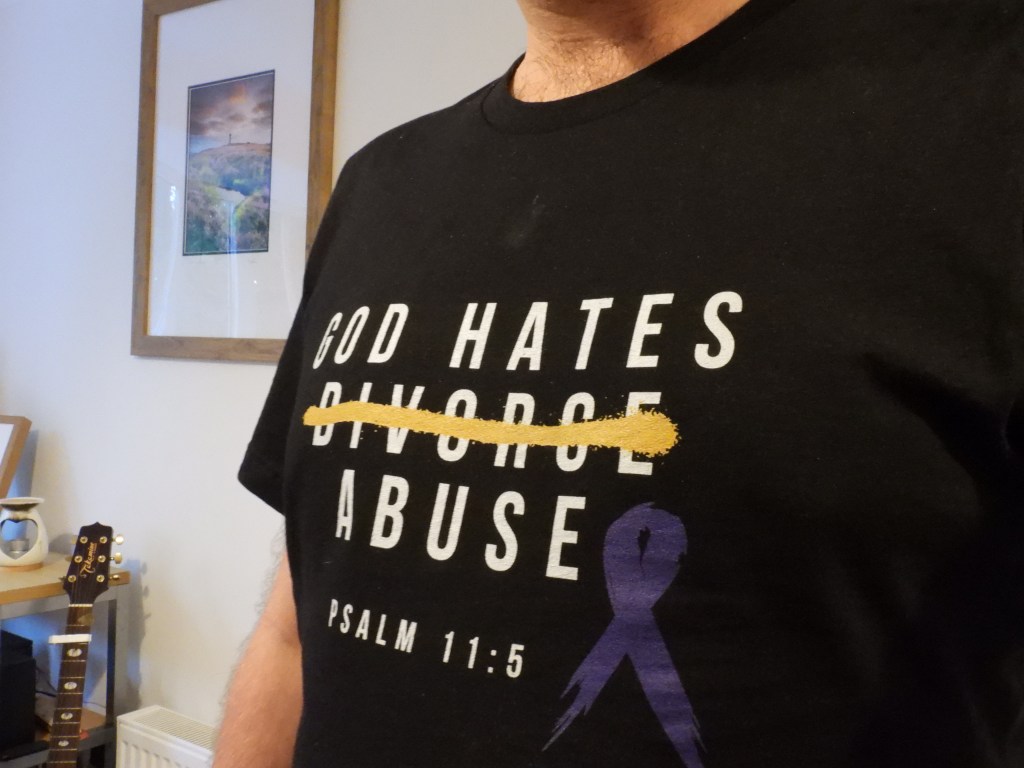
    Purple is the colour.

  • ‘How can I stop myself becoming like them?’

    ‘How can I stop myself becoming like them?’

    Spiders, Clowns, Heights, Buttons, Spaces, The dark, Nuclear war, being bullied at school….

    These weren’t the things I fear in most of my life. It wasnt things.

    It wasnt just ‘that parent’ that gave me considerable terrors. Have a read of my story above for more.

    That was bad enough.

    That voice. Those footsteps up the stairs. That coldness.

    But there was something else.

    Something that I think we all fear at some point in our lives.

    Was something I feared from the age of about 14

    Even if we have half decent respectable parents – it can be that weird thing of starting to act like them when we get to ‘that’ age, or ‘that’ moment – often when we have kids of our own.

    But what if your parents have been utterly abhorrent, in one way or another? What if they have been physically, emotionally or sexually abusive? What if they have few redeeming features at all? What if they are narcissistic/psychopathic to their core?

    When we see those parents for who they are – the light dawns – and for me it was a fairly early age – but could do nothing about it – the fear becomes very real.

    The fear is this:

    How do I stop myself becoming anything like them?

    And it plagued me.

    It might plague you too.

    That has been one of my biggest fears all my life.

    Will I end up being abusive? Will end up treating others the same? Am I psychopathic myself?

    Its a question I remember asking when I was still a teenager.

    Will the pattern continue? and Am I likely to turn out the same?

    how can I stop this? Will I be able to prevent it?

    Theres something else that caused me to worry about this. Its that the same abusive parent would often suggest that I was just like them.

    We’re just the same James‘ she would often say – we both have this kind of personality, and I remember thinking, even then queasily, no I’m not – people actually like me, and I think I know how to be kind to people.

    But have you ever had that situation where your abuser wants to alleviate themselves by saying that they’re not much different to you. Its like they’re trying to convince themselves, and yet at the same time be utterly bewildering at the time.

    Youre just like me, Don’t you dare think you’re better than me, we’re just the same.

    Oh the horror.

    How to emotionally confuse , gaslight, me as I knew then, that I was and am nothing like them and have no desire to be, at all.

    Yet with that fear in mind, what happens?

    It’s complicated.

    On one hand to try and not be like abusive parent, I become like other parent, accommodating, boundary less, unable to stand up for myself. In other words….too nice, helpful, open, and then walked all over..and also a shell of a person….. but on the positive… at least my fears aren’t realised….

    Im just then a walking punch bag ready to be pierced with defence mechanisms so high.

    Its like from over compensating in one way, I end up somewhere else – instead of damaging others deliberately, im damaging myself.

    But was there any real alternative anyway? Thats what I had to do to survive the childhood with the monster anyway. Stay small, stay out of the way, and fearfully accommodate with eggshells like landmines.

    Yet in another way, I would ‘end up’ like them… told you it was complicated.

    In desperate attempts to be seen, heard, validated and affirmed…that never arise anyway – (so quit this when you can – emotionally immature parents cant give this, however hard you try) – I sort of end up in places of work that they might acknowledge and validate. This isnt unusual either, how many kids become vets because their parents are – how many children do this out of ‘trying to please’… ? So, subconsciously, I think, I end up working in churches and ministry for 20 odd years, a default on one level, and somewhere in there is a thought about deep conformity, as the older, trophy child.

    So I would end up becoming ‘a bit’ like them, in the work that I do.

    Id spend most of my lifer up until the age 40 wrestling with that voice in my head, that fear of ‘don’t be anything like your mum’ thing, I wouldn’t know how to stop it, and a torment of analysing my actions to assess my motives, my behaviours.

    What I know now, is that kind of emotional trauma suffered by me , that I normalised to an extent, through childhood, has needed a place of safety, the reconnection with my family to share the common stories and name the abuse, the love of friends, and my partner Christelle, two, maybe more bouts of therapy, lots of books to help me see and understand everything. To realise now, though that I am not like them, because unlike one parent I have protected myself, and others from them, I am making others aware of them, and also the wider world aware of the effect of abusive mothers, and also reconnecting deeply with myself, to not be the shell, the mask even, that was.

    They do say that if you are worried about becoming like that person, your own self reflection is likely to cause you to be very different, as this is often a quality they dont have. If you think you might end up being a psychopath, you’re not one.

    That mask and shell might be the subject of a future piece.

    Do have a look on the resources page for books and articles on emotionally immature parents, that I found useful, and you may do too.

    Thank you for reading, please do like this blog, share with others who might find it useful, and if you can make a donation to my work, you can do do in the KO-FI link below. Thank you.

  • 2 years of being able to breathe

    I realised this week that I’ve been able to breathe for 2 years now, these were the first two years I’d been able to breathe in my whole life

    I remember when I walked into the flat 25 months ago and being emotional in front of the estate agent. Realising that this was going to be my space, my space to look after, my space to look after myself in, my space , haven, calm

    My space, to make home. To light candles, listen to music, read, and enjoy life in my own pace.

    My space to determine boundaries of what I listen to, read or who I allow in

    My space to look forward to coming home to after leaving it

    My safe space

    I can breathe

    Stop and slow down

    41 years of emotionally abusive home space, with 2 in-between of working/living in houses with gap year teams, with me being the ‘responsible’ one

    2 years of being able to breathe

    2 years of being enough, 2 years of listening to my heart, 2 years of not having to revolve around the often crazy unpredictable needs of others, 2 years of being just me.

    2 years of healing from the 41 years previously

    2 years of starting to see

    Healing requires time, safety and connection, and in the process, self determination to make decisions, take control, for me about putting myself first, making decisions for my own good.

    It makes me stop and realise quite how unhealthy places are when breathing isn’t possible. When eggshells are the only floor covering and avoiding fighting or fawning conflict is the only reality. That’s not to mention lies and gaslighting, and trying to constantly work out who the crazy one is.

    It’s worth saying here, if you’re the one creating eggshells for others in your relationships, or family, through manipulation, control, bullying and neediness then maybe decide to give it up. You can change. Problem is, that you’re unlikely to read this. But…

    If you’re not breathing you’re not living, you’re just surviving. I was just surviving all my life. Ignoring every attempt of my heart to make itself known. Just surviving. Bouncing from one crisis to another. Fawning over the needy anger of toxicity.

    Breathing for 2 years, learning to be me. Realising who ‘me’ is.

    As I write I’m on holiday, camping in the rain, and up to now, my few holidays have been busy ones, climbing, walking, city breaks, and I’ve filled my days. Today I’ve tried to do what I am learning to do in my home. To stop and enjoy a ‘doing nothing’ day.

    Yes I’ve walked a short distance,but no rushing for trains , or climbing hills, just a short meander to the village a walk by the river and now just time reflecting on it as I write this, in a tent in the rain.

    In the past I realised that I struggle to slow down, in the last two years I’ve realised quite how much I’m able to slow down.

    Business was my ongoing distraction. Busy work, busy hobbies, busy. It’s no wonder that I’d wait to get ill during Christmas holidays only, when I had the time and my body relaxed. This was the pattern since childhood.

    Learning to slow down

    2 years of being in and feeling like being home.

    Safe

    Rest

    Breathe

    I’m sure I have more healing to do, as more layers are uncovered, as I listen more to my inner child, as I draw, write and play. But for now, a mark to note two years of being able to breathe, and feel new life, growth and change.

    Thank you to all friends and family alike in their support and encouragement to me in these last 2-3 years, and to Christelle whose healing, loving kindness is a joy

  • 10 Red Flags to Identify Emotionally Unhealthy Christians

    Trigger Warning: Emotional Abuse, Spiritual Abuse, CPTSD, Narcissm, Child abuse. This piece contains material that may cause a reaction. 

    Following Tanya Marlows quite brilliant piece on the statements that Christians have used in the wake of the RZMI revelations, in it she identifies a number of phrases that then get banded around, often excusing, minimising or disconnecting a persons character from their ministry, mostly after the revelations have been made public. That piece is here 

    But his books are still good, right? – 5 things Christians must stop saying about sexual abusers

    I want to add a few more, to that list

    Though, her list includes: 

    1. His books are still good
    2. ‘we are all human’ everyone makes mistakes
    3. Blaming pedestals. 
    4. God can use anyone – this is a great example..
    5. The Biblical excuse – equating Kind David as a mirroring example.   (Tanya Marlow)

    Do read in full. 

    I want to build on this, by suggesting that there will have been a few things said BEFORE the case was made public, that signify that there were signs that there was emotionally immature practices from along time ago.

    Before you think that these do not happen in the UK (and RZMI has been in the UK) , and RZMI is a one-off, then I’m afraid you are mistaken. Emotional immaturity covers a range of personality issues, such as narcissism, sociopathy and psychopathy

    1. The Loyalty Card. 

    This gets played when someone disagrees with them. Rather than converse or dialogue with the person in a healthy conversation, they often dismiss this, using phrases like “I dont agree with them, and we as an organisation shouldn’t entertain it’ or ‘ You’ll bring shame to the family if you carry on saying things like that’ or ‘we cant have those kind of opinions in our church’  – loyalty is the card, played because they dont want to argue, but more that they seek adherence and conformity. Emotionally immature people throw this. They are often only interested in their opinion, not listening to someone elses.  This one is very very common.  Loyalty is regarded very very high in emotionally immature people. Closely linked to this is the shame that they throw towards you, and you then get to feel guilt for saying such a thing. Loyalty is often accused by those who actually show no evidence of being it themselves. It’s projecting, or gaslighting too. 

    2. Invalidate Feelings.  

    ‘They’re just emotional, They’re just sensitive’ This gets played to dismiss that someone might even have emotions when they have been wronged, and make a complaint. Somehow its as if emotionless responses are the higher ideal. Maybe, its that culturally in churches we place a very low regard for any emotions. So, when people display them, they are often dismissed, devalued and ignored. Can also include ‘ they’re always angry’. The emotionally unhealthy can look people in the eye and still lie. Emotionless is somehow then believed and that culture then created by them. 

    3. The Jezebel.

    You know its about to happen. The attack. The use of the J word. Its on its way. ‘They’re just a Jezebel’  Once the emotions have been highlighted, now the complainant is given the highest calling of all, the name above all, the most magnificent insult known to nearly all women who dare to a)disobey, b)show disloyalty, or c) expose an abuser and the ministry they hold. 

    They are the Jezebel.

    The sounding attack of the emotionally immature christian leader. (or twitter troll- same thing)  

    Notice that men dont get the insults as easy. But Women await the Jezebel insult. Wear it with pride. It’s coming. ‘Jezebel’ is on its way. 

    4. The forgiveness card 

    Following a concerted, even pastoral attempt to soothe the situation, often by saying things like ‘ you’re just bitter, angry’ then forgiveness is requested by representatives of the abuser, said like ‘you just need to forgive them, dont hold it in your heart’ ‘God wouldn’t want you to see them in that way’  ‘let go and let God’ 

    Forgiveness, as I have learned, is not something the abuser has the right to suggest, neither is it for the institution who houses them to offer it. Especially when those whose voices have expressed concern have not been taken seriously. 

    5.  The ‘Giving away the bare minimum’ card. 

    That wasn’t a big deal, everyone does that. I didnt do anything. I didnt do that. 

    But they did do this. 

    One thing that you can be certain of is that an emotionally immature person admits to merely the tip of the iceberg.

    So, they belittle the one thing, giving it away – oh I did just do that, but it was nothing 

    like ‘I dont abuse people, but I maybe have said the odd thing’ – its as if they are happy to give away something and admit one thing, the tip of the iceberg. 

    It is often just that. The tip of an iceberg they hope you never see. 

    What ever they admit to, what they actually did do was 5000 times worse. 

    6. Spiritual Bypassing or weaponising. 

    This could be similar to the forgiveness card ‘ everyone else needs to…’ – But its when they say things like ‘lets just pray about this’ or ‘Im sure God will help us at this time’ or ‘we just need to pray more’  or ‘We just need to make Jesus central to this’ – Especially in cases of emotional abuse, this is said when the person wants to avoid actually dealing with something to do with themselves, and holding up a spiritual bypass card to avoid wrestling with or having their real emotional trauma or state revealed. 

    And weaponising scripture. Ill not add it here. But throw a few bible verses out context to make people doubt their opinions and feelings, and you’re there.  

    7. The Role card 

    Usually in the form of ‘As a christian ‘I cant do that ‘thing’  or ‘Im a minister, theres no way I would do that’ or ‘Ive been doing this ministry for 20 years I wouldn’t do that’ or ‘As the child of a ________, that really isn’t me’ 

    Often they’ll play on an identity or role to make it look as they couldn’t do something. In a way what this does is separate them into roles and identities. When accused, or when challenged, they slip into an identity within which they cannot see themselves as anything other than a Godly, Holy person. However, what they disassociate from is the behaviour and their own personhood that has committed it. 

    They also see you in a role. Often one of the 3 in the Drama triangle.Image result for the drama triangle

    8. The ‘self loathing and victim mindset’ card.  

    No one else truly understands me, im just a worthless worm, im like Elijah under the tree, Im just one of those people Satan attacks, im tormented, theres days when I wish the whale would swallow me. 

    This is closely followed by using these examples to exegete that their life has been one long drama, and that everyone needs to feel sorry for them.  Its a rubber guts humility. (They play victim in the triangle, using Biblical references as a guide) 

    They are actually bragging about the things that they are asking you to feel sorry for them. They brag about they are repenting for and proud of it. 

    9. The ‘just trying my best’ card

    Im just trying. Everything I do seems to fail. Im just trying to be a good vicar/person/husband/leader/pastor. Again said to request that someone else needs to see them as the helpless trier who keeps trying, and wants a second chance. 

    also seen as ‘I have a good heart…ive just made a lot of mistakes in my past’ 

    or can look like. 

    ‘Im a good guy, trying my best, why are you the only person I cant get along with’

    Problem is that they have had millions of second chances, and if you have offered second chances, chances are others have too. Chances are, they are unlikely to be good, honest, decent – though they keep saying they are trying to be.  ‘You’ll just have to trust me, ive changed, this time its different’  – do question how this is the case, and them reading the bible or praying more, doesn’t count. Therapy, though, might. 

    I wish it wasn’t the case, but, unless the emotionally immature see themselves and do something about it, they will nearly always be unable to do the good they see others do. At times their only reaction is to be jealous of it.  Until that point, they are only saying they are trying their best, and its just words.  

    10. Not taking any responsibility.  

    Never, not once. Its everyone else fault. Satans. Gods. The congregation. The previous church,  ‘Its the world is full of darkness’ …The previous partner, and add more… 

    They use your compassion on them, to give them a second chance, it’s how they can hide. 

    If you start to hear any of these, the red flags need to be raised.  Get vigilant, aware and begin talking to each other, They will play you all off. Their only hope to survive is to divide and rule. 

     Darvo is one of the key patterns to look out for, because the emotionally immature will seek to confuse their victims, complainants and the system itself by switching roles.  The victim triangle is one to look out for too, as the emotionally immature will nearly always only operate in one of these three roles, Victim, Rescuer (often Codependant) or Perpetrator. 

    Thank you Tanya, for your piece yesterday, Thank you to all the women and men who have had to raise their voices and concerns in cases and not been believed. Emotionally immature, unhealthy churches and organisations are all around, they are full of emotionally unhealthy people. Often the emotionally healthy are the ones whose voices get belittled or sidelined. Strange that, when they often know what’s going on. 

    Please do leave a comment, like this piece and also if you have other examples to add, please share. Thank you 

    Many of the resources from which I gathered these from are in the menu link above.