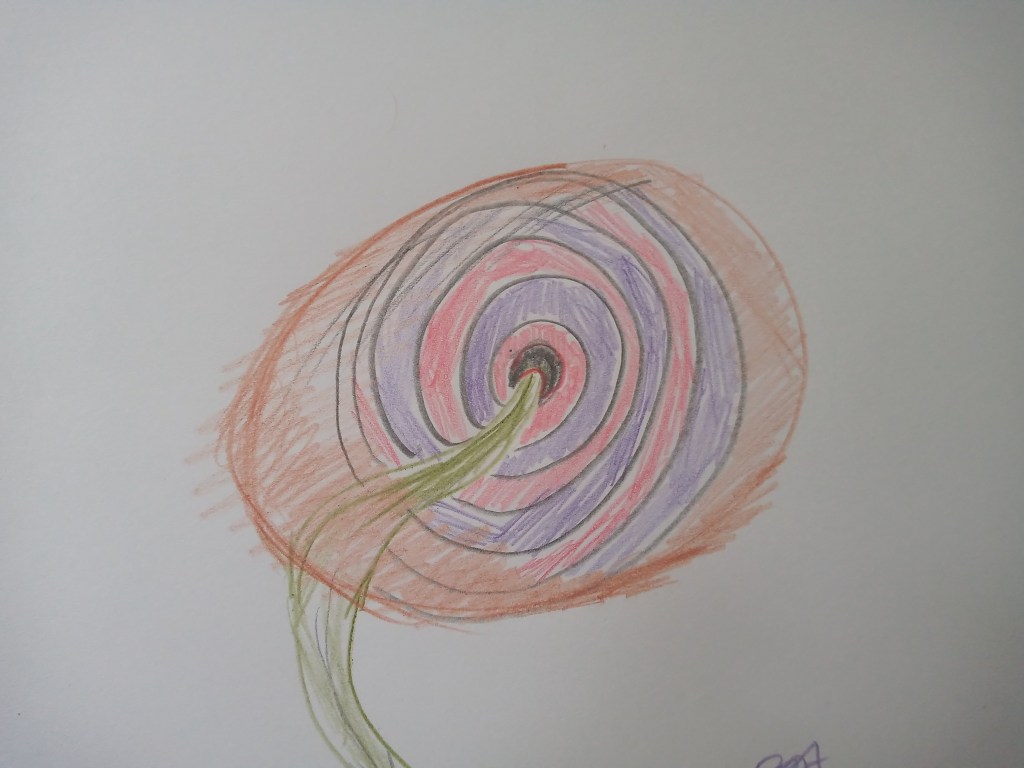
The first time I saw the dementors in JK Rowlings Harry Potter, I knew what that feeling was like. The moment when I’m in a room and the life and energy has been sucked out of it. It often only takes one person to do it. They might be outwardly charismatic – but the attention becomes all on them. They might be outwardly carrying the grey cloud of personal victim hood – and want the room to be on their level. Sometimes that person is both. The man or woman child that wants attention.
They suck the life out of the room. The collective energy.
There is a longer historical mythology around Vampires. Some perpetuated by the stories, of Transylvania and Whitby in the north east of England.
Maybe the mythological Vampire and fabled Dementor are attempts to give a fictional embodiment to the very real that exists in human society. For the many who give and contribute, for the many who love, care and are genuine. There are those exists just to take, to win, to consume, to prey.
I didnt like watching Vampire movies. They were far too terrorising. The only one I could cope with watching was the Polymorph in Red Dwarf, because it was funny. But its the same thing.
They were far to real to life. A vampire wasn’t fictional in my childhood.
What does a real life emotional vampire want?
Not your blood, but your emotions.
Why?
Because their tank is completely empty. Because they’re jealous. Because they are needy. Because you are not allowed to have what they cant feel. Because they just want, and just want to take. Because they cannot help themselves..and more besides…
Emotional abuse and neglect takes a number of forms, though I am not sure there is quite the language except that from mythology to describe how those who neglect and abuse people emotionally also take from them.
I have written before about pretending and hiding – and this is the only way I could survive growing up with an emotional vampire as a mother. In that post which is linked here – what I described was how I had to pretend to be someone else to fit in with a role that was expected of me. Also how I would have to give pretend smiles to the camera, whilst dying inside.
Pretending and hiding wasnt just about the role – or about fake emotions. Well, actually it was a lot more that that.
The reality was that the emotional neglect I (and my sister) experienced wasnt just the complete lack of nature and protection emotionally – but it was also that there was an emotional vampire taking from us any positive emotions or situations for themselves.
Sometimes it was ‘Killjoy’ words and actions ; ‘ Its my job to bring you down to earth’ – after having a good experience – notably away from them. (Jealousy)
or ‘ I don’t know why you’re so happy’ – whilst im stuck here… (Victim playing)
But my role growing up was that I was the one who had to soothe my abuser. There was no give, but take. At the time, aged 5 or above I thought this was a special place, a special role – to be the one who could soothe my ‘grown up’ parent. In reality I was being used and taken from. No 5 year old should be cast in the role of comforting their parent (from things the parent had done and not taken responsibility for) – ‘They are being awful to me James, I need you to hug me’ There was no give, only take.
The vampire at work.
Giving me the responsibility, also casting me in a favoured role. To nature and protect her. I would be in trouble if I didnt. Remember the eggshells? Yeah those.
There was a moment when I was about 9 or 10 that I look back on and realise what that had done to me. Aside from being completely soft, and unable to stand up for myself.
The all watching Vampire patrolled my primary school at lunchtime. I mean, there was no freedom. An incident occurred one lunchtime when she either fell, or a football hit her or some kind of accident happened when she was on patrol. Strengely I always avoided any playground she was in, most kids did tbh. Anyway, this one occasion something happened, I know not what and she got hurt, fell and damaged her arm. Though I dont remember all the exact events of the fall, or the immediate reactions of mine. I do remember being upset all afternoon. My teachers were kind, and lovely, but my emotional response really did not match the event. They thought I was crying because my mum was hurt ‘ Its ok James, she’ll be fine’ – which is perfectly understandable.
No I was crying that afternoon in 1988 because I hadn’t fulfilled my role. To protect her, I was crying because I was expecting to be in trouble. But there was no way I could communicate that.
Thats what happens when they take. When she gave me responsibility for her emotions, by taking mine.
Looking back this event was a key moment for me. Alot changed after then.
I must have known more at the time than I remember. I must have felt more.
Can you see how my inner child had no where to go? Apart from hide?
I worked out, from then, a number of strategies to cope, including the pretending and hiding.
On any day of success, such as passing driving tests, GCSE’s or A levels when I was existing in my childhood home, she wasnt the first person I would tell. I found people in my life who I could tell who would say
‘Well done James’ – instead of the vampire reaction I was used to which was
‘I needed to hear this, give me some of your joy’ or
‘All that stress you gave me, I can relax now‘ (its all about them remember)
Another strategy was that my body froze. Any hug, even hello or goodbye in any family gathering I would be as rigid as a board – she did not get anything. It was how I coped and survived. I shut down so she didn’t get emotions. She may have had some of my time, or even nicely cooked food, or even my intellectual capacity in listening to her life drama and personal victimhood, but she wasnt getting emotions. Thats what I naturally did. Shut down.
This was my norm.
Its only when I write this, when I realise that you think all sounds awful. But it was my norm.
I was the child-adult, the emotional rescuer.
Vampires do exist. So do Dementors and Polymorphs. They are parts of the preying psychopath.
So, not only was nature and protection, love and genuine support completely lacking – but anything i achieved or did, or was – was also taken – or I was expected to give it to them, for their consumption.
The thief comes to steal and destroy. The Wolf in Lambs clothing. I heard it all growing up. Vampires who take, who steal and destroy are real.
Emotional neglect is in many forms.
What they don’t give – they also take.
And they still exist.
Only some people are affected by them though, only some people can see them.
Usually those who have known them from childhood. Usually those who feel it in the pit of their soul.
For all that I have described the details of the abuse I suffered.
What if it was just me.
What if it was just me, and my family who suffered and experienced the monster. Our Monster.
Because, its very likely isnt it?
Thats the game they play – jackal in public – hyde away in private.
Public persona – just about gets through – unless challenged, unhinged or worked out
Ensuring that the suffering goes on alone.
Ensuring that the suffering isn’t believed
What if it was just me – because thats more than likely – isnt it?
The Family.
They can put on ‘literal’ Sunday best behaviour out there – for an hour a Sunday, or 9-5 Monday to Friday.
Have friends or allies.
Meanwhile – was I the only one?
Was is just my family whose lives were wrecked by her?
I mean – would anyone in their jobs ever see it?
Would they ever make a complaint?
Would they diminish it, or be scared of it?
Would they ever see it – and choose to ignore it?
Triangulated?
Whilst the family suffered?
But thats the thing isnt it
Men who abuse their wives – play a great round of golf, talk the talk,
Women who abuse their husbands – playing the kindly one as teacher, vicar or nurse…or a dominant sales person ready to lie for money
Hiding behind the social norm, that it’s only men who are abusive
Could be the person in your workplace, and you wouldn’t know it
Part of their game, hiding parts of their life away
So, the family know, they’ve felt the scars
We’ve then done the lifelong work, amateur psychologists trying work the monster out, professional therapy patients in recovery, healing with survivors gift
Took us, took me, a long time to realise what it was.
But can they act out a normal living whilst they’ve abused so appallingly? How is that even possible?
The psychopath at large, choosing victims appropriately. Playing the victim appropriately.
Darvo games
Only leaving the obvious trail amongst the unheard, silenced, victims
But leaving a trail elsewhere, that only the aware can spot.
So maybe only the family got abused.
Only the family saw their splintered personality at large
Only the family felt the cold
Only the family were stolen from, emotionally, physically and financially
Maybe it was only just the abused who know the abuser.
The truth has set us free – whilst they lie to everyone else.
So maybe it was just me, just us.
The victims who know and see – who saw and felt
It really cant just have been me?
But what if it was – what if its ‘just’ family.
They couldn’t do that – could they – be so good to get away with it elsewhere?
Or has that trail waiting to be discovered? Has no one come forward? Too scared or terrified?
The shame of being a victim, shame of exposing them, silenced into silence.
What if there are other stories waiting to be told? What if it wasn’t just me?
I wouldn’t know – until one of them was brave. Until one of them got angry, until one of them took a stand, but what if that story is dead? – unable to speak?
Its not possible to be just me – it cant be- can it?
Whats hidden in places, what trail was left behind, what tales behind closed doors never come to the open?
Theres no shame in being a victim of my monster, in speaking out – talk to us, talk to me – I already know. You are not to blame.
It cant just have been me – cant just have been family, can it?
Surely others can see?
Thank you for reading this piece, if you would like to respond to me, do so via my contact details, if you have stories of your own regarding my monster, then I would love to hear from you. Know that I will listen and it was not your fault.
We all do this, in whatever we do and however we are. As I am writing job application forms at the moment, I realise that I have an employment trail, and also a trail of where I have interacted with people, young people, my employers, stakeholders, churches, organisations and communities, as well as in personal friendships and relationships. We all leave a trail, sometimes its in places and in ways we can be proud of, sometimes in ways where we might wish it could have been better – but we all leave a trail, and, in the most part much of that trail we can look at, and leave in the past, yes there might be the one job or relationship that didnt go well, but if it was something we learned from and responded to….
Abusers leave trails too.
Trails of destruction all over the place- for most, if not all of their lives
Trails of terror and damage – to most – but not all people
But surely, someone would find out eventually? Surely they might get caught?
You say that, but then again:
And, for legal reasons Im not indicating that Johnson is abusive, but what I am saying is that his trail of behaviour has been well known – ie since school times. This image has done the rounds this week, but it could easily have done the rounds at any time in the last 10 years.
Analysing the behaviour of a Public figure from distance is one thing, but what about the abusers in our more immediate circumstances, in families, communities and organisations?
Trails are still there.
Imagine the person you just started a relationship with – and their ex is on the phone telling you about what that person did before – do you believe them, or think that they are the hysterical one – what would the person you are in a relationship with want you to believe? What red flags do you miss? or ignore – and why do you ignore them?
What about the person in the workplace who somehow manages to create division in settled teams and then manages to get promotions each time?
What about the trails an abusive person in a family might leave as residues of toxicity and festering stink all around?
They leave a trail. They always leave a trail.
And what do they rely on – to maintain that trail?
A few things.
Dividing up people. This they do in a number of ways. Often they ensure that the people who have authority in situations only see their good side – and then those they abuse who are vulnerable and not believed. Another way is to keep people apart. It took a number of years for me to engage in conversations with my family about the parents – conversations that I was joining in on that others had already started. The Stories were all the same – everyone had been shamed, abused, belittled – and everyone had been divided.
They can abuse everyone they meet, though they leave a trail with everyone. Usually its the cold, numb feeling, or its emails that dont make sense. Often charismatic but empty.
Because of 1. They rely on moving around a lot. Keep the residue far far away.
Another way of dividing people is the scapegoating and triangulation. Playing people off each other.
Sympathy and Gossip. This works especially well in communities of faith, where sympathy and gossip sadly go hand in hand – but families too. If the abuser can generate enough sympathy from people and create a narrative where everyone else is the problem – and not be kept accountable for – then this divides. Whilst everyone else is the problem – then the trail isnt being looked out for.
They rely on people being too scared to come forward. Too scared because they have been abused, too scared because they dont think they’ll be believed, too scared because of the damage that ‘it might cause’ – too scared because they have been made to think that they are alone – too scared also, because there abuser is now getting profile, is in a public position, is gaining power, in whatever way – whether its twitter followers, platform, role or status. Too scared also, because they know that their abuser will have a created fan club – who ride on their sympathy for them. So – the places where the trail has been left – stay silent. For the moment. But- there is a trail. (and theres a legal system thats expensive too)
And others dont come forward…because they say they dont want to be part of the drama – their silence benefits the abuser.
The trail can be so shocking – that silence is kept – because no one thinks you’re going to be believed. Stories that movies are made of in the years after. If it takes a year to get evidence from a high profile garden party, even in a mass communication age, no wonder other cases have taken years to get to court. But because no one suspected anything at the time – no one was looking…
“they couldn’t do that – they’re a (insert respected profession) ‘
‘I cant believe a ‘Mother’ would do such a thing’….
‘Thats just _____ being ____ – you cant change them
‘Aren’t you just being paranoid – say one of your ‘friends’ to you…
See how the trail is kept hidden away? See how those who have had experience of the trail are kept silent?
Since many psychopaths deceive close family and friends – the victims who are there easiest to target and pose the least risk for psychopaths – they remain undetected and can continue
The pattern is very common – Psychopaths have a parasitic lifestyle. They enjoy eating at nice restaurants but it is you that foots the bill. (a literal example in many cases)
The psychopath thinks they have a right to commit these transgressions since they stand above all the rest of us
Thomas Erikson Surrounded by Psychopaths (2019)
Hidden away, there are trails of communications, emails, facebook messages, conversations – where so many tiny or maybe large sprinkles of lead are left, grey and smouldering from them. That rely on someone putting it all together. Jimmy Saville relied on none of the institutions talking to each other – and the BBC fame – so he felt untouchable – but he left a trail both of victims and also in every interview.
They leave a trail.
A trail that relies on many people piecing it together.
But theres something else.
Because control, power and winning are usually the modus operandi of abusers – as their trail gets bigger and effectively they get away with it from an early age – what they then do is boast about their trail. In the moment of questioning – they reveal how many companies they closed, how many partners they slept with, how many people ‘love them’. That boasting of their trail, of the damage they have done, forms part of a new trail – and is evidence of how confident they are that their trail is being maintained, hidden and kept quiet.
And more especially – its winning, power and control in the moment – every conversation and interaction is about these things. The trail doesn’t matter to them. They dont care anyone is hurting because of them, they just care about the moment – and winning in that moment. It seems odd to the rest of us who can see journeys and connections in our lives, and reflect and learn from the choices we made… We see this in the press all the time, the inconsistencies of stories about refugee and asylum seekers vs lack of people to pick fruit and Brexit. Its the story in the immediate vs the narrative over time. Abusive people rely on the moment – and no-one coming forward to piece together the pieces of a toxic jigsaw.
Apologies are what you say when you can see that what you did in the past was wrong. It relies on memory and awareness of consequence. Even when a trail is brought to the attention of authorities- when people have come forward – when evidence is shown – denials, mistruths, and still blaming others might still be the response. ‘Why did they come forward now’? ‘they’re just after my money?’ ‘they’ll ruin my ministry?’ ‘I dont remember doing that!’ .
They leave a trail. They always leave a trail. Often they are proud of their trail.
How do you deal with it?
Personally self awareness. Organisationally – education on emotional abuse and collective self awareness, and a load more besides. Its harder to see there trail when we’re in a rush. Its harder to see the trail when we’re not looking for it. Its harder to see the trail when we dont want to believe it exists.
The reality is that the trail is only what is able to be evidenced. Research has shown that survivors are usually factual, and that the truth – as high profile lawsuits are revealing – is that the extend of the trails is far far greater than what is known.
There is more to write on this I’m sure. But thats all for this piece.
Thank you for reading, this grim piece about the trails left by abusers in their wake, and how they deal with them, with the same patterns. I hope that this, and other articles and links on this website are helpful. If you can support me in this writing please do click the link, and do share with others links to the website and new facebook page.
If you can financially support my work, please do so here: thank you
I will write other pieces on lighter subjects again, as this one took a while to write, bringing in examples from different examples of abusive situations.
There are resources in the menu above too, do take a look.
If you’re like me and have spent a lot of your life reading or watching politics, you may know about the phrase ‘hyper-normalisation’ . I dont know who coined it, but its spoken of in depth in Adam Curtis’ brilliant documentary here. The key part in which he speaks of it, is when the people of Russia dying of poverty are living a very different life to that of which is portrayed on their TV screens, and they accept it as ‘normal’. Imagine A Boris Christmas party being live broadcasted last year. Curtis’ documentary is long, but worth it.
Anyway, this blog isn’t about politics. Its about Normality.
I have found it fascinating, that over the course of the last few years, especially, as I have shared my story, incidents, events and situations of my childhood and then more recent times involving my parents, I sometimes get the reaction ; ‘That isn’t normal behaviour’ , then followed with… ‘ its shocking/abusive/disturbing/manipulative’
It isnt normal behaviour.
But then, like Boris world, and his accompanying anger – growing up in ‘non normal’ world, is about navigating it for safety reasons – showing pretend acceptance that doesnt rock the boat, hiding and all the other things. But its one of the weirdest things to write about, is that those who create a delusional reality, that isnt ‘normal’ (but normal to them) – based on entitlement, ego, woundedness, self absorption, narcissism etc – then expect that this normal is adhered to by others.
Sounds sort of cult like. Sounds pretty psychopathic too.
But what about me, what about any of us caught in the whirlwind of delusion, of a person chucking out death traps all the time?
One form of ‘normal’ they create is the one that you are forced to accept – their world.
There is another one too.
Theres the ‘Everything is normal’ that they determine.
They do a weird thing.
Imagine for a moment that you have no capacity to show remorse, shame or guilt – can you imagine that?
So now, consider how you react after someone has called you out for your crime?
Remember you cannot feel shame, guilt or remorse (and secretly you enjoyed the party, or crime)
Of course, not only do you have selective amnesia about it, deny it, or blame others for it (taking no responsibility) … and hope to get away with it..again and again… but then what…
Yes, you guessed it. They carry on as normal.
As if nothing happened.
Making no attempt to do any work in the relationship, because..they dont do anything wrong..remember?
Thats one of the crazy bewildering patterns of the abusive ones. Sometimes it even is accompanied by ‘playing the victim’ and being hurt that they got found out. On other occasions it may be said that ‘everyone just needs to move on and forget about it’ or ‘you cant get over what I did, I said sorry’ – putting the responsibility on someone else again, and they create a new normal, their normal.
Its bewildering isnt it? And thats why growing up in an emotionally abusive home, delusions become normalised.
And everyone else goes – that really isnt normal, or thats not the way to deal with hurt or pain..
But negotiation or conversation about the abuse never happens.
It’s normalised. Its not even viewed in that way. Its ignored.
Because a person who cant feel, cant accept that others might feel too.
Everyone else is emotional and cant get over it.
Most normal people recognise when they cause pain.
Some normal people might apologise
Some might have to face consequences.
Others live in a reality in which none of these exist.
Where everyone else is expected to see normal in the way they do.
As a child, its only possible to navigate through the delusion with safety, and escape on the mind.
But that delusional reality, and the trauma created as a result of it..affects..
Every time I accepted normal as abusive I denied myself, though that core was hurting badly.
Surviving Psychopathic parenting was about navigating the delusional normality and the price that I and everyone else paid for it.
And then what happens when you stop…
And realise that I deserve better, and able to stand up for myself.
See the delusional world, highlight others to it, and stay out.
I have been reading ‘The Courage of Hopelessness’ by Slavoj Zizek (2017) , its a hard read but an interesting one. He tackles some interesting subjects , ranging from Brexit, The EU and in his last two chapters the responses to the US presidential election win of Donald Trump in 2016.
In this chapter he write the following:
‘Men are gradually turning into perpetual adolescents, with no clear passage of initiation enacting their entry into maturity (military service, acquiring a profession, even education) . No wonder then, that in order to supplant this lack, post-paternal gangs proliferate, providing ersatz-initiation and social identity.‘ (Zizek, 2017)
The section makes some fascinating observations on the nature of the figure Women adopt with in the capitalist ideal. However, it is the ‘Men as perpetual adolescents’ comment that I thought it fascinating to reflect on. Trump, being that archetypal perpetual adolescent.
‘Perpetual adolescent’ is an interesting phrase? What might that mean to you?
What characteristics might this be in reference to?
Someone with no self-awareness, taking no responsibility, quick to blame others, ‘spitting their dummy out’ , too much ego?, having little empathy, black/white thinking, not great at planning, impulsive, reactionary, rebellious non conformity, school yard bullying, getting what they want?
I’m reminded of this quote in a guardian article referring to the current prime minister ‘Remember what a teacher at Eton wrote to his father in 1982: “Boris sometimes seems affronted when criticised for what amounts to a gross failure of responsibility … I think he honestly believes that it is churlish of us not to regard him as an exception, one who should be free of the network of obligation which binds everyone else.” A justified retort, of course, would be that this is the exact mindset that Eton is designed to produce – but even in that context, Johnson seemed to be in a league of his own.’ (https://www.theguardian.com/commentisfree/2021/dec/12/boris-johnson-crisis-contempt-covid-levelling-up?CMP=Share_AndroidApp_Other)
I might challenge Zizek on the point that not all adolescents are like this – many matured to quick, and many young people take lots of responsibility on, and challenge authority, make positive decisions etc etc… but the point is well made, I think..
In his book ‘Surrounded by Psychopaths’ Erikson suggests that CEO, Media and Sales are 3 of the top 4 professions where a psychopath might work – these are all roles created by capitalism, as Ronson describes in this fascinating and humorous TED talk. A psychopath is someone who shows no remorse, blaming others. Narcissists, closely related to psychopaths thrive in bewildering black/white, right/wrong dualistic thinking. Frederik Riberson describes this well in his videos here – are some of these consistent characteristics with ‘perpetual adolescent’ type thinking?
Maybe I’m making a few quantum leaps here, but is there more and more a Man crisis? – and does western capitalist society cause/create the environment where this is in even more evidence? Especially to be ‘successful’ within it – is to reject humane qualities – emotional intelligence, warmth, genuineness, complex thinking, empathy?
A piece in the Guardian this week said the following, in relation to male and female leaders:
Is this about mediocre men Bullying their way to the top? – The BJ’s of this world? The piece also encourages a different type of leadership, a feminine one. (and thank you Jenni Osborne for highlighting the article)
Is Mediocre man, the same as Adolescent Man? – probably.
What do you think? Is there a Man crisis?
There is a different man crisis – and that’s the considerable reality of suicide being the biggest killer of Men aged between 30-50 in the UK. That is most definitely a crisis. Might one crisis lead to the other?
Going it alone, and frightened to be called out – status to be kept – over kindness for themselves and others
Don’t be weak, don’t fail, must keep going, must make more money, strength is about winning at all costs….
and I get it, as a 43 year old male, I truly do.
In a book on Farming, and farmers have suffered significantly because of capitalism and resultant suicide, James Rebanks offers this, on the state of the environment, and also the human soul. For me it offers something in the remaking of the male.
Someone who knows the land our very food grows on, might just know something… i challenge you to reflect on this:
‘What will our descendants say of us, years from now? How will we be judged? Will they stand in the dust of a scorched and hostile world, surrounded by the ruins of all the exists today, and think that we , who could have saved the earth, were thoughtless vandals, too selfish or too stupid to turn back? will the future know us as the generation who pushed things too far, on whose watch the world began to fall apart, who had so little courage and wisdom that we turned away from our responsibilities ?
Or
Will they lie in the cool green light of the oak trees that we planted and be proud of us, the generation that pulled things back from the abyss, the generation that was brave enough to face up to its own flaws, big enough to overlook our differences and work together, and wise enough to see that life was more than shop-bought things, a generation that rose above itself to build a better and more just world.
This is our choice
We are at a fork in the road
There are a million reasons to believe that we are not big enough, brave enough or wise enough to do anything so grand and idealistic to stop the damage we are doing. We are choking to death on our own freedoms. The world of human beings is often ugly, selfish and mean, and we are easily misled and divided. And yet, despite everything, I believe we, you and I, each in our own ways, can do things that are necessary’ (James Rebanks, 2020, p266-267)
and as Zizek puts it:
The way to confront anxiety is to look at ourselves
Zizek, 2017, p281
Often its desperation, despair and the dive to the depth that causes the change to occur. Midlife awakening, crisis or breakdown – call it what you want to. Transformations do and can happen from within, and happen when there’s no choice but too. Only we, men can change. What do you think – is there a Mediocre Men crisis? And what questions might we want to ask ourselves, as men, deeply to be courageous, face our flaws and be brave to do the responsible thing?
Its time to face, fully the prevailing male crisis, and it starts with each of us, and it continues with our own boys.
Turn up at a church youth group hiding scratch marks under your sleeve, or bruises on your arm, and you are treated as a project, someone who needs attention and even too damaged to be considered useful.
Turn up as someone considered ‘mature for their age’, who thinks of others more than themselves, is able to listen and support people, and has no physical marks of the emotional damage, and they get funnelled into leadership.
Mature for his age
He’s a kind lad
He likes to help people
I abandoned my childhood.
Because there was no point in being a child any more. What was the point of being childish, when nurture as a child wasn’t offered, far better to become self reliant, sufficient and work towards being an adult.
Keep out of trouble, so not to upset the eggshells – might equal maturity in the eyes of an organisation like a church that equally seeks a level of conformity, and so church and me easily fit in together once it was safe.
But going up in an emotionally abusive home doesn’t give you the physical scars.
If anything, it gave me the fine emotionally attuned skills to have an open door for others to dump their issues and concerns on. That was how I thought I would be friends with people. I grew up a walking codependent, and that made me a good friend for many, and prime for a role in a church, growing up quick meant leadership from a young age.
Without any obvious needs, and had been encouraged not to have any of my own, I became the little grown up. At age 11 I realised I had to make the path for my own life, I got tidy (as well as being clever) and made school work for me, excelled at it, and ended with good grades. (this was also a ploy to stay out of trouble too)
If you had a self reliant personality, your parent wouldn’t have seen you as the needy child for whom he or she could play the role of rescuing parent. Instead you may have been pegged as the child without needs, the little grown up (Gibson, Lindsey C, 2016
And as a little grown up, I sought friends who were also grown up, adults rather than peers, or the ‘maturer’ peers in school, to have more in-depth chats, and likewise the youth leader, the adults in church. Taking on responsibility, I led Sunday school groups at age 12, youth club at 16. Working from 13 as a paper boy, babysitting and then in supermarkets, I rarely to this day asked my parents for money, and became self reliant to an extent (not that they offered it mind, unless it was couched in favouritism or rescue mentality) , and have gone through 2 degree courses and 25 years of life since leaving home, without asking, and having to be self reliant.
Interestingly, self sufficient children who dont spur their parents to become enmeshed are often left alone to create a more independent and self determined life. Therefore, they can achieve a level of self development exceeding that of their parents. In this way, not getting attention can actually pay off in the long run (Gibson, 2016)
So, on this basis, growing up fast was not only my only survival option, but also growing up and not needing them was in my favour. I was the little grown up, caring for others, including the parent, and learned very quickly to withhold my own needs, or find my own resources in which to have them met. Growing up and connecting in a church community , also meant that it was easy to find roles, and spaces in which growing up and taking responsibility was encouraged and affirmed, and where I could become the person I needed to be. The person that left childish and childlike ways behind.
Links to all the resources I mentioned are in the menu above.
Thank you for reading, this is part 4 of my survival story, do check out parts 1-3 in the menu to the right, though each part can be read separately. This one may contain details that could trigger.
Growing up with psychopathic emotionally immature parents allowed me to develop asbestos feet, with all the walking on eggshells that I had to do.
Now I know, if God had desired that we were to find asbestos feet useful maybe we would have been created with them, so maybe they are more a product of how the human child adapts to survive in such unnurturing circumstances.
I had soft feet. Eggshells hurt. Like they would do if they are stood on.
Apparently I had to toughen up, and develop proverbial asbestos feet, by the very person who was relaying the floor with a layer of eggshells to walk on.
Sometimes there’d be a bomb in and amongst the eggshell too, or a place of glass, just to cut deeper, all just to ‘help’ me to develop ‘thicker’ skin.
Given that I had no choice as a child, its loyalty or punishment, then, I learned to pretend, to fake agreeing, agreeing to being the role that was compliant, and trying to navigate a pathway full of emotional eggshells and explosives, that sometimes went off, other times just the fear of them was enough.
Its one thing advising people how not to walk on eggshells when you’re at work, but what if thats your entire home existence, you might as well have been born with asbestos feet, because they get to be needed pretty early on.
If other people are getting more attention, they find ways to draw attention back to themselves, such as interrupting, firing off zingers that get everyones attention, or changing the subject. If all else fails they may pointedly withdraw, look bored or otherwise communicate that they are disengaged – behaviours that ensure that the focus stays on them. (Lindsey C Gibson, Adult Children of Emotionally Immature Parents, 2016)
What you get to realise is that the eggshells appear when they are not centre of attention. When you have to ask for something, when you might want to disagree, when you try to put your needs first
I learned not to bother. Any time I did was met with emotional outburst.
Survival just meant growing asbestos feet, and wearing bomb proof clothing.
Emotional shielding from the impending storm. Fear. Terror. Because you just know that a bomb had gone off, and one will go off again. So dont dare upset them, just keep the peace, dont rock the boat, tip toe around them. Comply or hide.
When emotional parents disintegrate, they take their children with them into their personal meltdown. Their children experience their despair, rage or hatred in all its intensity. Its no wonder everyone in the family feels like they are walking on eggshells. These parents emotional instability is the most predictable thing about them. (Gibson, 2016)
And as the following indicates, it may not be in the workplace that some of you saw this in my parents. Though, I am pretty sure they didnt hide it very well. They left a trailblazer of shocking behaviour everywhere, and when challenged would not be able to see it as shocking. In which case it wouldn’t really matter if they were in a professional role in which character was important, like being a vicar for example, as long as in their job they could hide it…
Their fluctuating moods and reactivity make them unreliable and intimidating. And while they may act helpless and usually see themselves as victims, family life always revolves around their moods. Although they often control themselves outside the family, where they can follow a structured role (not always I might add) within the crucible of intimate family relationships they display their full impulsivity, especially if intoxicated. It can be shocking to see ow no-holds-barred they get. (Gibson, 2016)
However, my survival story is about me.
As a result of this, I learned to put other people first, and my needs firmly second, or third. Though, that doesn’t stop emotionally immature people of accusing me of being selfish (when I might dare to put my needs first). Learning how to navigate eggshells is about attuning to the needs of the other, attuning to the emotional cues of the most emotionally fragile in the room, responding to the needy. It’s codependancy. But thats what I had to do to survive, forgo myself. Because even though I should stand up to other people when they bully, the full force of victimhood, shame and loyalty would emerge if they were stood up to.
Being overly attentive to other peoples feelings and emotions is no bad thing.
Actually yes it is. That could end in empathy enmeshment.
Being attentive is no bad thing, its about having empathy that seeks to understand, and compassion that enables that person to make their own decisions in the actions to alleviate their situation.
Telling our story is about putting me as the main character of this, not the other person. From Eggshells to empathy, how I learned to be who I am, in the way I am from the start I was given. It has taken me a very long time to actually put me first. Part of surviving trauma is to narrate the story of and see it for what it is and was, and becoming aware of how I survived and what resources I used to be able to. Developing rubber feet to walk on eggshells, when there was no sledgehammer to crush them smooth, a new layer would be put down.
‘Working with trauma is as much about remembering how we survived as it is about what is broken’ (Kolk, The Body Keeps the Score, 2014)
I broke my grandmothers bedside clock.
I didn’t kick it, throw it, sit on it, drop it or smash it with a hammer.
At age 4 or 5, over the course of a few nights/mornings whilst staying in my grans front bedroom, I took it apart, prizing open the backing, and then discovering a world of cogs, levers and springs, I think it was a wind up one, but that part of my memory fails me, and that’s not a surprise, though I don’t remember that it had a battery, and it kept time. It was one that looked a bit like this:
Sort of circa 1960’s travel clock. Gradually, and without tools I think, unless I found a small screw driver around (and that was likely given what my grandad hoarded and that my dad had tools in his van) I prized open the back of the mechanism and then began to watch at first, then piece by piece remove the springs, cogs and everything else that was inside. If you’ve ever seen the film HUGO…
And yes of course I couldn’t put the clock back together again, and I probably also left springs and cogs out on the bedside table, with the intention of at least trying to fix it.
I think I was smacked for breaking the clock. I was also smacked for not being able to say sorry for breaking the clock.
But I wasn’t sorry for breaking the clock. I hadn’t broken it, well, I may have broken it, but I was trying to work out how it worked.
At age 4, I was already in curiosity, perceptive, brain engaging mode.
Repeatedly told off for acting spoiled and strong willed as a toddler, I used to hold my breath until I went blue, when my brain kicked into gear, I sought about trying to find out how things worked, and not only that, I realised by then that I had to stay alert.
Be alert and of sober mind. Your enemy the devil prowls around like a roaring lion looking for someone to devour. (1 Peter 5)
If part of recovering from trauma is telling the story of how I survived, then this part is about realising that I survived because of my brain. If, as was the case, that there was not going to be any emotional connection with my psychopathic parents, nature or support, which I clearly knew by this age, then my survival was going to rely on my own resources, my own brain to work things out, and to be alert.
My curious mind grew. And so, even though I was then discipled for being ‘smart’ at later occasions (they do find the strong parts in you to reduce/minimalise, and the weak parts to humiliate often dont they?) I set set out trying to discover how the world worked.
Also, what I realise now, is that I was golden child. That part was obvious. So, laden in any discipline I received was a sense of shame that I brought to my parents, and the effect it had on them, their golden child, that they showed off (to my grandparents, and aunties) , was also the breaker of the clock.
From then on I wasn’t allowed to touch anything electronic…
‘You might break it’
Ironically, It took a lot of care and attention to detail to break that grandmothers clock, it wasn’t heavy hands or clumsiness, probably at least 4-5 hours of work some evenings and mornings while everyone else was sleeping.
So, it was so unlikely that I would break something else, but from then on I wasn’t allowed to touch something.
Not even the remote control on my other grandparents new VHS, just in case. Ironically I was the one that my parents actually had to ask to work out things, like our own VHS, Microwave (when I was allowed to touch it)..
Dont touch you might break it.
The problem is that you need to know how things work so that you can see them for what they are. Its no wonder that survivors of traumatic parenting go into care work, psychology or similar professions (and everyone in my family has), their skills have had to be honed, naturally by the emotionally abusive. They, like I, have spent hours trying to work out why and how things worked.
That started for me when I broke my grandmothers clock.
Part of surviving psychopathy, was, and is, about trying to find out how they operate, how they work, what is it that makes them do what they do, what the patterns are. Part of their game is to stop you from from working them out.
How I survived my psychopathic parenting, involved attuning my practical and intellectual brain into gear, whilst my emotional brain shut itself down. I had already at this point realised that being emotional wasnt worth it, might as well work out how the world works instead.
Not many say this and live to tell the tale, though if you have been following along with my other posts, you will know that not all psychopaths are serial killers, some happen to be church leaders, with this being one of the top 10 professions where a psychopath might be.
My psychopath was on the emotional variety, someone who showed instinctively no generosity, empathy or responsibility, easily upset others without any idea that they had done so, and then was as easily upset when challenged (see Darvo, for the pattern), or when not getting their way, when no one was talking to them, and consistently did shocking behaviour, that shocked. There was a high regard for rules, conformity and loyalty, and above all would say that they were being just like any parent by doing all this.
I remember a friend say to me a few years back that the different between himself and a rock star, was that he was given lego to play with as a child. I sort of recognise this, a bit, the implication was that unless you had had a challenging background, that didn’t involve material items, you were more likely to express your anger for the material lack in poetic song writing and singing. I know its more complicated that that in terms of resources needed to make it (though you tube music has flattened the hierarchy somewhat since this comment to me in 2005) . Thats the thing about emotionally abusive parents.
You often get Lego. Sometimes the material is a good foil for the emotional lack. Challenge them, and they plea ungratefulness. This is one reason why, for so long I couldn’t put my finger on what it was about my upbringing. The material, certainly the basic needs were mostly met, even in dire times of recessions. But ‘home’ was neither good, nor safe.
Its difficult to question the emotionally immature, because they’re defensive, and they accuse you of being ungrateful. Its how they operate. The gifts I received were different to my sister, though apparently ‘we were treated the same’ .. oh, and they are never gifts.
But there’s nothing poetic about feeling alone and trapped, but then again, I realised the other day that I quite liked the pop songs that mention the feeling of being alone, Tiffany for one, and Voice of the Beehive (Perfect Place) was another, I still have that, on cassette. Rage against the alone ness wouldn’t have made good rock though.
I’m reading ‘The Body Keeps the score’ (Kolk) at the moment, and realise that so many of my memories for childhood revolve around being embarrassed, humiliated, controlled and bullied by my psychopath parent. I realise to that the only place I felt safe, was a place that evoked her anger when she was jealous of it. Jealous that I might be meeting the needs of others, and not her. Without a safe space I don’t know how I would have survived, though in reality anywhere where my parents weren’t, and who didn’t talk to them, was a safe place. Food was safe too, but it was also unhealthy comfort eating.
I became the helper, people pleaser, though also, this was so that I didnt go home. Staying behind to chat to the leaders at church, out the chairs away, and not want to go home, stay out late after school, doing anything but, be home, and then ultimately shut off, and go into survival mode.
The mode I must have been in since a very early age. Avoiding, coping, surviving, hiding, alone.
Thats enough for now.. because theres alot to say about disassociation, about trauma and emotions and ill write that in the next piece on surviving a psychopath, and at what cost…
Use the ‘next post’ link below to follow the story…