I have been reading ‘The Courage of Hopelessness’ by Slavoj Zizek (2017) , its a hard read but an interesting one. He tackles some interesting subjects , ranging from Brexit, The EU and in his last two chapters the responses to the US presidential election win of Donald Trump in 2016.
In this chapter he write the following:
‘Men are gradually turning into perpetual adolescents, with no clear passage of initiation enacting their entry into maturity (military service, acquiring a profession, even education) . No wonder then, that in order to supplant this lack, post-paternal gangs proliferate, providing ersatz-initiation and social identity.‘ (Zizek, 2017)
The section makes some fascinating observations on the nature of the figure Women adopt with in the capitalist ideal. However, it is the ‘Men as perpetual adolescents’ comment that I thought it fascinating to reflect on. Trump, being that archetypal perpetual adolescent.
‘Perpetual adolescent’ is an interesting phrase? What might that mean to you?
What characteristics might this be in reference to?
Someone with no self-awareness, taking no responsibility, quick to blame others, ‘spitting their dummy out’ , too much ego?, having little empathy, black/white thinking, not great at planning, impulsive, reactionary, rebellious non conformity, school yard bullying, getting what they want?
I’m reminded of this quote in a guardian article referring to the current prime minister ‘Remember what a teacher at Eton wrote to his father in 1982: “Boris sometimes seems affronted when criticised for what amounts to a gross failure of responsibility … I think he honestly believes that it is churlish of us not to regard him as an exception, one who should be free of the network of obligation which binds everyone else.” A justified retort, of course, would be that this is the exact mindset that Eton is designed to produce – but even in that context, Johnson seemed to be in a league of his own.’ (https://www.theguardian.com/commentisfree/2021/dec/12/boris-johnson-crisis-contempt-covid-levelling-up?CMP=Share_AndroidApp_Other)
I might challenge Zizek on the point that not all adolescents are like this – many matured to quick, and many young people take lots of responsibility on, and challenge authority, make positive decisions etc etc… but the point is well made, I think..
In his book ‘Surrounded by Psychopaths’ Erikson suggests that CEO, Media and Sales are 3 of the top 4 professions where a psychopath might work – these are all roles created by capitalism, as Ronson describes in this fascinating and humorous TED talk. A psychopath is someone who shows no remorse, blaming others. Narcissists, closely related to psychopaths thrive in bewildering black/white, right/wrong dualistic thinking. Frederik Riberson describes this well in his videos here – are some of these consistent characteristics with ‘perpetual adolescent’ type thinking?
Maybe I’m making a few quantum leaps here, but is there more and more a Man crisis? – and does western capitalist society cause/create the environment where this is in even more evidence? Especially to be ‘successful’ within it – is to reject humane qualities – emotional intelligence, warmth, genuineness, complex thinking, empathy?
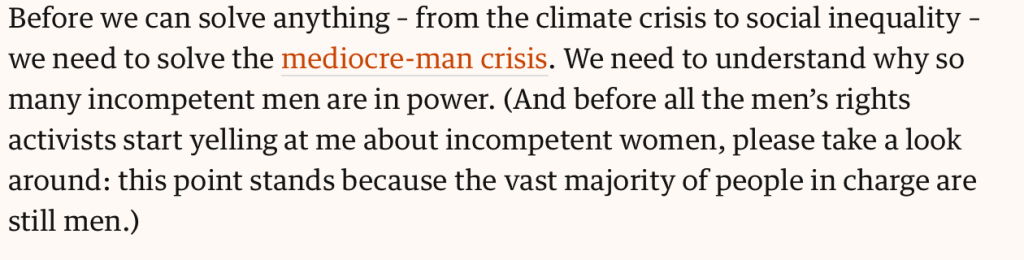
A piece in the Guardian this week said the following, in relation to male and female leaders:
Is this about mediocre men Bullying their way to the top? – The BJ’s of this world? The piece also encourages a different type of leadership, a feminine one. (and thank you Jenni Osborne for highlighting the article)
Is Mediocre man, the same as Adolescent Man? – probably.
What do you think? Is there a Man crisis?
There is a different man crisis – and that’s the considerable reality of suicide being the biggest killer of Men aged between 30-50 in the UK. That is most definitely a crisis. Might one crisis lead to the other?
Going it alone, and frightened to be called out – status to be kept – over kindness for themselves and others
Don’t be weak, don’t fail, must keep going, must make more money, strength is about winning at all costs….
and I get it, as a 43 year old male, I truly do.
In a book on Farming, and farmers have suffered significantly because of capitalism and resultant suicide, James Rebanks offers this, on the state of the environment, and also the human soul. For me it offers something in the remaking of the male.
Someone who knows the land our very food grows on, might just know something… i challenge you to reflect on this:
‘What will our descendants say of us, years from now? How will we be judged? Will they stand in the dust of a scorched and hostile world, surrounded by the ruins of all the exists today, and think that we , who could have saved the earth, were thoughtless vandals, too selfish or too stupid to turn back? will the future know us as the generation who pushed things too far, on whose watch the world began to fall apart, who had so little courage and wisdom that we turned away from our responsibilities ?
Or
Will they lie in the cool green light of the oak trees that we planted and be proud of us, the generation that pulled things back from the abyss, the generation that was brave enough to face up to its own flaws, big enough to overlook our differences and work together, and wise enough to see that life was more than shop-bought things, a generation that rose above itself to build a better and more just world.
This is our choice
We are at a fork in the road
There are a million reasons to believe that we are not big enough, brave enough or wise enough to do anything so grand and idealistic to stop the damage we are doing. We are choking to death on our own freedoms. The world of human beings is often ugly, selfish and mean, and we are easily misled and divided. And yet, despite everything, I believe we, you and I, each in our own ways, can do things that are necessary’ (James Rebanks, 2020, p266-267)
and as Zizek puts it:
The way to confront anxiety is to look at ourselves
Zizek, 2017, p281
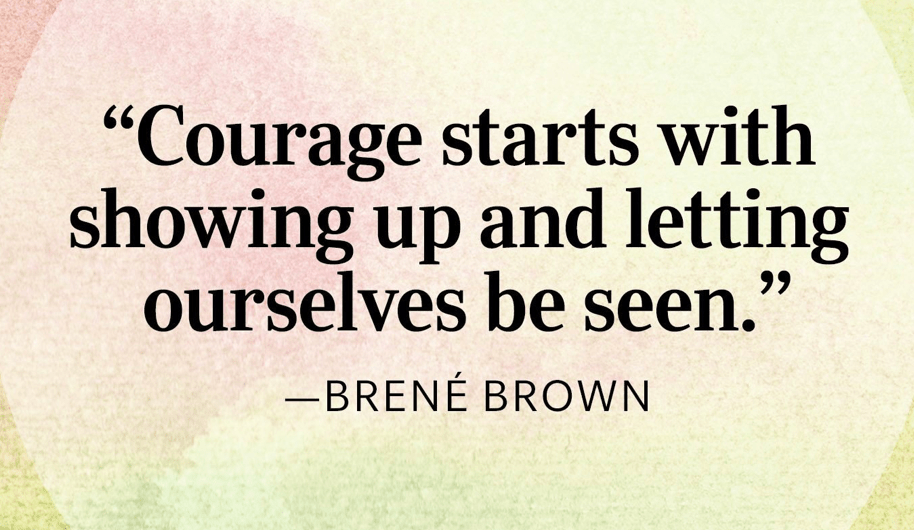
Often its desperation, despair and the dive to the depth that causes the change to occur. Midlife awakening, crisis or breakdown – call it what you want to. Transformations do and can happen from within, and happen when there’s no choice but too. Only we, men can change. What do you think – is there a Mediocre Men crisis? And what questions might we want to ask ourselves, as men, deeply to be courageous, face our flaws and be brave to do the responsible thing?
Its time to face, fully the prevailing male crisis, and it starts with each of us, and it continues with our own boys.
Of the 20 or so books I’ve read this year, the one that made the most impression on me from a healing and therapeutic perspective was ‘Adult children of Emotionally immature Parents’ by Lindsay Gibson (2015). (As an added note I’m slowly working my way through her follow up ‘Recovering from Emotionally Immature parents’ (2019))
Her first book was the one in which I ticked, underlined, marked and wrote comments in nearly every page, for me its a good examination of Emotional immaturity, the types of emotionally immature parents and how children react and what children have to do to survive and do to respond to them. What I found most interesting is that children respond, broadly, to emotionally immature parents (there are 4 types she describes) in one of two ways, being an internaliser, and an externaliser. These both existing along a spectrum and changes occurring during stress, after therapy and self realisations.
I realised, quite obviously that I am an internaliser. So, I would like to share with you some of the aspects of the internaliser, because in a way, if you’re an externaliser, you’re probably not going to be interested in reading this blog anyway. Self help, learning and reflection aren’t your bag, most of the time.
If you are an internaliser like me, then you are like to :
Worry, think that solutions start on the inside, be thoughtful and empathetic, think about what could happen, overestimate difficulties, try and figure out what’s going on (I was very perceptive as a child, some might call that over vigilance) , looking for their role in cause of a problem (‘what did I do?’), engage in self reflection and taking responsibility, figure out problems independently and deal with reality as it is and be willing to change.
I think before I act, as an internaliser, and also believe emotions can be managed, I feel guilty easily and I find the inner psychological world fascinating. (I nearly did a psychology degree aged 18, and recently completed a psychology module for my MA), and in relationships im likely to put other peoples needs first, consider changing myself to improve the situation, request dialogue to sort something out (ah ha.- thats why I like ‘conversation’ as a youth worker..) and want to help others understand why theres a problem.
If you want to know what an externaliser is like, then think about some of the opposites to the above. If you have any experience with someone who acts like an child but in adult form, then that is an externaliser. They deny reality and expect everyone else to sooth them, as they lash out, externalising emotions with little control or sense of consequences. Lindsey’s comment on these is that balance is a key, an extreme internaliser or externaliser is a dangerous thing, only that an extreme externaliser is also a danger to other people, all of the time.
I would say that I was on the middle to extreme internaliser space on the scale. Taking on and feeling guilt, for everything (‘Sorry seems to be the easiest word’), and revolving my sense of self around other people. Realising my co-dependancy tendencies last year was part of this. As Lindsay describes, children adopt one of two principle strategies for coping within such an emotionally immature situation, albeit, everyone in some way is along the spectrum as we can all be described as a mixture of internalisers and internalisers.
But I now know and understand my internalised self. And that is a good thing. I also have a better understanding of its strengths and weaknesses and ill share some of these below. And, I can accept that this is the way I chose to survive, cope and respond in such an emotionally toxic family upbringing.
Being an internaliser means that you are likely to, and I identify many of these:
Being highly sensitive and perceptive; they notice everything
They have strong emotions; they can be seen as ‘too emotional’ , ‘too sensitive’ – that’s because they hold all those emotions and they intensify as they do so
Internalisers have a deep need for connection – they are extremely sensitive to the quality of emotional intimacy in relationships – they want to go deep…
Internalisers have strong instincts for Genuine engagement – ‘it is crucial that internalisers see their instinctive desire for emotional engagement as a positive thing’ (rather than interpret it as needy or desperate)
Forging Emotional connections outside of the family – children who are internalisers are usually adept at finding potential sources of emotional connection outside of the family. They notice when other people provide warmth, seek out relationships with safe people outside the family to gain an increased sense of security. (I know where I felt ‘home’ as a child/teenager) This can also include pets, friends and spirituality. (NB crossover piece on youth work relationships with children of emotionally immature parents..)
Internalisers are often apologetic about needing help they often feel embarrassed or undeserving, and they are often surprised to have their feelings taken seriously. They often downplay their suffering, even wondering if ‘other people’ are more in need of therapy time than they are.
Internalisers become invisible and easy to neglect. Whereas explosive externalisers are easy to spot. Internalisers rely on inner resources and try and solve problems on their own.
Internalisers are overly independent
Internalisers don’t see abuse for what it is – often minimising it as ‘no big deal’
Internalisers do most of the work in relationships – sometimes doing the emotional work for parents, as emotionally immature parents avoid doing responsible emotional work themselves.
However.. they also… Overwork in the adult relationship, often playing both parts of the emotional work in a relationship, they attract needy people (everyone trusts them, being the ‘go-to’ person.) , they can believe that self-neglect can bring love (‘self sacrifice is the greatest ideal’ say parents to internalising children, and associate these with religion…in this way, writes Graham, ‘religious ideas that should be spiritually nourishing are instead used to keep idealistic children focussing on the care of others’
As I read the section on ‘what its like being an internalising adult’ I realised so much about me, about how I reacted in my childhood, my behaviour and what I did to cope, find emotional depth, nurturing and support outside the family home, I see it now, and once I saw it it was freeing to realise. It was also freeing to see how I made decisions based on my past that were almost inevitable without the kind of deep emotional work that I could have undertaken. But as an internaliser I orientated around inner strengths and survival, not seeing abuse for what it so clearly was.
I love my internal sense of self. I know its a good thing, and knowing about it means that I can fine tune it, and see it for its strengths and weaknesses. I know better how to love my internalising self, I think.
In Part 2, ill share more about the strategies for keeping an internalising self healthy…and that is here
References
Graham, Lindsay, 2015, Adult Children on Emotionally Immature Parents
Graham, Lindsay, 2019, Recovering from Emotionally Immature Parents
Sorry that I didnt did everything you expected me to
Sorry that Im not smiling today
Sorry for being too sensitive, when I dare stand up to you
Sorry seemed to be the easiest word.
Its a sure sign of abuse, when sorry seemed to be the easiest word.
Look at the list above, theres lots of opportunities to cause you to feel and be sorry.
It became a word I had to use in some relationships Ive been in, saying sorry when actually I hadn’t actually done anything wrong, yet made to feel sorry for existing or breathing.
And then I stopped saying it. I stopped saying sorry. It took a while. Clean air. Distance.
I stopped saying sorry for myself. Because I started to believe that, after 40 years of it, that I was the ok one. I could think of myself better. I am not a walking apology waiting to happen.
Apologising all the time. A sign of emotional abuse.
If you heard me say sorry too much, im not sorry now. Thats the pain I was in.
If you hear someone else say sorry often, they might be too.
Sorry seems to be the easiest word, when we value others opinions of us, more than our true worth. When those voices of destruction and abuse weigh heavy, and their manipulation so pervasive.
Hang on in there friend. See the signs. You are stronger, better, more worthy than you think.
If someone around you is apologising alot, they need assurance, not judgement. That they are ok, and that things will be.
I barely say sorry at all, and so if I do I mean it more, because of what I did, not for the value of myself.
As I I feel sad, I feel happy, I feel good… when ____ happens
Not ‘you made me feel’ or ‘you should feel’ – having someone else to blame, or dictate our feelings, but ‘I feel’
I feel fine covers a lot though doesn’t it…
It was recently said to me that in the conversations about men and emotions, that its not that men dont feel emotions, but that they lack the language to describe and articulate them. I look at my own life, and wonder when I could, or felt safe to, express how ‘I feel’ or ‘felt’ about anything. It strikes me as ironic, as during a time when I was helping young people explore emotional literacy in some mentoring work, that I numbed my own pain, that I had no handle on, or no experience of doing this myself. I know about emotional literacy, is vastly different to me being able to say ‘I feel’ .
You quickly learn as a child not to worry about your own emotions, when there’s more emotional people in the family to care for, when you’re on tenterhooks all the time. You learn to ignore feelings. Thats what I did. Switch onto full on survival mode.
Yet at the same time I thought I was self aware. I wasn’t.
If Daniel Coleman is to be believed, its about being aware of our mood and our thoughts about that mood (emotional intelligence, p 47) He says when we say ‘this anger I am feeling’ is more freeing than trying to deny someone the right to feel angry. Growing up in a ‘shouldn’t feel’ emotions culture, let alone a coping with other persons over emotional state culture, denies the healthy growth of emotional awareness, of the self.
Research has shown that those who accept and are aware of their emotions, are more likely to feel both good and negative ones, than people who distract, deny and suppress emotions. Coleman writes, the more we notice in terms of emotions, the richer we are emotionally.
But what about not being able to express or articulate emotions. A case study in Colemans book talks about the man who literally had flat, colourless emotions, who ‘lacked the words’ for feelings, and whilst he goes on to state (in 1996) that further research is needed on this (it might be done by now) he and others were drawn to the significant amount of people who literally could not feel and why this was the case.
I like this line, on the back of their preliminary findings then..
if you could put words to what you were felt, it was yours
and that, as they said was the problem to those who couldn’t feel or have no words for them, they couldn’t own their own feelings. Often, that just meant feeling other peoples.
I feel….. well what doing I feel. What do you feel? and, Men, I address you, to ask that you take notice of, and allow yourself to feel. Allow yourself to feel, and try and articulate the feeling, saying I feel angry, happy, blissful, calm, or feeling anxious, tired, hot, aroused…
or any one of these… practice saying, feeling, acknowledging them..I will..
Saying I feel isn’t weak.
Its so hard work that it requires strength. Ignoring I feel is so so much worse. I get if you cant. I get if you cant because its buried under hurts and trauma. I know. But admit that too, and prioritise talking, therapy and loving yourself to be fully you.
‘I think’ was always an easy get out for me. ‘I know’ was too. Hide emotions because not being in a safe place to express them, or to peel off the layers to experience them.
To be more me, Im going to try and speak from my heart and say I feel.
Its not too late to start. I owe it to myself, and everyone around me.
Deep down what are the rules that shape the way you act, the way you feel, the way you think about yourself, the way you think about others?
Give yourself a minute or two
Which of them might be the rules that you were ‘given’ through your childhood?
Maybe from a faith group?, from school? or somewhere else
As someone brought up in an evangelical christian home, and church – the implicit rules from the faith were one thing, but only added to through my childhood experiences at home.
What Ive discovered is that some of these rules need to be broken.
What I have also realised is that people who like rules try and keep the rules, and can only say that you’re crazy or weird when you break them.
What I realised that is breaking the rules is actually good.
Some of the wrong rules are described by Melody Beattie in her brilliant book ‘Beyond Codependency’ (Theres a link on the resources page above)
Not all of these apply to me, but, I recognised that so many of these had been mainstays in my own life. I had been trying to keep the wrong rules.
Don’t feel or talk about feelings (for me my feelings were secondary to soothing others)
Don’t think, figure things out, or make decisions – you probably don’t know what you want or what is best for you
Don’t identify, mention or solve problems – its not okay to have them
Don’t be who you are because thats not good enough
Don’t be selfish, put yourself first, say what want and need, say no, set boundaries, or take care of yourself – always take care of others and never hurt their feelings or make them angry
Don’t have fun, be silly, or enjoy life – it costs money, makes noise, or mess, and isnt necessary
Don’t trust yourself, your Higher power, the process of life or certain people – instead ut your faith in untrustworthy people; then act surprised when they let you down
Don’t be open, honest and direct – hint manipulate, get others to talk for you, guess what they want and need and expect them to do the same for you
Don’t get close to people, it isnt safe
Don’t disrupt the system by growing and changing
(Melody Beattie)
Some of these rules are there to protect the system, the system of the organisation of the faith, they are often passed on from generation to generation. Following these rules keeps people locked in codependancy. Now, for me, im reading these rules and realising that many of these rules, not all of them, have guided my life for so long. If I realise what happened when or if I dared to express feelings or needs, or made any kind of choice or decision. As I said not all of them.
What I didn’t ever know was that I was ok for me to be who I was, and good enough.
What I didn’t ever have was the opportunity to know how to take care of myself
To have fun (that wasn’t belittled or patronised)..
And shame, guilt and disapproval keeps the rules in check. These rules govern silently. I was selfish for feeling, selfish for acting, selfish for making any kind of decision.
But
Its ok to change the rules. I realised that the rules I followed didn’t do me any good. The rules I followed, were just that, rules. They kept my decisions away from my heart. New life, new rules. Though its hard to not act like im still following the old rules, breaking free has been tough, and thats where my support group, my friends, books like the one I mention above have helped to realise the rules, and make new ones, and to decide what kind of rules I want to have in the rest of my life.
As Melody said, and I underlined. The first rule is that it is ok to break the rules.
The second is that that breaking might need to happen aggressively, change, assertive, to take back the power that you and I rightly have.
Im learning to follow these rules:
Its okay to feel my feelings and talk about them when its safe and appropriate, and I want to
I can think, make good decisions, and figure things out
I can have, talk about and solve my problems
Its ok for me to be who I am
I can make mistakes, be imperfect, sometimes be weak, sometimes be not so great, or good, sometimes be better, and occasionally be great
Its ok to be selfish at times, put myself first sometimes. and say what I want and need
Its okay to give to others, but its ok to keep some for myself too
Its ok for me to take care of me. I can say no and set boundaries
Its okay to have fun, be silly sometimes, and enjoy life
I can make good decisions about who I can trust. I can trust myself. I can trust God even when it looks like I cant
I can be appropriately vulnerable
I can be direct and honest
Its okay for me to be close to some people
I can grow and change, even if that means rocking a bunch of boats
I can grow at my own pace
I can love and be loved. And I can love me, because I am lovable. And I am good enough.
(These are also taken from Melody’s book – do add your own)
And I say im learning because old habits die hard. One of the things I realised is that for so long, for most of my life I have been in endurance or survivor mode, bouncing off, every moment, drama and painful situation, just getting through. Mostly getting through the drama of everyone else, being the calm, strong one, the one that supports others, but didnt ever, for a long time, seek it myself. For me it is time to break rules, time to learn new rules, time to enjoy life in which new rules stem from my heart, my soul and from a place of health, safety, truth and power. Im learning to accept me, for who I am, not what I ought to be.