
‘When we (Men) reach out and be vulnerable, we get the shit beat out of us… and dont tell me from the guys…but from the women in our lives
So I started interviewing men and..
You show me a woman who can sit with a man with real vulnerability – ill show you a woman who has done incredible work
You show me a man who can sit with a woman who has got to the end of her tether and his first response isn’t ‘I unloaded the dishwasher’ but he really listens – because thats what we need – then ill show you a guy whose done a lot of work
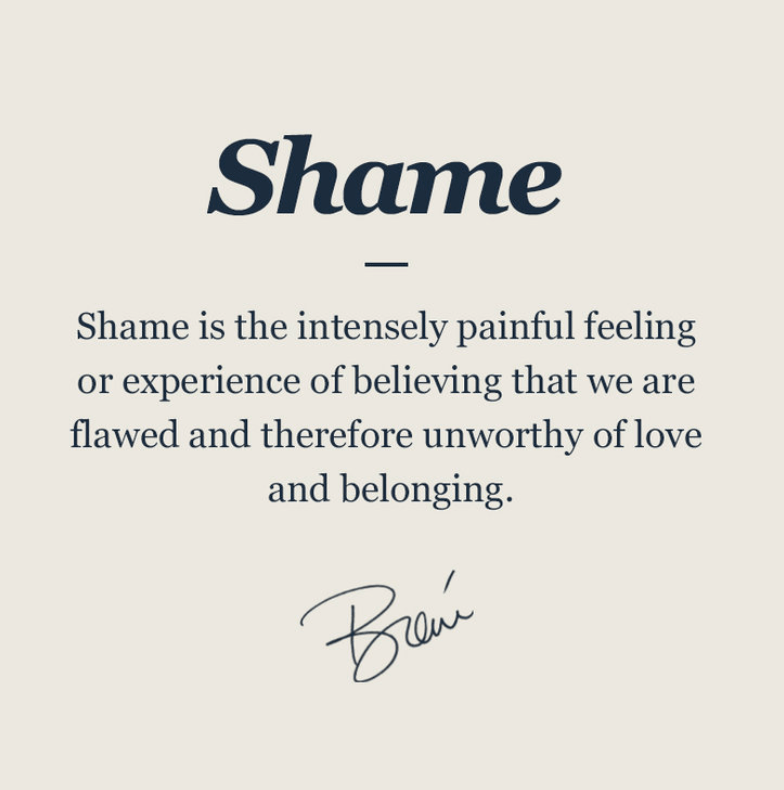
Shame is an epidemic in our culture
To find our way back to ourselves in our culture we have to find out how it affects us, the way we’re parenting, the way we’re working, the way we’re looking at each other
When asked what the things men have to do to conform with male norms in culture, research showed the following:
- Always show emotional control
- Make work a Primary goal
- Pursue Status
- Violence
The antidote to shame is empathy, if you put shame in a petrie dish it goes away.
Shame needs three things to grow exponentially, secrecy, silence and judgement – it can’t survive with empathy.
If we’re going to find our way back to each other, vulnerability is going to be that path.
It may be seductive to stand outside the arena, when im perfect and bulletproof…but that never happens, we bring ourselves as we are to the battle ‘
(Brene Brown, TED Talk 2012 – https://www.youtube.com/watch?v=psN1DORYYV0
I have spent the last week digging deep reflecting on vulnerability and shame, on guilt, on myself – and this brought me to the point of actually reading or watching something of Brene Brown, a name that to me had been only a social media meme, or someone who I hadn’t got around to yet.
So I watched her two TED talks over the weekend. Whilst there’s so much to reflect on in full. Its these last few comments about Men that I highlighted above, that I felt it appropriate to share here.
Lets look again. For a man in society to live up to cultural norms (in a US based research) it involves
Emotional Control
Primacy of work
Status
Violence.
So shall we ask the question – do you agree or disagree?
Or a better one – have you felt shame in not fulfilling these things?
Or another – how much effort does it take to ‘go against’ them?
What does shame feel like for you?
Are you expected to be ‘in emotional control’ – around others who lose their shit – so what place do your feelings have?
when was the last time you cried? When was the last time you cried, in front of your partner?
Are you expected to work until – well until you are sick? Because you are meant to? Is your life about success at all costs?
Status and power – Have felt the pressure or shame for not taking on that promoted role, or that position?
Violence – Dont be the victim of bullying, stand up for yourself… fight back… – win at all costs ?
Which of these resonates for you? Or might it be something else?
If im honest I was shocked by these 4 things, especially Violence, but then whats the method in which superheroes win in films? or in video games? (as one example) – and it worried me that these were revealed as expectations and then areas in which Men might feel shame about, and realised that even if we dont think all apply to us – we can still carry shame because of just one of these areas.
Maybe lets pause for a moment and reflect on the shame that we carry.
What is it, and what is it doing to us that is likely to be unhealthy.
What subliminal message about expectations and shame are we passing onto our children? What have we inhabited? What does shame and vulnerability mean for us, as men?
I had to admit something to my partner Christelle the other day, she knows me as someone who is wise, clever, reads, who likes nature, adventures, travel and food, who is in work that involves justice, poverty and faith. I had to admit something, that feels like a guilty secret, in comparison of all these noble, creative, wise activities about me.
And that was my also my following of sport. Specifically the capitalist business model team that is Manchester United – a team I supported since I was 8. My guilty pleasure, out in the open. But it felt almost shameful. Not liking football could be seen as odd in the UK, but that I support ‘that’ team (and not just because of recent results) seems so out of character with so many parts of me that I stand for. Though this felt trivial it wasnt in a way. It was a tiny bit of vulnerability on my part, a part of me that I often feel shame about, and hide, as it makes me feel less perfect, less with integrity, interested in something ‘trivial’. Though it sounded trivial, it still felt like a thing I felt shame about.
In another example : I had to take a covid test today, like so many of us in the last 2 years – but can you remember how it was ‘shameful’ to admit getting this disease? Shame and blame in culture… – and yes I am writing this post whilst dosed up on lemsips and a bag full of tissues to hand – and the test has come back negative…
Maybe thats the thing with shame and vulnerability – its about giving ourselves away, to hope that we’ll be loved despite our imperfections, and take a risk – where its safe to do so.
So to the Men who might read this – what might shame and being vulnerable mean to you – what are you scared of, or afraid of?
What cultures in work, or religious groups, make it even easier to hold on to shame- where our real lives can be hidden away for pretence or expectation – to not be our real selves..pretending…
It might be time to bring it out of the secrecy, silence and judgement.
Do the expectations of emotional control, stays, work and violence affect you? – in what ways?
Is it one of these things more than the others? And who and how might you begin to expose the layers of some of the wounds of shame and let them go, in a way like Matt Haig describes below:
Imagine forgiving yourself completely. The goals you didnt reach. The Mistakes you made -(the choices that you made even). Instead of locking those flaws inside to define and repeat yourself, imagine letting your past float through your present and away like air through a window, freshening a room. Imagine that.
Matt Haig (The Comfort Book)
Of course, the other side of this is those who feel no shame, the tiny proportion, but still large number who might be considered sociopathic. Shame is part of being human, part of being a human that is more whole and humane.

 James Ballantyne
Leave a reply to Facing up to the Male Crisis – Healing for Men Cancel reply