
One of the benefits of being a survivor of emotional domestic abuse is that you can see the patterns of behaviour
One of the disadvantage of being a survivor of emotional domestic abuse is that you can see the patterns of behaviour, everywhere, and at times, like I was when watching Stranger things recently, I get triggered by them.
Growing up I was perceptive. Smart was a word people used also. I had to be, it was a survival mechanism to stay afloat with the narcissist in the house.
What I couldn’t do as a child was articulate emotional abuse. How could I? – who can – its difficult enough when the bruise is visible.
What I have become aware of as I have recovered from, and then read further about emotional and psychological abuse is that it is possible to see patterns.
My previous piece here -is about gaining knowledge to heal.
In this post I describe how psychopathy is evident in churches, and how to raise awareness of this.
As someone perceptive, observant, and probably under went hyper-vigilence, anxiety and fear as a child, with emotionally immature parents , add the perceptivity to the knowledge and then patterns start to appear.
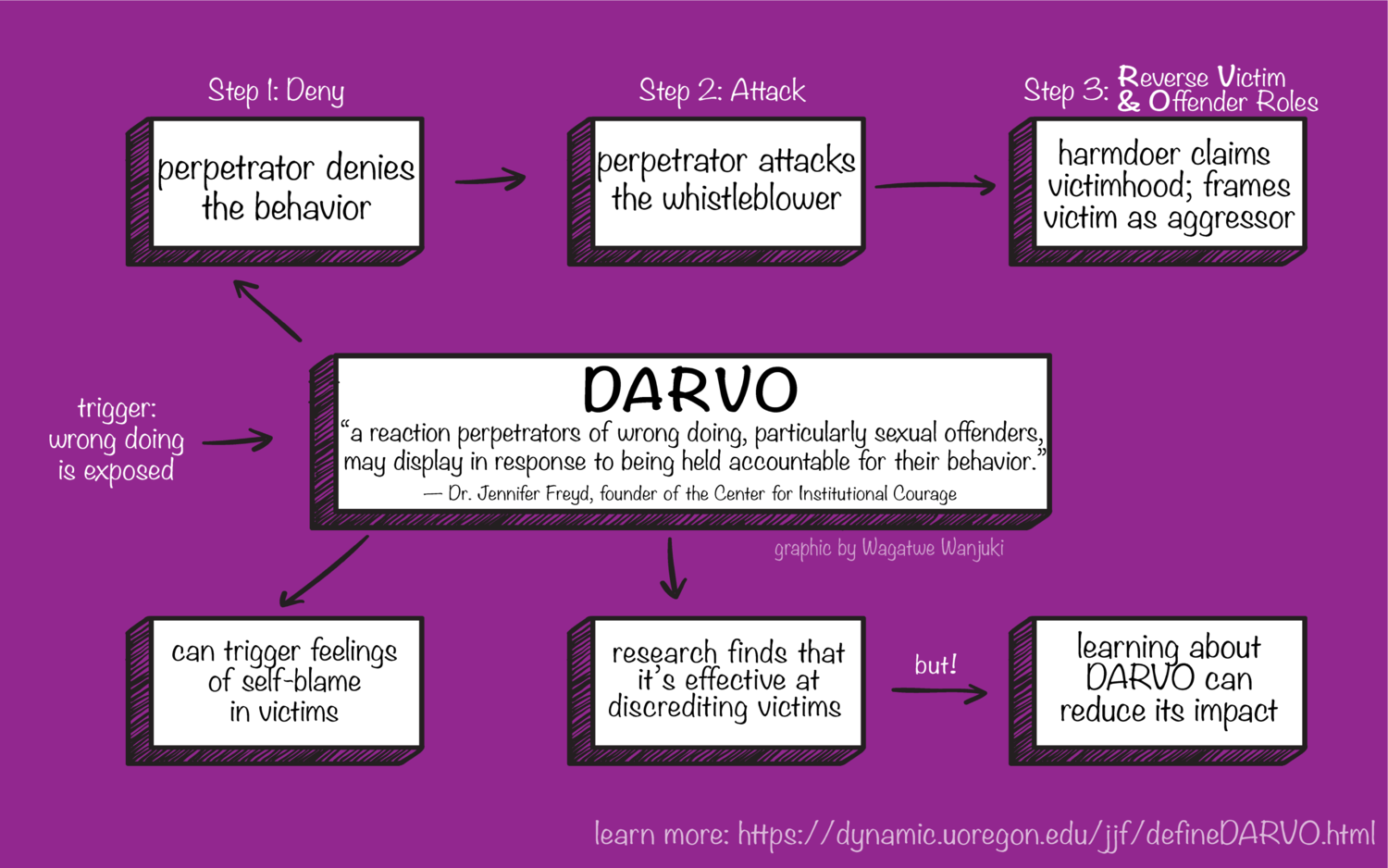
Not only do the perpetuators of emotionally abusive acts, act in similar ways, their response when they are confronted is also similar.
Its a cycle, and one that I want to bring awareness of, for those who have to deal with safeguarding, and bringing people to account who display such personalities.
The first step is Denial.
Of course they aren’t going to accept what they did, often a denial is in the form of denial (and then a reason is given for why they actually did what they did do, even though they denied doing it) There could also be a distracting acceptance here, ‘Of course I didnt do this, I couldn’t do this.. but I may have done this…'(instead, or smaller crime)
By the way an emotionally immature person is famous for behaviours that are so wrong that no one would have thought to make up rules against it. Like preside over the insurrection, often stealing things, like democracy, but could be other items, or any crime. (Lindsay Gibson, 2019)
The second is Accuse
This can often be at the same time as the next two stages, but, Accuse – can look like scapegoating someone else, blaming them. It can be the classic and well trodden accusation that ‘everyone is being sensitive’ or ‘we got very upset when we were accused of’ – or ‘we were hurt by all your anger’ or there is a personal attack on the whistleblower somewhere in there. ‘They are emotional/sensitive/jealous , trying to destroy my job/ministry’
This leads to the third thing…
Notice how in part 2, they switched from perpetrator to victim..then..
Part 3 is Reverse Victim-Offender
They literally swap. In front of your very eyes. Its the tears of the girl who cries wolf, when she beat up the younger sister whilst looking after the wolf. Its the person who claims to be the victim, after being accused of doing something that they cannot conceive was in any way offensive. But they will turn from bully to victim in the blink of an eye.
They often then seek support from those who only see this side of them. Them as perpetual victims. Some people only see themselves as this, therefore are almost delusional to the offence and coercive control that they are actually perpetuating.
If you want to discover more, it’s here… DARVO
Can you imagine what its like as a child, or adult for that matter, seeing this in front of you? When you have seen with your own eyes that abusive people have acted inappropriately and then in the blink of an eye play victim. And play the kind of emotionally immature victim that seeks the child to console them, and be on their side. Imagine how a child might try and articulate all of this and what they might be expected to do. Some parents appear as the victims of the times they bullied their own children. Yes. Ill say it again. Some parents assume the role of victim after they have bullied their own children. And then expect the other child to be on the parents side.
So, before I digress too far.
Patterns.
After the abuse is when you see them. Though, not everyone believes you even when you can see them. Or if you’ve lived through it. one of the things to look for when dealing with emotional abuse, gaslighting, narcissism, psychopathy, is that DARVO is often apparent.
What to do about it, is to be aware of it, and discover ways of not letting the Darvo monsters play you off in their game. Thats when you become their flying monkeys and enmeshed by them. Start to feel sorry for someone emotionally immature/narcissistic and all of a sudden your life, and previous friends, and families are divided into ruins..and so is your church, or entire nation when previously (USA) or currently (UK) led by one.
If you are in a position of responsibility in churches, and especially in safeguarding one, then DARVO is definitely something you need to read up on.


 James Ballantyne
Leave a reply to Why don’t people want to believe Abuse Victims? (Reasons below) – Healing for Men Cancel reply